
Upgrade Your Shower Wellness Routine: A Step-by-Step Workflow
TL;DR:
- Hard water and chlorine damage skin and hair by causing dryness and irritation.
- Installing targeted shower filters effectively reduces irritants and improves skin and hair health.
- Consistency and personalized adjustments are key to achieving long-term wellness benefits.
You spend real money on serums, conditioners, and moisturizers, yet your skin still feels tight after every shower and your hair looks dull by midday. The problem might not be your products at all. Hard water and chlorine cause skin dryness, increased water loss through the skin barrier, and a measurably higher risk of eczema and psoriasis, while simultaneously lifting the hair cuticle and accelerating color fade. This guide walks you through a practical, evidence-backed workflow to assess your water, choose the right tools, and build a daily routine that actually delivers the results your skincare shelf promised.
Table of Contents
- Assessing your water: Why it matters for skin and hair
- Essential tools and products for your shower wellness routine
- Step-by-step: Building your shower wellness workflow
- Common mistakes and troubleshooting tips
- How to monitor your results and maximize skin/hair wellness
- Why consistency and customization are the real shower wellness secret
- Ready to upgrade your shower experience?
- Frequently asked questions
Key Takeaways
| Point | Details |
|---|---|
| Water quality matters | Hard water and chlorine can damage skin and hair no matter which products you use. |
| Filters make a difference | A targeted shower filter can quickly reduce irritants and boost skin and hair wellness. |
| Routine is key | Combining the right filter and consistent habits delivers lasting results. |
| Track your progress | Noticeable improvements may take 1–2 weeks, but keep monitoring for best outcomes. |
Assessing your water: Why it matters for skin and hair
Understanding your water is the foundation of any effective shower wellness routine. Most people never think about what comes out of the showerhead, but the impacts of hard water on your skin and hair are well documented and surprisingly significant.
Hard water contains elevated levels of calcium and magnesium. When those minerals combine with soap, they form a residue that sits on your skin and hair rather than rinsing clean. Chlorine, added by municipal water systems to kill bacteria, is a chemical irritant that strips the skin’s natural oils and disrupts the scalp’s moisture balance. Together, these two factors can quietly undo everything your skincare routine is working toward.
Key stat: Hard water above 120 mg/L CaCO3 is linked to an 87% higher eczema risk in infants and a 20% increased psoriasis risk when levels exceed 180 mg/L. Chlorine compounds this by increasing transepidermal water loss (TEWL), meaning your skin loses moisture faster after every shower.
The shower fixes for hard water you choose will depend on knowing exactly what you’re dealing with. Here’s how different water types affect your body:
| Water type | Skin effects | Hair effects |
|---|---|---|
| Soft water | Gentle, preserves moisture barrier | Maintains shine, reduces breakage |
| Hard water | Dryness, clogged pores, irritation | Cuticle lift, dullness, brittleness |
| Chlorinated water | Stripped oils, increased TEWL, redness | Faster color fade, reduced tensile strength |
Signs your water may be the culprit:
- White or chalky residue on faucets and showerheads
- Soap that doesn’t lather well and leaves a filmy feeling
- Skin that feels tight or itchy immediately after showering
- Hair that tangles more easily, looks dull, or fades faster after coloring
- Increased flaking on the scalp despite using a moisturizing shampoo
Pro Tip: Your local utility is legally required to publish an annual water quality report. Search for your city’s Consumer Confidence Report online or call your water provider directly. Look for total hardness (measured in mg/L or grains per gallon) and chlorine levels. If you’re on well water, pick up a home test kit from a hardware store for under $20 and test for hardness, pH, and chlorine.
Essential tools and products for your shower wellness routine
Once you know your water’s quality, focus on the right tools and products for your new routine. The good news is that you don’t need to overhaul your entire plumbing system to see meaningful improvements.
Shower filters are the most targeted, cost-effective solution for skin and hair wellness. Unlike whole-house softeners, a shower filter works specifically where chlorine and mineral exposure happen most intensely: during your daily shower. Understanding the benefits of shower filters helps you make a smarter purchasing decision rather than just grabbing whatever looks good.
Here’s how the main options compare:
| Solution | Cost | Portability | Primary benefit | Limitation |
|---|---|---|---|---|
| Shower filter | Low to moderate | High (renter-friendly) | Removes chlorine, reduces irritants | Doesn’t soften whole home |
| Whole-house softener | High | None | Reduces scale throughout home | Adds sodium, doesn’t remove chlorine |
| Combined system | Highest | None | Comprehensive water treatment | Expensive, requires installation |
Filters are superior for targeted skin and hair wellness because chlorine is the primary irritant absorbed through skin and inhaled as steam. Softeners address scale and mineral buildup throughout the home but add sodium to the water and don’t remove chlorine. Combining both gives you the most thorough protection, but for most renters and homeowners focused on skin and hair, a quality shower filter is the smart starting point.
What to look for when choosing a shower filter:
- Vitamin C filters: Neutralize chlorine and chloramines on contact. Excellent for sensitive skin and color-treated hair.
- Activated carbon filters: Absorb chlorine, sediment, and some heavy metals. Widely available and effective.
- Ceramic ball filters: Use mineral-infused ceramics to reduce bacteria and balance pH. Often combined with other filter types.
- KDF (Kinetic Degradation Fluxion) filters: Use copper and zinc to reduce chlorine and heavy metals. Effective at higher water temperatures.
If you’re not sure what a shower filter actually does mechanically, think of it as a targeted purifier that intercepts irritants before they ever touch your skin. Most filters install in under five minutes with no tools required, which makes them a genuinely practical upgrade for anyone.
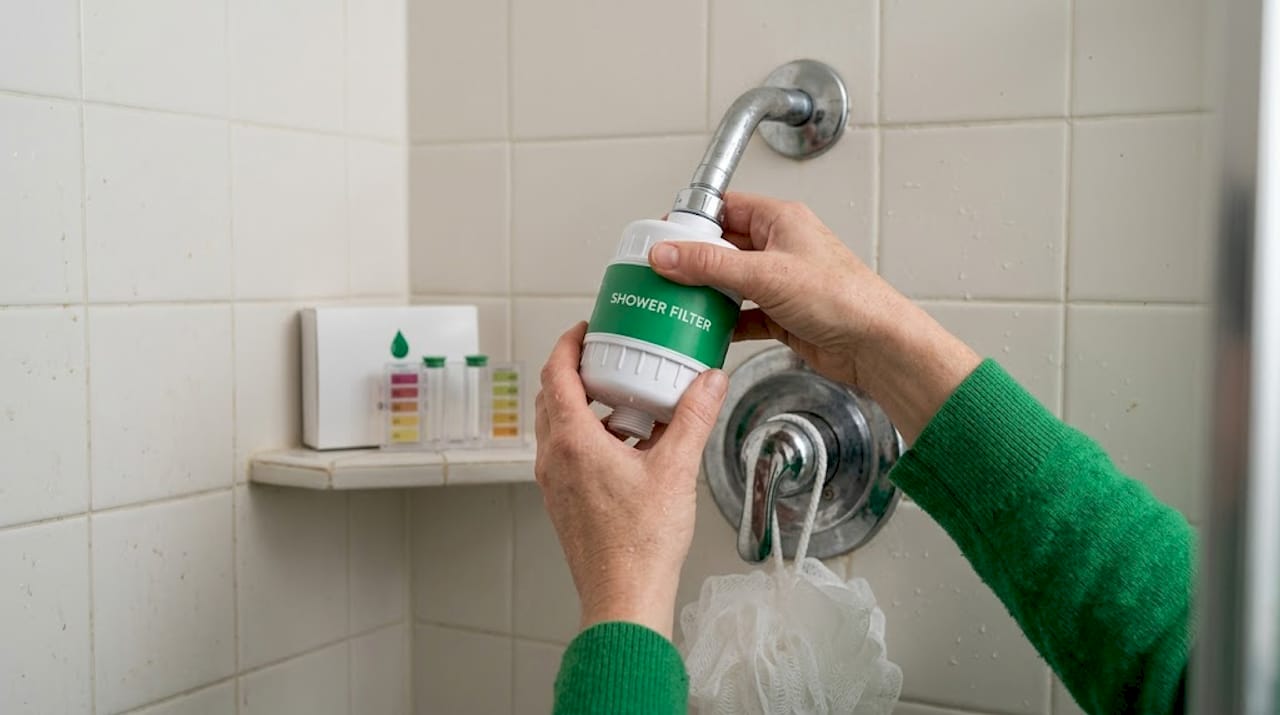
Pro Tip: Match your filter type to your primary concern. If chlorine sensitivity is your main issue (red skin, itchy scalp after showers), a Vitamin C filter is your best bet. If you’re dealing with hard water mineral buildup and dullness, look for a filter that combines KDF media with ceramic balls for a broader effect.
Step-by-step: Building your shower wellness workflow
With the right tools in hand, you’re ready to implement an effective wellness workflow. This isn’t about adding complexity to your morning. It’s about making small, strategic changes that compound over time.
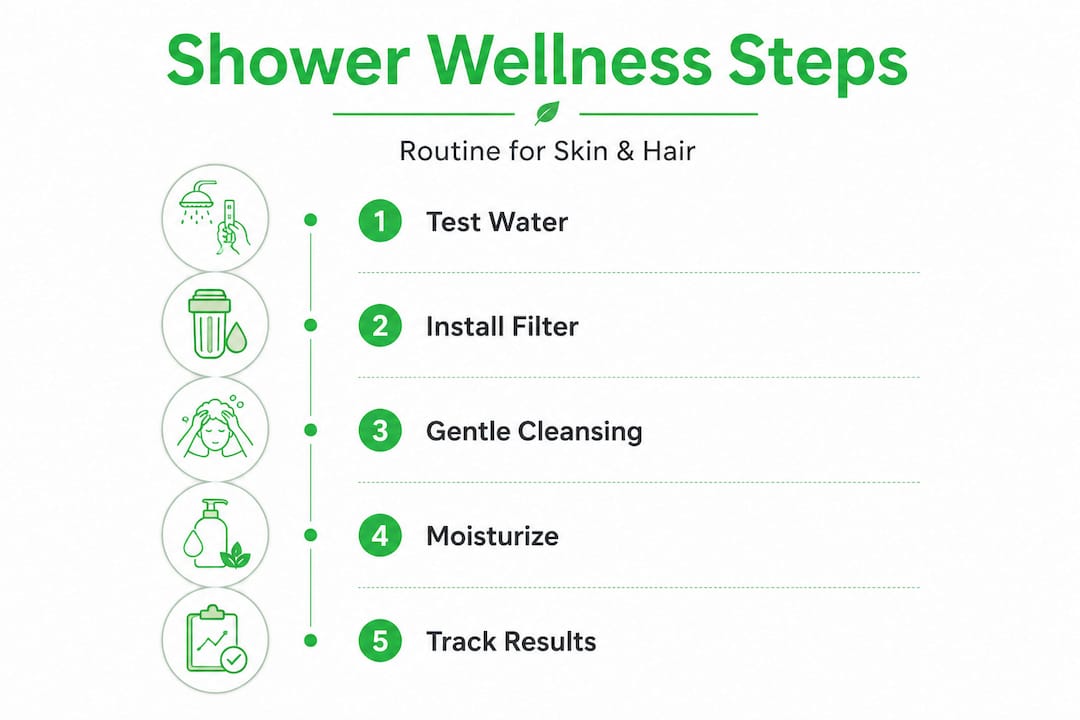
Your 6-step shower wellness workflow:
- Install your shower filter. Follow the manufacturer’s instructions. Most simply screw onto your existing showerhead connection. No plumber needed.
- Set your water temperature to warm, not hot. Hot water (above 105°F) strips the skin’s lipid barrier faster than warm water. Aim for 98 to 104°F for a comfortable, skin-safe shower.
- Sequence your products correctly. Shampoo and condition first so rinse water isn’t sitting on cleansed skin. Apply body wash last, then rinse thoroughly.
- Keep your shower to 10 minutes or less. Even filtered water can cause moisture loss if exposure time is too long. A focused 8 to 10 minute shower is the sweet spot.
- Apply moisturizer within 3 minutes of stepping out. This locks in residual moisture before your skin barrier has a chance to lose it to evaporation.
- Replace your filter cartridge on schedule. Most cartridges last 2 to 3 months depending on usage and water hardness. An expired filter offers no protection.
| Workflow step | Expected skin benefit | Expected hair benefit |
|---|---|---|
| Filtered water | Reduced irritation, less dryness | Less cuticle damage, improved shine |
| Lower temperature | Preserved lipid barrier | Reduced frizz and breakage |
| Correct product sequence | Less residue on skin | Better conditioner absorption |
| Shorter duration | Less TEWL | Less mineral exposure per session |
| Post-shower moisturizer | Sustained hydration | Scalp moisture retention |
| Regular filter changes | Consistent irritant removal | Ongoing color and strength protection |
It’s worth addressing a common misconception here. One short-term study found no significant difference in hair tensile strength between hard water and distilled water over 30 days. However, broader clinical and anecdotal evidence consistently shows that cumulative mineral residue buildup causes measurable damage over months and years. Don’t let one short study discourage you from a routine that the larger body of evidence supports. The step-by-step shower water filtration process works gradually, not overnight.
Pro Tip: Keep a simple notes app entry for the first two weeks. Log how your skin feels immediately after showering, whether your hair tangles less during brushing, and any changes in scalp flaking. This gives you real data to evaluate rather than relying on vague impressions.
Common mistakes and troubleshooting tips
Even the best routines need ongoing tweaks. Here’s how to catch mistakes early and stay on track.
The most common shower wellness mistakes and how to fix them:
- Skipping filter cartridge replacements. An expired cartridge can actually harbor bacteria and offer zero filtration. Set a phone reminder every 8 weeks to check your filter status.
- Installing the wrong filter type. A filter designed for chlorine removal won’t address hard water mineral buildup effectively. Go back to your water quality report and match the filter to your specific issue.
- Using harsh cleansers after installing a filter. A sulfate-heavy shampoo or soap with alcohol will strip your skin barrier even in filtered water. Switching to gentler formulas amplifies your filter’s benefits significantly.
- Using water that’s still too hot. Many people install a filter and keep all their other habits the same. Temperature matters as much as water quality. Dial it down and you’ll notice the difference within days.
- Ignoring signs you need a shower filter replacement. Reduced water pressure, a change in water smell, or a return of skin and hair symptoms are all signals that your cartridge is spent.
Remember: Even the best shower filter is only as effective as its maintenance schedule. Filters mitigate irritants by actively removing them from the water stream. Once the filter media is saturated, that protection disappears completely. Treat cartridge replacement as a non-negotiable part of the routine, not an optional extra.
Pro Tip: Write the installation date on a piece of tape and stick it to the underside of your showerhead. It takes five seconds and eliminates the guesswork entirely.
How to monitor your results and maximize skin/hair wellness
Maintaining your routine is easier when you see results. Here’s how to track them and make your progress stick.
How to evaluate your progress over time:
- Take a baseline photo on day one. Focus on your hair’s shine and texture, and note any areas of skin dryness or redness. Repeat at the two-week and one-month marks.
- Track specific symptoms weekly. Note changes in scalp flaking, skin tightness after showering, hair tangling during brushing, and overall moisture levels.
- Check your hair’s behavior when wet. Healthy, less-damaged hair detangles more easily and dries with less frizz. This is one of the earliest and most noticeable improvements.
- Assess your skin’s need for moisturizer. If you’re reaching for lotion less urgently after showers, your skin barrier is recovering.
- Note any changes in hair color vibrancy. Color-treated hair that’s protected from chlorine and mineral exposure holds color significantly longer, which is one of the most measurable benefits you can track.
Realistic timeframes:
- Week 1: Skin may feel less tight immediately post-shower. Hair may feel slightly softer.
- Week 2 to 4: Reduced scalp flaking, less hair breakage during brushing, improved skin hydration between showers.
- Month 2 and beyond: Cumulative improvements in hair strength, skin barrier resilience, and overall texture become clearly noticeable.
Understanding why investing in water filters pays off long-term helps you stay committed during the early weeks when changes are subtle. The best shower filters work consistently in the background so your other wellness habits can actually do their job.
Pro Tip: Pair your new shower routine with clean pillowcases (wash twice weekly) and a gentle, fragrance-free body lotion. These two habits create a compounding effect that accelerates the improvements your filter is already driving.
Why consistency and customization are the real shower wellness secret
Here’s something most wellness content won’t tell you directly: there is no single perfect shower routine that works for everyone. The idea that you can follow a generic five-step protocol and see identical results to someone else is simply not how biology or water chemistry works.
Your local water supply has a unique mineral and chemical profile. Your skin barrier has its own baseline strength, influenced by genetics, diet, stress, and age. Your hair’s porosity and density determine how quickly it absorbs and loses moisture. All of these variables mean that the workflow in this guide is a starting framework, not a fixed prescription.
What the research consistently shows is that gradual, cumulative exposure to irritants causes damage that short-term studies sometimes miss. The evidence on shower head filters transforming skin and hair is most compelling when you look at people who maintained a filtered routine for three months or more, not those who tested it for a few weeks and moved on.
The practical implication is this: give your routine time, and be willing to adjust. If a Vitamin C filter alone isn’t fully addressing your scalp dryness, add a ceramic ball enhancement. If your skin still feels reactive after two weeks, look at your cleanser ingredients before assuming the filter isn’t working. Customization is not a sign that the approach is failing. It’s a sign that you’re paying attention.
Consistency matters more than perfection. A routine you follow 90% of the time for three months will outperform a perfect routine you abandon after two weeks. Build the habit first, then refine the details.
Ready to upgrade your shower experience?
Your skin and hair deserve water that actually supports them, not works against them. Once you know what’s in your water and how to address it, the difference a quality shower filter makes is hard to overstate.
At Vitaclean, we’ve built our entire product line around this exact problem. Whether you’re starting with vitamin C shower filters to neutralize chlorine on contact, exploring ceramic filters for a more mineral-balanced shower, or looking for a complete solution with our filtered shower heads, we have options designed to fit your water type, your budget, and your routine. Browse our full range and find the right starting point for your wellness upgrade today.
Frequently asked questions
How quickly will I notice results after installing a shower filter?
Most people notice softer skin texture and more manageable hair within 1 to 2 weeks, with the most significant cumulative benefits appearing after 4 to 8 weeks of consistent use, as filters steadily reduce irritant exposure over time.
Is a shower filter better than a whole-house water softener for my skin?
For skin and hair wellness specifically, shower filters are more targeted and effective because chlorine is the primary irritant absorbed through skin and inhaled as steam, while softeners address mineral scale throughout the home but add sodium and don’t remove chlorine.
Can a shower filter help with eczema or psoriasis?
Yes, shower filters can meaningfully reduce your exposure to the irritants most closely linked to flare-ups, since hard water above 120 mg/L is associated with an 87% higher eczema risk in infants and a 20% increased psoriasis risk at higher concentrations.
How do I know if I have hard or chlorinated water?
Use a home water test kit available at most hardware stores, or download your municipality’s annual Consumer Confidence Report online, which lists calcium, magnesium, and chlorine levels in plain language.
Do I still need to use gentle soaps and haircare products with a filter?
Absolutely. A shower filter removes irritants from the water itself, but harsh sulfates and alcohols in cleansers can still strip your skin barrier. Pairing filtered water with gentle, fragrance-free products gives you the best possible outcome for sensitive skin and hair.
Recommended
- How to enhance your shower for wellness: complete guide
- Turn Your Shower into a Spa: Ultimate Guide to Adding Aromatherapy
- Transform Your Shower for Better Skin and Hair Vitality
- 6 steps to shower bliss
- A Guide to Bathroom Safety for Your Parents | Helping Mom LLC
- Transforming Your Space: Essential Tips for New Jersey Bathroom Renovations