
How to enhance your shower for wellness: complete guide
TL;DR:
- Shower water often contains chlorine, heavy metals, and sediments that damage skin and hair.
- Installing NSF-certified filters tailored to specific water contaminants can improve skin and hair health.
- Combining filtration with proper shower routines enhances overall wellness and minimizes water-related damage.
Your daily shower might be the reason your skin feels tight, your hair looks dull, or your scalp itches constantly. Tap water carries chlorine, heavy metals, and sediment that strip moisture and damage hair follicles with every rinse. The good news is that targeted upgrades, backed by real science, can turn your shower into a genuine wellness ritual. This guide walks you through exactly what’s in your water, which products actually work, how to install them, and how to track your results so you stop guessing and start seeing real change.
Table of Contents
- Understand the problem: What’s in your shower water?
- Gather your essentials: Tools and products for a spa-like shower
- Step-by-step: How to upgrade your shower for wellness
- Monitor your results: Troubleshooting and maximizing benefits
- A wellness expert’s take: What really matters in shower upgrades
- Ready for a wellness shower? Top filters and upgrades
- Frequently asked questions
Key Takeaways
| Point | Details |
|---|---|
| Water quality matters | Contaminants in your shower water can damage skin and hair, so filtering is crucial for wellness. |
| Pick the right enhancements | Matching shower filters and spa accessories to your needs delivers the best results. |
| Routine is essential | A true wellness shower involves regular filter upkeep and healthy habits beyond just equipment. |
| Track your progress | Monitor changes to your skin and hair to adjust your routine for ongoing improvement. |
Understand the problem: What’s in your shower water?
Most people assume shower water is safe because it’s treated. Treated, yes. Harmless to skin and hair? Not always. Municipal water typically contains chlorine or chloramine used to kill bacteria, but those same chemicals strip your skin’s natural oils and disrupt your hair’s moisture balance. Shower filters enhance wellness by removing chlorine, heavy metals, and sediments from water, reducing skin dryness, irritation, and hair damage.
Beyond chlorine, your water may carry lead from aging pipes, traces of mercury, calcium and magnesium deposits from hard water, and fine sediment particles. Each of these interacts with your skin barrier differently, but the cumulative effect is the same: dryness, irritation, and weakened hair structure.
Here’s a quick breakdown of the most common culprits:
- Chlorine and chloramine: Disinfectants that dry out skin and fade color-treated hair
- Lead and mercury: Heavy metals linked to scalp irritation and hair thinning
- Calcium and magnesium: Hard water minerals that leave residue on skin and hair
- Sediment: Fine particles that clog pores and dull hair texture
| Contaminant | Source | Skin/hair effect |
|---|---|---|
| Chlorine | Municipal treatment | Dryness, irritation, color fade |
| Lead | Old pipes | Scalp inflammation, hair loss |
| Calcium/Magnesium | Hard water | Residue, brittle hair, dry skin |
| Sediment | Supply lines | Clogged pores, dull texture |
Testing your water is easier than most people think. You can order an at-home test kit online for under $30, or look up your local water quality report at your municipality’s website. The filter science behind modern shower filters is well-documented, and knowing your specific contaminant levels helps you choose the right solution.
Pro Tip: If you have eczema, psoriasis, or a sensitive scalp, your skin is reacting more intensely to these contaminants than average. Prioritize testing and filtration before trying new skincare products.
Gather your essentials: Tools and products for a spa-like shower
Once you know what you’re dealing with, you can select the right enhancements to transform your shower. The market for shower wellness products has grown significantly, but not everything lives up to its claims. Knowing what to look for saves you money and frustration.
Shower filters fall into several categories. Vitamin C filters neutralize chlorine through a chemical reaction and are particularly effective for sensitive skin. Ceramic ball filters use mineral-infused media to reduce bacteria and soften water feel. KDF filters use a copper-zinc alloy to remove heavy metals and chlorine. Each type has strengths depending on your water profile.
When evaluating any filter, look for NSF/ANSI 177 certification. This is the industry standard for shower filtration, meaning the product has been independently tested to reduce free chlorine by at least 50% at specific flow rates and temperatures. A filter without this certification is making claims that haven’t been verified.
Here’s how the main filter types compare:
| Filter type | Best for | Certification to look for | Avg. lifespan |
|---|---|---|---|
| Vitamin C | Chlorine, chloramine | NSF/ANSI 177 | 1-3 months |
| Ceramic ball | Bacteria, general softening | NSF/ANSI 177 | 3-6 months |
| KDF/Carbon | Heavy metals, chlorine | NSF/ANSI 177 | 3-6 months |
| Multi-stage | Comprehensive filtration | NSF/ANSI 177 | 3-6 months |
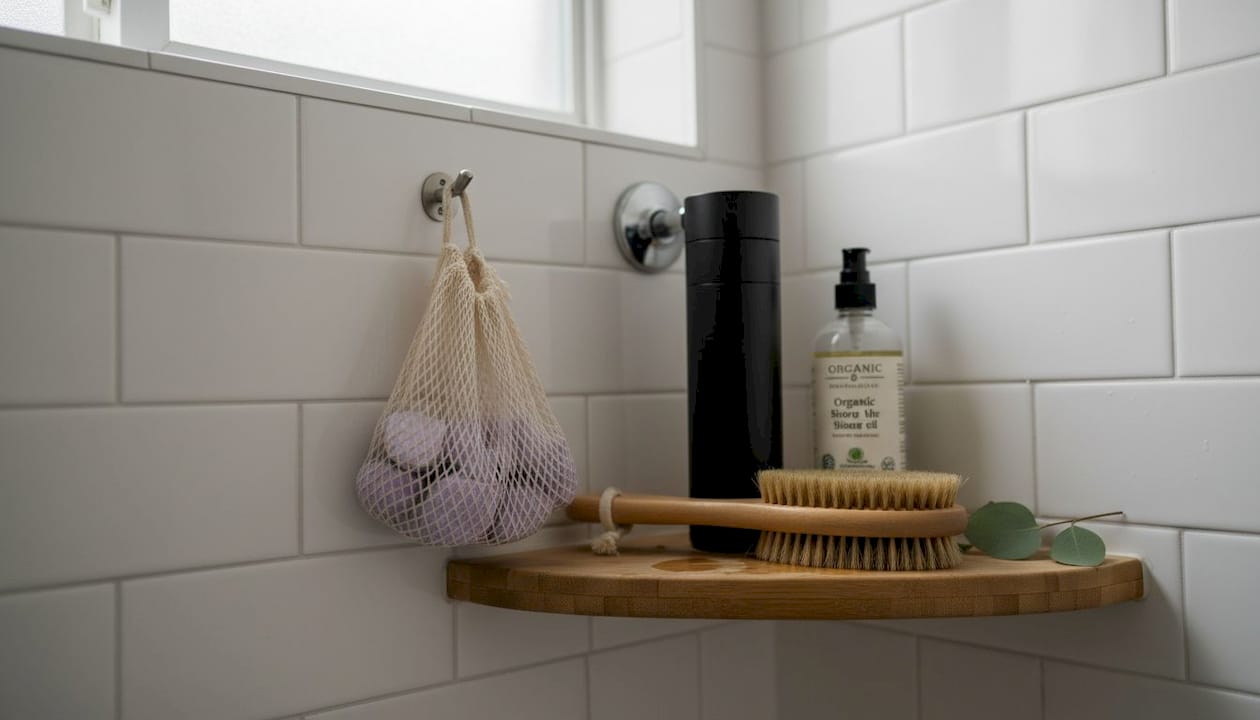
Beyond filters, wellness accessories add real value. Aromatherapy shower tablets release eucalyptus or lavender vapor for a spa-like atmosphere. High-pressure showerheads improve circulation and muscle relaxation. Red light therapy devices, while pricier, support collagen production when used consistently.
A clinical study on the Jolie filter found that 81% of participants reduced hair shedding by an average of 46% after removing chlorine and heavy metals from their shower water. That’s a significant result for a relatively simple upgrade.
Explore the best shower filters for 2025 and consider whether antioxidant-enhanced filters might be the right fit for your goals. You can also compare top filter options across brands before committing.
Pro Tip: Match your filter to your primary concern. If chlorine is your main issue, a vitamin C filter is fast and effective. If you’re dealing with heavy metals and sediment, go with a multi-stage KDF or carbon system.
Step-by-step: How to upgrade your shower for wellness
With quality products on hand, here’s exactly how to execute your new wellness routine.
Installing your shower filter takes about 10 minutes and requires no special tools. Here’s the process:
- Turn off the water supply or simply note that no shutoff is needed for most showerhead filters.
- Unscrew your existing showerhead counterclockwise by hand or with a wrench wrapped in a cloth to avoid scratching.
- Clean the pipe threads with a damp cloth to remove any old tape or mineral buildup.
- Wrap the threads with plumber’s tape (Teflon tape) two to three times clockwise.
- Screw the filter unit onto the pipe threads by hand until snug, then tighten a quarter turn with a wrench.
- Attach your showerhead to the filter outlet if it’s a separate unit.
- Turn the water on and check for leaks at both connection points.
For a more detailed walkthrough, the step-by-step filtration guide covers different installation types including handheld and wall-mounted setups.
Beyond installation, your shower habits matter. Keep water temperature lukewarm rather than hot. Hot water opens pores aggressively and accelerates moisture loss. Limit showers to 5 to 10 minutes. Longer exposure increases chlorine absorption through skin and inhalation of steam.
Filters do not soften hard water by removing calcium and magnesium. They reduce the effects of hard water, but for severe cases, pairing your filter with a whole-home softener or chelating shampoos gives better results. (source)
Post-shower care completes the routine. Apply a moisturizer within two minutes of stepping out while your skin is still slightly damp. This locks in hydration that filtered water helps preserve. If you deal with eczema, the connection between water and eczema flares is worth understanding before choosing your filter type.
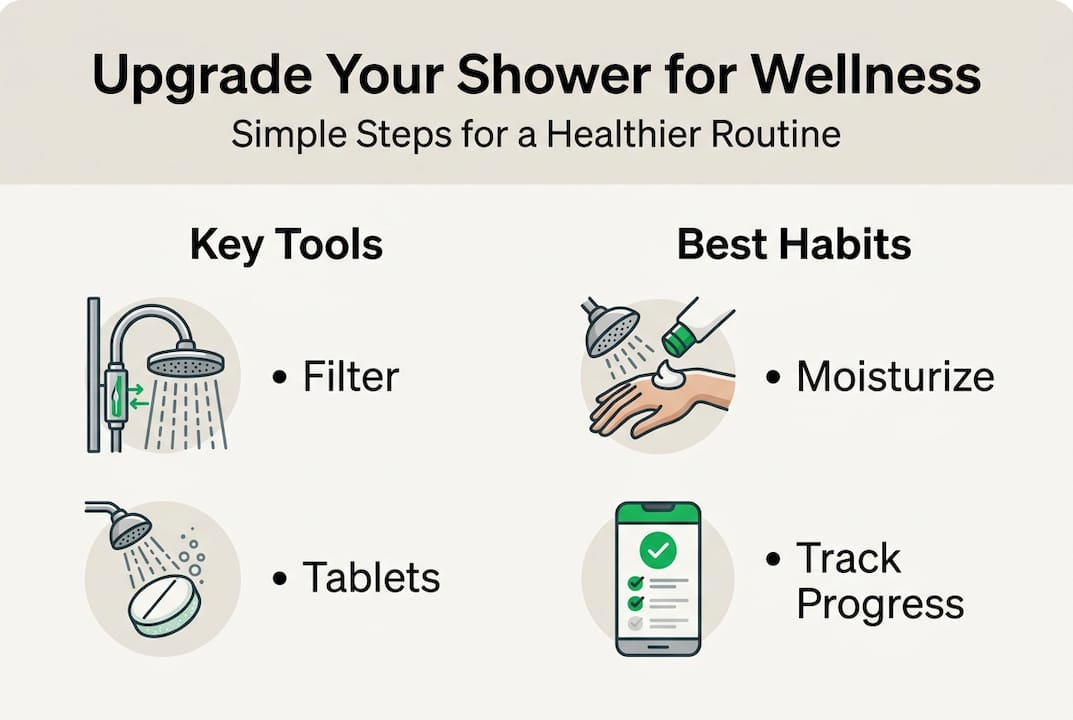
Pro Tip: Keep a small bottle of body oil in your shower. Apply it to damp skin before drying off for an extra barrier against moisture loss, especially in winter.
Monitor your results: Troubleshooting and maximizing benefits
Now that your shower is upgraded, let’s look at how to track your progress and address any challenges.
Results vary by person and water quality. Sensitive skin sees hydration improvements within 1 to 2 weeks, while conditions like eczema and psoriasis benefit from reduced irritant exposure over a longer period. Filters must be replaced every 3 to 6 months to maintain effectiveness.
Here’s what to watch for as your routine takes hold:
| Timeframe | What to expect | Action if not improving |
|---|---|---|
| Week 1-2 | Less skin tightness, softer feel | Check filter installation |
| Week 3-4 | Reduced hair shedding, less scalp itch | Test water for remaining contaminants |
| Month 2-3 | Visibly smoother skin, shinier hair | Evaluate filter type for your water |
| Month 3-6 | Consistent results | Replace filter on schedule |
Common problems and how to fix them:
- No improvement after two weeks: The filter may not be targeting your specific contaminants. Test your water and match the filter media to your results.
- Reduced water pressure: Sediment may be clogging the filter. Replace it earlier than the standard schedule if your water is high in particulates.
- Skin still dry: Check your post-shower routine. Even filtered water can’t compensate for skipping moisturizer or taking very hot showers.
- Filter lifespan shorter than expected: High-use households or heavily contaminated water will exhaust filters faster. Consider a subscription service for automatic replacements.
Knowing the signs you need a shower filter helps you stay proactive rather than reactive. If you’re in a hard water area, understanding how hard water damages hair over time makes the case for consistent filter maintenance even clearer.
Consult a dermatologist if skin conditions worsen or don’t respond after 6 to 8 weeks of consistent filtered showering. Some conditions need medical treatment alongside environmental improvements.
A wellness expert’s take: What really matters in shower upgrades
Here’s something the wellness industry doesn’t say loudly enough: a shower filter is a foundation, not a fix. We’ve seen people install premium filtration systems and expect transformation without changing anything else. It doesn’t work that way.
The biggest gains come when filtration pairs with complementary habits. Moisturizing immediately post-shower, keeping showers short and lukewarm, and using gentle, pH-balanced products all amplify what your filter does. Filters complement routines rather than replace them, and they serve as genuine precautionary measures against contaminants like PFAS and inhaled chlorine vapor.
Some people notice softer skin within days. Others take six weeks to see meaningful change. Both are normal. What isn’t normal is expecting a single product to override years of skin or hair damage without any supporting routine.
The 2026 filtration trends show a clear move toward multi-stage, antioxidant-enhanced systems, which reflects what we’ve observed: the more comprehensively you address your water, the more consistent your results. But the routine around the filter is what makes it transformative.
Ready for a wellness shower? Top filters and upgrades
If you’re ready to turn your new knowledge into action, Vitaclean makes the process straightforward with products designed specifically for skin and hair wellness.
Our vitamin C shower filters neutralize chlorine on contact, making them one of the fastest-acting options for sensitive skin. If you prefer a longer-lasting solution, our ceramic shower filters offer multi-stage filtration with a satisfying lifespan. For ongoing performance, explore our replaceable shower filters and subscription options so you never miss a replacement cycle. Every product is designed for easy installation, whether you rent or own your home, and each one brings you closer to the spa-like shower experience your skin and hair actually deserve.
Frequently asked questions
What’s the fastest way to tell if my shower water is harming my skin or hair?
Check for dry, itchy skin or increased hair shedding after showering. These are the most common signs of chlorine and heavy metal exposure in unfiltered tap water.
Will a shower filter fix hard water or just help with chlorine?
Shower filters primarily target chlorine and heavy metals, not hard water minerals like calcium and magnesium. For severe hard water issues, pairing a filter with a whole-home softener gives better results.
How often should I replace my shower filter?
Most filters should be replaced every 3 to 6 months to maintain effective contaminant reduction. High-use households may need to replace them closer to the 3-month mark.
Apart from filters, what else can I add to my shower for wellness?
Aromatherapy tablets, red light therapy devices, and vitamin-infused shower add-ons all contribute to a more complete spa-like experience alongside filtration.