
Shower water filtration for better skin & hair: 5 steps
TL;DR:
- Water filters can significantly improve skin and hair condition by removing chlorine, heavy metals, and sediment.
- Multi-stage filters with certified media like Vitamin C and KDF effectively target specific contaminants for better results.
- Proper installation, regular maintenance, and realistic expectations are key to maximizing filter benefits.
Your skin feels tight after every shower. Your hair looks dull no matter what conditioner you use. If this sounds familiar, your water is likely the problem, not your products. Unfiltered tap water carries chlorine, heavy metals, and sediment that strip your skin’s natural oils and rough up your hair cuticles with every rinse. The good news is that a quality shower filter can reverse this quickly. This guide walks you through the entire filtration process, step by step, so you know exactly what to buy, how it works, and what results to expect.
Table of Contents
- Gathering your tools and understanding shower filter basics
- The step-by-step water filtration process explained
- Verification: Assessing filter performance and skin/hair results
- Troubleshooting, maintenance, and common mistakes
- Most guides miss these truths about shower filters
- Elevate your shower routine with Vitaclean
- Frequently asked questions
Key Takeaways
| Point | Details |
|---|---|
| Multi-stage filters work best | Combining sediment, chemical, and Vitamin C stages provides the broadest protection for skin and hair. |
| Expect quick results | Most users see reduced dryness and shinier hair within a week of using a quality filter. |
| Not all filters are equal | Certifications like NSF 177 guarantee chlorine reduction—look for these when choosing a filter. |
| Maintenance matters | Regular cartridge changes and proper installation are key for consistent filter performance. |
| Match filter to your needs | Vitamin C filters are ideal for sensitive skin, while KDF excels in high-temp or metal-heavy water. |
Gathering your tools and understanding shower filter basics
Let’s start with what you’ll need and what to expect from a truly effective shower filter.
Before you touch a single pipe, you need the right equipment. Skipping this step is where most people go wrong. Here’s what to have on hand:
- A compatible shower filter (wall-mount or handheld, matched to your showerhead thread size)
- An adjustable wrench (for removing your existing showerhead)
- Teflon tape (also called plumber’s tape, prevents leaks at the connection)
- The filter’s user manual (don’t skip this, installation order matters)
- A bucket or towel (to catch residual water during the swap)
Once you have your tools, it’s worth understanding what separates a basic filter from a genuinely effective one. Multi-stage filtration systems use layered media, each targeting a different type of contaminant, which is why they outperform simple single-stage cartridges.
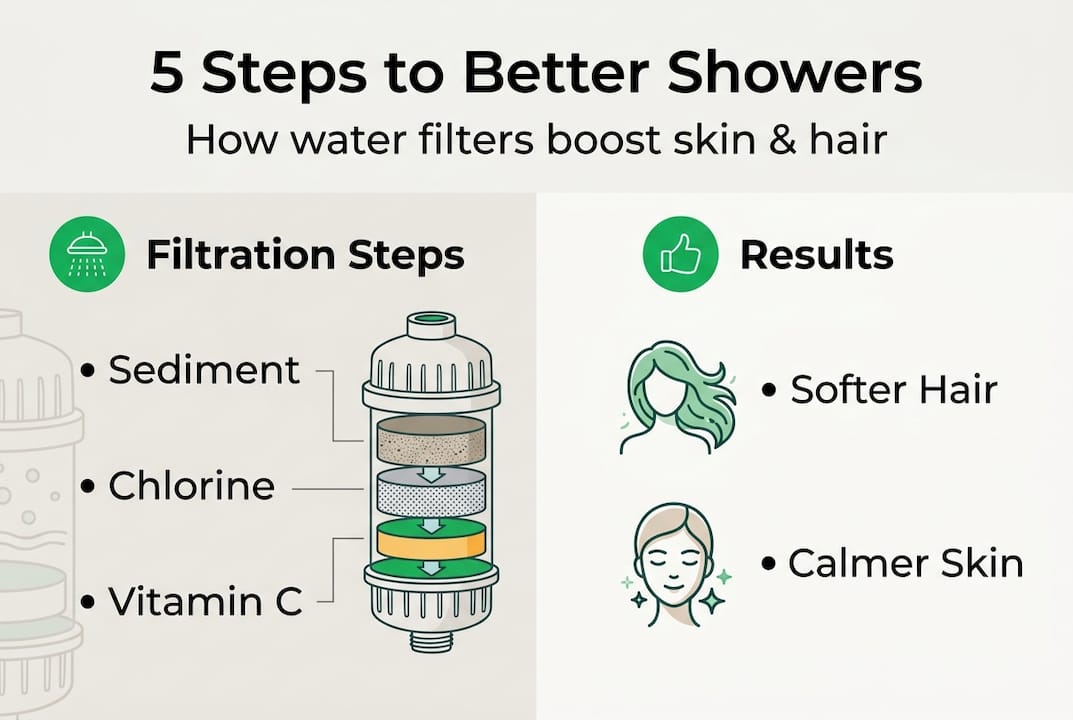
Here’s a quick breakdown of what each stage does:
| Filter stage | What it targets | Why it matters for skin/hair |
|---|---|---|
| Sediment filter | Rust, dirt, particles | Prevents scalp buildup and clogged pores |
| KDF-55 media | Heavy metals, chlorine | Reduces chemical damage to hair shaft |
| Activated carbon | Chloramines, VOCs, odor | Softens water feel, reduces dryness |
| Vitamin C stage | Residual chlorine, chloramines | Ideal for sensitive skin and scalp |
| Polishing layer | Fine particles | Leaves water visibly clear |
You’ll also want to look for NSF/ANSI 177 certification. This is the industry standard that confirms a filter actually reduces free chlorine by at least 50% under tested conditions. Without it, you’re trusting marketing claims over verified lab results. Learn more about shower filter benefits and how filtration works before you buy.
Pro Tip: Match your filter media to your actual water problem. If your water smells like a pool, activated carbon handles that. If your skin is extremely reactive, a Vitamin C stage is your best friend. If you’re on well water, KDF for heavy metals is non-negotiable.
The step-by-step water filtration process explained
With your tools and expectations set, here’s how the water actually gets purified from start to finish.
Understanding each stage isn’t just nerdy trivia. It helps you choose the right product and troubleshoot when something feels off. A typical 3 to 5 stage shower filter moves water through distinct media layers in a specific sequence.
- Sediment removal: Water enters the filter housing and passes through a mesh or fiber layer first. This catches visible particles like rust flakes and sand. Without this stage, those particles would clog the finer media downstream.
- KDF or chemical reaction stage: Water hits KDF-55 (a copper-zinc alloy) or similar media. A redox reaction converts free chlorine into harmless chloride. This stage also handles some heavy metals like lead and mercury.
- Activated carbon adsorption: Carbon granules or a carbon block trap chloramines, volatile organic compounds (VOCs), and odor molecules. This is the stage that makes water feel softer and smell neutral.
- Vitamin C neutralization: Ascorbic acid (Vitamin C) neutralizes any remaining chlorine and chloramines on contact. This is especially valuable for sensitive skin because it’s gentle, effective, and leaves a mild antioxidant benefit on your skin and scalp.
- Polishing layer: A final fine-media layer removes any loose particles from earlier stages, so what hits your skin is genuinely clean water.
Here’s how those stages map to specific contaminants:
| Stage | Chlorine | Chloramines | Heavy metals | VOCs | Sediment |
|---|---|---|---|---|---|
| Sediment | No | No | No | No | Yes |
| KDF-55 | Yes | Partial | Yes | No | No |
| Activated carbon | Yes | Yes | No | Yes | No |
| Vitamin C | Yes | Yes | No | No | No |
For a deeper look at multi-stage filtration systems, it’s clear that skipping even one stage leaves a gap in protection. You can also explore how these stages transform skin and hair and why the Vitamin C shower stage is a game-changer for sensitive users.
Important: Always flush a brand-new filter for at least 60 seconds before your first real shower. This clears loose carbon dust from the activated carbon stage. Skipping this step can leave dark residue on your skin or stain your shower floor.
Pro Tip: Run cold water during the flush, not hot. Hot water can prematurely activate some media and shorten your cartridge’s effective lifespan.
Verification: Assessing filter performance and skin/hair results
After you’ve installed and started using your filter, how do you know it’s really working?

You don’t need a lab to verify your filter is doing its job. Your senses and your skin will tell you most of what you need to know.
Immediate signs your filter is working:
- The chlorine smell disappears or drops significantly within the first shower
- Water feels noticeably softer and less harsh on your face
- No white or greenish residue builds up on your showerhead nozzle
- Your skin doesn’t feel tight or itchy after rinsing
Here’s a realistic timeline based on what users consistently report:
After 1 shower: Reduced chlorine odor, skin feels less stripped, water texture feels different.
After 1 week: Less scalp itching, hair feels more manageable after washing, noticeable reduction in post-shower skin tightness.
After 1 month: Visibly brighter hair, fewer tangles, reduced flakiness, and a more balanced scalp. Users with sensitive skin often report fewer breakouts along the hairline and back.
On the technical side, quality filters reduce chlorine from levels as high as 4 ppm down to below 0.5 ppm. That’s a reduction of up to 95 to 99%, which is significant because chlorine is the primary culprit behind dry, reactive skin and brittle hair.
Stat callout: Users who switched to filtered shower water reported reduced dryness and itching within the first week, with continued improvement over 30 days.
For more detail on reducing chlorine in water and the full range of skin and hair improvements you can expect, these resources break it down clearly.
Troubleshooting, maintenance, and common mistakes
Even with the right filter in place, a few pitfalls can get in the way of best results.
The most common problems people run into aren’t about the filter itself. They’re about skipping maintenance or misreading what a filter can actually do.
Common issues and what they signal:
- Reduced water pressure: The sediment layer is clogged. Replace the cartridge or pre-filter if your model has one.
- New or unusual smell: Carbon dust wasn’t flushed, or the cartridge is past its useful life.
- Inconsistent flow: Air trapped in the housing. Unscrew, flush, and reinstall.
- Skin still reacting: Your water may have chloramines instead of free chlorine. Not all filters handle both. Check your filter’s spec sheet.
Routine maintenance steps:
- Replace the cartridge on schedule (every 3 to 6 months for most models, sooner with hard or heavily treated water)
- Clean the filter housing with a mild soap solution during each cartridge swap
- Inspect the Teflon tape seal and re-wrap if you notice any dripping
- Run a 30-second flush after every cartridge replacement
- Log your replacement dates so you never accidentally run an expired cartridge
Hot water and high sediment levels both accelerate cartridge wear. If your water is very hard or your household uses hot showers frequently, plan to replace cartridges closer to the 3-month mark rather than waiting 6.
Warning: NSF 177 certification only tests for free chlorine reduction. A filter labeled “multi-stage” or “15-stage” is not automatically better. Always check what each stage is certified to remove, not just how many stages are listed on the box.
For guidance on chlorine sensitivity solutions and how to match your filter to your specific water chemistry, that resource is worth bookmarking.
Most guides miss these truths about shower filters
While most guides stop at step-by-step instructions, let’s get real about what actually makes a difference.
The shower filter market is full of inflated claims. Filters marketed as “20-stage” or “removes 99% of everything” are rarely backed by independent testing. More stages don’t equal better filtration. What matters is the quality of the media used and whether it’s certified for your specific contaminants.
Vitamin C and KDF are the two media types with the strongest real-world track records. For anyone with sensitive skin or scalp issues, Vitamin C is the most targeted solution available. It works instantly on contact, unlike carbon which relies on contact time and can become saturated.
Here’s the honest part: the aesthetic improvements from shower filters are real and well-documented through user experience and basic chemistry. But clinical evidence from randomized controlled trials is thin. If you’re managing a diagnosed skin condition, a shower filter is a smart supportive step, not a medical treatment. Pair it with proven chlorine reduction tips and realistic expectations, and you’ll get the most out of it.
Elevate your shower routine with Vitaclean
Ready to turn knowledge into daily results? Here’s how you can upgrade your routine with products designed for real beauty and health improvements.
Vitaclean’s lineup is built around the same multi-stage principles covered in this guide. The Vitamin C shower filter shots deliver targeted chlorine and chloramine neutralization, which is exactly what sensitive skin users need most. For households concerned about bacteria and pathogens, the antibacterial filters add an extra layer of protection without complicating installation.
Keeping your filter performing at its best is simple with the filter refill plan, which takes the guesswork out of replacement timing. Every product is designed to install in minutes and deliver results you can feel from the very first shower.
Frequently asked questions
How often should shower filters be replaced?
Most shower filter cartridges last 3 to 12 months or 5,000 to 15,000 gallons, but replacement timing depends on your local water quality and the specific filter model you use.
Do shower filters really help with dry skin or hair?
Yes. Reduced skin irritation and improved hair manageability are consistently reported after switching to a quality shower filter, particularly for people who are sensitive to chlorine.
Will a shower filter soften hard water?
Shower filters are not true water softeners. They mainly target chlorine, chloramines, and heavy metals rather than the calcium and magnesium that cause water hardness.
Is Vitamin C or KDF better for sensitive skin?
Vitamin C is typically the better choice for sensitive skin because it neutralizes chlorine and chloramines instantly and provides mild antioxidant benefits, while KDF is more effective in hot water and for heavy metal reduction.