
How to Support Hair Vitality in Showers: Proven Steps
You’ve tried the serums, the deep conditioners, the protein treatments. Your hair still feels dry, brittle, and dull after every wash. The culprit probably isn’t your shampoo. It’s the water pouring over your head every single morning. Shower water loaded with chlorine, calcium, and heavy metals quietly strips your hair of its natural oils, roughens the cuticle, and leaves your scalp irritated before any product even gets a chance to work. This guide walks you through exactly what’s happening, what you need, and how to fix it at the source.
Table of Contents
- The problem: How shower water affects your hair and scalp
- What you need: Essentials for shower water hair care
- Step-by-step: How to optimize your shower for hair vitality
- What to expect: Hair improvements and troubleshooting
- A fresh perspective: Why filtering your shower water beats any hair serum
- Support your hair at the source with proven filtration
- Frequently asked questions
Key Takeaways
| Point | Details |
|---|---|
| Address water quality first | Improving your shower water is a vital, often-overlooked step for healthier hair and scalp. |
| Multi-stage filters offer real results | NSF-certified filters significantly reduce hair damage, increase shine, and promote scalp hydration. |
| Easy upgrades, lasting benefits | Installing and maintaining a shower filter is straightforward and yields noticeable improvements within weeks. |
| Supports all hair types | Filtered water helps retain color, prevents breakage, and benefits even sensitive or treated hair. |
The problem: How shower water affects your hair and scalp
Most people never question their shower water. They assume it’s clean enough. But shower water contaminants like chlorine and hard water minerals actively damage hair by stripping natural oils and causing dryness. That’s not a minor inconvenience. It’s a daily assault happening every time you rinse.
The EPA allows chlorine levels in tap water between 0.2 and 4.0 mg/L, and hard water is classified at anything above 60 ppm of dissolved minerals. Many American households sit well above that threshold. Calcium and magnesium ions bind to the hair shaft, creating a rough, porous surface that loses moisture fast.
Here’s a quick look at the main offenders and what they do:
| Contaminant | Effect on hair | Effect on scalp |
|---|---|---|
| Chlorine | Strips oils, fades color | Dryness, irritation |
| Calcium/Magnesium | Mineral buildup, brittleness | Flaking, itchiness |
| Heavy metals (lead, iron) | Discoloration, breakage | Inflammation |
The damage compounds when you factor in hot water. Heat opens the hair cuticle wider, letting minerals and chlorine penetrate deeper into the hair shaft. You’re essentially pressure-washing your hair’s protective layer off every morning.
People with sensitive scalp conditions like eczema or psoriasis feel this even more acutely. Chlorine is a known irritant that disrupts the skin barrier, and shower water filters research increasingly supports their use as a practical solution. The visible signs to watch for include:
- Persistent dryness even after conditioning
- Increased shedding or breakage
- Dull, lackluster appearance between washes
- Scalp tightness, flaking, or redness
- Color-treated hair fading faster than expected
Understanding shower filter hair benefits starts with recognizing that your water is working against everything you’re trying to achieve with your hair care routine.
What you need: Essentials for shower water hair care
With these reasons in mind, what do you actually need to get started on healthier hair every time you shower?
The foundation is a quality shower filter. Not all filters are equal. Multi-stage shower filters using KDF-55, activated carbon, or Vitamin C can remove over 99% of chlorine and reduce heavy metals and hard water minerals significantly. NSF certification matters here because it confirms the filter actually performs as advertised under real conditions.
Here’s a comparison of the main filter technologies:
| Filter type | Chlorine removal | Hard water minerals | Best for |
|---|---|---|---|
| KDF-55 | Excellent | Moderate | General use |
| Activated carbon | Excellent | Low | Chlorine sensitivity |
| Vitamin C | Excellent | Low | Sensitive skin/scalp |
| Multi-stage combo | Excellent | Good | Comprehensive protection |
Dermatologists recommend shower filters specifically for people with sensitive scalps and those seeking improved hair hydration. It’s not just wellness marketing. It’s clinical advice backed by real outcomes.
Beyond the filter itself, you’ll want a few supporting tools:
- Chelating shampoo: Designed to break down and remove mineral buildup from the hair shaft. Use it weekly or bi-weekly alongside your filter.
- TDS test strips: Optional but useful for measuring your water’s total dissolved solids before and after filtration. It gives you a concrete baseline.
- Replacement cartridges: Know your filter’s replacement schedule before you buy. Most need swapping every 2 to 3 months.
Pro Tip: If you have color-treated or highly porous hair, prioritize filters with Vitamin C technology. It neutralizes chlorine on contact without altering water pH, which means less color fade and less cuticle damage. Check out options built specifically for filters for sensitive scalps and explore how shower filters for hair color can extend the life of your dye.
Water pressure is another factor worth checking. Some lower-quality filters restrict flow noticeably. Look for filtered showerhead solutions that maintain standard pressure while still delivering full filtration.
Step-by-step: How to optimize your shower for hair vitality
Now that you have all the essentials, let’s walk through exactly what to do, step by step.
- Test your water first. Use a TDS strip to measure your current water quality. This gives you a before snapshot so you can track real improvement.
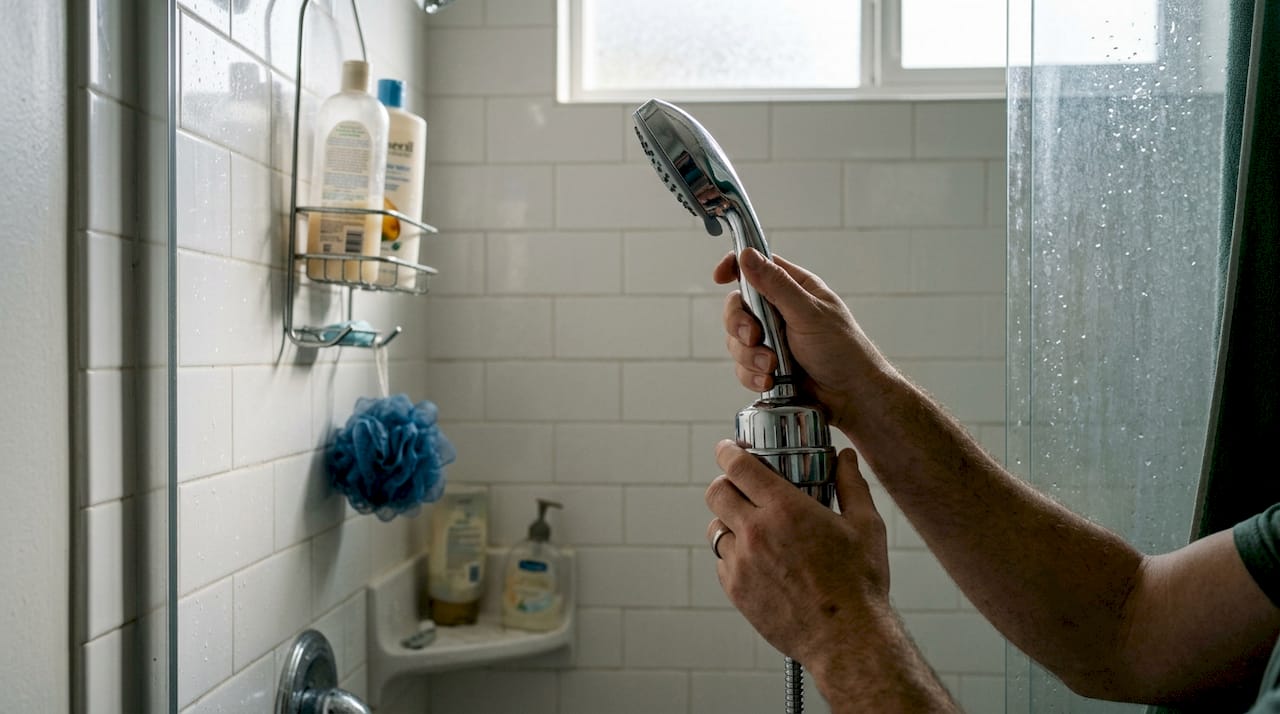
- Install your multi-stage shower filter. Most models attach directly to your existing shower arm with no tools required. Follow the manufacturer’s instructions, but expect it to take under 10 minutes.
- Run the water for 2 minutes before use. This flushes any loose carbon particles from a new filter cartridge.
- Switch to lukewarm water. Hot showers feel great but open the hair cuticle aggressively. Lukewarm water cleans just as effectively while keeping the cuticle smoother and more sealed.
- Use chelating shampoo once a week. Even with a filter running, some mineral residue can accumulate. A chelating shampoo clears it out and keeps your hair shaft clean.
- Replace your filter cartridge on schedule. NSF-certified multi-stage filters perform best when replaced every 2 to 3 months. A clogged or expired cartridge can actually concentrate contaminants rather than remove them.
- Track your results. Note changes in softness, shine, and shedding weekly. Adjust your approach if you’re not seeing progress.
“After 8 weeks of filtered shower use, users reported 23% less hair shedding, a measurable benchmark that reflects real scalp and follicle health improvement.”
Pro Tip: Set a phone reminder for your filter replacement date the moment you install it. Waiting until you notice reduced pressure usually means you’ve already been showering through a compromised filter for weeks.
For a curated list of what’s working in 2026, browse top shower filter options and learn how consistent filtration supports hair growth with filtration over time. You can also check independent filter recommendations for additional context.
What to expect: Hair improvements and troubleshooting
After following the steps, knowing what to expect and how to handle snags ensures you get the best possible results.
Results follow a predictable timeline for most people. Softer hair by day one, noticeable shine improvement within the first week, and reduced breakage by the end of month one are the standard benchmarks. Scalp hydration improves by up to 47%, and irritation drops by around 31% within the same window.
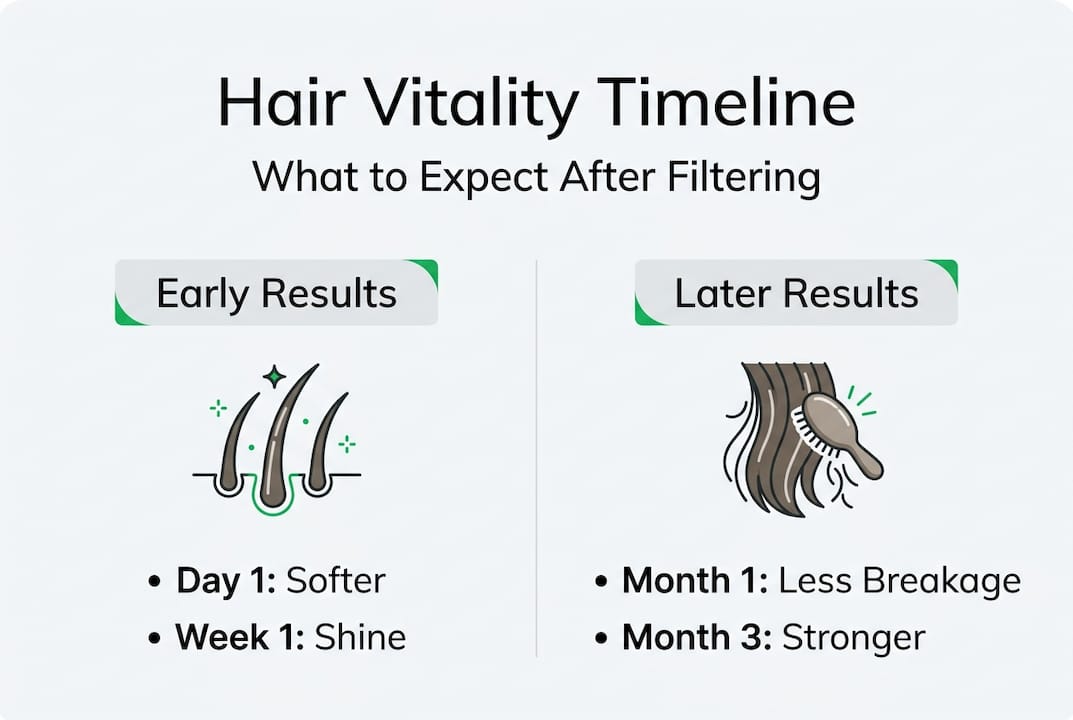
Here’s a practical timeline to set your expectations:
| Timeframe | Expected improvement |
|---|---|
| Day 1 | Softer feel, less scalp tightness |
| Week 1 | Improved shine, less frizz |
| Month 1 | Reduced breakage, calmer scalp |
| Month 2+ | Sustained results, less product needed |
The numbers are compelling. 81% of users in one study reported reduced hair shedding by an average of 46% after switching to filtered shower water. That’s not a marginal improvement. That’s a fundamental shift in hair health.
Common issues to watch for:
- Reduced water pressure: Usually means the filter is clogged. Replace the cartridge.
- Persistent buildup despite filtering: Your water may be extremely hard. Add a chelating shampoo to your weekly routine and consider a water softener for the whole home.
- No visible improvement after 4 weeks: Check that your filter is correctly installed and that the cartridge isn’t expired.
Explore the full shower filter benefits to understand what’s happening at each stage, and review shower filter warning signs if you’re unsure whether your current setup is working. For severe scalp conditions like persistent eczema or psoriasis, consult a dermatologist. A filter helps, but some conditions need clinical support alongside it. You can also review hydrated scalp results from clinical-grade filtered showerheads for additional benchmarking.
A fresh perspective: Why filtering your shower water beats any hair serum
Here’s what most people get wrong. They treat hair care as a product problem when it’s actually an environment problem. You can spend $80 on a bond-repair serum and still undo its effects every morning with a five-minute chlorinated shower. The water wins every time because it’s daily, it’s direct, and it’s unavoidable.
Filtering your shower water is an upstream fix. It doesn’t just solve one symptom. It removes the cause, which means every product you use afterward actually gets to do its job. Think of it as changing the conditions rather than constantly fighting them.
We’ve seen this pattern repeatedly. People who transform their hair via filtration often report spending less on products within a few months because their hair simply needs less intervention. Fewer split ends. Less frizz. Less color touch-up. The math favors the filter.
Most beauty advice focuses on what you put on your hair. We think the smarter question is what you’re washing it with. Prevention is always cheaper and more effective than damage control.
Support your hair at the source with proven filtration
If you’re ready to stop cycling through products and actually fix the root cause, upgrading your shower setup is the most direct path forward.
Vitaclean’s Vitamin C shower filter shots neutralize chlorine on contact and are designed for easy swapping without tools. For a more complete solution, the microfiber antibacterial shower filters combine multiple filtration stages to tackle chlorine, heavy metals, and impurities in one unit. Both options install in minutes and cost a fraction of what most people spend on hair treatments annually. A filter replacement subscription keeps your protection consistent without the hassle of remembering when to reorder.
Frequently asked questions
What are the most harmful shower water contaminants for hair?
The most damaging are chlorine, calcium, magnesium, and heavy metals, which strip oils and cause buildup that leads to breakage and dullness.
How quickly can I see improvements in my hair after switching to filtered shower water?
Most people notice softer hair within one day, more shine after a week, and reduced breakage within a month, based on empirical benchmarks from filtered shower use studies.
Do shower filters lower water pressure?
High-quality multi-stage filters are designed to maintain standard water pressure at around 2.5 GPM, so you shouldn’t notice a difference with a well-maintained unit.
Are shower filters safe for color-treated or damaged hair?
Yes, and they actively protect color longevity and reduce further damage. Color-treated hair fades faster with chlorine exposure, so filtration is especially valuable, though highly porous hair requires consistent filter replacement to stay protected.