
Eco-friendly shower heads: save water & boost wellness
TL;DR:
- Eco-friendly shower heads reduce water and energy use without sacrificing rinse quality.
- Certification from WaterSense ensures performance, efficiency, and effective spray coverage.
- Using low-flow, filtered models benefits skin health, saves water, and supports sustainable routines.
Most people assume that going green in the shower means giving up pressure, coverage, or the kind of rinse that actually gets conditioner out of thick hair. That assumption is wrong, and it’s costing people both water and wellness. The best eco-friendly shower heads on the market today are engineered to deliver a satisfying, skin-friendly experience while cutting water use by hundreds of gallons a month. This guide breaks down what “eco-friendly” actually means in shower technology, which certifications matter, and how to find a model that works as hard for your self-care routine as it does for the planet.
Table of Contents
- Defining eco-friendly shower heads: standards and basics
- Low-flow vs. standard shower heads: what really changes?
- Certification and performance: why the WaterSense label matters
- Eco-friendly shower heads and your wellness routine
- The uncomfortable truth: eco-friendly doesn’t mean “one-size-fits-all”
- Find your eco-friendly shower head solution
- Frequently asked questions
Key Takeaways
| Point | Details |
|---|---|
| Look for WaterSense label | WaterSense-certified models balance water savings with satisfying pressure and coverage. |
| Consider filter technology | Filters like vitamin C or ceramic enhance skin and hair wellness while being eco-friendly. |
| Check local flow standards | Flow rate rules vary, but choosing a 2.0 GPM or lower shower head maximizes savings nationwide. |
| Certification trumps buzzwords | Trust certified performance over products labeled eco-friendly with no real testing. |
Defining eco-friendly shower heads: standards and basics
The term “eco-friendly” gets thrown around a lot in product marketing, but for shower heads, it has a specific, measurable meaning. An eco-friendly shower head reduces both water consumption and the energy needed to heat that water, without making your shower feel like standing under a garden hose. The key is engineering: modern low-flow models use air-infusion technology, pressure-compensating valves, and precision nozzle design to make every drop feel like more.
The gold standard for measuring this is the WaterSense standards program run by the U.S. Environmental Protection Agency. A shower head earns the WaterSense label only when it uses a max 2.0 GPM at 80 psi, which is 20% less than the federal maximum of 2.5 GPM, and passes independent performance testing for spray coverage and force. That last part matters. Certification isn’t just about using less water. It’s about proving the product still works well enough that you’ll actually keep using it.
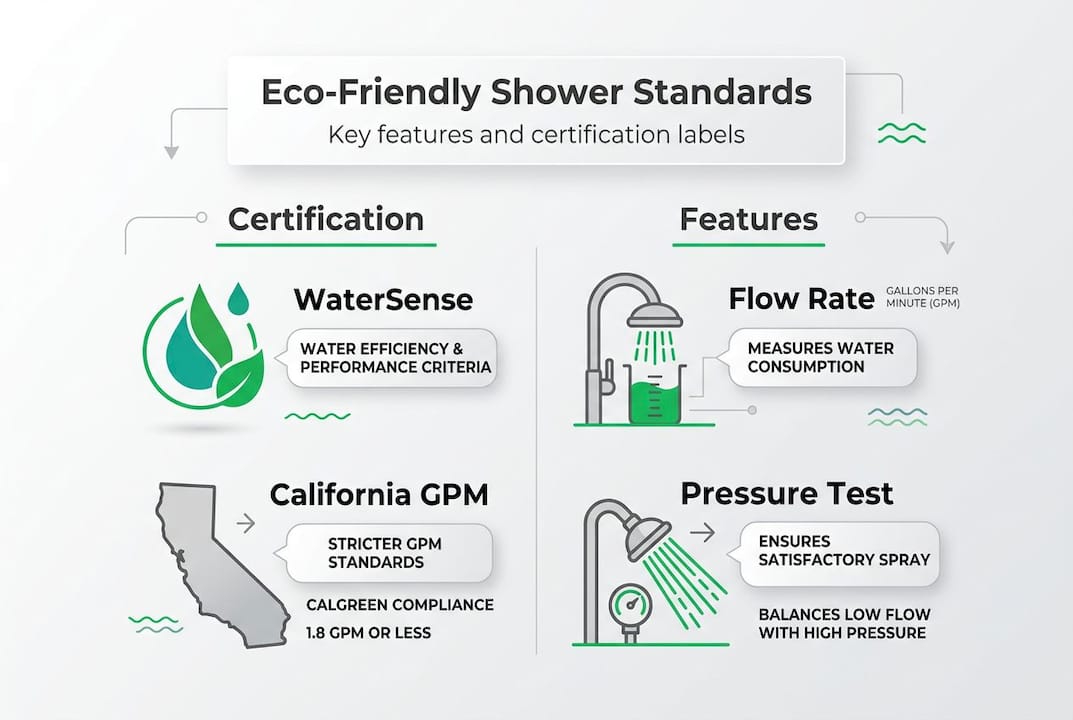
Understanding the shower head benefits of switching to a certified model starts with knowing what to look for on the label and in the specs.
Key features to evaluate when choosing an eco-friendly shower head:
- Flow rate (GPM): Look for 2.0 GPM or lower. Some models go as low as 1.5 GPM without sacrificing feel.
- WaterSense certification: This is the most reliable indicator of both efficiency and tested performance.
- Spray pattern and nozzle design: More nozzles and adjustable settings help distribute water more evenly.
- Tamper-proof flow restrictor: Prevents accidental or intentional removal of the water-saving component.
- Filter compatibility: Some models integrate vitamin C or ceramic filtration for added wellness benefits.
| Feature | Why it matters |
|---|---|
| GPM rating | Directly determines water and energy savings |
| WaterSense label | Guarantees independent performance testing |
| Spray coverage | Affects rinse quality and daily comfort |
| Filter integration | Supports skin and hair health alongside efficiency |
| Tamper-proof restrictor | Ensures long-term water savings aren’t bypassed |
If a product just says “eco” or “water-saving” without a certification label, treat that claim with healthy skepticism. Real performance is verified, not just advertised.
Low-flow vs. standard shower heads: what really changes?
Once you understand what eco-friendly means on paper, the real question is: what do you actually notice in the shower? Low-flow models, defined as 2.0 GPM or less at the federal level, feel noticeably different from older 2.5 GPM or even 3.0 GPM fixtures. But “different” doesn’t mean worse.
Modern low-flow technology uses air entrainment, which mixes air into the water stream to create a fuller, more pressurized feel. The result is a spray that feels strong even though less water is moving through it. Older low-flow models from the 1990s gave eco shower heads a bad reputation precisely because they didn’t use this technology. Today’s certified models are a completely different experience.
In California, the bar is even higher. New construction showerheads must meet a 1.8 GPM standard, and California low-flow rules are among the strictest in the country. Manufacturers building for that market have had to innovate, and those innovations benefit everyone.
Understanding the filtered shower benefits of low-flow models goes beyond water savings. Less hot water also means less steam, which can actually be gentler on skin.
How to check your current shower head’s flow rate at home:
- Place a bucket with gallon markings under your shower head.
- Turn the shower on at full pressure.
- Time how long it takes to fill one gallon.
- Divide 60 by that number of seconds to get your GPM.
- If it’s above 2.0, you’re using more water than a WaterSense model would.
| Comparison | Standard (2.5 GPM) | Low-flow (2.0 GPM) | California standard (1.8 GPM) |
|---|---|---|---|
| Water per 8-min shower | 20 gallons | 16 gallons | 14.4 gallons |
| Annual savings (vs. standard) | Baseline | ~1,460 gallons | ~2,044 gallons |
| Pressure feel (modern models) | Strong | Strong | Strong with good design |
| Skin/hair impact | Neutral | Gentler | Gentler |
Pro Tip: When shopping, look specifically for tamper-proof flow restrictors. Some cheaper models include a restrictor that can be easily removed, which defeats the purpose entirely and voids any eco claims.
If you’re curious whether a shower head filter could transform your skin and hair, the answer often starts with choosing a model that combines low-flow efficiency with real filtration technology.
Certification and performance: why the WaterSense label matters
Not every shower head that claims to be eco-friendly has been put through its paces. This is where certification separates real performance from clever packaging. The WaterSense label is the most trustworthy signal you can find on a shower head in the U.S. market.
To earn it, a product must meet strict EPA criteria and pass independent, third-party testing. That testing covers both water efficiency and user experience, specifically spray coverage and rinse performance. A shower head can’t just use less water. It has to use less water well.
What WaterSense certification actually requires:
- Maximum flow rate of 2.0 GPM at 80 psi
- Independent laboratory testing (not just manufacturer self-reporting)
- Verified spray coverage across the shower area
- Adequate rinse force to remove soap, shampoo, and conditioner
- Ongoing compliance, not just a one-time test
“Certification ensures performance. Prioritize WaterSense-certified models for verified savings without the miserable trickle that gave low-flow a bad name.”
The problem with uncertified “eco” products is that they often optimize for one thing at the expense of another. A shower head might hit a low GPM number but fail to rinse shampoo effectively, leaving residue that irritates your scalp. Or it might claim green credentials based solely on recyclable packaging while the actual water use is unchanged.
Learning about the shower head filter benefits of certified models shows that real eco design and real wellness performance are not competing goals. They’re the same goal, achieved through better engineering.
Pro Tip: Before buying, search the EPA’s official WaterSense product database. If the model isn’t listed there, the label on the box may not be legitimate.
The bottom line is simple. Certification is not bureaucratic red tape. It’s the only way to know that a product’s eco claims have been tested by someone other than the company selling it.
Eco-friendly shower heads and your wellness routine
Here’s where eco-friendly design gets genuinely exciting for anyone focused on skin and hair health. Reducing water flow isn’t just about saving gallons. It changes the chemistry and feel of your shower in ways that directly benefit your body.
Hot, high-volume water strips the skin’s natural oils faster. A lower-flow shower, especially one using air-infused pressure, tends to be gentler on the skin barrier. Pair that with a filter that removes chlorine and heavy metals, and you’re actively protecting your skin and scalp every single day. Understanding how water quality impacts skin health is the foundation of building a smarter shower routine.
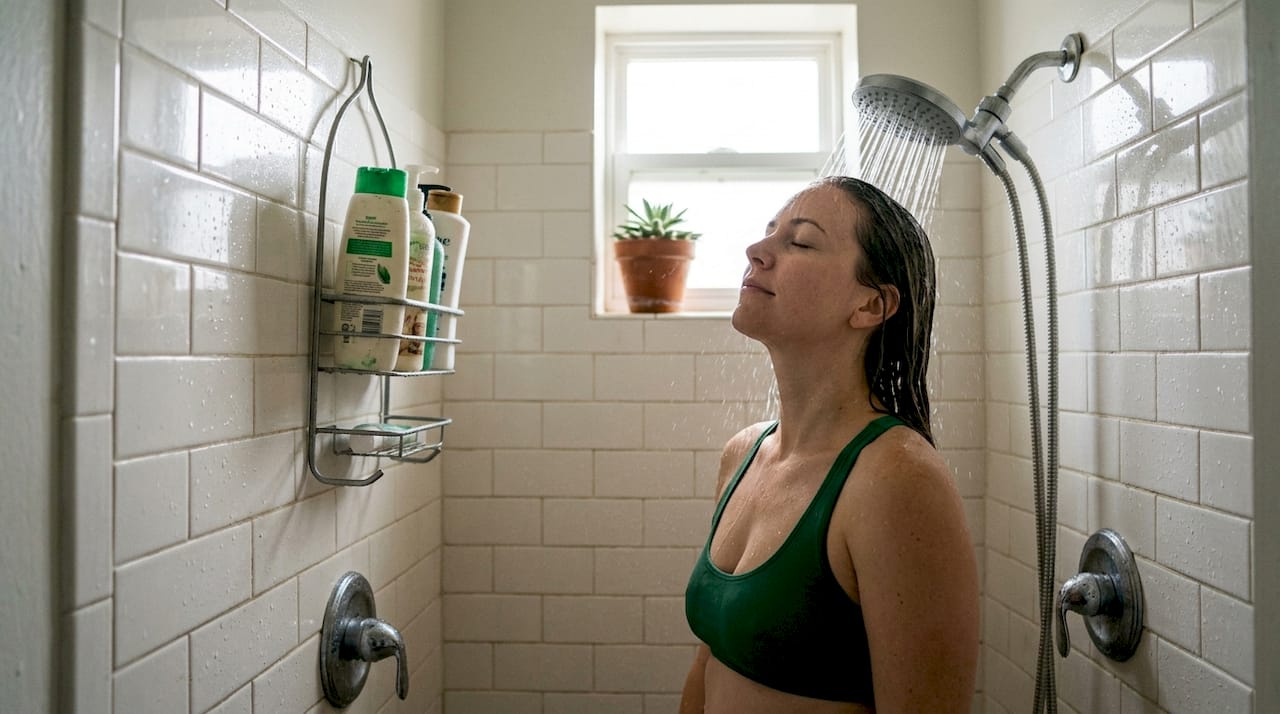
For people managing sensitive skin conditions, the difference is even more significant. Chlorinated water is a known irritant, and shower water and eczema have a well-documented relationship. Reducing both water volume and chemical exposure in one product is a meaningful upgrade.
Steps to integrate eco-friendly showering into your daily wellness routine:
- Replace your current fixture with a WaterSense-certified model that includes a filter.
- Set a shower timer to 8 minutes or less to maximize water and energy savings.
- Use lukewarm water rather than hot to reduce skin dryness.
- Choose a shower head with adjustable spray settings to match your hair type and skin sensitivity.
- Replace filters on schedule (typically every 1 to 3 months) to maintain filtration effectiveness.
Eco features tied directly to skin and hair benefits:
- Lower GPM: Less hot water means less stripping of natural skin oils
- Vitamin C filtration: Neutralizes chlorine before it contacts your skin and scalp
- Ceramic ball filters: Reduce bacteria and soften water for a gentler rinse
- Adjustable pressure: Lets you customize spray intensity for delicate or sensitive areas
It’s also worth noting that multi-nozzle or multi-head systems must meet combined flow limits, and flow restrictors must be tamper-proof to count toward certified performance. This matters if you’re considering a rain shower upgrade, since rain shower head wellness benefits are real, but only when the fixture meets actual efficiency standards.
The uncomfortable truth: eco-friendly doesn’t mean “one-size-fits-all”
Most eco shower head guides stop at GPM numbers and certification checkboxes. Here’s what they skip: buying the most efficient model on the market is a mistake if it doesn’t fit your actual routine.
We’ve seen this pattern repeatedly. Someone switches to a 1.5 GPM certified model, hates the feel, and goes back to their old 2.5 GPM fixture within a month. Net result? Zero water savings and a product in a landfill. That’s worse for the environment than never switching at all.
The right eco-friendly shower head is the one you’ll use every day for years. That means pressure that works for your hair thickness, a spray pattern that suits your skin sensitivity, and ideally a filter system that actively improves your water quality. Choosing between a double vs. rain shower head for wellness isn’t just an aesthetic decision. It’s a sustainability decision. A product you love is a product you keep, and keeping it is the most eco-friendly outcome of all.
Don’t let “lowest GPM” be your only filter. Let your skin, your hair, and your daily comfort be part of the equation too.
Find your eco-friendly shower head solution
Ready to make a change that’s good for the planet and your skin? Vitaclean’s lineup is built for exactly this intersection of eco performance and daily wellness.
Our vitamin C shower filter shots neutralize chlorine on contact, protecting your skin and hair with every shower. For a broader approach to water purity, explore our ceramic filter options, which soften water and reduce bacteria without adding chemicals. Not sure where to start? Visit our full breakdown of shower head benefits to find the model that fits your water type, hair needs, and sustainability goals. Every product is designed to be easy to install, simple to maintain, and genuinely effective.
Frequently asked questions
How much water can I really save with an eco-friendly shower head?
WaterSense-labeled shower heads use a maximum of 2.0 GPM, which is 20% less than the federal standard, saving a typical household thousands of gallons per year. For an 8-minute daily shower, that adds up to over 1,400 gallons annually compared to a standard 2.5 GPM model.
Will a low-flow shower head still feel strong enough for thick hair or rinsing soap?
Certified models like WaterSense-approved shower heads are independently tested for rinse performance and spray coverage, so strong pressure and effective rinsing are part of the certification requirement. Modern air-infusion technology makes most people unable to tell the difference from a standard model.
Are all eco-friendly shower heads the same or are some safer for sensitive skin?
Not all eco models are equal. Shower heads with built-in vitamin C or ceramic filtration go further by removing chlorine and reducing waterborne irritants, making them a much better fit for sensitive or eczema-prone skin alongside their water-saving benefits.
Is California’s 1.8 GPM rule relevant if I don’t live there?
The 1.8 GPM California standard is only mandatory for new construction in California, but choosing a product at or below that threshold gives you maximum water savings and future-proofs your purchase regardless of where you live.