
Shower Water Contaminants: Effects on Hair & Skin
TL;DR:
- Shower water contains invisible contaminants like chlorine, heavy metals, minerals, and microbes damaging skin and hair.
- Hard water and chlorine are the most widespread shower contaminants, causing dryness, dullness, and irritation.
- Installing quality shower filters can effectively reduce exposure and improve skin and hair health.
Most people obsess over the quality of their drinking water yet step into a shower every morning without a second thought. That’s a significant oversight. Your skin absorbs water and chemicals during every shower, and exposure through shower water can deeply affect your skin and hair health in ways that no moisturizer or conditioner can fully fix. This guide breaks down the most common shower water contaminants, explains exactly how they damage your appearance, and gives you practical, proven steps to reduce your exposure starting today.
Table of Contents
- Understanding shower water contaminants
- Most common shower water contaminants
- How shower water contaminants impact your skin and hair
- How to reduce shower water contaminants at home
- What most guides miss about shower water contaminants
- Upgrade your shower for real results
- Frequently asked questions
Key Takeaways
| Point | Details |
|---|---|
| Not just tap water | Shower water contaminants can have a direct impact on the health and appearance of your skin and hair. |
| Common culprits | Chlorine, minerals, and bacteria are the most frequent contaminants found in household showers. |
| Visible effects | Dryness, irritation, and buildup on skin and hair may signal your shower water quality needs improvement. |
| Easy solutions | Upgrading to a quality shower filter can reduce contaminants and quickly enhance your daily wellness routine. |
Understanding shower water contaminants
A contaminant, in the context of water, is any substance present beyond what’s naturally expected in clean water. That includes added chemicals, dissolved minerals, microbial organisms, and even trace metals that leach from old pipes. The tricky part is that most contaminants are completely invisible. Your water can look crystal clear and still carry a cocktail of substances that irritate your skin and weaken your hair over time.
Contaminants enter your shower water through a few different routes. Municipal water treatment plants add chemicals like chlorine to kill bacteria, which is necessary but not without trade-offs. Your home’s plumbing, especially in older buildings, can introduce lead and copper. And depending on your region, groundwater may carry minerals, agricultural runoff, or volatile organic compounds (VOCs) before it ever reaches your pipes.
As research on shower water confirms, shower water can contain a surprising mix of minerals, chemicals, and microbes depending on your home’s plumbing and municipality. The EPA’s contaminant database lists over 90 regulated substances in drinking water alone, and many of those same substances flow right through your shower head.
Here’s a quick breakdown of contaminant categories:
- Minerals: Calcium, magnesium (hard water)
- Chemicals: Chlorine, chloramine, VOCs
- Heavy metals: Lead, copper, iron
- Microbes: Bacteria, mold, biofilm
- Pesticides: Agricultural runoff byproducts
| Contaminant type | Source | Visible? |
|---|---|---|
| Minerals | Groundwater | Sometimes (scale) |
| Chlorine | Municipal treatment | No |
| Heavy metals | Old pipes | No |
| Bacteria | Stagnant water | No |
| VOCs | Industrial/agricultural runoff | No |
Pro Tip: Test your shower water at least once a year, especially if you notice unexplained skin dryness or hair changes. Home test kits are affordable and widely available.
Understanding hard water’s effects on your body is a solid starting point, but it’s only one piece of the picture. Exploring shower fixes for hard water can help you see just how many solutions are already within reach.
Most common shower water contaminants
Now that you understand the landscape, let’s get specific. Not all contaminants carry equal risk, and some are far more widespread than others in American households.
According to data on hard water and hair loss, hard water minerals, chlorine, heavy metals, and bacteria are among the most widespread contaminants found in U.S. household showers. Here are the six you’re most likely dealing with right now:
- Chlorine: Added by water treatment facilities to kill pathogens. Effective for safety, but harsh on skin and hair with daily exposure.
- Chloramine: A newer disinfectant used as a chlorine alternative in many cities. It’s harder to filter out and causes similar irritation.
- Hard water minerals: Calcium and magnesium dissolve into water as it moves through rock and soil. They leave deposits on everything, including your scalp.
- Lead and heavy metals: Homes built before 1986 may have lead pipes or solder. These metals leach into water and accumulate in the body over time.
- Bacteria and microorganisms: Shower heads can harbor biofilm, a thin layer of bacteria that builds up in warm, moist environments. Legionella bacteria, for example, thrives in shower systems.
- Pesticides and VOCs: Agricultural areas see higher levels of these compounds in groundwater, and they can make their way into municipal supplies.
| Contaminant | Primary source | Main concern |
|---|---|---|
| Chlorine | Water treatment | Skin and hair dryness |
| Chloramine | Water treatment | Respiratory and skin irritation |
| Calcium/Magnesium | Groundwater | Mineral buildup, dull hair |
| Lead | Old plumbing | Long-term health risk |
| Bacteria | Biofilm in pipes | Infection risk |
| VOCs | Runoff | Systemic health effects |
The CDC’s overview of water disinfection explains why chlorine is used widely, but it also reinforces why filtration at the point of use matters for daily wellness. Over 85% of American homes deal with some degree of hard water, making mineral buildup one of the most common and underestimated shower concerns.
How shower water contaminants impact your skin and hair
This is where things get personal. Each contaminant has a specific mechanism for damaging your skin and hair, and understanding that mechanism helps you choose the right fix.
Chlorine strips your skin’s natural oils and disrupts the moisture barrier. After a chlorinated shower, skin often feels tight, dry, and sometimes itchy. For people with eczema or psoriasis, this is especially problematic because chlorine can trigger flare-ups by removing the protective lipid layer that keeps irritants out.
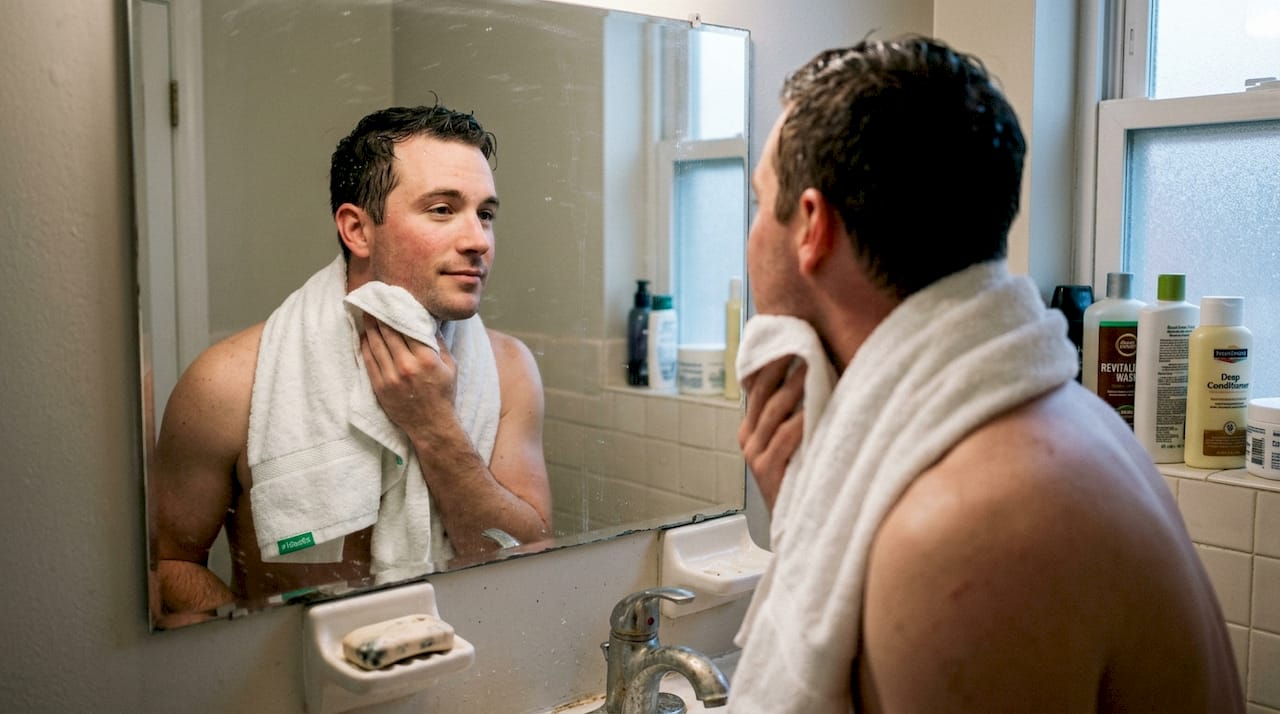
Hard water minerals create a different kind of damage. They don’t strip, they coat. Calcium and magnesium ions bond to hair strands, making them feel rough and look dull. On your scalp, this mineral film blocks follicles and disrupts the natural pH balance. As research on scalp health shows, minerals found in hard water can disrupt your scalp’s natural balance and cause buildup, while chlorine strips moisture, leaving hair brittle and skin dry.
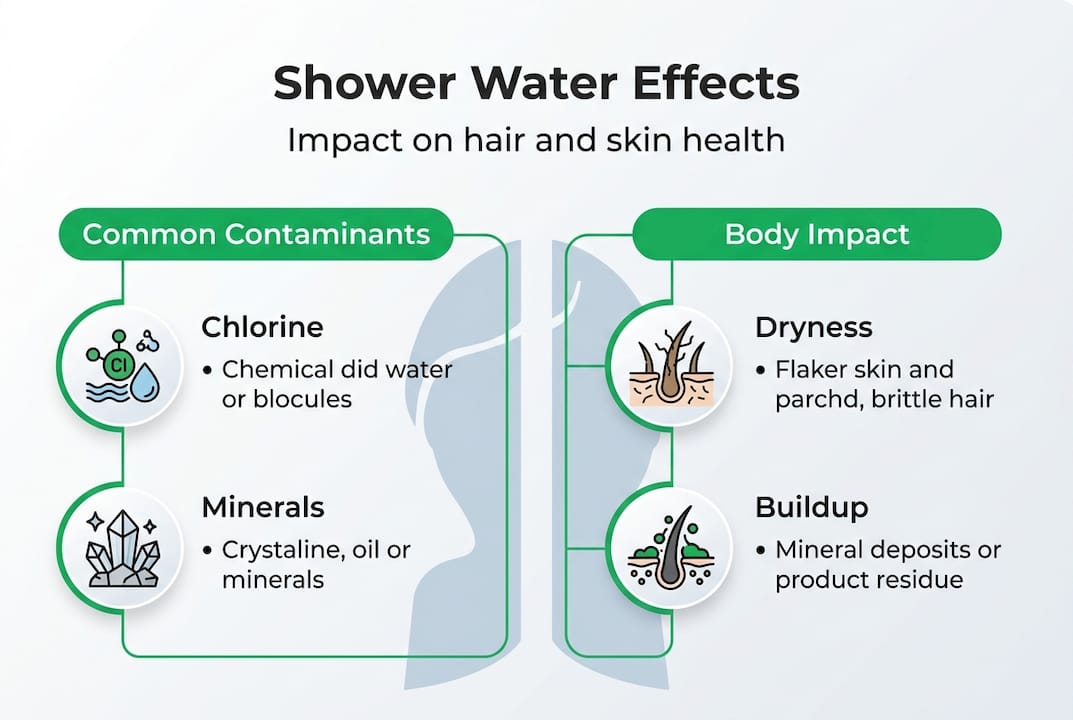
A clinical study on hard water’s effect on hair found measurable differences in hair tensile strength between hard and soft water exposure, confirming this isn’t just anecdotal. The shower filter benefits page breaks this down further with real before-and-after context.
Here’s a summary of the most common skin and hair effects:
- Dry, flaky, or tight-feeling skin after showering
- Dull, rough, or brittle hair that’s hard to manage
- Scalp irritation, dandruff, or itchiness
- Worsening eczema, psoriasis, or sensitive skin conditions
- Hair color fading faster than expected
- Increased breakage or thinning over time
“Water quality is often the missing link in effective hair and skin care. You can use the best products on the market, but if your water is working against you, results will always fall short.”
Pro Tip: Rinse with filtered or softened water as the final step in your shower routine. Even a short cold rinse with cleaner water can help close the hair cuticle and lock in moisture.
Learning how to transform your skin and hair starts with recognizing that your water is a variable, not a constant.
How to reduce shower water contaminants at home
The good news is that reducing your exposure doesn’t require a full home renovation. There are practical, affordable steps you can take right now.
Install a quality shower filter. This is the single most impactful change you can make. In-line shower filters can dramatically improve skin and hair health by removing chlorine, heavy metals, and other common contaminants. Look for filters certified to reduce the specific contaminants in your water.
Choose the right filter media. Different filter types target different contaminants:
- Vitamin C filters: Neutralize chlorine and chloramine on contact. Fast, effective, and gentle.
- Ceramic ball filters: Soften water and reduce mineral buildup.
- Activated carbon filters: Absorb VOCs and some heavy metals.
- KDF media: Reduces heavy metals and controls bacteria growth.
Follow these practical steps to reduce exposure further:
- Let your shower run for 30 to 60 seconds before stepping in, especially in the morning when water has been sitting in pipes overnight.
- Clean your shower head monthly by soaking it in white vinegar to dissolve mineral deposits and kill biofilm.
- Replace your filter cartridge on schedule. An expired filter can become a contaminant source itself.
- If your home was built before 1986, consider having your pipes inspected for lead.
- Use a gentle, sulfate-free shampoo to avoid compounding the drying effects of chlorinated water.
For homes in hard water regions, exploring filtered water for healthier hair reveals just how significant the improvement can be. And if you’re unsure where to start, shower fixes for skin and hair offers a practical comparison of available options. The Healthline guide on hard water hair is also a solid external resource for understanding your options.
What most guides miss about shower water contaminants
Here’s the part most water quality articles skip entirely. Almost every conversation about water purity focuses on drinking water. Filters for the kitchen tap, water pitchers, reverse osmosis systems under the sink. That’s all worthwhile, but it misses something obvious: you spend 8 to 15 minutes in direct contact with shower water every single day. Your skin is your largest organ, and it’s absorbing and reacting to every contaminant in that spray.
The contrarian reality is that upgrading your shower water is often cheaper and faster than overhauling your diet or skincare routine, and the results show up quicker. Many people notice softer skin and more manageable hair within just a few days of switching to a Vitamin C filtered shower. That’s not a placebo. That’s the absence of daily chemical and mineral assault on your body.
Most wellness advice treats water as a background detail. We think it’s actually the foundation. Fix your shower water first, then layer your serums and hair masks on top. You’ll get dramatically better results from the products you’re already using.
Pro Tip: Keep a simple photo diary of your skin and hair for the first two weeks after switching to filtered shower water. The gradual improvement is easy to miss day to day but striking when you compare week one to week two.
Upgrade your shower for real results
Clean shower water isn’t a luxury. It’s the baseline your skin and hair need to actually thrive. Every contaminant we’ve covered, from chlorine to hard water minerals to bacteria, is something you can actively reduce with the right filtration setup.
Vitaclean’s Vitamin C shower filter shots neutralize chlorine on contact, while the ceramic shower filter tackles mineral buildup that makes hair dull and skin rough. For households concerned about microbial exposure, antibacterial filters add an extra layer of protection. All filters are easy to install, renter-friendly, and available with refill subscriptions so you’re never caught with an expired cartridge. Your shower should be working for your wellness, not against it.
Frequently asked questions
What are the most common harmful contaminants in shower water?
The most common harmful shower water contaminants are chlorine, chloramine, hard water minerals, lead, bacteria, and VOCs. As noted in research on hard water and hair loss, these contaminants are widespread across U.S. households.
Can shower water really damage hair and skin?
Yes, daily exposure to chlorine and hard water minerals causes dryness, irritation, and buildup on both hair and skin. Research confirms that minerals and chlorine strip moisture, leaving hair brittle and skin tight.
How do shower filters work to remove contaminants?
Shower filters use media like Vitamin C, ceramic balls, or activated carbon to neutralize or trap chlorine, minerals, and other impurities before the water reaches you. Installing a shower filter is one of the most direct ways to improve your daily skin and hair health.
Should I test my shower water for contaminants?
Testing is recommended if you notice unexplained dryness, scalp irritation, or hair changes, or if you live in an area with known water quality issues. Annual water testing is a simple habit that can reveal problems before they compound.
Are Vitamin C shower filters effective against chlorine?
Yes, Vitamin C is one of the most effective and fast-acting ways to neutralize chlorine in shower water. The science behind filtered water for healthier hair confirms that Vitamin C filtration significantly reduces chlorine’s impact on skin and hair.
Recommended
- Shower Water Chlorine Risks: Effects on Skin, Hair & Lungs Explained
- Could A Shower Head Filter Transform My Skin & Hair?
- How Water Quality Impacts Your Skin Health (A Research- Based Guide)
- Signs you need a shower filter for healthier skin
- Upptäck tecken på förorenat dricksvatten – skydda din brunn 2026 – Svenskt Vattenprov