
Hard water effects on skin and hair: easy shower fixes
85% of US homes have hard water, yet most people never connect their dry skin, brittle hair, or itchy scalp to what’s coming out of their showerhead. Hard water is loaded with calcium and magnesium minerals that quietly work against your skin barrier and hair health every single day. The good news is that once you understand what’s happening, the fixes are straightforward. This guide walks you through the science, the symptoms, and the most effective solutions for cleaner, gentler shower water.
Table of Contents
- What is hard water and why is it so common?
- How hard water affects your skin and hair
- Common shower water solutions: What actually works?
- Practical steps to solve hard water in your shower
- Effective shower filters and accessories for hard water
- Frequently asked questions
Key Takeaways
| Point | Details |
|---|---|
| Hard water is widespread | Over 85 percent of US homes have hard water, impacting daily shower health. |
| Skin and hair effects | Hard water can worsen dryness, eczema, and make hair feel stiffer without clear mechanical damage. |
| Filters help but have limits | Shower filters improve feel and reduce chlorine but do not fully remove hardness minerals. |
| Whole-house softening for best results | Ion exchange softeners are most effective for removing hardness and protecting skin and hair. |
| Easy steps for renters and owners | Renters can use shower filters; owners may consider whole-home softening for lasting benefits. |
What is hard water and why is it so common?
Hard water simply means water with a high concentration of dissolved minerals, mainly calcium and magnesium. These minerals dissolve naturally as water moves through rock and soil before reaching your pipes. The result is water that leaves scale on your faucets, makes soap harder to lather, and creates that tight, filmy feeling on your skin after a shower.
Geography plays a huge role. According to water hardness statistics, 85% of US homes deal with hard water, with the Southwest and Great Plains states experiencing the most severe levels. If you live in Arizona, Texas, or Kansas, your water is almost certainly hard.
Water hardness is measured in grains per gallon (gpg). Here’s a quick reference:
- Soft: 0 to 1 gpg
- Slightly hard: 1 to 3.5 gpg
- Moderately hard: 3.5 to 7 gpg
- Hard: 7 to 10.5 gpg
- Very hard: Over 10.5 gpg
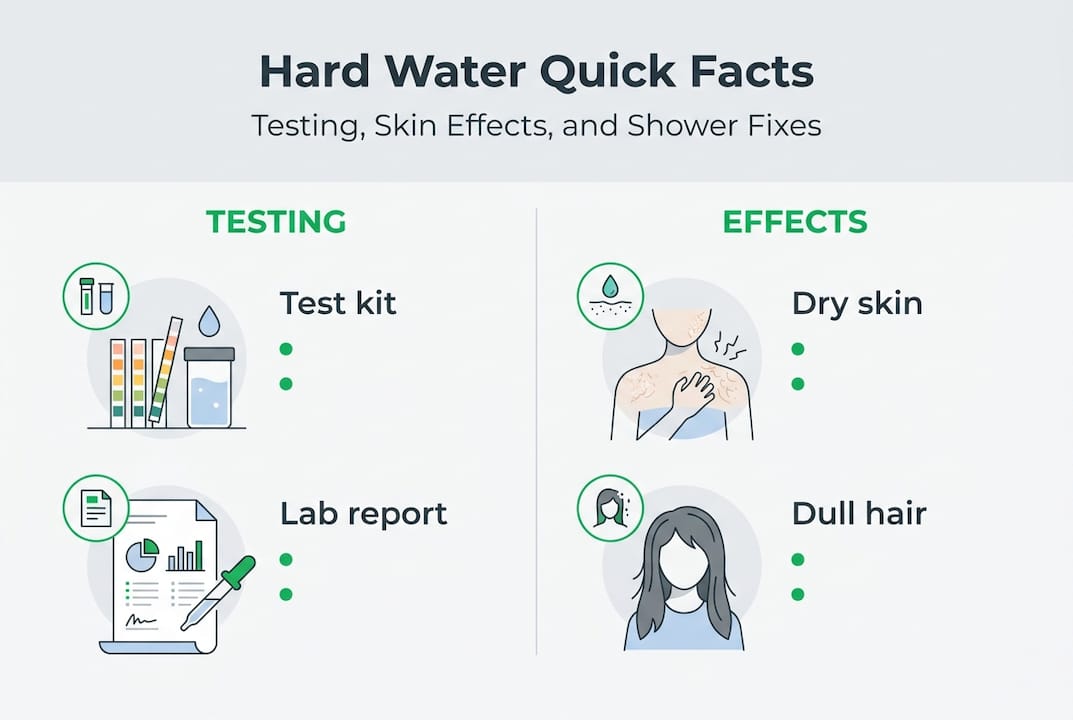
Testing your water is the smartest first step. You can buy an inexpensive test kit online or request a water quality report from your local utility. Knowing your gpg number tells you exactly how aggressive your solution needs to be.
How hard water affects your skin and hair
This is where things get personal. Hard water doesn’t just leave spots on your shower glass. It actively interferes with your skin and hair in ways that are backed by real research.
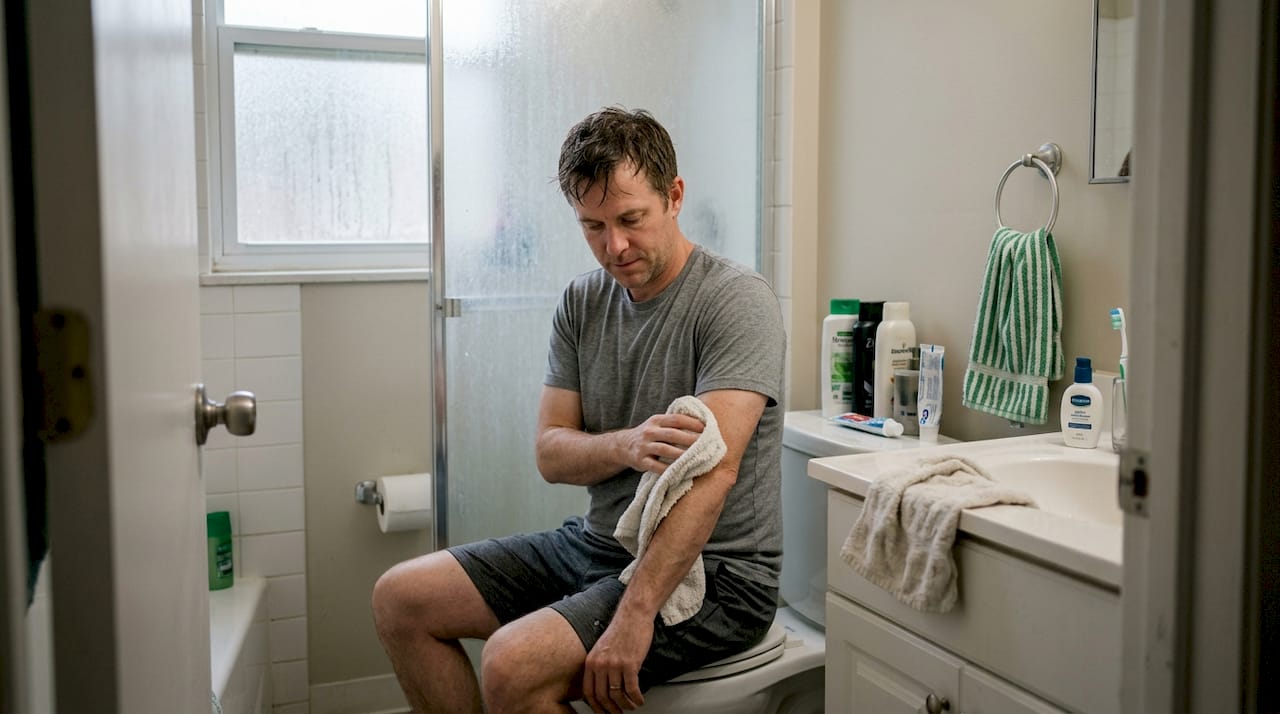
On your skin, the minerals in hard water disrupt your natural skin barrier. They react with soap to form a residue that clogs pores and strips moisture. Research on hard water skin and hair confirms that hard water causes dryness and irritation, and a large UK Biobank cohort study found a dose-response link between water hardness and eczema and psoriasis prevalence. The harder the water, the higher the risk. If you’ve been struggling with eczema from hard water, switching shampoos or moisturizers alone won’t solve the root problem.
On your hair, mineral buildup coats each strand, making hair feel stiff, look dull, and tangle more easily. Check out these hard water hair care tips if you’re already noticing the signs. It’s worth noting that not every study agrees on all effects. Some research shows no measurable impact on hair tensile strength, meaning hard water may not literally break your hair. But the texture and manageability issues are well documented, and if you’re noticing that your hair condition is being damaged by hard water, the mineral buildup is the likely culprit.
| Effect | Skin | Hair |
|---|---|---|
| Dryness | Yes, confirmed | Yes, common |
| Irritation/eczema | Yes, dose-response | Less studied |
| Reduced lather | Yes | Yes |
| Stiffness/dullness | N/A | Yes, confirmed |
| Strength loss | N/A | Not proven |
“Switching to a better shampoo won’t fix hard water damage. If your skin or scalp issues are severe, the water itself needs to be addressed, not just the products you use on top of it.”
Common shower water solutions: What actually works?
Not all solutions are created equal. Here’s an honest breakdown of your main options.
Ion exchange water softeners are the gold standard. They swap calcium and magnesium ions for sodium ions, genuinely removing hardness from your water. Ion exchange softeners are the only method that truly softens water for the whole home. If your water tests above 7 gpg, this is the most effective long-term fix.
Salt-free conditioning systems alter the structure of minerals so they don’t stick to surfaces as easily, but they don’t actually remove them. Your water is still technically hard. These systems work well for scale prevention but offer less benefit for skin and hair.
Shower filters are a popular and accessible option. They excel at reducing chlorine, heavy metals, and other impurities that irritate skin. However, shower filters don’t reduce total dissolved solids (TDS) or hardness minerals. According to water softener performance data, salt-based softeners outperform shower filters for hard water above 7 gpg, but shower filters still meaningfully improve how your skin feels by removing chlorine. Read more about shower filter benefits for a fuller picture.
Here’s a side-by-side comparison:
| Solution | Removes hardness | Removes chlorine | Best for |
|---|---|---|---|
| Ion exchange softener | Yes | No | Whole-home, >7 gpg |
| Salt-free conditioner | No | No | Scale prevention |
| Shower filter | No | Yes | Renters, chlorine relief |
| Vitamin C filter | No | Yes | Sensitive skin, renters |
For dermatologist-backed insights on shower filters and sensitive skin, the consensus is clear: filters help, but whole-house softening is the most complete solution. For a step-by-step approach, this hard water guide covers the full process.
Pro Tip: Replace your shower filter every 3 to 6 months. A clogged or expired filter can actually reduce water pressure and stop working effectively, giving you a false sense of protection.
Practical steps to solve hard water in your shower
Knowing your options is one thing. Taking action is another. Here’s a clear process to follow.
- Test your water. Buy a home test kit or request a water quality report from your utility. You need your gpg number before choosing a solution. This hard vs soft water guide explains what the numbers mean for your skin.
- Assess your situation. Are you a renter or a homeowner? Do you have a lease that limits plumbing changes? Your living situation shapes your options significantly.
- Choose your solution. If you’re a homeowner with water above 7 gpg, a whole-house softener is the most effective investment. For renters or anyone wanting a quick win, a quality shower filter is your best starting point.
- Address chlorine separately. Even if you install a softener, your municipal water likely contains chlorine. A shower filter or vitamin C filter shot handles this layer of the problem.
- Set a maintenance schedule. Shower filters need replacing every 3 to 6 months. Softener salt needs topping up regularly. Skipping maintenance means losing the benefits you paid for.
- Monitor your skin and hair. Give any new solution 4 to 6 weeks before judging results. Skin barrier repair takes time.
Pro Tip: If you’re on a low-sodium diet and concerned about salt-based softeners, potassium chloride is a direct substitute for the salt pellets. It works the same way without adding sodium to your water. You can also combine a salt-free conditioner with a point-of-use filter for a sodium-free approach.
For a deeper look at how to address hard water for skin and hair health, the approach matters as much as the product you choose. Whole-house softener reviews consistently show that for skin and hair improvement, ion exchange remains the top choice when budget and installation allow.
Effective shower filters and accessories for hard water
If you’re ready to take the next step, starting with your showerhead is one of the fastest ways to notice a real difference in how your skin and hair feel. Shower filters won’t eliminate hardness minerals, but they do remove chlorine and other impurities that compound the damage hard water causes every day.
At Vitaclean, we’ve built our products around exactly this problem. Our vitamin C shower filter shots neutralize chlorine on contact, making them ideal for sensitive skin and anyone dealing with scalp irritation. Our ceramic filter options add another layer of purification, targeting additional impurities beyond chlorine. And if you’re looking for a complete upgrade, browse our full range of shower head filters to find the right fit for your setup. All our filters are designed for easy installation and come with a simple replacement schedule so maintenance never becomes a chore.
Frequently asked questions
What makes water ‘hard’ and why does it matter?
Hard water contains elevated calcium and magnesium levels that leave mineral deposits on surfaces, reduce soap lather, and contribute to skin dryness and hair dullness over time.
Can shower filters remove hard water minerals?
Most shower filters are designed to reduce chlorine and heavy metals, not hardness minerals. Shower filters don’t remove calcium or magnesium, so they won’t fully solve hard water but they do improve overall water quality.
Is hard water linked to eczema or psoriasis?
Yes. A large population study found a clear dose-response relationship between water hardness and eczema and psoriasis risk, meaning harder water correlates with higher rates of these conditions.
How do I test if my home water is hard?
You can use an inexpensive home test kit to measure your water in grains per gallon, or request a free water quality report from your local utility provider.
What’s the easiest fix for renters with hard water?
A shower filter is the fastest solution for renters since it requires no plumbing changes, installs in minutes, and immediately reduces chlorine and other irritants in your shower water.