
How to address hard water issues for healthier skin
If you’ve noticed your skin feels dry and tight after showering, or your hair looks dull despite using quality products, hard water could be the culprit. Hard water affects over 85% of U.S. homes, leaving mineral deposits that damage your skin’s protective barrier and strip moisture from your hair. This guide walks you through identifying hard water problems, testing your water quality, and implementing effective filtration solutions to restore your skin’s natural glow and your hair’s vitality.
Table of Contents
- Understanding Hard Water And Its Impact On Skin And Hair
- Preparing To Address Hard Water: Testing And Recognizing The Problem
- Effective Solutions For Hard Water: Shower Filters, Softeners, And Maintenance
- Monitoring Results And Troubleshooting Common Hard Water Issues
- Explore Vitaclean Solutions For Hard Water Challenges
Key takeaways
| Point | Details |
|---|---|
| Hard water damages skin and hair | Mineral buildup clogs pores and leaves hair dull and brittle |
| Testing confirms the problem | Water hardness kits measure calcium and magnesium levels accurately |
| Filters and softeners provide solutions | Shower filters reduce chlorine while softeners remove hardness minerals |
| Right technology matters | Selecting appropriate filtration ensures better skin and hair health |
| Maintenance sustains results | Regular filter replacement and testing prolong effectiveness |
Understanding hard water and its impact on skin and hair
Hard water contains elevated levels of calcium and magnesium minerals that accumulate as water passes through limestone and chalk deposits. When you shower, these minerals react with soap to form an insoluble residue that clings to your skin and hair, creating a film that’s difficult to rinse away.
This mineral residue doesn’t just sit on the surface. It actively disrupts your skin’s protective barrier, leading to increased moisture loss and irritation. Your hair shaft becomes coated with mineral deposits that block moisture absorption, leaving strands feeling rough and looking lackluster. Over time, this buildup can worsen existing skin conditions and create new problems.
Recognizing the telltale signs helps you identify if hard water is affecting your health:
- Persistent dry, itchy skin even after moisturizing
- Brittle, tangled hair that breaks easily
- White or gray crusty deposits around faucets and showerheads
- Difficulty creating soap lather in the shower
- Flaky, irritated scalp despite regular shampooing
- Worsening symptoms of eczema or dermatitis
Chlorine in municipal water compounds these issues. While added to kill bacteria, chlorine strips natural oils from your skin and hair, intensifying the drying effects of hard water minerals. The combination creates a double assault on your body’s largest organ and your hair’s delicate structure.
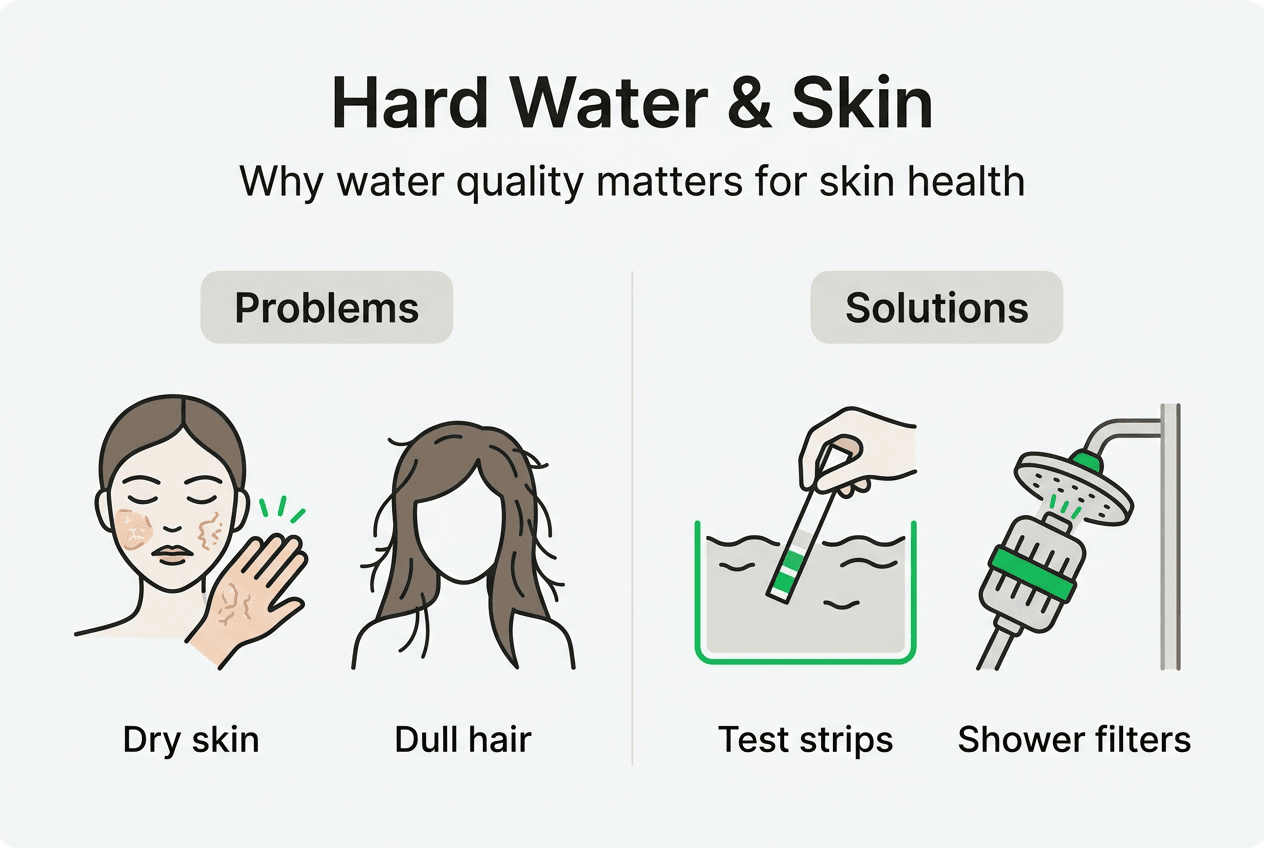
Understanding the hard vs soft water effects on your body helps you appreciate why addressing water quality matters for your daily wellness routine. Your skin and hair are constantly exposed to whatever comes through your showerhead, making water quality a foundation of your personal care regimen.
Preparing to address hard water: testing and recognizing the problem
Before investing in filtration solutions, you need concrete data about your water’s mineral content. Water hardness test kits provide definitive answers about calcium and magnesium levels, typically measuring in grains per gallon (gpg) or parts per million (ppm).
Test strips offer the simplest approach. Dip a strip in your tap water, wait for the color change, and compare it to the included chart. Digital meters provide more precise readings but cost more. Most kits classify results into categories: soft (0-3 gpg), moderately hard (3-7 gpg), hard (7-10 gpg), and very hard (above 10 gpg).
Pro Tip: Test your water at different times of day and from multiple taps to get an accurate average, as mineral content can fluctuate based on municipal treatment schedules and plumbing conditions.
Visual inspection reveals clues even before formal testing. Telltale signs include difficulty lathering soap and chalky mineral deposits that form rings around your bathtub or leave spots on glass shower doors. These deposits appear white or grayish and feel rough to the touch.
Gather these supplies to prepare for implementing solutions:
- Water hardness test kit (strips or digital meter)
- Notebook to track test results and symptoms
- Camera to document mineral buildup
- Measuring tape for showerhead dimensions
- Budget estimate for filtration options
| Water Hardness Level | Grains per Gallon | Parts per Million | Impact on Skin and Hair |
|---|---|---|---|
| Soft | 0-3 gpg | 0-60 ppm | Minimal mineral interference |
| Moderately Hard | 3-7 gpg | 60-120 ppm | Slight dryness, manageable |
| Hard | 7-10 gpg | 120-180 ppm | Noticeable dryness and buildup |
| Very Hard | 10+ gpg | 180+ ppm | Severe damage to skin and hair |
Knowing your water’s hardness severity guides your solution selection. Very hard water (above 10 gpg) typically requires more aggressive treatment than moderately hard water. Your hard water solutions checklist should match the severity of your specific situation.
Regular testing ensures you catch changes early. Municipal water sources can shift in mineral content seasonally, and well water hardness varies with groundwater levels. Testing every six months keeps you informed and helps you maintain optimal water quality year round.
Effective solutions for hard water: shower filters, softeners, and maintenance
Shower filters represent the most accessible entry point for improving water quality. These devices attach directly to your existing showerhead or replace it entirely, processing water as it flows through. However, understanding their limitations prevents disappointment.
Shower filters condition water by sequestering minerals and removing chlorine, but they don’t actually remove calcium and magnesium ions like true softeners do. Instead, they use media like KDF-55 (a copper-zinc alloy) or activated carbon to neutralize chlorine and reduce mineral adhesion to your skin and hair. This conditioning effect makes water feel softer without changing its chemical hardness.
Whole-home water softeners provide comprehensive solutions by removing hardness minerals through ion exchange. These systems replace calcium and magnesium with sodium or potassium ions, delivering genuinely soft water to every tap in your home. Installing water softeners requires professional plumbing work and ongoing salt replenishment, but the results transform your entire water supply.

| Solution Type | Installation | Cost Range | Effectiveness | Maintenance |
|---|---|---|---|---|
| Shower Filter | DIY, 10 minutes | $25-$150 | Chlorine removal, mineral conditioning | Replace cartridge every 3-6 months |
| Whole-Home Softener | Professional | $500-$2,500 | Complete mineral removal | Add salt monthly, annual service |
| Chelating Shampoo | None needed | $10-$30 | Removes existing buildup | Use weekly |
| Vinegar Rinse | None needed | Under $5 | Dissolves mineral deposits | Use after shampooing |
For immediate relief from existing damage, chelating shampoos and vinegar rinses help remove mineral buildup already coating your hair. Chelating agents bind to metal ions, allowing water to wash them away. A simple vinegar rinse (one part apple cider vinegar to three parts water) after shampooing dissolves deposits and restores shine.
Pro Tip: Performance matters more than price when selecting shower filters. Budget-friendly models can outperform expensive options in chlorine and mineral reduction, so check independent test results rather than relying on marketing claims.
Maintenance schedules directly impact filtration effectiveness. Shower filter cartridges saturate with trapped contaminants over time, gradually losing their ability to process water. Most manufacturers recommend replacement every three to six months, but heavy use or very hard water may require more frequent changes. Watch for reduced water pressure or returning symptoms as signs your filter needs replacement.
Combining approaches often yields the best results. A whole-home softener handles mineral removal while a vitamin C shower filter neutralizes any residual chlorine, creating water that’s both soft and free from harsh chemicals. This layered strategy addresses multiple water quality issues simultaneously.
The benefits of shower filters extend beyond just mineral management. By removing chlorine and reducing mineral adhesion, filtered showers help your skin retain natural moisture and allow hair to absorb conditioning treatments more effectively. Many users notice improvements within two to three weeks of consistent use.
Understanding water softening benefits helps you decide if a whole-home system makes sense for your situation. Beyond shower improvements, soft water extends appliance life, reduces soap usage, and eliminates the constant battle against mineral stains throughout your home.
Monitoring results and troubleshooting common hard water issues
Tracking improvements helps you verify your solutions are working and identify any remaining issues. Your skin should feel noticeably smoother within two to three weeks of using filtered or softened water. Dryness and tightness after showering diminish as your skin barrier repairs itself. Hair typically shows improvement slightly faster, with increased shine and manageability appearing within the first week.
Specific indicators of successful water treatment include:
- Skin feels soft and hydrated after showering without immediate moisturizer
- Hair tangles less and requires less conditioner
- Scalp flaking and itching decrease significantly
- Soap and shampoo lather more easily
- No new mineral deposits form on fixtures
If problems persist despite installing filtration, several common issues might be interfering with performance. Soap scum continuing to accumulate suggests your filter isn’t properly installed or has reached capacity. Check that all connections are tight and water flows through the filter cartridge rather than bypassing it.
Clogged filters represent the most frequent performance problem. As cartridges trap contaminants, water flow slows and filtering efficiency drops. If you notice reduced pressure or returning symptoms before the recommended replacement interval, change your filter early. Very hard water saturates cartridges faster than manufacturer estimates based on average conditions.
Proper contact time matters for chemical filtration. Water needs sufficient exposure to filter media to allow reactions that neutralize chlorine and condition minerals. If water rushes through too quickly, treatment remains incomplete. Some high-flow showerheads may require filters with larger cartridges or multiple stages to maintain effectiveness.
Water temperature affects filtration chemistry. Extremely hot water can reduce the efficiency of some filter media and accelerate cartridge saturation. Moisture loss increases when hot water strips oils, compounding hard water damage. Moderately warm showers protect both your skin and your filter’s performance.
Follow this troubleshooting sequence when results disappoint:
- Verify proper filter installation and check for bypass leaks
- Test water hardness to confirm the problem severity matches your solution
- Replace filter cartridge even if not yet at recommended interval
- Adjust water temperature to warm rather than hot
- Consider upgrading to a multi-stage filter or whole-home softener
- Test water after the filter to verify it’s actually reducing contaminants
Research shows detergent residue increases by up to 80% with hard water, disrupting your skin’s barrier function. If you still experience residue buildup after filtering, switch to soap-free cleansers formulated for hard water. These products rinse more completely and don’t form the same problematic film.
Periodic water testing confirms your system maintains effectiveness over time. Test quarterly to catch any degradation in filter performance or changes in your municipal water supply. Keep a log of test results, filter replacement dates, and symptom changes to identify patterns and optimize your maintenance schedule.
The hard water effects on hair and wellness extend beyond cosmetic concerns. Chronic skin barrier disruption can lead to increased sensitivity and vulnerability to irritants. Monitoring your skin and hair health serves as an early warning system for water quality issues that need attention.
Explore Vitaclean solutions for hard water challenges
Now that you understand how to identify and address hard water issues, finding the right products makes implementation straightforward. Vitaclean specializes in advanced shower filtration systems designed specifically to combat the effects of hard water and chlorine on your skin and hair.
Our vitamin C shower filter shots provide a powerful, natural approach to neutralizing chlorine while conditioning minerals. These replaceable cartridges deliver concentrated vitamin C that reacts with chlorine to form harmless compounds, while the antioxidant properties support skin hydration and hair softness. Installation takes minutes and fits most standard showerheads.
For comprehensive contaminant reduction, our ceramic filter products offer fine filtration that captures sediment and reduces mineral adhesion. The ceramic media provides consistent performance across a wide temperature range, maintaining effectiveness whether you prefer cool or warm showers.
Complete your healthy shower routine with our range of shower accessories designed to work seamlessly with filtered water. From handheld options to wall-mounted systems, each product emphasizes ease of use and filter replacement convenience, helping you maintain optimal water quality with minimal effort.
How can I test if my water is hard?
What signs indicate hard water is damaging my skin and hair?
Persistent dryness and tightness after showering signal hard water damage to your skin barrier. Brittle hair that tangles easily and white crusty deposits around faucets confirm mineral buildup. Conditions like eczema often worsen with continued hard water exposure, as minerals disrupt the skin’s protective function.
Are shower filters enough to solve hard water problems?
Shower filters improve water condition by removing chlorine and reducing mineral adhesion, but they don’t fully soften water like dedicated softening systems. For moderate hardness, quality filters provide noticeable relief. Very hard water (above 10 gpg) typically requires whole-home softeners that actually remove calcium and magnesium ions for comprehensive results.
How often should I replace my shower filter cartridges?
Replacement frequency depends on your water hardness, usage, and filter capacity, typically ranging from three to six months. Very hard water saturates cartridges faster, requiring more frequent changes. Watch for reduced water pressure or returning skin and hair symptoms as indicators your filter needs replacement regardless of the timeline.
Can hard water cause or worsen skin conditions like eczema?
Hard water minerals actively disrupt your skin’s protective barrier, allowing moisture to escape and irritants to penetrate more easily. This disruption can trigger eczema flares or worsen existing symptoms. Filtering or softening your shower water removes these harsh minerals, often providing significant relief and allowing skin to heal naturally.