
What is water softening? Improve skin & hair health in 2026
You moisturize daily, invest in quality hair products, yet your skin still feels tight and your hair remains dull. The culprit might be flowing from your showerhead. Hard water, laden with calcium and magnesium, sabotages your beauty routine by leaving invisible mineral deposits on your skin and hair. Understanding water softening reveals how removing these minerals transforms your daily shower into a genuine wellness ritual. This guide explains the science behind water softening and how it directly improves your skin hydration and hair vitality.
Table of Contents
- What Is Water Softening And How Does It Work?
- How Hard Water Affects Your Skin And Hair Quality
- Benefits Of Softened Water For Skin And Hair Health
- Maintaining Your Water Softener For Consistent Skin And Hair Benefits
- Enhance Your Shower Experience With Vitaclean Filters
- Frequently Asked Questions
Key takeaways
| Point | Details |
|---|---|
| Ion exchange process | Water softening removes calcium and magnesium by swapping them for sodium ions on specialized resin beads. |
| Skin and hair protection | Softened water prevents mineral buildup that causes dryness, irritation, and dull hair appearance. |
| Enhanced product performance | Cleansing products lather better and rinse cleaner with soft water, reducing waste and improving results. |
| Maintenance matters | Regular salt level checks and regeneration cycles ensure consistent water softening effectiveness. |
| Widespread hard water | 85% of Americans deal with hard water, making softening solutions essential for optimal skin and hair health. |
What is water softening and how does it work?
Water softening removes hardness minerals through a chemical process called ion exchange. When hard water passes through a softener tank, it encounters thousands of tiny resin beads carrying a negative charge. These beads attract positively charged hardness ions like calcium and magnesium, pulling them from the water. In their place, the resin releases sodium ions, which don’t cause the damaging effects of hard water on hair and skin.
The magic happens at the molecular level. Strong acid cation exchange resins prefer divalent ions like calcium and magnesium over monovalent sodium ions. Think of it as a trade where the resin always chooses the harder minerals, leaving your water soft and gentle. This preference drives the entire softening process without requiring electricity or complex machinery.
Over time, the resin beads become saturated with hardness minerals and need refreshing. This happens through a regeneration cycle with four distinct phases:
- Backwashing flushes debris and loosens the resin bed for 10 minutes
- Brine draw introduces concentrated salt solution to displace hardness ions for 50 to 60 minutes
- Slow rinse continues removing displaced minerals for another 50 to 60 minutes
- Refill replenishes the brine tank with fresh water, preparing for the next cycle
Each phase serves a specific purpose in restoring the resin’s softening capacity. The brine solution contains such high sodium concentrations that it reverses the ion exchange, forcing calcium and magnesium off the resin and down the drain. This regeneration typically occurs automatically every few days, depending on your water usage and hardness level.
Pro Tip: Check your salt levels monthly and maintain at least a quarter tank full to ensure your system regenerates properly and delivers consistently soft water for your skin and hair.
How hard water affects your skin and hair quality
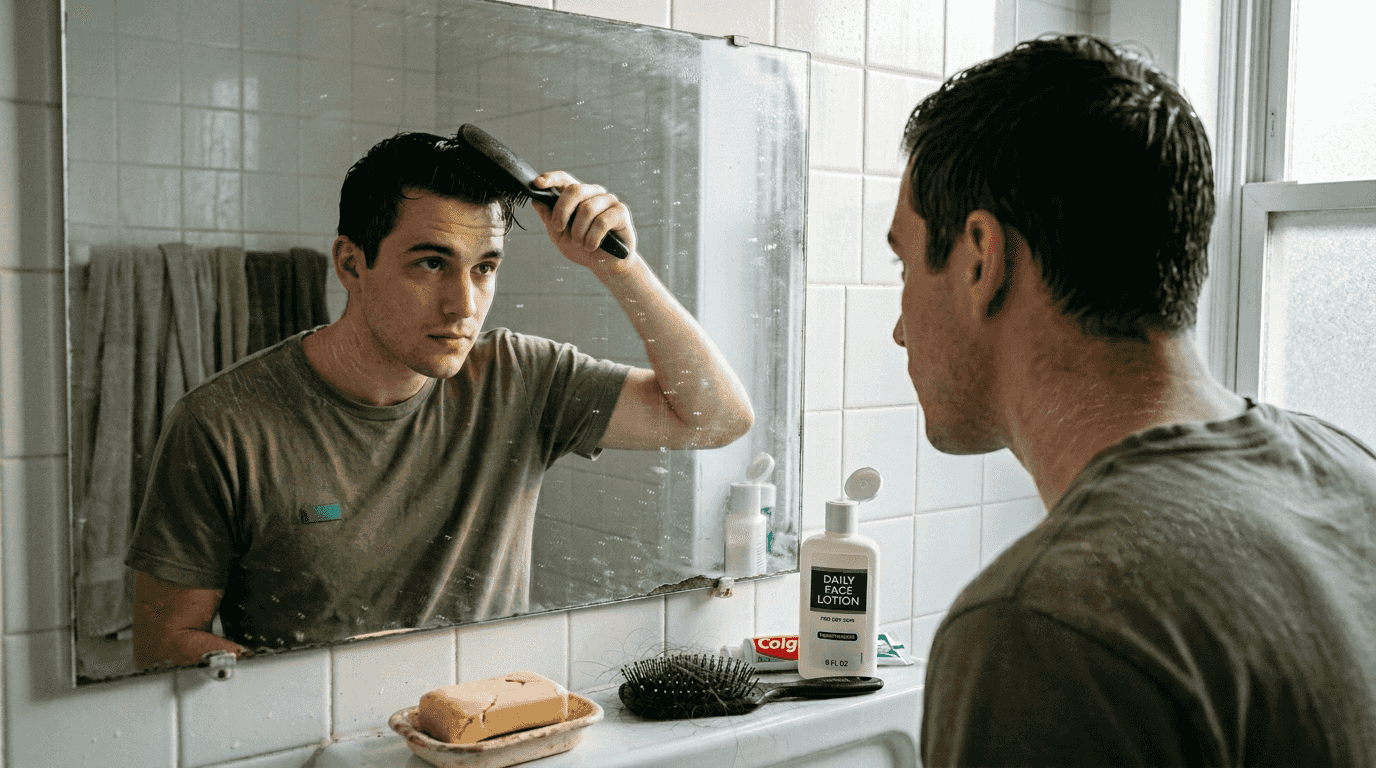
Hard water creates an invisible film on your skin that disrupts your body’s natural protective barrier. When calcium and magnesium react with soap, they form insoluble deposits that cling to your skin and hair instead of rinsing away cleanly. This residue clogs pores, traps dirt and oil, and prevents your skin from breathing properly. Your moisturizer can’t penetrate this mineral layer effectively, leaving you feeling dry no matter how much product you apply.
The mineral buildup does more than just sit on the surface. Hard water disrupts your skin’s pH balance, stripping away the natural oils that keep your skin supple and protected. This disruption weakens your skin’s defense against environmental irritants and bacteria. For people with sensitive skin or conditions like eczema, hard water acts as a constant trigger, causing flare-ups and prolonged eczema and hard water connection issues that resist typical treatments.
“85% of the U.S. experiences hard water, with some regions dealing with extremely hard water that dramatically worsens skin dryness and irritation.”
Your hair suffers similar consequences from mineral accumulation. Hard water deposits coat each strand, making hair feel rough and look dull even after conditioning. The minerals interfere with hair dye, causing uneven color and faster fading. Styling products don’t work as intended because they can’t properly coat mineral-covered hair shafts.
Common symptoms of hard water exposure include:
- Persistent skin tightness and itching after showering
- Increased breakouts and clogged pores despite regular cleansing
- Hair that tangles easily and resists smoothing
- Brittle ends that break more frequently
- Scalp irritation and increased dandruff
- Faded hair color that requires frequent touch-ups
These problems compound over time as mineral deposits accumulate with each shower. What starts as minor dryness can progress to chronic skin conditions that require dermatological intervention. Understanding these effects makes the case for water softening clear: removing hardness minerals at the source prevents these cascading beauty and health issues.
Benefits of softened water for skin and hair health
Softened water preserves your skin’s protective barrier by eliminating the minerals that disrupt its natural pH balance. Without calcium and magnesium forming deposits, your skin can maintain its optimal slightly acidic environment. This proper pH level supports healthy bacteria that defend against pathogens while keeping moisture locked in. Your skin’s natural oils spread evenly instead of being stripped away or trapped under mineral buildup.
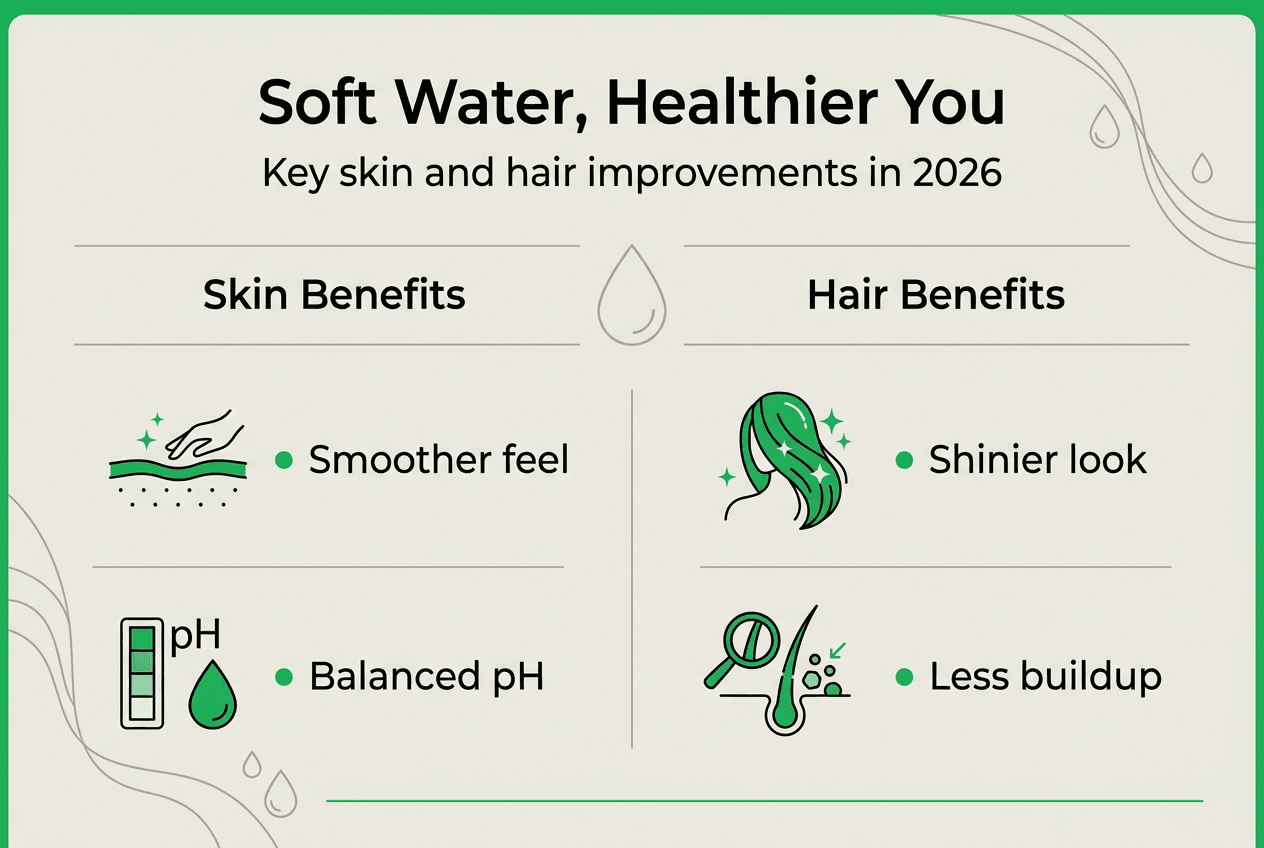
The transformation extends beyond just feeling cleaner. Soft water allows your skin to function as nature intended, regulating hydration and producing the right amount of sebum. People who switch to softened water often notice their skin feels genuinely soft rather than slippery or coated. This natural softness comes from healthy, well-hydrated skin cells rather than product residue.
Your hair responds dramatically to the absence of mineral deposits. Strands regain their natural shine because light reflects properly off smooth, clean surfaces instead of dull mineral coatings. Shampoos and conditioners work as formulated, penetrating the hair shaft to deliver conditioning agents and nutrients. You’ll use less product while achieving better results, saving money while improving hair health.
| Factor | Hard Water | Softened Water |
|---|---|---|
| Skin Hydration | Reduced by mineral deposits blocking moisture | Improved as skin barrier functions properly |
| Irritation Level | Higher due to pH disruption and residue | Lower with balanced pH and clean rinse |
| Product Efficacy | Decreased by soap scum formation | Enhanced with complete product activation |
| Hair Texture | Rough and tangled from mineral coating | Smooth and manageable without buildup |
The benefits of softened water for skin and hair extend to your entire beauty routine. Makeup applies more evenly on properly hydrated skin. Hair styling takes less time when your hair is naturally smoother and more cooperative. Even your towels and clothes feel softer because detergents work properly in soft water, avoiding the stiff residue that hard water leaves behind.
Key improvements you can expect:
- Noticeably softer skin texture within days of switching
- Reduced need for heavy moisturizers and leave-in conditioners
- Hair that holds styles longer and resists frizz
- Fewer skin reactions to products previously tolerated
- Brighter, more vibrant hair color that lasts longer
- Decreased scalp itching and flaking
Pro Tip: After switching to softened water, you may need to adjust your product amounts downward since cleansers and conditioners work more efficiently without fighting mineral buildup.
Maintaining your water softener for consistent skin and hair benefits
Your water softener delivers health benefits only when properly maintained. The regeneration cycle keeps resin beads effective, but this process depends on adequate salt levels and proper timing. Neglecting maintenance leads to gradually hardening water that slowly reintroduces the skin and hair problems you wanted to eliminate. Most people don’t notice the decline until symptoms return in full force.
The regeneration cycle follows a precise sequence that restores resin capacity. Understanding each phase helps you recognize when something isn’t working correctly. Backwashing loosens and expands the resin bed, preparing it for regeneration. The brine draw phase does the heavy lifting, flooding the resin with concentrated salt solution that forces hardness minerals to release. Slow rinsing removes displaced minerals and excess salt, while the refill stage prepares the system for the next cycle.
Routine maintenance tasks that protect your investment:
- Check salt levels monthly and refill when the tank reaches one-quarter full
- Use high-purity salt designed for water softeners to prevent buildup
- Inspect the brine tank quarterly for salt bridges or mushing
- Clean the resin bed annually with specialized cleaner to remove iron and sediment
- Verify regeneration cycles occur as scheduled by checking your control valve settings
- Test water hardness every six months to confirm effective softening
Salt bridges form when humidity causes salt to clump together, creating a hard crust above the water line. This prevents salt from dissolving properly, starving the regeneration process of the concentrated brine it needs. Breaking up salt bridges requires physical intervention with a broom handle or similar tool. Prevention works better: use high-quality salt and maintain proper humidity levels in the softener area.
Common maintenance pitfalls to avoid:
- Letting salt levels drop too low, forcing the system to regenerate with insufficient brine
- Using rock salt or salt with additives that leave residue in the tank
- Ignoring error codes or unusual noises from the control valve
- Skipping annual resin cleaning, allowing iron buildup to reduce capacity
- Setting regeneration frequency too low for your household’s water usage
Consistent maintenance ensures your skin and hair continue benefiting from soft water year after year. A well-maintained softener can last 15 to 20 years, providing decades of improved water quality. The small investment of time in regular checks pays dividends in sustained health benefits and equipment longevity. Your skin and hair will thank you for the attention to detail that keeps your water consistently soft.
Enhance your shower experience with Vitaclean filters
Understanding water softening principles reveals why targeted filtration makes such a difference in your daily routine. Vitaclean offers shower-specific solutions that complement whole-house softening or provide focused water improvement for renters and apartment dwellers. Our vitamin C shower filter shots neutralize chlorine and other oxidants that damage skin and hair, working alongside soft water to maximize your shower’s wellness potential.
Our ceramic filter options reduce mineral deposits and sediment right at your showerhead, preventing buildup on your skin and hair. For those concerned about bacteria and microorganisms, antibacterial filters add an extra layer of protection. These solutions install in minutes without tools, making improved water quality accessible regardless of your living situation. Explore how Vitaclean’s targeted filtration can transform your shower into a true wellness experience.
Frequently asked questions
What is water softening?
Water softening removes calcium and magnesium minerals that cause hardness through an ion exchange process. Specialized resin beads capture these hardness minerals and release sodium ions in their place, producing water that’s gentler on skin, hair, and plumbing. The process requires periodic regeneration with salt to maintain effectiveness.
How does soft water improve skin health?
Soft water preserves your skin’s natural pH balance and protective barrier by eliminating mineral deposits that disrupt normal function. Without hard water minerals forming residue, your skin retains moisture more effectively and products penetrate properly. This leads to improved hydration, reduced irritation, and fewer issues like eczema flare-ups.
Can water softening help with hair damage?
Yes, removing hardness minerals prevents the buildup that makes hair dull, tangled, and brittle. Soft water allows hair cuticles to lie flat, reflecting light for natural shine while letting conditioning treatments work as intended. You’ll notice smoother texture, easier styling, and longer-lasting color without mineral interference.
How often should I regenerate my water softener?
Regeneration frequency depends on your water hardness level and household usage, typically every 3 to 7 days. Modern softeners calculate this automatically based on water flow, ensuring regeneration occurs only when needed. Manual systems may require you to set a schedule based on your specific conditions and consumption patterns.
Does softened water feel different on skin?
Softened water feels noticeably different because it rinses completely clean without leaving mineral residue. Many people describe a slippery feeling, which is actually your skin’s natural oils spreading evenly instead of being trapped under hard water deposits. This clean rinse means you’re feeling your actual skin, not product or mineral buildup.
What maintenance does a water softener require?
Water softeners need monthly salt level checks, quarterly brine tank inspections, and annual resin bed cleaning. You should also verify regeneration cycles occur properly and test water hardness semi-annually. Proper maintenance ensures consistent soft water delivery and extends equipment life to 15 to 20 years.