
What is a shower filter? Clear benefits for skin & hair
You probably assume the water flowing from your shower is gentle and safe for your skin and hair. But tap water often contains chlorine and other chemicals that can strip natural oils, trigger dryness, and damage hair over time. Many people overlook how daily exposure to unfiltered shower water affects their appearance and comfort. Shower filters offer a practical solution by reducing these harsh contaminants, transforming your routine into a healthier experience. This guide explains what shower filters are, how they work, and the real benefits they deliver for your skin and hair.
Table of Contents
- What Is A Shower Filter And How Does It Work?
- Why Chlorine And Water Contaminants Matter For Your Skin And Hair
- Understanding What Shower Filters Can And Can’t Remove
- Choosing The Right Shower Filter For Your Skin And Hair Needs
- Explore Vitaclean’s Shower Filter Products For Healthier Skin And Hair
Key takeaways
| Point | Details |
|---|---|
| Chlorine reduction focus | Shower filters primarily target chlorine but do not soften hard water minerals. |
| Chloramine limitations | Chloramine removal requires whole-home systems due to insufficient contact time in shower filters. |
| Skin and hair benefits | Filtered water reduces dryness, irritation, and hair damage caused by chlorine exposure. |
| Hard water concerns | Hard water increases detergent residue and skin inflammation risks that filters cannot address. |
| Media over stages | Effective filtration depends on quality media volume, not the number of filter stages. |
What is a shower filter and how does it work?
Shower filters are devices installed on your showerhead to reduce contaminants in tap water before it reaches your skin and hair. These filters use specialized media to capture and neutralize chemicals, particularly chlorine, which municipal water systems add for disinfection. Shower filters primarily reduce chlorine, using media like KDF55, calcium sulfite, and activated carbon, each targeting specific contaminants through different chemical reactions.
The filtration process happens as water flows through layers of media inside the filter cartridge. KDF55 uses a redox reaction to convert chlorine into harmless chloride ions. Calcium sulfite works effectively even in hot water, making it ideal for shower applications. Activated carbon traps organic compounds and improves water taste and smell. These media work together to deliver cleaner water during every shower.
It’s important to understand what shower filters cannot do. They do not soften water by removing hard minerals like calcium and magnesium. Water softening requires ion exchange systems that replace these minerals with sodium, a process shower filters are not designed to perform. Similarly, chloramine removal is limited because it requires much longer contact time than the brief seconds water spends passing through a shower filter. For comprehensive chloramine reduction, you would need a whole-home treatment system.
Common filtration media and their roles include:
- KDF55: Reduces chlorine and heavy metals through redox reactions
- Calcium sulfite: Neutralizes chlorine effectively in hot water conditions
- Activated carbon: Captures organic compounds and improves water clarity
- Vitamin C: Converts chlorine to harmless chloride through ascorbic acid reaction
Pro Tip: More filter stages don’t guarantee better filtration. The volume and quality of effective media matter far more than the number of layers. A filter with three high-quality media stages can outperform one with ten ineffective layers.
When choosing a chlorine sensitivity shower filter, focus on filters that use proven media in sufficient quantities. Check manufacturer specifications for media volume rather than counting stages. Understanding these basics helps you make informed decisions about which filter truly meets your needs.
Why chlorine and water contaminants matter for your skin and hair
Chlorine serves an essential purpose in public water systems by killing harmful bacteria, but it doesn’t distinguish between pathogens and the beneficial oils protecting your skin and hair. Chlorine and chloramine, commonly used to disinfect water, can cause skin dryness, irritation, and hair damage. When you shower in chlorinated water, this chemical strips away sebum, the natural oil barrier that keeps skin hydrated and hair smooth.

The effects accumulate with daily exposure. Your skin may feel tight and itchy after showering, especially if you already have sensitivity or conditions like eczema. Chlorine exposure during showering can lead to dry skin, brittle hair, and exacerbate conditions like eczema. Hair becomes rough and prone to breakage because chlorine oxidizes the proteins in hair shafts, weakening their structure. Color-treated hair fades faster when exposed to chlorine regularly.
Disinfection byproducts add another layer of concern. When chlorine reacts with organic matter in water, it forms trihalomethanes and haloacetic acids. While regulatory agencies set limits for these compounds in drinking water, you also absorb them through skin during hot showers when pores open. The Environmental Protection Agency monitors these byproducts because long-term exposure raises health questions.
Studies show that chlorine exposure from showering can contribute to 25% more moisture loss in skin compared to filtered water, particularly affecting individuals with pre-existing skin conditions.
Common chlorine-related issues include:
- Persistent skin dryness and flaking
- Increased irritation and redness after showering
- Inflammation flare-ups in eczema or psoriasis
- Accelerated moisture loss from skin barrier disruption
Shower filters address these problems by reducing chlorine before it contacts your body. This simple intervention helps maintain your skin’s natural protective barrier and preserves hair integrity. People with sensitive skin or eczema often notice improvements within weeks of switching to filtered shower water. The reduction in chemical exposure allows skin to retain more moisture and reduces the frequency of irritation episodes.
For those dealing with chronic skin conditions, filtering shower water represents a practical first step. It complements other skincare efforts by removing a daily source of irritation. Understanding how shower water affects eczema helps you recognize why filtration makes such a noticeable difference in skin comfort and appearance.
Understanding what shower filters can and can’t remove
Setting realistic expectations about shower filter capabilities prevents disappointment and helps you choose the right water treatment approach. Shower filters excel at chlorine removal but face limitations with other contaminants due to water flow rate and contact time constraints. Chloramine removal is limited in shower filters due to insufficient contact time; whole-home systems are recommended for comprehensive treatment.
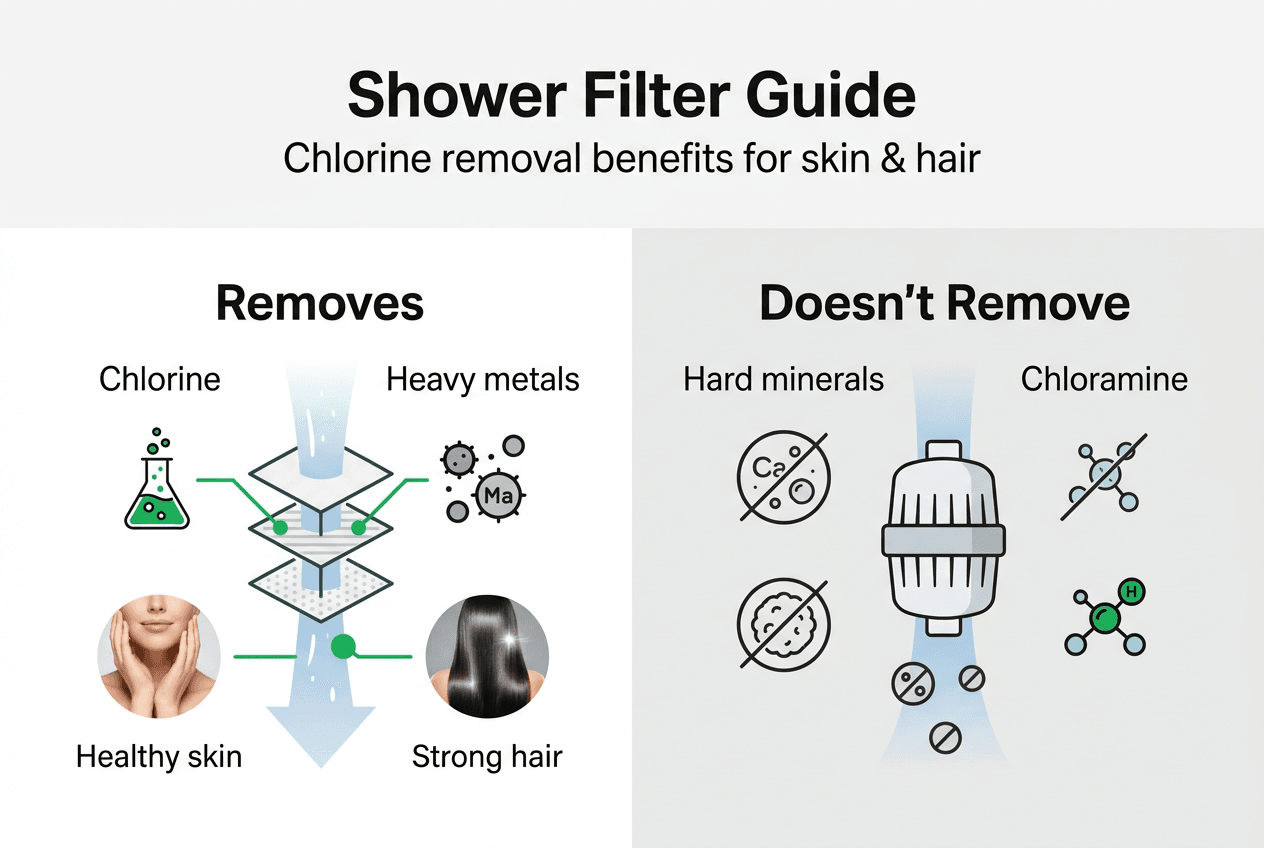
Chloramine presents a particular challenge because it’s a more stable compound than chlorine. Municipal water systems increasingly use chloramine because it lasts longer in distribution pipes. However, breaking down chloramine requires extended contact with filtration media, typically several minutes. Water passing through a shower filter spends only seconds in contact with media, which isn’t enough time for effective chloramine reduction. If your water utility uses chloramine and you want it removed, you’ll need a point-of-entry whole-home system.
Hard water minerals pose another common misconception. Shower filters do not soften water; hard water minerals like calcium and magnesium are not removed. These minerals require ion exchange systems that swap calcium and magnesium for sodium ions. Shower filters lack this technology. If you live in an area with hard water, you’ll still experience mineral buildup on fixtures and may notice effects on skin and hair that filtration alone cannot address.
| Treatment capability | Shower filter | Whole-home system |
|---|---|---|
| Chlorine removal | Highly effective | Highly effective |
| Chloramine removal | Limited effectiveness | Highly effective |
| Water softening | Not capable | Capable with softener |
| Flow rate | Maintains pressure | May reduce pressure |
| Installation | Simple DIY | Professional required |
The table illustrates key differences between shower filters and whole-home treatment options. Each approach serves different needs and budgets. Shower filters offer an accessible entry point for improving water quality where you need it most. Whole-home systems provide comprehensive treatment but require significant investment and professional installation.
Pro Tip: If chloramine or hard water are major concerns in your area, consider whole-home treatment options as a long-term solution. Shower filters work best when your primary goal is chlorine reduction and you want immediate, affordable results.
Understanding these limitations helps you make informed choices. If you notice hard versus soft water effects on your skin, you’ll know whether a shower filter alone will solve your problem or if you need additional water treatment. Being clear about what shower filters can and cannot do ensures you invest in the right solution for your specific water quality challenges.
Choosing the right shower filter for your skin and hair needs
Selecting an effective shower filter requires looking beyond marketing claims and focusing on proven performance factors. The right filter matches your water quality issues with appropriate filtration media while fitting your budget and maintenance preferences. More stages in a shower filter do not necessarily equate to better filtration; the amount of filtration media is the key factor.
Start by assessing your local water quality and identifying your primary concerns. Contact your water utility to request a water quality report showing chlorine levels, hardness, and whether they use chloramine. This information guides your filter selection. If you have sensitive skin, eczema, or notice hair damage, prioritize filters with substantial chlorine reduction capacity. Hard water creates additional challenges because it increases detergent residue. Hard water increases detergent residue on skin by up to 80%, disrupting natural barrier and triggering inflammation, making thorough rinsing more difficult even with filtered water.
Follow these steps to choose the right shower filter:
- Obtain your water quality report from your local utility to identify contaminants
- Identify your primary skin or hair concerns such as dryness, irritation, or damage
- Check filter specifications for media type, volume, and certified chlorine reduction rates
- Compare filter lifespan and replacement costs to understand long-term expenses
- Read reviews from users with similar water quality and skin concerns
- Verify the filter fits your existing showerhead or comes with compatible hardware
| Filter media | Primary benefit | Limitation |
|---|---|---|
| KDF55 | Removes chlorine and heavy metals | Less effective in very hot water |
| Calcium sulfite | Works well in hot water | Requires regular replacement |
| Activated carbon | Improves taste and removes organics | Can clog with sediment |
| Vitamin C | Gentle chlorine neutralization | Higher cost per gallon filtered |
The data table shows how different media serve specific purposes. Combining multiple effective media types provides broader protection, but only if each is present in sufficient quantity. A filter with 100 grams of high-quality media outperforms one with 20 grams spread across five stages.
Pro Tip: Prioritize filters proven to reduce chlorine effectively over those simply advertising multiple stages. Look for third-party testing results or certifications that verify performance claims rather than relying on manufacturer marketing alone.
For those with sensitive skin or eczema, consult dermatology resources alongside product specifications. Understanding shower head filter benefits helps you recognize which features matter most for your condition. Filters designed specifically for chlorine sensitivity often use vitamin C or calcium sulfite as primary media because these work gently while delivering reliable results.
Consider replacement frequency and ongoing costs when making your choice. A filter requiring monthly replacements may cost more annually than one lasting six months, even if the initial price seems lower. Calculate the total cost of ownership over a year to make accurate comparisons. Balance performance, convenience, and budget to find the filter that you’ll actually maintain consistently for best results.
Explore Vitaclean’s shower filter products for healthier skin and hair
If you’re ready to upgrade your shower experience with effective filtration, Vitaclean offers solutions designed specifically for chlorine reduction and skin protection. Our range includes innovative options like vitamin C shower filter shots that neutralize chlorine through a gentle ascorbic acid reaction, ideal for sensitive skin. Each product focuses on delivering cleaner water that supports your skin’s natural barrier and helps maintain hair vitality.
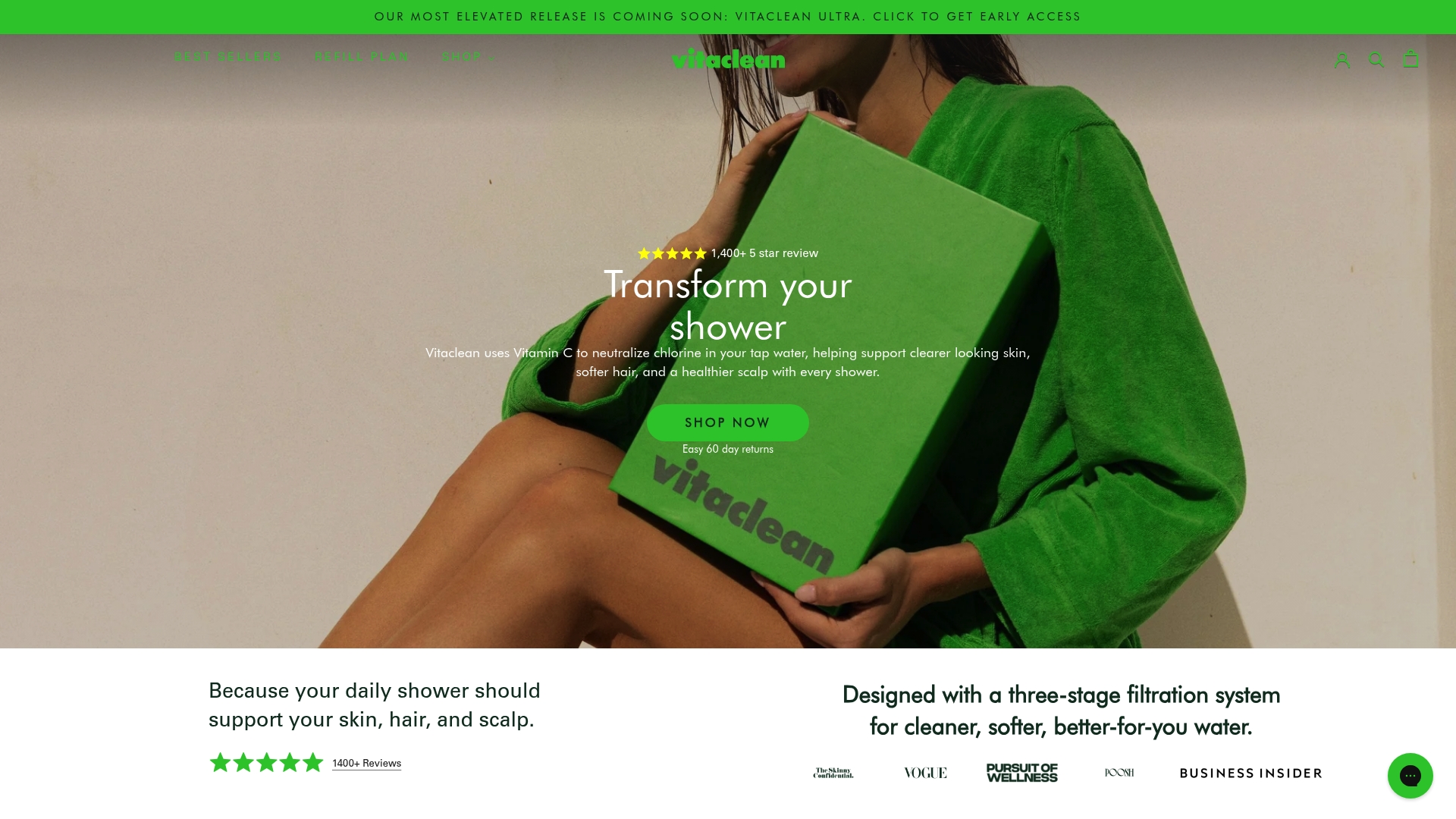
Vitaclean’s replaceable shower filters make maintenance simple with clear replacement schedules and easy installation. Our Vitaclean Ultra shower head combines filtration with a spa-like experience, featuring multiple spray settings alongside effective chlorine reduction. These products address the core water quality issues affecting your daily routine, helping you achieve the healthier skin and hair you’re working toward. Explore our collection to find the filtration solution that fits your needs and transforms your shower into a wellness ritual.
FAQ
What contaminants do shower filters remove?
Shower filters primarily remove chlorine and some heavy metals through specialized filtration media. They do not effectively remove chloramine due to insufficient contact time, and they cannot eliminate hard water minerals like calcium and magnesium. For comprehensive contaminant removal including chloramine, whole-home filtration systems are necessary.
Can a shower filter soften hard water?
No, shower filters do not soften water because they lack ion exchange technology needed to remove calcium and magnesium minerals. Water softening requires dedicated softener systems that replace hard minerals with sodium ions. If hard water is your primary concern, you’ll need a separate water softening solution beyond shower filtration.
How often should I replace my shower filter?
Most shower filters require replacement every six months, though this varies based on water quality and usage frequency. Households with high chlorine levels or multiple daily showers may need more frequent replacements. Check your filter manufacturer’s recommendations and watch for reduced water pressure or returning chlorine smell as replacement indicators.
Are shower filters effective for sensitive skin?
Yes, shower filters can significantly help sensitive skin by reducing chlorine exposure that strips natural oils and triggers irritation. Many users with eczema, psoriasis, or general sensitivity notice improvements in skin comfort and reduced dryness within weeks. Filtering chlorine allows your skin to maintain its protective barrier more effectively.
Do shower filters protect hair as well as skin?
Yes, shower filters benefit hair by lowering chlorine exposure that causes brittleness, dryness, and protein damage. Filtered water helps hair retain moisture and natural oils, reducing breakage and improving texture. Color-treated hair particularly benefits because chlorine accelerates fading, so filtration helps maintain vibrancy longer.