
Solve hard water step by step: healthier skin & hair
Your hair looks dull no matter what products you use. Your skin feels tight after every shower. There’s a chalky white ring around your showerhead that won’t scrub off. These aren’t random annoyances — they’re classic signs of hard water at work. Hard water leaves mineral buildup that strips moisture from skin and hair, and the good news is you can fix it systematically. This guide walks you through every step: testing your water, choosing the right filter, replacing cartridges on schedule, and using chelating shampoo to clear what filters can’t reach.
Table of Contents
- How hard water impacts skin and hair
- What you need: Tools and materials checklist
- Step-by-step hard water solution for healthier showers
- Troubleshooting and common mistakes
- How to verify results and optimize your routine
- Premium solutions for ongoing shower wellness
- Frequently asked questions
Key Takeaways
| Point | Details |
|---|---|
| Identify water hardness | Check your home’s water hardness first to choose the right solution for skin and hair concerns. |
| Install premium shower filtration | A certified multi-stage shower filter dramatically reduces chlorine and some minerals for healthier showers. |
| Maintain and complement | Change filter cartridges regularly and use a chelating shampoo weekly to maximize benefits in hard water. |
| Upgrade for extreme hardness | Consider a whole-house softener or distilled rinse if your water is exceptionally hard and filters aren’t enough. |
How hard water impacts skin and hair
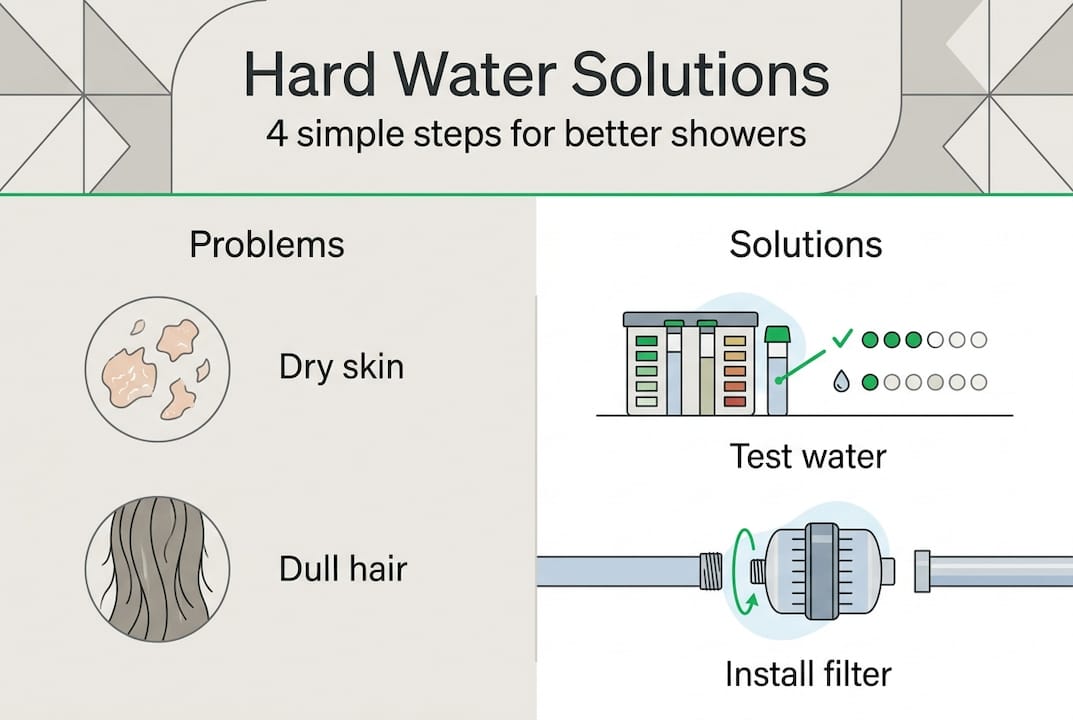
Hard water is simply water with high concentrations of calcium and magnesium minerals. These minerals are harmless to drink, but they cause real problems when they interact with soap, shampoo, and your skin. Instead of lathering cleanly, soap reacts with calcium to form a sticky residue called soap scum. That residue clings to your skin and hair after every rinse.
Over time, the effects stack up. Skin loses its ability to hold moisture, leading to dryness, tightness, and itching. Hair becomes brittle, loses shine, and color-treated strands fade faster because minerals interfere with dye molecules. For people with sensitive skin, hard water can trigger eczema flare-ups and persistent scalp irritation.
Here’s what hard water damage looks like in daily life:
- Skin: Persistent dryness, itching after showers, clogged pores, and increased breakouts
- Hair: Dull appearance, rough texture, color fading quickly, and increased breakage
- Scalp: Flaking, irritation, and product buildup that regular shampoo can’t clear
- Fixtures: White chalky scale on showerheads, faucets, and glass doors
Addressing hard water in your beauty routine isn’t just about aesthetics. It’s about removing a daily source of irritation that compounds over months and years. The hard water effects on hair alone are enough reason to act, but the skin benefits make it even more worthwhile. A hard water solutions checklist can help you stay organized as you work through each fix.
Now that you know why hard water is a problem for your skin and hair, let’s look at how to prepare for an effective solution.
What you need: Tools and materials checklist
Before you start, gather everything you’ll need. Going in without the right tools means stopping halfway through or making a choice you’ll regret in three months. Here’s what to have on hand.
Essential tools and products:
- Water hardness test kit (or your city’s annual water quality report)
- A quality shower filter with multi-stage media (KDF-55, activated carbon, and vitamin C or ceramic options)
- Replacement filter cartridges certified to NSF/ANSI 177 standards for chlorine reduction
- Chelating shampoo containing EDTA or citric acid
- Adjustable wrench and plumber’s tape for installation
- A calendar or app reminder for cartridge change intervals
Pro Tip: Before buying any filter, check your water hardness level. Your city’s water quality report is free and usually available online. If you’re on well water, pick up an at-home test kit. Knowing your hardness in parts per million (ppm) tells you how aggressive your filtration needs to be.
Here’s a quick comparison of filter media types to help you choose:
| Filter media | What it removes | Best for |
|---|---|---|
| KDF-55 | Chlorine, heavy metals, bacteria | General water quality improvement |
| Activated carbon | Chlorine, chloramines, VOCs | Odor and taste improvement |
| Vitamin C (ascorbic acid) | Chlorine and chloramines | Sensitive skin and hair |
| Ceramic balls | Minerals, bacteria, odor | Broad-spectrum filtration |
| Multi-stage combined | All of the above | Hard water with multiple concerns |
A premium filter workflow that combines several of these media types gives you the most complete protection. If you’re still weighing your options, reviewing the full range of shower filter benefits can help you prioritize what matters most for your specific concerns.
With all your tools ready, you can move through each step focusing on best practices and product choices.
Step-by-step hard water solution for healthier showers
This is the core of the process. Follow these steps in order for the best results.
-
Test your water hardness. Use a test kit or pull your city’s water quality report. Water under 60 ppm is soft. Between 61 and 120 ppm is moderately hard. Above 180 ppm is very hard and will wear out filter cartridges faster.
-
Install an NSF/ANSI 177 certified shower filter. NSF-certified multi-stage filters with KDF-55 and activated carbon are the most effective at reducing chlorine and scale. Wrap the threads with plumber’s tape, hand-tighten first, then snug with a wrench. Don’t overtighten.
-
Set a cartridge replacement schedule. Replace your cartridge every 4-6 months or after roughly 10,000 gallons of use. If your water tests above 180 ppm, plan to replace it closer to the 3-month mark. A spent cartridge does almost nothing and gives you false confidence.
-
Add a chelating shampoo to your weekly routine. Chelating shampoos with EDTA or citric acid break the bond between minerals and your hair shaft, clearing what your filter can’t catch. Use it once a week or every other week depending on your hardness level.
-
Consider a whole-house softener for extreme hardness. If your water is consistently above 200 ppm, a shower filter alone won’t be enough. Ion exchange softeners replace calcium and magnesium with sodium, fully removing hardness at the source. They’re a bigger investment but solve the problem at every tap.
Pro Tip: If you have chlorine sensitivity, a vitamin C-based filter is your best friend. Ascorbic acid neutralizes both chlorine and chloramines instantly on contact, which KDF-55 alone doesn’t fully handle.
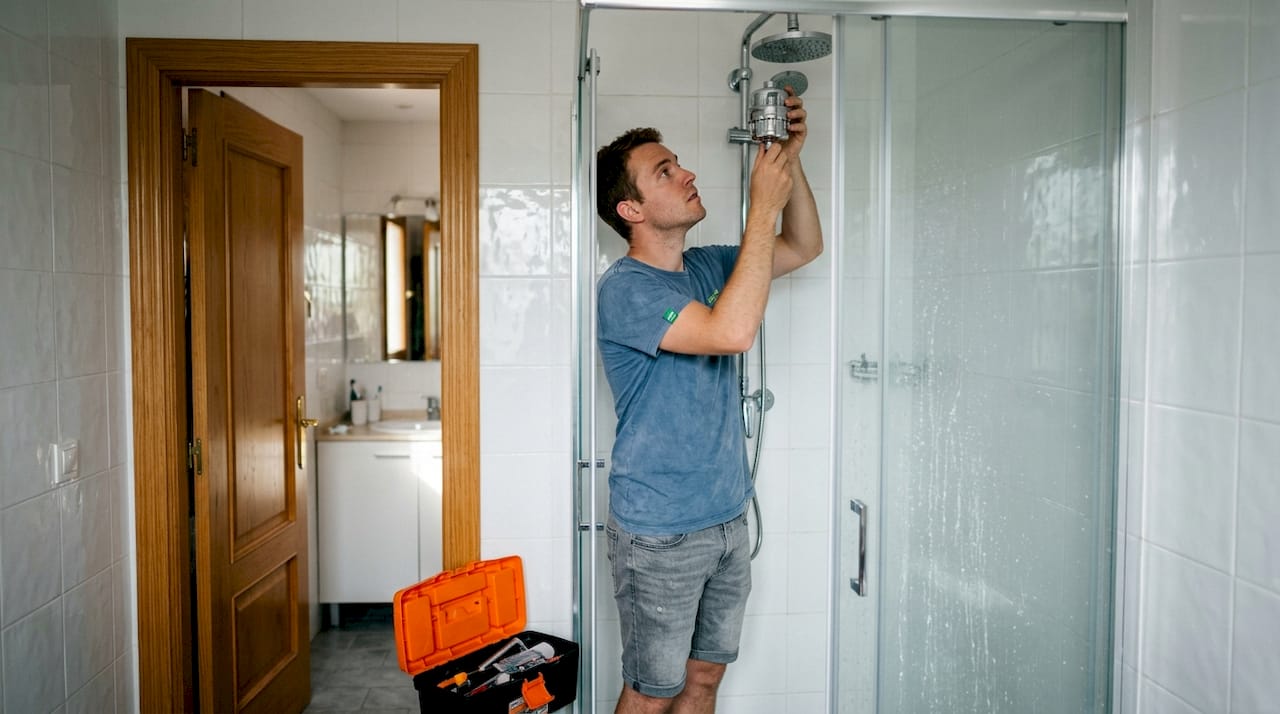
Here’s a side-by-side look at your two main options:
| Feature | Shower filter | Whole-house softener |
|---|---|---|
| Cost | $30 to $150 | $800 to $2,500+ |
| Installation | DIY, 10 minutes | Professional required |
| Chlorine reduction | Up to 99% | None (separate system needed) |
| Mineral removal | Partial (scale reduction) | Complete (ion exchange) |
| Maintenance | Cartridge every 4-6 months | Salt refill, annual service |
| Best for | Moderate hardness, renters | Very hard water, homeowners |
For most people dealing with moderate hard water, a quality shower filter handles the job well. Knowing when to replace your shower filter is just as important as the initial install. You can also compare top-rated options like the SparkPod and Weddell Duo to find the right fit for your setup.
Shower filters are a powerful first line of defense, but they work best as part of a layered routine that includes chelating shampoo and regular cartridge changes.
With steps outlined, it’s important to prepare for everything that might go wrong or need extra attention.
Troubleshooting and common mistakes
Even with the right products, things can go sideways. Here are the most common problems and how to fix them.
Common mistakes to avoid:
- Buying a filter without checking your water hardness first
- Skipping cartridge changes because the water “looks fine”
- Using a chelating shampoo daily (it’s strong — weekly is enough for most people)
- Installing the filter without plumber’s tape, causing leaks
- Assuming one solution handles everything when your water is extremely hard
If your water pressure drops noticeably after installing a filter, the cartridge may already be clogged with sediment. This happens faster in areas with high mineral content. Replace the cartridge and consider adding a sediment pre-filter if it keeps happening.
If your hair still feels dull and rough after a month of filtering, check two things. First, confirm your cartridge is still within its service life. Second, add or increase your chelating shampoo use. Very hard water above 200 ppm can overwhelm a shower filter on its own, and a distilled water rinse after washing can help clear residual minerals from hair.
Shower filters reduce chlorine and some scale, but they don’t work like softeners. They condition the water rather than removing hardness minerals entirely. That’s why chelating products are a necessary complement, not an optional add-on.
Pro Tip: If you’re unsure whether your filter is still working, buy a chlorine test strip. Run water through your filter and test it. If chlorine is still present at normal tap levels, your cartridge needs replacing.
Severe hard water cases, typically above 200 ppm, often require a whole-house softener or a distilled water rinse to see meaningful results in hair and skin quality.
For a deeper look at what can go wrong and how to fix it, the troubleshooting filter issues guide covers the most common scenarios in detail.
Once you’ve handled these issues, it’s time to check your progress and see what results to expect.
How to verify results and optimize your routine
Results don’t always show up overnight. Skin takes a few weeks to rehydrate, and hair needs a couple of wash cycles to clear mineral buildup. Here’s what to look for as your routine takes effect.
Signs your solution is working:
- Skin feels softer and less tight after showers
- Hair has more shine and feels smoother when dry
- Less soap scum on shower walls and glass
- Scalp irritation or flaking decreases
- Color-treated hair holds its tone longer between salon visits
To benchmark your filter’s performance, look at verified data. The SparkPod 23-stage filter achieves 97% chlorine reduction and a 23% improvement in skin softness, while the Weddell Duo carries NSF certification with 99% PFAS removal and 87% chlorine reduction. These numbers give you a realistic target for what a quality filter should deliver.
Track your water hardness every few months, especially if you notice your results slipping. Seasonal changes and municipal water source shifts can change hardness levels. Adjust your cartridge replacement schedule accordingly. Learning how water filtration improves shower quality over time helps you stay ahead of changes rather than reacting to them.
If you’re pleased with your new results, you can take further action with specialized solutions that fit your needs.
Premium solutions for ongoing shower wellness
Once your routine is dialed in, the biggest risk is letting it slip. Cartridges go unchanged, chelating shampoo runs out, and within a few months you’re back where you started. That’s exactly the problem that premium, subscription-based filtration is designed to solve.
Vitaclean’s Vitamin C shower filter shots deliver a targeted dose of ascorbic acid that neutralizes chlorine and chloramines on contact, making them ideal for anyone with sensitive skin or color-treated hair. For broader mineral and bacteria filtration, the ceramic shower filter offers multi-stage protection in a compact, easy-to-install design. And if you want to take the guesswork out of maintenance entirely, the filter refill plan sends replacement cartridges on a schedule so you never shower through a spent filter again. Your skin and hair will thank you for the consistency.
Frequently asked questions
How often should I replace my shower filter cartridge in hard water areas?
Replace your cartridge every 4-6 months, or more frequently if your water tests above 180 ppm. Very hard water exhausts filter media faster, so check your hardness level and adjust your schedule accordingly.
Can shower filters fully soften hard water?
Shower filters reduce chlorine and scale significantly, but they don’t fully remove hardness minerals the way a whole-house ion exchange softener does. For very hard water, you’ll need both a filter and a softener for complete results.
What is a chelating shampoo and how often should I use it?
A chelating shampoo uses EDTA or citric acid to remove bonded minerals from hair and scalp. Use it once a week or every other week to clear hard water residue that your shower filter can’t reach.
How can I check my home’s water hardness?
Pick up an at-home water test kit from a hardware store, or download your city’s annual water quality report online. Both give you a ppm reading for calcium and magnesium so you can choose the right filtration level.
Do hard water solutions improve skin conditions like eczema?
Yes. Filtered or softened water reduces mineral irritation and helps skin retain moisture, which can noticeably reduce eczema flare-ups and general dryness over time.