
Hard Water Damage: Key Signs and How to Protect Your Home
TL;DR:
- Hard water causes mineral deposits, soap scum, and appliance buildup in homes.
- It negatively impacts skin, hair, and reduces water pressure over time.
- Testing and filtration solutions can effectively address hard water issues.
You scrub your shower doors, but the cloudy film keeps coming back. Your hair feels brittle no matter what conditioner you use, and your skin itches after every wash. If this sounds familiar, the problem probably isn’t your cleaning products or your hair care routine. Hard water, which contains elevated levels of dissolved calcium and magnesium minerals, is one of the most common and most overlooked culprits behind these persistent issues. Knowing exactly what to look for is the first step toward protecting your home, your skin, and your hair.
Table of Contents
- Visible signs: Spotting, scaling, and residue on fixtures
- Plumbing and appliance red flags: Reduced water pressure and limescale
- Soap struggles: Scum, residue, and lack of lather
- Personal impact: Skin irritation and hair problems linked to hard water
- How to confirm hard water: Testing and next steps
- Why many overlook hard water damage (and what really works)
- Restore your water and wellness: Simple upgrades that work
- Frequently asked questions
Key Takeaways
| Point | Details |
|---|---|
| Chalky residue is a warning | White deposits on faucets and glass point to hard water mineral buildup. |
| Soap struggles signal trouble | Persistent soap scum and poor lather often mean your water is hard. |
| Appliances lose efficiency | Limescale from hard water can reduce water flow and damage appliances over time. |
| Dry hair and skin are clues | Unusual dryness, itchiness, or dullness in hair and skin often links back to hard water exposure. |
| Testing leads to solutions | A simple test confirms water hardness so you can target the right fixes. |
Visible signs: Spotting, scaling, and residue on fixtures
The most obvious clues that hard water is moving through your pipes show up right on your fixtures and glass surfaces. Chalky white mineral deposits on faucets, showerheads, and other fixtures are a textbook warning sign, especially noticeable after water dries on the surface. These deposits, often called limescale, form when minerals like calcium carbonate are left behind as water evaporates.
Look around your bathroom and kitchen for these telltale signs:
- White or chalky film around the base of faucets or on showerhead nozzles
- Cloudy spots or streaks on drinking glasses and dishes even after a full dishwasher cycle
- Foggy or filmed-over glass shower doors that don’t clear up with regular cleaning products
- Gray or orange tinge on porcelain sinks or toilets, which can result from mineral and iron combinations in the water
- Rough texture on surfaces that should feel smooth, like tile grout or stainless steel fixtures
The frustrating thing about scale buildup is that it compounds over time. A thin film of minerals becomes a thick crust that is genuinely difficult to remove without acidic cleaners or professional help. Understanding the root cause, rather than just scrubbing harder, is the smarter move. Learning more about preventing hard water stains can save you significant cleaning time and money in the long run.
Now that you’ve seen how hard water damage can manifest on visible surfaces, let’s explore other less obvious but equally telling symptoms throughout your home.
Plumbing and appliance red flags: Reduced water pressure and limescale
Beyond what’s visible on surfaces, hard water can quietly impact your home’s plumbing and appliances. This is where things get expensive if you ignore the early warning signs. Hard water buildup restricts flow over time by narrowing the interior diameter of pipes, which translates directly into lower water pressure at your faucets and showerheads.
| Symptom | Likely cause | When it typically appears |
|---|---|---|
| Reduced water pressure | Mineral deposits narrowing pipes | After months to years of buildup |
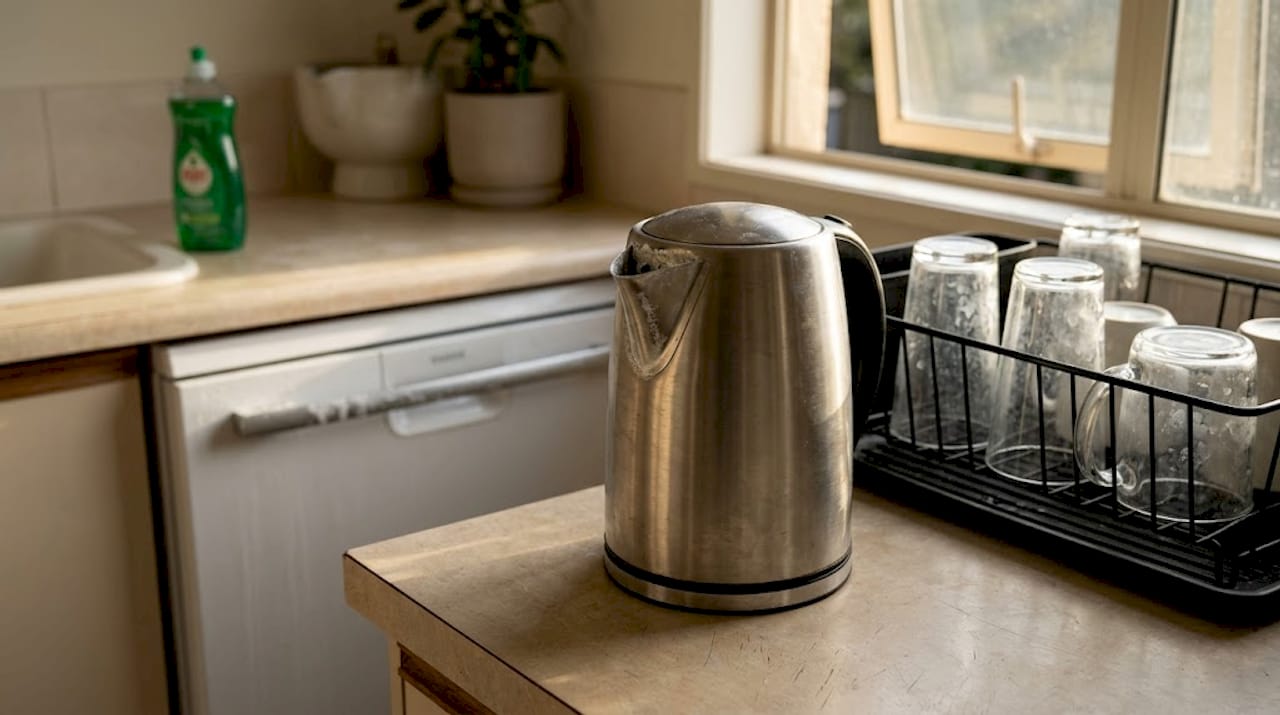
| Kettle with white flakes | Internal limescale deposits | Within weeks in very hard water areas |
| Dishwasher leaving residue | Mineral interference with detergent | Ongoing, worsens over time |
| Water heater running longer | Scale insulating heating elements | Gradual, raises energy bills |
| Washing machine drum scaling | Mineral accumulation inside drum | Visible after 1 to 2 years |
Appliances take a significant hit from hard water exposure. Your water heater, for example, can lose efficiency as limescale builds up on the heating elements. The U.S. Department of Energy notes that water heaters are already among the largest energy consumers in a home, so any efficiency loss matters to your monthly bills.
Key differences to keep in mind: hard water buildup is gradual and tends to affect every fixture in the home at a similar rate. If only one faucet has low pressure, that may be a different plumbing issue. When it affects multiple fixtures across different rooms, hard water is a far more likely explanation.
Watch for these appliance-specific red flags:
- Kettles boiling slower than usual or leaving white flakes in your cup
- Dishwashers leaving a cloudy film on supposedly clean glasses
- Washing machines that need more detergent to get clothes clean
- Water heaters that take longer to heat or have higher energy costs
Pro Tip: If you notice a drop in water pressure at your showerhead specifically, unscrew the head and check the nozzle openings. Visible white or yellow buildup on those tiny holes is a clear signal that mineral deposits are at work.
While plumbing and appliance problems can be serious, one of the most persistent clues is found in your daily cleaning routine.
Soap struggles: Scum, residue, and lack of lather
This is the category that catches most people off guard, because the signs feel like personal habits or product failures rather than a water problem. Hard water interferes directly with soap performance, reducing its ability to lather and leaving behind residue that clings to your skin, your tub, and your laundry.
Here’s how hard water stacks up against soft water in everyday cleaning situations:
| Cleaning scenario | Soft water | Hard water |
|---|---|---|
| Showering with bar soap | Rich, easy lather | Thin, difficult lather |
| Washing dishes by hand | Bubbles form quickly | Requires much more soap |
| Laundry rinse cycle | Clothes come out soft | Clothes feel stiff or scratchy |
| Shower walls over time | Easy to wipe clean | Persistent soap scum buildup |
| Skin after washing | Feels clean and smooth | May feel filmy or tight |
Soap scum is a specific chemical reaction. When the fatty acids in soap meet the calcium and magnesium in hard water, they form a white or gray curd that sticks to surfaces. No amount of scrubbing fully fixes this unless you address the mineral content of the water itself.
Clothing is another victim. Even freshly washed items may come out of the machine feeling rough or stiff, because mineral residue stays embedded in the fabric fibers. Over time, this can dull colors and break down fabric faster than normal wear.
- Towels that feel rough or lose their softness quickly
- Whites that appear gray or yellow after repeated washing
- Lingering soapy film on skin even after thorough rinsing
- Using significantly more shampoo or body wash than the recommended amount
Pro Tip: Try this quick test at home. Fill a clear bottle with about ten ounces of your tap water, add a few drops of pure liquid soap, and shake it for ten seconds. If the water goes cloudy and doesn’t produce many bubbles, your water is likely hard. Soft water will create a thick, frothy lather.
Apart from what you see around your home, hard water can take a hidden toll on your personal wellness.
Personal impact: Skin irritation and hair problems linked to hard water
This is where hard water gets personal. The same minerals that leave deposits on your showerhead don’t rinse cleanly off your body, either. They can sit on your skin and scalp, disrupting your skin’s natural moisture barrier and leaving hair coated with a mineral film that changes how it looks, feels, and behaves.
Research specifically links hard water to hair damage including dryness, dullness, lack of shine, increased tangles, and higher rates of breakage. Mineral buildup on the hair shaft also makes it harder for shampoo and conditioner to rinse out completely, which adds to the limp, weighed-down feeling many people chalk up to their product choices.
The most common personal signs of hard water exposure include:
- Dry, tight, or itchy skin after showering, even when you use a moisturizing body wash
- Flaky scalp that doesn’t respond well to dandruff shampoos
- Dull, flat hair that lacks the shine it used to have or that products promise
- Increased breakage or shedding noticed in your brush or on the shower floor
- Difficult-to-manage hair that tangles easily or doesn’t hold a style well
- Worsening skin conditions like eczema or psoriasis, especially during high-use periods
On that last point, the research is striking. A large UK Biobank analysis found an increased psoriasis risk associated with rising domestic water hardness levels. For anyone already managing a skin condition, hard water can make flare-ups more frequent and more severe.
“Mineral deposits from hard water don’t just affect your fixtures. They can disrupt the scalp’s natural balance, interfere with your skin barrier function, and make every product you use work less effectively. The water is often the variable no one thinks to change.”
Understanding the full scope of hard water hair effects can help you make smarter choices about both your water and your care routine. For more targeted strategies, there are also practical hair care tips for hard water that can help bridge the gap while you work on a longer-term solution. Some people also wonder about more severe consequences, and exploring whether hard water and hair loss are connected is a valid next question.
If you’re starting to recognize these issues in your own home or personal care, here’s how to find out for sure.
How to confirm hard water: Testing and next steps
Suspecting hard water and knowing you have it are two different things. The good news is that confirming it is simple, fast, and inexpensive. A hardness test kit is the most accurate at-home method, giving you a number in grains per gallon (GPG) or milligrams per liter (mg/L) that tells you exactly how hard your water is.
Here’s a clear process for moving from suspicion to certainty:
- Order a home water hardness test kit from a hardware store or online retailer. Most kits cost under $15 and give results in minutes.
- Request your local water quality report. Water utilities in the U.S. are required to publish annual reports called Consumer Confidence Reports, which include hardness levels for your area.
- Compare your test result to the standard scale. Water measuring above 7 GPG (120 mg/L) is generally classified as hard, and above 10.5 GPG is very hard.
- Document the signs you’ve noticed around your home, on your skin, and in your hair. Cross-reference these with your test result to build a complete picture.
- Identify the right solution for your specific situation. Point-of-use filters like shower filters address skin and hair concerns directly and immediately. Whole-house softeners treat all water entering your home but require professional installation.
Pro Tip: Even if you rent and can’t install a whole-home system, a shower filter is something you can set up yourself in under ten minutes and take with you when you move. It’s the most accessible entry point for anyone dealing with hard water effects on their body.
Understanding your water’s hardness level makes every next decision clearer. Explore a step-by-step hard water solution guide to match your confirmed hardness level to the right fix.
Why many overlook hard water damage (and what really works)
Here’s the honest truth about why so many people live with hard water problems for years without connecting the dots. The symptoms show up so gradually that they become the new normal. Dry skin becomes your skin type. Dull hair becomes just how your hair looks. Soap scum becomes a cleaning challenge you accept as just part of owning a shower. The frustration gets absorbed into daily life rather than traced back to a single, fixable cause.
The second reason hard water gets overlooked is that the solutions people try first don’t address the actual problem. Buying expensive shampoos, switching moisturizers, or trying new cleaning sprays can offer small improvements, but none of them change the mineral content of the water you’re using every single day. It’s like trying to dry off with a damp towel.
What genuinely works is targeting the water itself. Shower-specific filtration, particularly systems using Vitamin C filters or ceramic media, has been shown to reduce chlorine and mineral load at the point where it matters most, your shower. People who make this change often report immediate improvements in how their hair feels after washing and how their skin looks within a few weeks.
The other piece of practical wisdom worth sharing: testing early saves money. A $10 water test kit can tell you whether your instincts about hard water are correct before you spend money on softening salts, plumber visits, or appliance repairs caused by limescale buildup. Hard water isn’t a rare problem, either. More than 85 percent of U.S. homes are estimated to have some level of hard water. Chances are, your water is harder than you realize.
Protecting your hair from ongoing hard water exposure is an ongoing process, not a one-time fix. A consistent approach that combines protecting hair from hard water with filtered water at the source delivers results that no product alone can match.
Restore your water and wellness: Simple upgrades that work
You’ve now got a clear picture of how hard water shows up in your home and on your body. The next move doesn’t have to be complicated or expensive.
Vitaclean’s Vitamin C shower filter shots are designed to neutralize chlorine and reduce mineral impact at the shower level, delivering immediate results for skin hydration and hair vitality. For deeper filtration, ceramic filter solutions offer another layer of protection tailored to water quality improvement. Both are easy to install, renter-friendly, and built around the daily shower experience you already have. Keeping your filter fresh is just as important as having one, and exploring shower head filter replacements makes ongoing maintenance simple and consistent. Better water, every single day.
Frequently asked questions
How can I tell if my water is hard without a test kit?
Look for chalky mineral deposits on faucets and showerheads, cloudy glassware after washing, stubborn soap scum, and difficulty getting soap or shampoo to lather as reliable at-home indicators.
Can hard water make skin conditions worse?
Yes. Research shows an increased psoriasis risk with rising domestic water hardness, and eczema flare-ups are also commonly linked to hard water exposure.
Why does my hair feel lifeless after washing?
Mineral buildup from hard water coats the hair shaft, causing dullness and tangles while also preventing shampoo and conditioner from rinsing out fully, which leaves hair looking flat and feeling heavy.
Does hard water only affect old homes?
No. Hard water is determined by your local water supply, not the age of your plumbing. New construction and older homes in the same area will have the same water hardness if they share the same municipal source.
Should I replace or just filter my water to prevent hard water damage?
Filtering is usually the most practical and affordable first step, especially for renters. A quality shower filter delivers immediate improvements for your skin and hair without requiring permanent changes to your home’s plumbing.