
Transform Your Shower for Better Skin and Hair Vitality
TL;DR:
- Filtered shower water reduces chlorine and heavy metals, improving skin and hair health.
- Proper assessment and installation of the right filter extension optimize results.
- Consistent filter maintenance and tracking signs ensure long-term skin and hair benefits.
Transform Your Shower for Better Skin and Hair Vitality
You follow every step of your skincare routine, use the best conditioner on the shelf, and still wake up with dull skin and frizzy hair. Frustrating, right? The missing link is often right above your head. Your daily shower water is saturated with chlorine, heavy metals, and sediments that silently work against every product you apply. The good news is that upgrading your shower water quality is one of the most impactful changes you can make for your skin and hair. This guide walks you through everything, from understanding your water to installing the right filter and tracking real results.
Table of Contents
- Why your shower water matters more than you think
- What you need before you upgrade: Tools and filters
- Step-by-step: Installing and optimizing your shower filter
- How to assess results and take your routine to the next level
- Why water quality is the wellness upgrade most people overlook
- Elevate your shower experience with advanced filtration
- Frequently asked questions
Key Takeaways
| Point | Details |
|---|---|
| Water quality matters | Unfiltered shower water contains contaminants that impair skin and hair vitality. |
| Choose the right filter | Match your filter to your water type and verify certifications for best results. |
| Install and maintain | Proper installation and regular filter changes ensure a consistently revitalizing shower. |
| Measure your results | Assess improvements in your skin and hair to verify the upgrade’s effectiveness. |
Why your shower water matters more than you think
Most people assume that showering is neutral. Water touches your skin, rinses clean, done. But the water coming from your tap is processed with disinfectants, travels through aging pipes, and picks up contaminants along the way. By the time it hits your skin, it can be doing real damage.
Common contaminants in shower water include chlorine (added to kill bacteria), chloramine (a chlorine and ammonia compound used in many city systems), heavy metals like lead and copper from older plumbing, and fine sediment particles. According to shower filter research, shower water filters primarily remove chlorine, heavy metals, and sediments using media like KDF-55, calcium sulfite, activated carbon, and vitamin C.
For your skin, daily exposure to chlorinated water strips away the natural oils that form your skin’s protective barrier. This leads to dryness, tightness after showering, and worsened conditions like eczema or rosacea. Your skin’s microbiome, which plays a huge role in preventing breakouts and irritation, also takes a hit every time chlorine passes over it. Read more about the benefits for your hair and skin from a filtration perspective.
For your hair, chlorine binds to the protein structure of each strand, making it brittle and prone to breakage. Color-treated hair fades significantly faster because chlorine accelerates dye oxidation. If your hair looks dull or feels like straw no matter what you put on it, your water could be the reason. Many people who wonder whether they can transform their skin and hair with a simple swap are often surprised by how fast filtered water shows results.
Here is a quick comparison of what unfiltered water does versus what filtered water offers:
| Contaminant | Effect on skin and hair (unfiltered) | Outcome with filtration |
|---|---|---|
| Chlorine | Dryness, irritation, color fade | Softer skin, retained moisture |
| Heavy metals | Breakouts, scalp buildup | Clearer skin, reduced scalp itching |
| Sediment | Clogged pores, dull hair | Cleaner pores, shinier strands |
| Chloramine | Persistent dryness, chemical odor | Eliminated with vitamin C filter |
The most insidious damage is invisible. Your skin does not visibly react to chlorine the way it reacts to a harsh scrub. The effect accumulates slowly over months and years, quietly undoing the work of your creams, serums, and masks.
Pro Tip: If your skin feels tight immediately after a shower, that is a reliable sign that your water is stripping your moisture barrier. Do not blame your cleanser first. Check your water.
What you need before you upgrade: Tools and filters
Before you purchase any filter, you need to understand your specific water profile. Not all water is the same, and not all filters are equally suited to every situation. Skipping this step means you might invest in a filter that underperforms for your water type.
How to assess your water type:
- Chlorinated water: Most city water. A simple pool test strip will confirm chlorine presence within seconds.
- Chloraminated water: Common in larger metro areas. It smells subtly different from straight chlorine and requires a different type of filter media.
- Hard water: Contains high levels of calcium and magnesium minerals. Leaves scale buildup on fixtures and makes soap lather poorly. A TDS (total dissolved solids) meter gives you a reading in seconds.
- Combination: Many homes face both chlorination and hard water simultaneously, requiring a multi-stage filtration approach.
Once you know your water type, you can choose the right filter media. Edge cases matter here: chloramine removal requires vitamin C or calcium sulfite because activated carbon loses effectiveness in hot shower water, and hard water demands high-stage KDF filtration. This is critical to get right. Using the wrong filter is nearly as bad as using no filter at all.
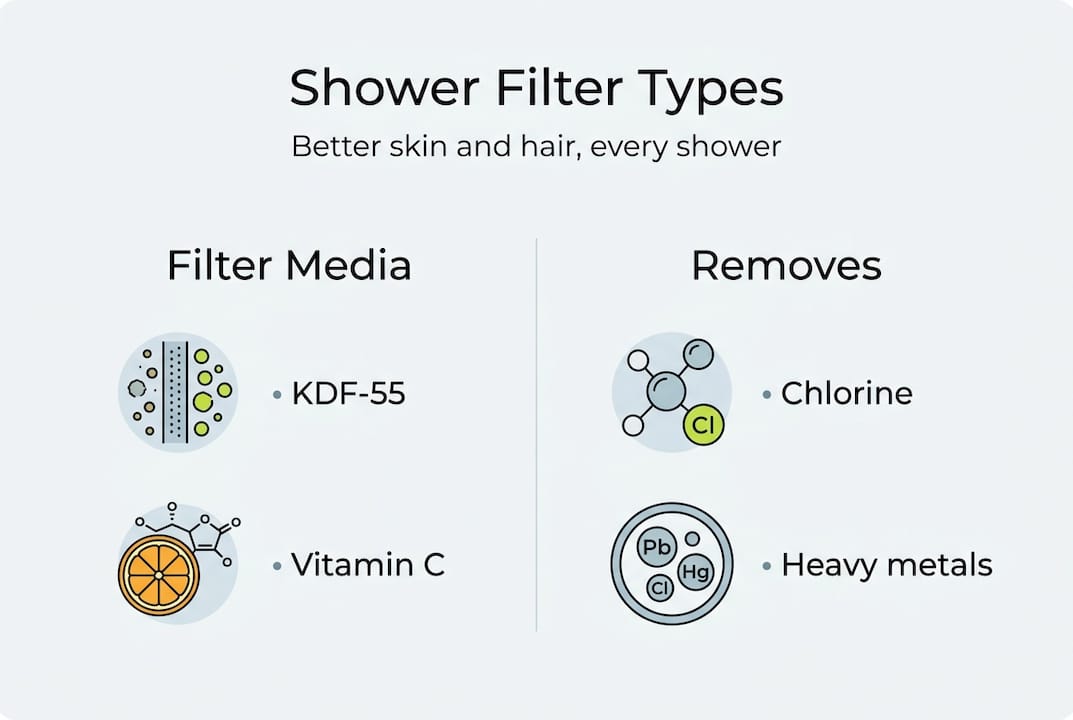
Here is a breakdown of the main filter types:
| Filter type | What it removes | Best for |
|---|---|---|
| KDF-55 | Chlorine, heavy metals, bacteria | Hard water, high mineral content |
| Activated carbon | Chlorine, VOCs, sediment | Mild chlorine, cool water temperatures |
| Calcium sulfite | Chlorine, chloramine | Hot showers, chloramine systems |
| Vitamin C | Chlorine, chloramine | All water types, sensitive skin |
Look into vitamin C shower heads as a strong all-around option, especially if you are dealing with chloramine or have sensitive skin. Vitamin C (ascorbic acid) neutralizes chlorine and chloramine chemically and is gentle enough to benefit your skin directly. You can also explore vitamin C filtration in more detail to understand why it outperforms basic carbon in hot water environments.
What certifications should you look for? NSF/ANSI 177 is the gold standard for shower filters. It verifies that the filter reduces free chlorine by at least 50% for a minimum of 10,000 gallons. Not all filters carry this certification, and those that do have been independently tested, which matters when you are making a health decision for your daily routine.
Essential components to gather before starting:
- Filter housing unit (wall-mount or handheld, depending on your preference)
- Replacement cartridges compatible with your chosen filter media
- Teflon tape for a watertight seal
- TDS meter to track your baseline water quality
- Pool test strips for a quick chlorine check before and after installation
Step-by-step: Installing and optimizing your shower filter
Installing a shower filter is genuinely simple. Most systems take under 15 minutes and require no plumbing experience. What matters more than installation speed is that you do it correctly and maintain it consistently.
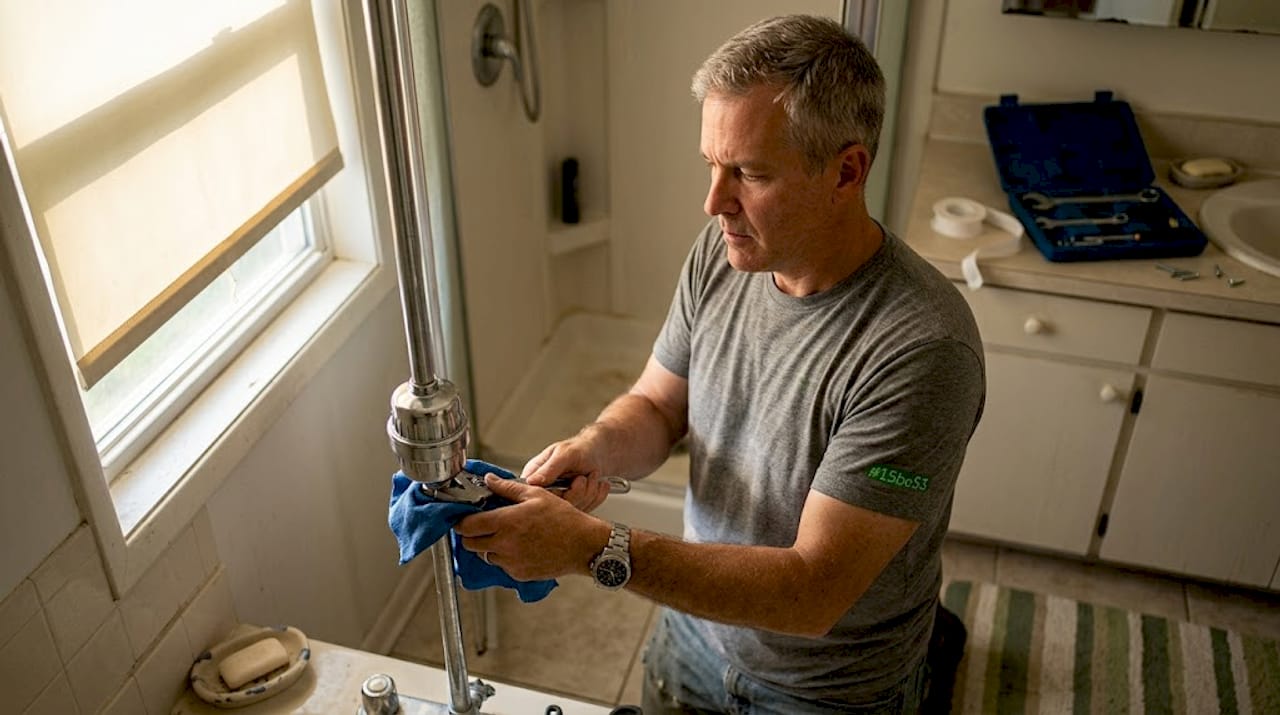
Step 1: Turn off the water and remove your current shower head. Use a wrench if it is tight, but wrap it in a cloth to protect the finish. Clean the threaded pipe with a dry cloth to remove mineral buildup.
Step 2: Wrap the threaded pipe with Teflon tape. Wind it two to three times clockwise. This ensures a leak-free seal when you attach the new filter housing.
Step 3: Attach the filter housing. Hand-tighten first, then give it a quarter turn with a wrench. Over-tightening can crack the housing, so do not overdo it.
Step 4: Insert your filter cartridge according to manufacturer instructions. Some cartridges are directional, meaning water must flow through them in a specific orientation to work properly.
Step 5: Run water for 2 minutes before using. This flushes out any carbon dust or manufacturing residue from the new cartridge. The water may look slightly gray at first. This is normal.
Step 6: Test immediately with a pool strip. Hold it in the shower stream for 30 seconds. A working filter should show near-zero chlorine. If chlorine still reads high, check your cartridge orientation or contact the manufacturer.
Understanding how filter cartridges enhance your shower and knowing what a shower filter actually does will help you pick the right cartridge and get the most from it.
Common mistakes to avoid:
- Skipping the Teflon tape (leads to leaks and frustration)
- Not flushing the cartridge before first use
- Ignoring filter life and using an exhausted cartridge for months
- Choosing a filter rated for cool water but using it in a steaming hot shower
For maintenance, filters should be replaced every 3 to 6 months or after 4,000 to 10,000 gallons, with top-performing models maintaining a pressure drop under 5%. If you notice reduced water pressure or your pool strip shows rising chlorine again, it is time for a new cartridge.
Pro Tip: Write your next filter change date on a sticky note inside your bathroom cabinet the day you install a new cartridge. You will never miss a replacement again, and your results will stay consistent all year.
How to assess results and take your routine to the next level
Once your filter is running, the results do not happen overnight. Skin and hair need time to repair. But you will notice signs within the first week if your filter is working correctly.
Visible signs of improvement to look for:
- Skin feels less tight immediately after showering
- Reduced redness or irritation, especially in people with sensitive skin
- Hair feels softer and looks shinier without extra product
- Scalp feels less itchy or flaky
- Color-treated hair retains vibrancy longer between salon visits
To track your progress accurately, run a few simple self-checks every two weeks. Touch your skin 30 minutes after showering, without applying any products, and note the texture. Photograph your hair in the same lighting once a week. These small habit checks reveal changes you might otherwise dismiss as coincidence.
Here is a before-and-after reference to guide your expectations and identify when it is time to reassess:
| Area | Before filter | After 4 weeks | Sign to upgrade again |
|---|---|---|---|
| Skin texture | Tight, dry, dull | Soft, hydrated, clear | Dryness returning after 6 weeks |
| Hair feel | Brittle, frizzy, flat | Smooth, bouncy, shiny | Dullness creeping back in |
| Scalp health | Itchy, flaky | Calm, balanced | Itching resumes unexpectedly |
| Water pressure | Normal | Minimal change | Noticeable pressure drop |
NSF/ANSI 177 certification also verifies ongoing chlorine reduction throughout the rated filter life, with KDF plus vitamin C being the best combination for hard water and chloramine environments. If your results plateau, this combination is worth upgrading to.
Beyond the filter itself, you can build a full spa-like routine around it. Use your cleaner water as the foundation and layer in complementary habits. Keep the shower cooler toward the end to close pores. Use a gentle, sulfate-free cleanser so you are not stripping what the filter protected. Apply a light moisturizer within 60 seconds of stepping out to lock in the hydration your skin retained. To inspire even more ideas, the bathroom spa makeover guide is a practical resource for turning your daily shower into a true ritual.
Why water quality is the wellness upgrade most people overlook
Here is the uncomfortable truth: most wellness enthusiasts spend hundreds of dollars on serums, supplements, and specialty tools, yet the water touching their skin and hair for 8 to 10 minutes every single day goes completely unexamined. Water filtration is not glamorous. There is no trending hashtag for it. But it is arguably the highest-leverage change you can make for your skin and hair health.
We have seen people cycle through three or four different shampoos trying to fix hair that filtered water fixed within weeks. The frustration is real, and it is also completely avoidable. Expensive skincare routines built on a foundation of chlorinated, mineral-heavy water are always going to underperform. It is like applying premium oil to a dirty engine.
The reason so few people make this connection is that the damage is slow and invisible. You do not feel the chlorine stripping your moisture barrier in one single shower. You feel it over months, as dryness creeps in and nothing seems to fix it. Understanding why investing in water filters pays off is the mindset shift that changes everything. Foundational changes, like water purity, outperform trendy products every time. Start with what touches your skin most, and build your routine from there.
Elevate your shower experience with advanced filtration
The steps in this guide give you everything you need to start making real improvements to your shower water quality. But having the right products makes the process effortless.
At Vitaclean, we specialize in advanced filtration solutions built specifically for skin and hair wellness. Our vitamin C shower filter shots are a simple, effective way to neutralize chlorine and chloramine with every shower. Want consistency without the hassle of remembering to reorder? Our filter refill plan delivers fresh cartridges on schedule, so your filtration never lapses. Round out your routine with our curated shower accessories designed to complement your filtration system and make every shower feel like a spa visit.
Frequently asked questions
How often should shower filters be replaced for best results?
Replace shower filters every 3 to 6 months or after 4,000 to 10,000 gallons of use for optimal performance. Going beyond this range reduces filtration effectiveness significantly.
What is the difference between KDF, activated carbon, and vitamin C filters?
KDF removes chlorine and heavy metals, activated carbon is less effective in hot water, and vitamin C neutralizes both chlorine and chloramine. Vitamin C is the most versatile option for hot showers and sensitive skin.
How do I know if my water contains chlorine or chloramine?
Check your local water quality report, which most municipal systems publish online, or use pool test strips to detect chlorine or chloramine directly from your tap.
Are certified shower filters really better?
Yes. NSF/ANSI 177 certified filters are independently tested to verify effective chlorine reduction and meet a standardized performance benchmark, making them a more reliable investment.