
8 evidence-backed tips for healthier showers and better skin
TL;DR:
- Hot water and long showers damage skin’s natural oils, leading to dryness and irritation.
- Gentle, fragrance-free cleansers and immediate moisturizer boost skin and hair health.
- Water quality, including chlorine and minerals, significantly affects skin and hair condition.
Most people step into the shower without a second thought, assuming more heat and more lather equals cleaner and healthier. But your daily shower habits may actually be working against your skin and hair. Hot water, harsh cleansers, and poor water quality can strip your skin’s natural moisture barrier, trigger scalp irritation, and leave hair brittle. The good news? Small, evidence-based adjustments to your shower routine can produce real, visible results in just a few weeks. This guide walks you through every stage, from water temperature to post-shower moisturizing, so you can finally stop undoing the very thing you’re trying to fix.
Table of Contents
- Choose the right water temperature and shower length
- Pick gentle cleansers and use the right products
- Rethink your washing order and frequency
- Protect and nourish your skin after you shower
- Bonus: Improve your shower water quality
- A smarter approach: Skip the ‘everything showers’ for barrier-first care
- Transform your shower with Vitaclean solutions
- Frequently asked questions
Key Takeaways
| Point | Details |
|---|---|
| Short, lukewarm showers | Limiting showers to 5-10 minutes with lukewarm water protects natural skin and hair oils. |
| Gentle, fragrance-free products | Choose mild cleansers with ceramides and avoid harsh ingredients to reduce irritation. |
| Moisturize immediately | Apply moisturizer within a few minutes after showering to lock in hydration. |
| Water quality matters | Consider a shower filter if you have hard water or chlorine to prevent dryness and breakage. |
Choose the right water temperature and shower length
Let’s start with the single biggest mistake people make: water temperature and shower duration. It feels luxurious to stand under a steaming hot shower, especially on a cold morning. But that heat is doing you no favors.
Hot water aggressively strips your skin and scalp of their natural oils, also called sebum. These oils are not impurities. They’re your body’s built-in moisturizer and protective film. When hot water removes them, skin dries out fast, and hair becomes brittle and frizzy. If you have eczema, rosacea, or naturally sensitive skin, heat amplifies the inflammation and can trigger full-on flare-ups.
Dermatologists consistently recommend that you use lukewarm water instead of hot to preserve those natural oils and keep your skin barrier intact. Lukewarm means warm to the touch but not steaming, roughly 98 to 104 degrees Fahrenheit. It still feels comfortable, but it won’t compromise your skin’s defense system.
Time also matters more than most people realize. Showers lasting longer than 10 minutes, especially in hot water, give water and heat enough time to disrupt the skin barrier and cause lasting dryness. Dermatologists advise a window of 5 to 10 minutes as the sweet spot for healthy skin and hair.
The benefits add up quickly:
- Improved skin hydration by keeping natural oils intact
- Reduced redness and irritation, especially on sensitive skin types
- Less hair frizz and breakage from heat damage
- Lower risk of eczema flare-ups in those prone to them
- Better scalp health by preserving sebum balance
Understanding shower water and skin health also helps you see why temperature is just one part of a larger picture.
Pro Tip: If you’re dealing with recurring dryness or irritation, try dropping your water temperature just slightly above body temperature (around 99 to 100 degrees Fahrenheit) and capping your shower at 7 minutes. Even that modest change can produce noticeable improvement within a week.
Pick gentle cleansers and use the right products
Once you’ve set the right shower foundation, the next key area is what you actually use on your body and hair. The wrong cleanser can undo everything else you get right.
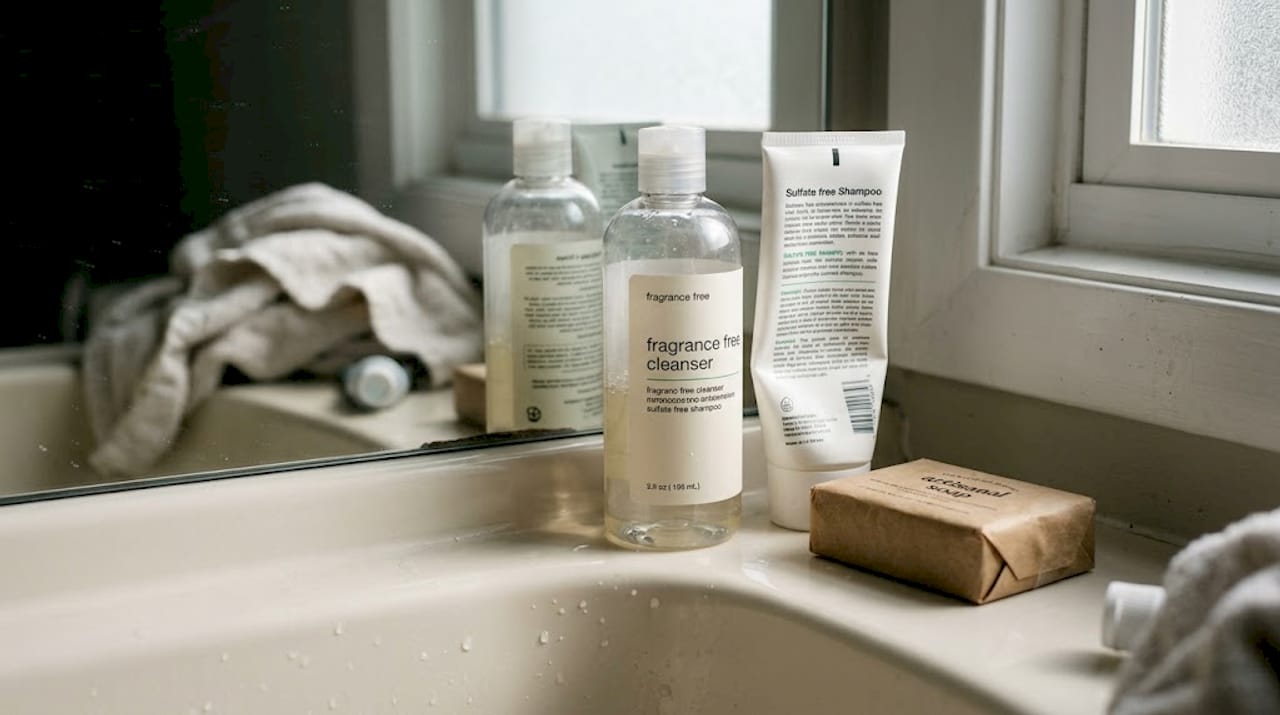
Fragrances and sulfates are among the most common culprits behind shower-related skin problems. Sulfates create a satisfying lather, but they’re detergents that pull moisture out of your skin alongside the dirt. Fragrances are similarly sneaky because they smell pleasant but are a leading cause of contact dermatitis and scalp sensitivity.
For body cleansing, choose fragrance-free options with active skin-supporting ingredients and steer clear of anything that strips rather than nurtures.
Ingredients to look for:
- Ceramides (restore and reinforce the skin barrier)
- Glycerin (draws moisture into the skin)
- Hyaluronic acid (retains hydration in skin cells)
Ingredients to avoid:
- Sulfates (SLS and SLES)
- Alcohol-based formulas
- Synthetic dyes and heavy fragrances
- Harsh antibacterial soaps for daily use
For your hair, the same logic applies. Washing daily strips the scalp of sebum and can lead to overproduction of oil as a rebound effect. Aim to shampoo 2 to 3 times per week with a mild, sulfate-free formula. If your hair is very dry or chemically treated, once a week may be sufficient.
For body washing, focus only on the areas that truly need cleansing: armpits, groin, and feet. Soaping your entire body from head to toe every shower is overkill for most skin types and contributes to dryness.
Knowing the shower filter benefits for skin and hair adds another layer to why product choice alone isn’t always enough. Building a consistent self-care routine around gentle ingredients is a strong foundation, but what’s in your water also shapes results. You can also learn how a showerhead upgrade can transform skin and hair alongside better product choices.
Pro Tip: Patch-test any new body wash or shampoo on your inner arm for 24 to 48 hours before using it in your full routine. This simple step can save you from an unexpected, full-body reaction.
Rethink your washing order and frequency
With the right products in hand, making simple tweaks to your shower sequence and routine pays big dividends. Most people think order doesn’t matter. It does.
Here’s the sequence that actually protects your skin and scalp:
- Wash hair first. Shampoo and condition before anything else. This way, any product that rinses down your back or shoulders gets washed off when you cleanse your body. If you condition first and then soap your skin, conditioner residue can clog pores.
- Cleanse your body next. Start with high-sweat areas like armpits, groin, and feet. These areas genuinely need daily attention.
- Rinse thoroughly. Leftover shampoo or conditioner on your skin is a hidden cause of body acne and back breakouts.
Frequency matters just as much as sequence. According to guidance from dermatologists, limiting shampooing to 2-3 times per week if you have a dry scalp allows your natural oils to rebalance. Daily washing removes those oils faster than they can replenish.
For overall shower frequency, once a day is ideal for most people. Athletes or those who work in hot, sweaty conditions may need two short showers, but they should keep each one gentle and brief. Looking at how filter cartridges affect skin health can also help when your routine alone isn’t getting results.
Pro Tip: Swap out your loofah or shower puff for your hands or a soft washcloth. Loofahs and puffs are breeding grounds for bacteria. They can also create microtears in already-irritated skin, making inflammation worse.
Protect and nourish your skin after you shower
Your work isn’t done when the shower shuts off. What you do in the next three minutes matters just as much as what happens inside the shower.
First, dry off gently. Rubbing your skin aggressively with a towel creates friction that can irritate or even micro-tear sensitive skin, especially if you’ve just exfoliated. Pat dry instead. It takes a few extra seconds and makes a real difference for reactive skin types.
The most important step is moisturizing quickly. You should apply moisturizer within 3 to 5 minutes post-shower while your skin is still slightly damp. This traps the residual moisture inside the skin rather than letting it evaporate into the air.
| Timing | Skin hydration effect |
|---|---|
| Moisturize within 3 minutes | Seals in maximum residual moisture |
| Moisturize after 5 minutes | Moderate moisture retention |
| Moisturize after 10+ minutes | Skin has already begun to dehydrate |
| No moisturizer applied | Skin often drier than before showering |
For the best post-shower results, look for these types of products:
- Ceramide-rich body creams (repair and reinforce the skin barrier)
- Fragrance-free lotions with glycerin (fast-absorbing, gentle daily use)
- Shea butter or oat-based creams (ideal for dry and sensitive skin)
- Hyaluronic acid serums (excellent for face and neck)
For more ideas on finding the right products for sensitive skin bath time, exploring gentle, skin-safe formulations can make your post-shower ritual much more effective. You can also check out guides to the best shower filters for 2025 to pair great products with better water.
Pro Tip: For very dry or cracked skin, apply a thick emollient ointment like plain petroleum jelly to problem areas at night. It’s unglamorous but genuinely one of the most effective barrier treatments available.
Bonus: Improve your shower water quality
Even after calibrating your routine, real improvements may hinge on the water coming out of your showerhead. Most people focus only on products, but the water itself is often the hidden cause of persistent skin and hair problems.
Chlorine is added to municipal water supplies as a disinfectant. That’s useful for drinking water safety, but when it hits your skin in the shower, it acts as an irritant. It disrupts the skin’s microbiome (the community of bacteria that keeps your barrier healthy) and contributes to dryness, itching, and inflammation. Hard water, which contains high concentrations of calcium and magnesium, leaves mineral deposits on your skin and hair that block moisture absorption.
“For persistent skin and hair issues, dermatologists recommend prioritizing short lukewarm showers, gentle products, and immediate moisturizing. If chlorine or hard water is suspected, consider an NSF-certified filter and check your local water report.”
| Filter type | Main benefits |
|---|---|
| Vitamin C filter | Neutralizes chlorine and chloramines effectively |
| Ceramic ball filter | Softens water, removes sediment, balances pH |
| Activated carbon filter | Broad-spectrum impurity removal |
Signs your water quality may be affecting you include unexplained skin dryness that doesn’t respond to moisturizer, persistent scalp itch or flaking, and excessive hair breakage. Learning when to install a shower filter is a smart first step, and understanding why investing in filters matters can help you make a confident decision. Look up your local water quality report and check whether NSF 61 certified filters are right for your water type.
A smarter approach: Skip the ‘everything showers’ for barrier-first care
Social media has made the “everything shower” wildly popular: multi-step routines with hair masks, body scrubs, face treatments, and elaborate product stacking. We get it. It feels indulgent and self-caring. But the reality for most people is that more steps means more exposure to potential irritants, more heat time, and more friction.
The data-backed view is that basic hygiene is sufficient for most people, but dermatologists emphasize barrier protection over elaborate rituals. Adding more products does not automatically mean better skin. It often means more variables to troubleshoot when something goes wrong.
Barrier-first care is a different mindset. It asks: what is the minimum effective routine that keeps my skin and scalp protected, hydrated, and balanced? That usually means a short lukewarm shower, one gentle cleanser, and a ceramide moisturizer applied fast. Anyone dealing with winter scalp dryness and irritation especially benefits from stripping routines back rather than layering more products on.
Pro Tip: Before adding any new shower product, try removing one first. Cut one step that involves heat, friction, or a fragrance. Your skin’s response will tell you exactly what it needed.
Simpler routines are also more sustainable. They cost less, take less time, and deliver consistent results because there are fewer things to get wrong.
Transform your shower with Vitaclean solutions
If you’re ready to see results from evidence-based changes, a few smart product upgrades can make all the difference. Adjusting water temperature and choosing gentler cleansers are great starting points, but the quality of the water itself is what takes real results to the next level.
Vitaclean offers certified filtration solutions designed specifically for people who want healthier skin and hair from the shower up. From Vitamin C shower filter shots that neutralize chlorine on contact to a ceramic shower filter that softens water and removes sediment, every product is built around what your skin actually needs. You can also explore the full range of shower accessories to customize your routine without complicating it.
Frequently asked questions
Why is lukewarm water better for your skin and hair than hot water?
Lukewarm water is less likely than hot water to strip natural oils from the skin and scalp, which helps preserve hydration and minimize irritation throughout the day.
How quickly should I moisturize after showering for best results?
Apply moisturizer within 3 to 5 minutes after showering while your skin is still slightly damp to lock in the maximum amount of moisture.
What are the signs that my shower water quality is affecting my skin or hair?
Ongoing dryness, persistent itching, flaking, or excessive hair breakage that doesn’t respond to product changes may signal water quality issues like high chlorine or hard minerals in your supply.
How often should you shampoo your hair if you have a dry scalp?
Shampoo 2 to 3 times weekly if you have a dry scalp, since overwashing strips the natural oils that keep your scalp balanced and comfortable.
Recommended
- Winterizing your shower: A guide to glowing skin and healthy hair.
- Best shower accessories for healthier skin and hair
- SHEERLUXE: 4 REASONS WHY YOU SHOULD THINK TWICE ABOUT A DAILY SHOWER
- How to enhance your shower for wellness: complete guide
- Stay cool and protected in the Australian sun without sunscreen