
Spot the Signs of Chlorine in Water for Healthier Showers
TL;DR:
- Signs of chlorine in water include a bleach smell, dry skin, and dull hair.
- Hot showers increase chlorine absorption through inhalation and skin contact.
- Using tested filters and conducting water tests can reduce health and cosmetic issues.
Your skin feels tight the moment you step out of the shower. Your hair looks dull even though you just washed it. And there’s a faint bleach smell that you’ve quietly accepted as normal. These aren’t random problems. Skin dryness and that familiar ‘swimming pool’ odor are two of the most telling signs that chlorine is present in your water. Chlorine is added to municipal water to kill bacteria, which is important, but what protects the pipes doesn’t always protect your skin. This article walks you through exactly what to look for, how to test your water, and what to do when you find it.
Table of Contents
- How to identify chlorine in your water: Key criteria
- Common myths vs. facts about chlorine exposure
- Physical and sensory signs: A closer look
- How to confirm and measure chlorine: Home and lab tests
- What should you do if you find chlorine? Practical solutions
- Why most people miss the signs and what actually works
- Take the next step: Healthier showers start here
- Frequently asked questions
Key Takeaways
| Point | Details |
|---|---|
| Recognize key symptoms | Dry skin, brittle hair, and a pool-like smell may all signal chlorine in your shower water. |
| Test for clarity | Home test kits and digital meters can confirm chlorine levels quickly and easily. |
| Act for healthier showers | Certified shower filters can dramatically reduce chlorine exposure for better skin and hair. |
| Don’t rely on taste or smell alone | Chlorine may still affect your body even if you can’t sense it directly. |
| Solutions offer rapid relief | Most people see marked improvement in weeks after installing an effective shower filter. |
How to identify chlorine in your water: Key criteria
Now that you know why unexplained irritation could be related to your shower, let’s break down the exact signs that suggest chlorine is occupying your taps.
The most immediate giveaway is smell. If your shower steam smells faintly of bleach or reminds you of a public pool, that’s chlorine volatilizing in warm water. Hot water opens the pores and accelerates gas release, which means your shower is often more chemically concentrated than a glass of cold tap water. That odor isn’t just unpleasant. It’s a signal worth taking seriously.
Beyond smell, here are the key signs to watch for:
- Bleach or ‘pool’ odor during or after a hot shower
- Dry, tight, or itchy skin within minutes of stepping out
- Dull, frizzy, or brittle hair that doesn’t respond to conditioning
- Yellow or slightly discolored water from the tap or showerhead
- Stinging or red eyes after washing your face in the shower
- Fading laundry colors or staining, especially on light fabrics
- Metallic or chemical taste from the tap water
These chlorine risks for skin and hair go beyond cosmetic annoyance. Chlorine strips the skin’s natural oils and disrupts the acid mantle, the thin protective film that keeps moisture in and irritants out. Once that barrier is compromised, everything from redness to eczema flares can follow.
The problems caused by chlorine aren’t limited to skin either. Hair dye fades faster. Scalp becomes flaky. Laundry loses vibrancy after fewer washes than it should.
Pro Tip: Your shower often reveals chlorine issues before your kitchen tap does. Steam concentrates chemical compounds more than cold water, so physical reactions post-shower are frequently the first clue.
Worth knowing: Studies suggest that the average person absorbs a meaningful amount of chlorine through skin and inhalation during a 10-minute hot shower, sometimes more than through drinking water throughout the day.
Common myths vs. facts about chlorine exposure
After reviewing the physical signs, it’s important to set the record straight on some widespread beliefs and clarify what science and regulatory authorities say.
Myths about chlorine tend to keep people complacent. Let’s address the most common ones directly.
Myth: Chlorine at regulated levels is always harmless. Fact: The EPA sets 4 mg/L as the maximum chlorine level for public water, but many people with sensitive skin, eczema, or respiratory conditions report symptoms well below that threshold. Regulatory limits are built for population averages, not individual biology.
Myth: Only drinking water chlorine affects your health. Fact: Shower exposure is often more impactful than ingestion. When you inhale steam or absorb water through warm, open skin, chlorine bypasses many of the body’s usual filtration defenses. The CDC view on chlorine safety acknowledges that chlorine can irritate the skin, eyes, and respiratory system even at normal disinfection levels.
“Dermatologists frequently underestimate how much chlorinated shower water contributes to skin barrier disruption, particularly in patients who already present with dry skin or atopic dermatitis. The warm water and steam create a uniquely high-absorption environment.”
Here’s what the facts actually support:
- Chlorine reacts with organic matter in water to form byproducts called trihalomethanes, which are inhaled in steam
- Sensitive users may notice reactions even when their water meets all safety standards
- Hot showers accelerate chlorine absorption compared to cold water or drinking
- Reading local water quality reports gives you real chlorine levels, not just theoretical ones
The benefits of shower filters become especially relevant here, because even if your water is technically within legal limits, your skin may be telling a different story.
Pro Tip: Request your municipality’s Consumer Confidence Report. It lists actual chlorine levels in your area. Then cross-reference it with how your skin feels after a shower. Both data points matter.
Physical and sensory signs: A closer look
Now that myths are clarified, here’s an in-depth look at how chlorine manifests in everyday experiences and what that means for your body and home.
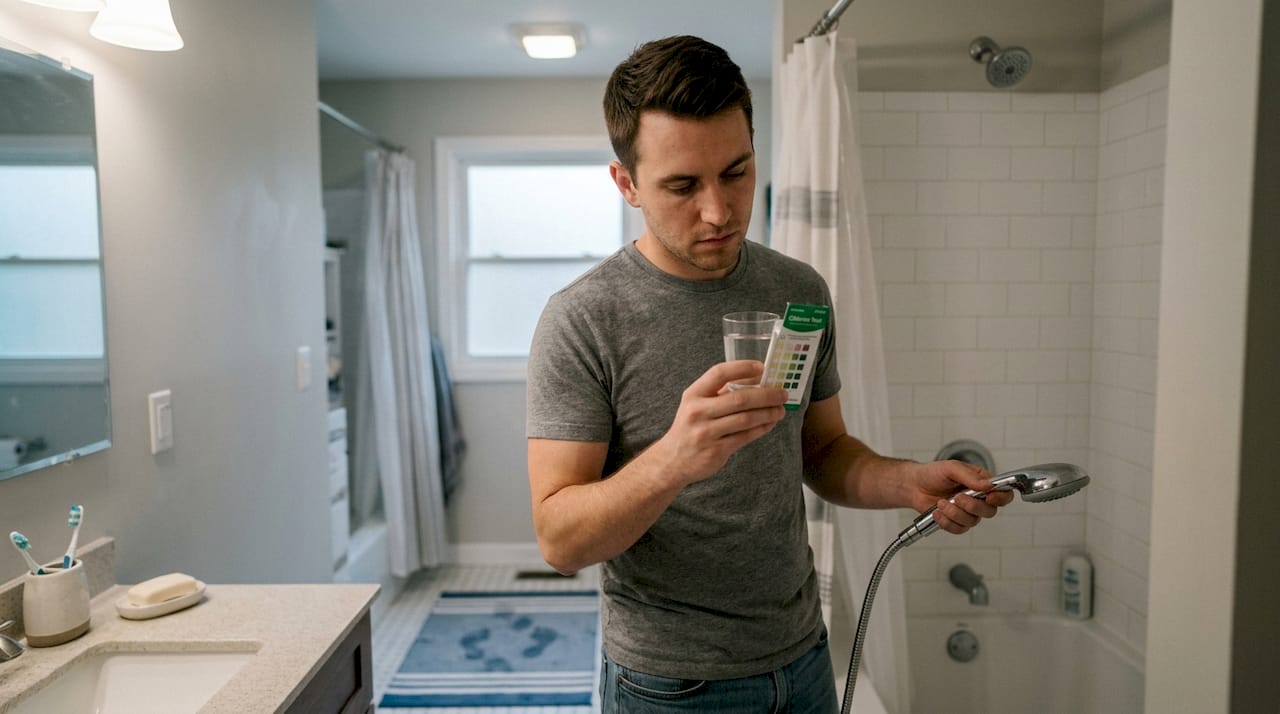
Chlorine doesn’t announce itself with a label. It shows up in your morning routine as small annoyances that slowly add up. Understanding the categories helps you connect the dots faster.
Sensory signals:
- Smell: A sharp, chemical or bleach-like odor when water runs warm
- Color: Slight cloudiness, yellow tinge, or brown discoloration
- Taste: Flat, metallic, or chemical flavor from the tap
Physical effects by area:
| Affected area | Common symptom | Why it happens |
|---|---|---|
| Skin | Dryness, redness, eczema flares | Chlorine strips protective oils |
| Hair | Frizz, brittleness, color fading | Chlorine damages the cuticle layer |
| Eyes | Redness, stinging | Direct chlorine contact on mucous membranes |
| Laundry | Fading, staining | Chlorine bleaches fabric fibers |
| Scalp | Flakiness, irritation | Disrupted scalp microbiome |
Eye redness, hair changes, and laundry stains are secondary effects that many people chalk up to other causes. Switching shampoos or buying new fabric softener doesn’t address the root issue.
Here are the steps to confirm chlorine is the culprit:
- Note when symptoms started and whether they follow shower activity
- Smell the water directly from the tap both cold and hot
- Check recent laundry for unexpected fading or stiffness
- Look at your showerhead for mineral or chemical buildup
- Review any skin or hair changes that appeared after moving or after your utility provider updated its treatment
If two or more of these steps match your situation, checking out the shower filter signs guide is a logical next move.
How to confirm and measure chlorine: Home and lab tests
With symptoms in mind, here’s how to scientifically verify chlorine is the reason with simple tests.
There are four main ways to test for chlorine in your shower water. Each has a different use case depending on how much detail you need.
Types of chlorine tests:
- Test strips: Inexpensive and fast. Dip in water, compare to a color chart. Accuracy is moderate.
- DPD colorimetry kits: A drop-based method with higher accuracy than strips. Common in pool maintenance.
- Digital meters: Give a numerical readout. More expensive but reusable and more reliable.
- Lab analysis: Mail-in or local lab. Highest accuracy, includes disinfection byproducts and full chemical profile.
| Factor | Home test kit | Lab analysis |
|---|---|---|
| Cost | $5 to $30 | $50 to $150+ |
| Speed | 30 seconds to 2 minutes | 3 to 7 days |
| Accuracy | Moderate | High |
| Ease of use | Very easy | Requires sample collection |
| Best for | Quick screening | Confirmed diagnosis |
Home test kits provide quick results and work well for most households. Lab tests are worth it when you want to understand the full picture, including byproducts.
Here’s how to run a basic home test:
- Fill a clean glass with cold shower water, then repeat with hot
- Dip the strip for the exact time listed on the package
- Compare the color to the chart immediately (don’t wait)
- Note the reading in mg/L (milligrams per liter)
- Compare to EPA chlorine guidelines of up to 4 mg/L
Pro Tip: Always test both cold and hot water from your shower. Hot water readings often show higher effective chlorine exposure because steam concentrates the gas. This gives you the complete picture of what your body actually encounters.
Once you have your numbers, explore your options to reduce chlorine in shower water based on what the test reveals.
What should you do if you find chlorine? Practical solutions
Testing reveals the truth, so what should your next step be if chlorine is found?
The good news is that chlorine is one of the most filterable contaminants in household water. You don’t need expensive whole-home systems to make a meaningful difference at the point where it matters most: your shower.
Here are the most effective solutions:
- Install a certified shower filter: Look for NSF/ANSI-certified options that confirm chlorine reduction performance. NSF-certified shower filters can lower chlorine exposure significantly and support skin and hair recovery within weeks.
- Use vitamin C filtration: Ascorbic acid neutralizes chlorine on contact, making it one of the fastest-acting filter options available.
- Upgrade to a whole-head filtration system: Wall-mounted and handheld filtered shower heads offer built-in filtration without extra attachments.
- Replace filters on schedule: An expired filter stops working and may release trapped contaminants back into the water.
- Monitor local water reports quarterly: Chlorine levels fluctuate seasonally, especially in summer when municipalities increase treatment.
For a full breakdown of what to look for, the shower filter guide walks through options by skin type and sensitivity level.
Pro Tip: Track your skin and hair weekly after installing a filter. Take a quick photo and note texture, moisture, and any breakouts. Most users notice a real change within two to three weeks, and that visible feedback is the best motivator to keep up the habit.
Beyond filtration, review the documented filter benefits for skin and hair to understand what to realistically expect after switching.
Why most people miss the signs and what actually works
Knowing the action steps is empowering, but let’s address why these signs are so often missed and what makes a noticeable difference.
Here’s what most people get wrong: the entire conversation around chlorine safety is framed around drinking water. How much you ingest. What the EPA allows per liter. But your shower? It rarely comes up, even though warm water opens pores and turns your bathroom into a low-level inhalation chamber for up to 10 minutes or more every day.
We see this pattern repeatedly. Customers come to us having tried expensive serums, new shampoos, and elimination diets, trying to solve skin and hair problems that turned out to be a water quality issue. The fix wasn’t a new product. It was changing what the water itself contained.
Filtered showers restore skin barrier quality and reduce dryness measurably in weeks, according to clinical observations. That’s not a slow or uncertain process. It’s a relatively fast response once the irritant is removed.
Don’t wait for a severe flare to take action. The first signs, slight dryness, a faint chemical smell, hair that just won’t cooperate, are enough to justify testing and filtering. These are small signals worth listening to. The shower filter benefits are often far larger than most people expect from such a simple change.
Take the next step: Healthier showers start here
If you’re ready to see and feel the change for yourself, here’s how you can upgrade your shower today.
Once you know chlorine is present, the solution is straightforward. Vitaclean makes it easy to switch to a filtered shower head that fits your routine without complicated installation or tools.
For fast-acting and precise chlorine neutralization, vitamin C shower filters use ascorbic acid to eliminate chlorine on contact, making them ideal for sensitive skin and color-treated hair. Prefer a longer-lasting media option? The ceramic shower filters offer steady, reliable filtration with easy cartridge replacement. Both work with Vitaclean’s subscription service so you never forget a filter change. Start tracking your skin and hair after your first filtered shower. Most users notice a real difference faster than they expect.
Frequently asked questions
What are the fastest ways to tell if my shower water has chlorine?
The quickest indicators are a strong chemical smell during your shower, itchy or dry skin right after, and visible color fading in your hair or laundry. A ‘swimming pool’ smell and dryness after showering are the most commonly reported early signs.
How can I test my shower water for chlorine at home?
Use home test strips or a digital meter, comparing results to the supplied color chart immediately after dipping. Test kits and strips provide quick, easy chlorine detection that works for most households.
Are there safe levels of chlorine in tap water for skin and hair?
Regulated levels are considered safe for general public health but can still trigger irritation in sensitive users, particularly during long or hot showers. The EPA MCL for chlorine is 4 mg/L, yet some users experience real skin effects below that limit.
Will a shower filter really help my skin and hair if I have chlorine in water?
Yes, certified shower filters meaningfully reduce chlorine exposure and support recovery of skin and hair health over time. Filtered showers restore skin barrier function and reduce dryness and eczema flares according to clinical observations.
Should I worry about chlorine in my shower if I can’t smell or taste it?
Absolutely, because some chlorine exposure happens without a noticeable odor or taste, making testing the only reliable confirmation method. Invisible effects like dry skin or persistent hair issues often indicate chlorine is present even when senses don’t catch it.