
Prevent dry scalp from hard water: proven solutions
TL;DR:
- Hard water minerals cause scalp dryness, irritation, and flaking by coating the scalp and blocking moisture absorption.
- Using a shower filter or water softener, combined with targeted routines like chelating shampoos and ACV rinses, restores scalp health.
- Most issues can be fixed within weeks by addressing water quality and implementing a consistent scalp care routine.
You’ve tried every shampoo on the shelf, switched conditioners twice, and still your scalp itches and flakes after every wash. The frustrating truth is that the problem might not be your products at all. Hard water minerals like calcium and magnesium build up on your scalp with every shower, stripping moisture and disrupting the skin barrier. This guide walks you through how to identify hard water as the cause, what tools actually work, and a clear routine to restore scalp comfort for good.
Table of Contents
- Signs your dry scalp is caused by hard water
- What you need to prevent dry scalp: tools and prep
- Step-by-step: How to protect your scalp from hard water
- Troubleshooting and adjusting for different hair and water types
- Why most approaches to hard water scalp care fall short
- Better scalp comfort with filtered shower solutions
- Frequently asked questions
Key Takeaways
| Point | Details |
|---|---|
| Identify hard water symptoms | Persistent dry, itchy, or flaky scalp may signal mineral buildup from hard water. |
| Use combined prevention tactics | Optimal results require both water modification (filters/softeners) and proper haircare routines. |
| Customize for hair and water type | Curly, color-treated, or very dry hair needs tailored care and possibly stronger water solutions. |
| Routine makes a difference | Consistent clarifying, conditioning, and scalp care dramatically reduce hard water effects over time. |
Signs your dry scalp is caused by hard water
Not every dry scalp is a dandruff problem. If you’ve ruled out fungal issues and your scalp still feels tight, itchy, and flaky, hard water is worth a serious look. The key is knowing what hard water damage actually looks like versus other causes.
Here are the most common signs that hard water is behind your scalp trouble:
- Persistent itchiness that gets worse right after washing, not better
- Flaking that looks powdery rather than oily or yellowish
- Hair that feels rough or coated even after conditioning
- Reduced lather from your shampoo, no matter how much you use
- White or brown mineral deposits on your showerhead or faucet handles
- Scalp tightness that returns within a day of washing
Mineral buildup from hard water causes dryness, irritation, and flaking by coating the scalp and blocking moisture absorption. Think of it like a thin film of chalk sitting on your skin. Your scalp can’t breathe or hydrate properly, and no amount of moisturizing shampoo will fix that if you’re rinsing with the same mineral-heavy water every day.
Certain hair types are more vulnerable. Curly hair has a naturally raised cuticle structure, which means minerals have more surface area to cling to. Color-treated hair is porous after chemical processing, making it absorb hard water deposits faster. If you fall into either category, you’re likely noticing the effects sooner and more severely than someone with straight, unprocessed hair.
One quick way to check your risk: look at your showerhead. Crusty white or brown buildup around the nozzles is a direct sign of mineral-heavy water running through your pipes. You can also check your city’s annual water quality report, which lists hardness levels in grains per gallon or parts per million.
Did you know? Over 85% of U.S. homes have hard water, meaning most people are showering in water that works against their scalp health every single day.
Understanding hard water’s effect on your hair is the first step toward actually fixing the problem. Once you recognize the pattern, the solution becomes much clearer. For a broader look at what’s happening, the full guide to hard water problems covers everything from skin to plumbing.
What you need to prevent dry scalp: tools and prep
If the symptoms match, you’ll want the right tools and products to actually solve the problem. The good news is you don’t need to overhaul your entire bathroom. A targeted approach with the right combination of solutions gets results faster than throwing money at every product on the market.
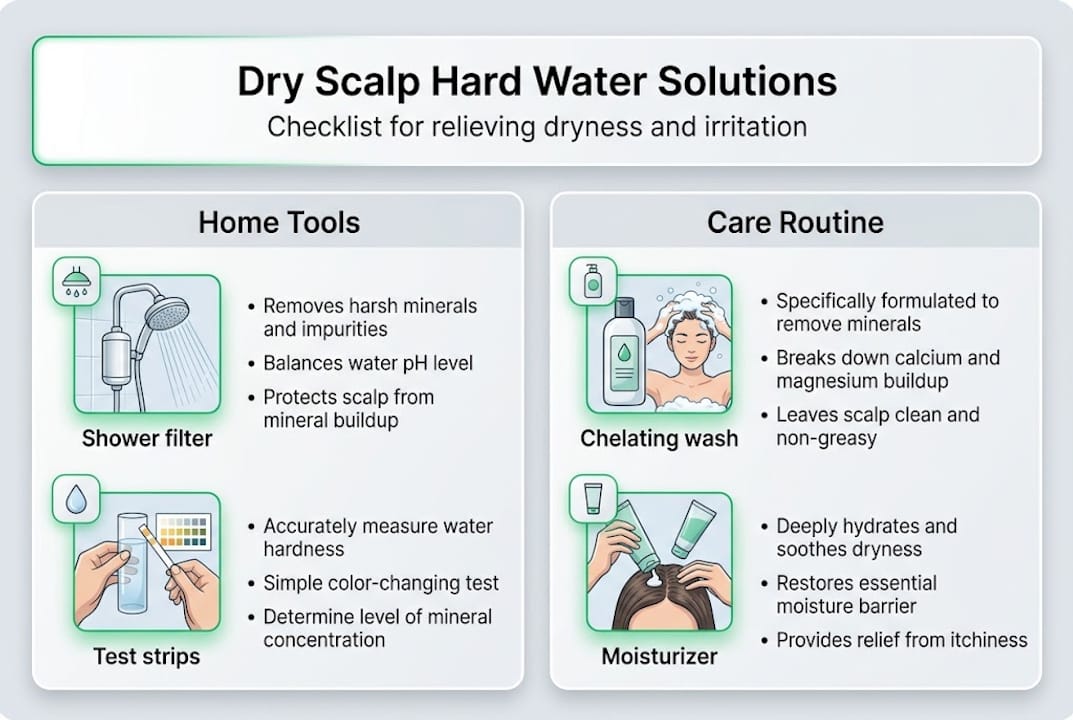
Here’s what to gather before you start:
- An at-home water hardness test strip (available at hardware stores)
- A shower filter or whole-house water softener
- A chelating or clarifying shampoo (look for EDTA or citric acid in the ingredients)
- A deep conditioning mask or scalp oil
- Apple cider vinegar (ACV) for rinses
- A gentle, pH-balanced daily shampoo for in-between washes
Not all solutions work the same way. Water softeners are most effective for minerals, while shower filters handle chlorine and some impurities. Knowing the difference helps you spend wisely.
| Solution | What it targets | Effectiveness | Cost range | Installation |
|---|---|---|---|---|
| Shower filter | Chlorine, some minerals | Moderate | $20-$80 | Easy, DIY |
| Whole-house softener | Calcium, magnesium (95-100%) | High | $500-$2,000+ | Professional |
| Chelating shampoo | Mineral buildup on hair/scalp | Moderate | $10-$30 | None |
| ACV rinse | pH balance, mild buildup | Low-moderate | Under $5 | None |
For renters or anyone not ready to invest in a whole-house system, a quality shower filter is the most practical starting point. The benefits of shower filters go beyond just scalp health. They also reduce chlorine exposure, which causes its own dryness and irritation. If you’re unsure whether a filter is worth it, shower filter value is well documented for people in hard water areas.
Pro Tip: Before buying anything, test your water. A simple DIY strip takes 30 seconds and tells you exactly how hard your water is. This helps you decide whether a filter alone is enough or whether you need a softener for your level of mineral concentration. You can also request your city’s annual water quality report for free.
For a complete rundown of what to prioritize, the solutions checklist is a useful reference before you start shopping.
Step-by-step: How to protect your scalp from hard water
With your supplies ready, here’s exactly how to break the hard water cycle and restore scalp comfort. This isn’t a one-time fix. It’s a rhythm you build into your routine, and it gets easier every week.
-
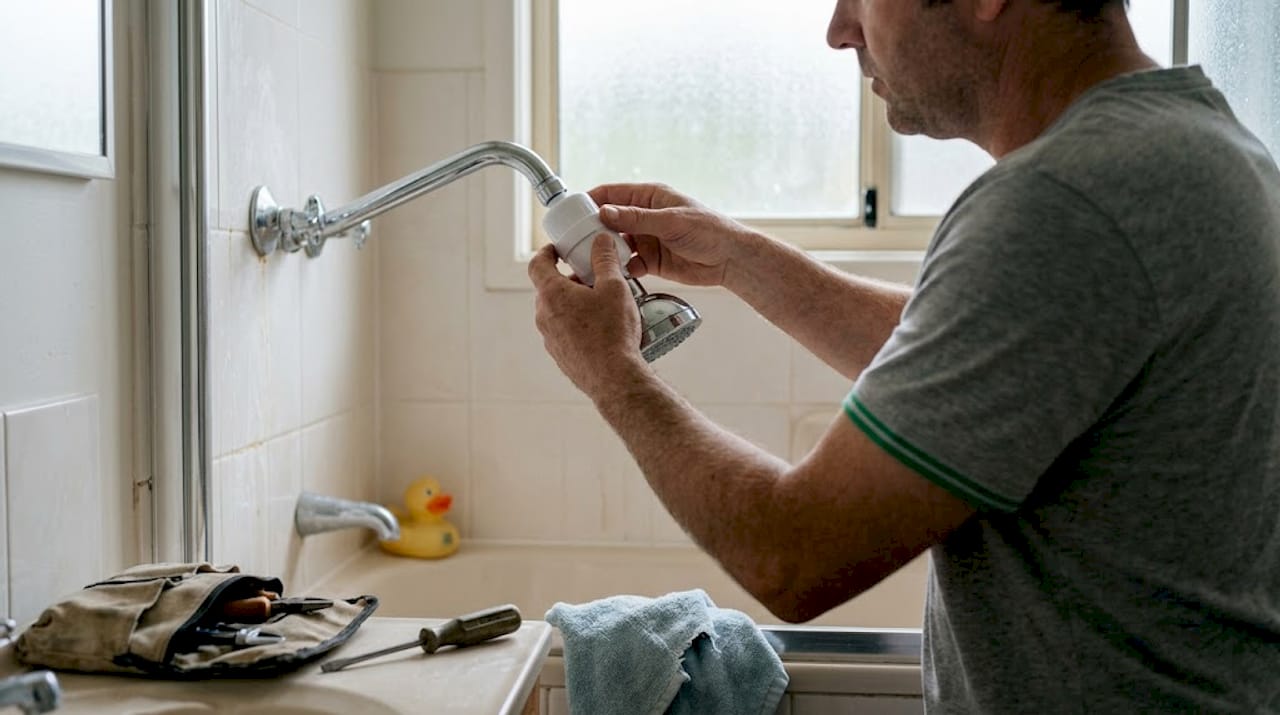
Install a shower filter or softener. Attach a vitamin C or KDF shower filter directly to your existing showerhead. Most models install in under five minutes with no tools. If your water tests above 180 ppm (very hard), a whole-house softener gives more complete protection.
-
Use a chelating shampoo once a week. Weekly chelating shampoos and ACV rinses remove mineral buildup and restore scalp pH. Apply it to wet hair, massage into the scalp for 2-3 minutes, and rinse thoroughly.
-
Deep condition immediately after clarifying. Chelating shampoos are powerful and can strip natural oils along with the minerals. Follow every clarifying wash with a hydrating mask or scalp oil, focusing on the roots and lengths.
-
Do a diluted ACV rinse weekly. Mix one part apple cider vinegar with three parts water. Pour it over your scalp after shampooing, leave it for two minutes, then rinse. This helps restore your scalp’s natural pH, which hard water disrupts.
-
Adjust frequency based on your hair type. Curly or color-treated hair needs more moisture support after clarifying. Limit chelating shampoo to every 10-14 days for these types, and increase deep conditioning frequency instead.
Safety note: Never use undiluted ACV directly on a sensitive or broken scalp. Always dilute and patch test first if you have existing irritation.
Combining a filter with proper scalp care yields the best results, and the hard water effects on hair confirm why both sides of the equation matter.
| Step | Frequency | Key product |
|---|---|---|
| Filter use | Every shower | Shower filter or softener |
| Chelating shampoo | Weekly (or every 10-14 days) | Chelating/clarifying shampoo |
| Deep conditioning | After every clarifying wash | Hydrating mask or scalp oil |
| ACV rinse | Weekly | Diluted apple cider vinegar |
Pro Tip: Use lukewarm water instead of hot. Hot water opens the hair cuticle and makes it easier for minerals to penetrate. Cooler rinses also help seal the cuticle after conditioning, locking in moisture.
For more detail on each step, the full step-by-step guide and proven hair care tips are both worth bookmarking.
Troubleshooting and adjusting for different hair and water types
Even the best routine sometimes needs troubleshooting. Here’s how to handle special cases and setbacks when the standard steps aren’t cutting it.
If you’ve been following the routine for three to four weeks and still see no improvement, your water may be extremely hard (above 180 ppm). At that level, a shower filter alone won’t remove enough minerals. You’ll need a water softener or a combination system to see real scalp relief. It’s also worth checking whether your filter cartridge needs replacing. Most filters lose effectiveness after two to three months.
Color-treated and curly hair are at higher risk and may need stronger softening solutions than straight or unprocessed hair. For curly hair specifically, the dealing with hard water on curly hair guide covers curl-specific routines that protect the pattern while managing mineral exposure.
Here are the most common mistakes people make that slow their progress:
- Over-clarifying: Using chelating shampoo more than once a week strips natural oils and worsens dryness
- Using harsh sulfate shampoos daily: These compound the drying effect of hard water
- Ignoring scalp pH: Skipping the ACV rinse means the scalp stays in a disrupted alkaline state
- Not replacing filters on schedule: An expired filter offers little protection
- Expecting overnight results: Mineral buildup accumulates over months. Clearing it takes consistent effort over weeks
If you notice redness, open sores, or intense burning on your scalp, stop self-treating and see a dermatologist. Hard water can aggravate existing conditions like psoriasis or seborrheic dermatitis, and those need medical care. Expert dermatologist advice is especially important if you’re also experiencing noticeable hair thinning. You can also read more about hard water and hair loss to understand when it becomes a more serious concern.
Important: Persistent scalp irritation that doesn’t respond to routine changes within four to six weeks warrants a professional evaluation, not just a product swap.
Why most approaches to hard water scalp care fall short
After walking through the practical steps, it’s worth stepping back to look at what most routines actually miss. The honest answer is this: most people treat the symptom (dry, itchy scalp) without addressing the source (water quality and pH disruption).
Switching to a moisturizing shampoo feels like progress, but if you’re still rinsing with hard water, you’re refilling a leaky bucket. Lab studies show minimal short-term damage, but long-term expert consensus identifies cumulative scalp impact as the real concern. It’s not one shower that wrecks your scalp. It’s 365 showers a year, year after year, slowly shifting your scalp’s pH and weakening its moisture barrier.
The scalp has its own microbiome, a delicate ecosystem of bacteria and oils that keeps it balanced. Hard water’s alkaline pH disrupts that balance. Products alone can’t restore it if the water itself keeps pushing it off course. That’s why the hair effects and practical tips approach we recommend always starts with the water, not the shelf.
The most effective approach combines water modification at the source, a targeted product routine, and genuine respect for your scalp’s biology. That’s not complicated. But it does require addressing all three, not just the one that’s easiest to buy.
Better scalp comfort with filtered shower solutions
Ready to turn theory into healthy hair action? The right filter makes all the difference between a routine that works and one that just delays the problem.
Vitaclean’s vitamin C filtered shower solutions are designed specifically for people dealing with hard water scalp issues. The vitamin C shower filter shots neutralize chlorine and reduce impurities with every shower, making your entire routine more effective from the very first use. For a full upgrade, the handheld vitamin C shower head gives you flexible, filtered water that supports scalp health without complicated installation. Explore the full range and find the option that fits your setup, whether you rent or own.
Frequently asked questions
How do I know if my water is hard enough to affect my scalp?
Check for limescale buildup on faucets or showerheads, or use an at-home test strip. Over 85% of U.S. homes have hard water, so the odds are already against you.
Do shower filters remove all minerals that cause dryness?
Shower filters reduce chlorine and some impurities effectively, but only water softeners remove 95-100% of hardness minerals like calcium and magnesium.
Is dry scalp from hard water permanent?
No. Scalp hydration and comfort typically improve within a few weeks once you combine a filter or softener with the right routine. Severe or persistent cases may need professional guidance.
Will clarifying shampoo alone prevent dry scalp from hard water?
Clarifying shampoos remove existing buildup but can’t stop new minerals from depositing with each wash. Best results come from pairing them with filtered or softened water for true prevention.