
What is vitamin C filtration and how it benefits your skin
Your shower might be sabotaging your skin and hair without you realizing it. Municipal water contains chlorine levels that can strip natural oils, trigger irritation, and leave hair brittle. While most people focus on expensive serums and treatments, the real culprit could be flowing from your showerhead every morning. Vitamin C filtration offers a scientifically backed solution that neutralizes chlorine instantly, protecting your skin and hair at the source. This article breaks down exactly how vitamin C filtration works, what it can and cannot do, and how to choose the right system for healthier showers.
Table of Contents
- Key takeaways
- What is vitamin C filtration and how does it work?
- Limitations and how vitamin C filtration compares to other shower water filters
- Benefits of vitamin C filtration for skin and hair health
- How to choose and maintain the best vitamin C shower filter
- Elevate your shower experience with Vitaclean filters
- Frequently asked questions
Key Takeaways
| Point | Details |
|---|---|
| Chlorine removal rate | Vitamin C filtration removes over 99 percent of chlorine at standard shower flow rates, delivering chlorine free water from the first drop. |
| Instant neutralization | The reaction occurs instantly with no harmful byproducts or residues left behind. |
| Filter capacity | Most cartridges contain at least 250 grams of USP grade ascorbic acid and are designed to maximize contact time. |
| Skin and hair benefits | Using vitamin C filtration improves skin and hair by reducing dryness and irritation and preventing breakage. |
| Limitations and pairing | Vitamin C filters do not remove metals or soften water, so pairing with other filtration stages is recommended. |
What is vitamin C filtration and how does it work?
Vitamin C filtration relies on a straightforward chemical process. When water passes through the filter, ascorbic acid reacts with chlorine and chloramines, converting them to harmless chloride ions. This redox reaction happens instantly, with no harmful byproducts or residues left behind. Unlike mechanical filtration that traps particles, this chemical neutralization permanently transforms chlorine molecules.
The filter design maximizes contact between water and vitamin C. Compressed granules or tablets sit in a chamber with baffling that forces water to flow through the ascorbic acid bed. Contact time ranges from 0.5 to 1.5 seconds, enough for complete neutralization at standard shower flow rates around 2.5 gallons per minute. This rapid reaction means you get chlorine-free water from the first drop.
Effective cartridges contain at least 250 grams of USP-grade ascorbic acid. This pharmaceutical-grade vitamin C ensures purity and consistent performance. The compressed format prevents channeling, where water might bypass the filter media. Each molecule of ascorbic acid can neutralize multiple chlorine molecules, making the process highly efficient.
The chlorine removal process works without reducing water pressure. Because the reaction is chemical rather than physical, water flows freely through the vitamin C bed. You maintain your shower’s normal pressure while getting purified water. This makes vitamin C filtration ideal for shower applications where flow rate matters.
Key advantages of vitamin C filtration:
- Instant neutralization with no lag time
- Works effectively in hot water without degradation
- No pressure drop during operation
- Leaves no chemical residues or odors
- Compatible with all showerhead types
Pro Tip: Test your water’s chlorine level before installing a filter. Municipal water typically contains 1-4 ppm of chlorine. Knowing your baseline helps you track filter effectiveness and determine replacement timing.
Testing shows: Vitamin C filtration achieves over 99% chlorine removal at flow rates up to 2.5 GPM, making it the most reliable method for shower applications.
Limitations and how vitamin C filtration compares to other shower water filters
Vitamin C filtration excels at one specific task but has clear boundaries. It targets chlorine and chloramines exclusively. Heavy metals, fluoride, and dissolved minerals pass through unchanged. Hard water remains hard. If your water contains lead, copper, or high mineral content, you need additional filtration stages.
Carbon filters adsorb chlorine through physical attraction. The chlorine molecules stick to the carbon surface. This process works well but requires longer contact time and larger filter beds. In shower conditions with high flow rates, carbon filters may not capture all chlorine before water exits. Temperature also reduces carbon effectiveness, making it less reliable for hot showers.
KDF filters use a copper-zinc alloy that creates an electrochemical reaction with chlorine. They work reasonably well and can remove some heavy metals. However, KDF filters need regular backwashing to prevent clogging and maintain efficiency. They also work better in cold water, losing effectiveness as temperature rises. Flow restriction can be significant with KDF media.
Thiosulfate offers another chemical neutralization option. While it reduces chlorine, it leaves behind sulfate residues that may irritate sensitive skin. Some users report a slight chemical smell after showering with thiosulfate filters. The residue can also build up on hair over time, creating a different problem than the one you’re trying to solve.
Filtration method comparison:
| Method | Chlorine removal | Works in hot water | Pressure impact | Residues | Lifespan |
|---|---|---|---|---|---|
| Vitamin C | 99%+ | Excellent | None | None | 1-3 months |
| Activated carbon | 85-95% | Moderate | Slight | None | 3-6 months |
| KDF | 80-90% | Poor | Moderate | None | 6-12 months |
| Thiosulfate | 90-95% | Good | None | Sulfates | 2-4 months |
For comprehensive water treatment, combine filtration methods strategically. A sediment pre-filter removes particles that could clog the vitamin C cartridge. An antibacterial filter downstream prevents microbial growth in the showerhead. This layered approach addresses multiple water quality issues without compromising the vitamin C filtration advantage of instant chlorine neutralization.
Pro Tip: If you have both chlorine and hard water concerns, install a vitamin C filter for chlorine removal and use a chelating shampoo to manage mineral buildup. Whole-house water softeners work better for hardness than shower filters.
Benefits of vitamin C filtration for skin and hair health
Chlorine strips away the natural oils that keep your skin barrier intact. This leads to dryness, flaking, and increased sensitivity. Your skin’s pH shifts toward alkaline, disrupting the acid mantle that protects against bacteria and irritants. People with eczema, psoriasis, or rosacea often see flare-ups after chlorinated showers. Removing chlorine lets your skin maintain its natural balance.

Hair suffers similar damage. Chlorine oxidizes the proteins in your hair shaft, weakening the structure. This causes breakage, split ends, and a rough texture. Color-treated hair fades faster when exposed to chlorine. The cuticle layer lifts, making hair porous and prone to damage. Neutralizing chlorine preserves hair strength and appearance.
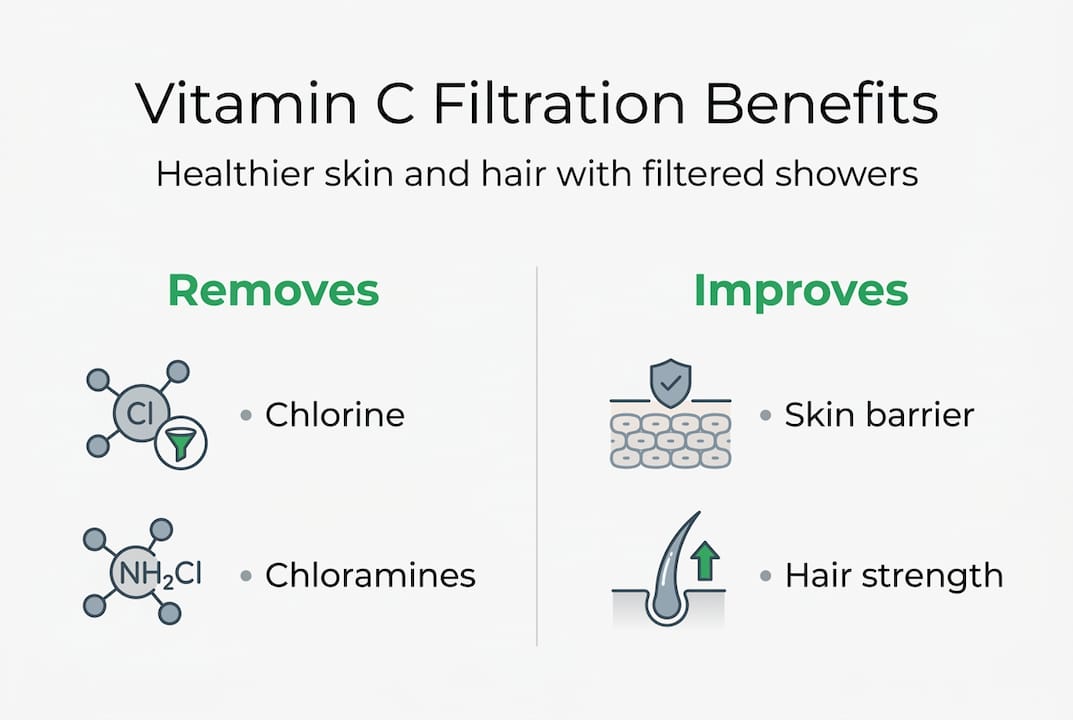
Residual vitamin C in filtered water may provide mild antioxidant benefits. While skin absorption of vitamin C from water is minimal compared to topical serums, any amount helps neutralize free radicals. This adds a protective layer during your shower rather than just removing a harmful element. Think of it as a gentle treatment rather than just damage prevention.
User reports consistently show improvements within two weeks. Skin feels softer and less tight after showering. Redness and irritation decrease noticeably. Hair becomes more manageable, with less tangling and breakage. These aren’t placebo effects but direct results of eliminating a daily irritant. Your regular skincare and haircare products also work better when they’re not fighting chlorine damage.
Documented improvements from vitamin C filtered showers:
- Reduced skin dryness and flaking
- Less post-shower redness and itching
- Improved scalp health with less irritation
- Stronger hair with reduced breakage
- Better moisture retention in skin and hair
- Enhanced effectiveness of skincare products
The benefits extend beyond visible improvements. Chlorine sensitivity affects immune response in your skin, making it more reactive to other irritants. By removing this constant stressor, your skin becomes more resilient overall. You might notice fewer reactions to products you previously couldn’t tolerate.
Pro Tip: Track your skin and hair changes with weekly photos for the first month after installing a vitamin C filter. The gradual improvements become more obvious when you compare images side by side.
“Switching to vitamin C filtered showers transformed my skin. The chronic dryness I battled for years disappeared within three weeks. My dermatologist noticed the improvement before I even mentioned the filter change.”
How to choose and maintain the best vitamin C shower filter
Start with certification verification. Look for filters tested by NSF International or the Water Quality Association. These independent labs confirm that products actually remove chlorine as claimed. Certifications like NSF/ANSI 177 specifically address shower filtration performance. Without third-party testing, you’re relying on manufacturer promises.
Cartridge specifications matter significantly. Quality filters contain at least 250 grams of USP-grade ascorbic acid. Pharmaceutical-grade vitamin C ensures purity and consistent neutralization. Lower-grade ascorbic acid may contain fillers or impurities that reduce effectiveness. Check the product specifications before purchasing.
Housing material affects longevity and hygiene. Stainless steel resists corrosion and prevents mold growth better than plastic. The housing should have clear markings for cartridge replacement and easy access for maintenance. Transparent chambers let you see when the vitamin C is depleted, though this isn’t always reliable since the reaction is invisible.
Selection checklist:
- Verify NSF or WQA certification for chlorine removal
- Confirm minimum 250g USP-grade ascorbic acid content
- Choose stainless steel or high-quality plastic housing
- Check compatibility with your existing showerhead
- Review cartridge replacement cost and availability
- Look for clear installation instructions and support
Cartridge lifespan depends on your water’s chlorine concentration and usage frequency. With typical municipal chlorine levels around 2 ppm and average household use, expect 1-3 months per cartridge. Higher chlorine levels or multiple daily showers shorten this timeframe. The vitamin C gradually depletes as it neutralizes chlorine.
Filter lifespan under different conditions:
| Chlorine level | Daily showers | Approximate lifespan | Total gallons |
|---|---|---|---|
| 1-2 ppm | 1-2 | 3 months | 7,200 |
| 2-3 ppm | 2-3 | 2 months | 5,400 |
| 3-4 ppm | 3-4 | 1 month | 3,600 |
| 4+ ppm | Any | 3-4 weeks | 2,700 |
Replace cartridges when you notice chlorine smell returning or if test strips show levels above 0.2 ppm. Don’t wait for complete depletion. A partially exhausted filter still removes some chlorine but not enough to protect your skin and hair fully. Mark your calendar when you install a new cartridge to track replacement timing.
Maintenance extends filter life and ensures consistent performance. Install a sediment pre-filter to catch particles before they reach the vitamin C cartridge. This prevents clogging and maintains flow rate. Clean the filter housing during cartridge changes to remove any buildup. Test your water monthly with chlorine test strips to verify continued effectiveness.
Pro Tip: Buy cartridges in multi-packs or subscribe to automatic delivery. You’ll save money and never risk running with a depleted filter. Having a spare cartridge means you can replace immediately when needed rather than showering with chlorinated water while waiting for delivery.
Explore vitamin C filter options that match your shower setup and water quality needs. A filter refill plan ensures you never run out of fresh cartridges.
Elevate your shower experience with Vitaclean filters
You now understand how vitamin C filtration protects your skin and hair from chlorine damage. Vitaclean translates this science into practical solutions designed for real-world shower conditions. Each filter cartridge contains pharmaceutical-grade ascorbic acid in optimized concentrations for maximum chlorine neutralization.
Vitaclean’s vitamin C shower filter shots deliver consistent performance with easy installation. The cartridges fit standard shower systems without tools or plumbing modifications. When it’s time to replace, the process takes less than a minute. A filter refill plan automates cartridge delivery based on your usage, so you never shower with depleted filters. Pair vitamin C filtration with antibacterial filters for comprehensive water treatment that addresses both chemical and biological concerns. Your skin and hair deserve water as pure as the products you apply after showering.
Frequently asked questions
Is vitamin C filtration effective for all water types?
Vitamin C filtration works excellently with municipal water containing chlorine or chloramines regardless of geographic location. Effectiveness remains high across typical chlorine concentrations from 0.5 to 4 ppm found in city water supplies. However, vitamin C does not address water hardness, heavy metals, or other dissolved solids. If your water has multiple quality issues beyond chlorine, combine vitamin C filtration with sediment filters or whole-house treatment systems for comprehensive purification.
How often should I replace my vitamin C filter cartridge?
Replace cartridges every 1-3 months or after 5,000-7,200 liters of use, whichever comes first. Actual lifespan depends on your water’s chlorine concentration and household shower frequency. Higher chlorine levels deplete the ascorbic acid faster. Also replace immediately if you notice chlorine smell returning or if test strips show chlorine levels exceeding 0.2 ppm. Setting a calendar reminder helps ensure timely replacement before the filter loses effectiveness.
Can vitamin C filtration help with chlorine sensitivity or skin conditions?
Yes, neutralizing chlorine significantly reduces dryness, redness, and irritation linked to chlorine sensitivity. People with eczema, psoriasis, and contact dermatitis often report noticeable improvements after switching to vitamin C filtered showers. The filter removes the chemical irritant before it contacts your skin, allowing your natural barrier to recover. Users typically see improvements within two to three weeks of consistent use. While not a medical treatment, removing chlorine eliminates a major trigger for many skin conditions.
Does vitamin C filtration remove other contaminants like heavy metals or fluoride?
No, vitamin C filtration specifically targets chlorine and chloramines through chemical neutralization. It does not remove heavy metals like lead or copper, fluoride, bacteria, or dissolved minerals that cause hard water. The ascorbic acid reaction only affects chlorine compounds. For broader water purification, pair your vitamin C filter with sediment filters to remove particles, KDF filters for heavy metals, or carbon filters for additional chemical removal. This layered approach ensures comprehensive water quality improvement for both skin health and overall safety.