
Enhance your shower routine with vitamin infusion benefits
Standard shower water contains chlorine and impurities that strip moisture from your skin and hair, leaving them dry and damaged. Vitamin infusion showering offers a health-conscious solution by releasing Vitamin C into the water flow, neutralizing harsh chemicals while supporting natural skin and hair vitality. This guide explains how vitamin C infusion works, its scientifically-backed benefits for skin and hair health, and practical steps to choose and maintain filters for lasting results.
Table of Contents
- Key takeaways
- What is vitamin infusion in showering and how does it work?
- Benefits of vitamin infusion showers for your skin and hair
- Comparing vitamin infusion shower filters to traditional filters
- How to choose and maintain vitamin infusion shower filters for best results
- Explore vitamin infusion shower filters and accessories
- Frequently asked questions about vitamin infusion in showering
Key Takeaways
| Point | Details |
|---|---|
| How it works | The filters release Vitamin C into the water to neutralize chlorine and chloramines through a redox reaction, protecting skin and hair from drying chemicals. |
| Chlorine removal benefits | Certification under NSF/ANSI 177 ensures up to 99.9 percent chlorine removal and a noticeable reduction in water odor, helping skin and hair feel softer over time. |
| Sensitive skin guidance | Dermatologists recommend these filters for eczema, psoriasis, and sensitive skin to protect the skin barrier from chlorine damage. |
| Filter maintenance tips | Review your local water report, choose filters that address chloramines if needed, and replace cartridges according to manufacturer guidance. |
What is vitamin infusion in showering and how does it work?
Vitamin infusion showering uses specialized filters that release ascorbic acid (Vitamin C) into water as it flows through your showerhead. This process neutralizes chlorine and chloramines through a redox reaction, transforming harsh chemicals into harmless compounds before they contact your skin and hair.
The chemistry is straightforward yet powerful. When water passes through the filter cartridge, ascorbic acid reacts with free chlorine (Cl₂) and chloramines (NH₂Cl) in a reduction-oxidation process. The chemical equation looks like this: C₆H₈O₆ + Cl₂ → C₆H₆O₆ + 2HCl. Vitamin C donates electrons to chlorine molecules, converting them into hydrochloric acid and dehydroascorbic acid, both of which rinse away harmlessly. This reaction happens instantly as water contacts the Vitamin C crystals.
Quality filters combine Vitamin C with multi-stage filtration components. Each layer targets specific contaminants:
| Filter Component | What It Removes | How It Works |
|---|---|---|
| Vitamin C crystals | Chlorine, chloramines | Redox reaction neutralizes oxidizing agents |
| Activated carbon | Volatile organic compounds, odors | Adsorption traps chemical molecules in porous surface |
| KDF media | Heavy metals, bacteria | Ion exchange and electrochemical oxidation |
| Ceramic balls | Sediment, rust particles | Physical filtration blocks particles larger than pore size |
| Calcium sulfite | Chloramines at high temperatures | Chemical reduction works in hot water where Vitamin C degrades |
Certified filters meeting NSF/ANSI 177 standards remove up to 99.9% of chlorine from shower water. This certification verifies that filters perform as claimed under real-world conditions, maintaining effectiveness across varying water pressures and temperatures.
Pro Tip: Check your local water quality report to identify whether your municipality uses chlorine or chloramines for disinfection. Chloramines require filters with both Vitamin C and calcium sulfite for complete neutralization, especially in hot water.
The filtration process improves water quality in measurable ways. Users notice reduced chemical odor immediately, while skin and hair benefits accumulate over weeks as the protective lipid barrier repairs itself. Unlike topical Vitamin C products that require careful pH balancing and stability measures, shower filters deliver consistent results without oxidation concerns.
Benefits of vitamin infusion showers for your skin and hair
Chlorine exposure during showering creates a cascade of skin and hair problems that many people attribute to genetics or aging. Municipal water treatment requires chlorine concentrations of 0.2 to 4.0 parts per million, levels that disrupt the skin microbiome and strip natural oils from hair cuticles. Daily exposure compounds these effects, leading to chronic dryness, irritation, and accelerated damage.

Vitamin C infusion addresses these issues through two mechanisms. First, it eliminates the oxidizing agent causing damage. Second, it delivers antioxidant benefits that support skin regeneration and collagen synthesis. While you won’t absorb therapeutic doses of Vitamin C through shower water, removing chlorine allows your skin’s natural repair processes to function optimally.
The transformation shows up in user experiences. One verified review from a Jolie filter user noted: “My skin feels noticeably softer after just one week, and my hair has less frizz and shedding.” These aren’t isolated cases. Thousands of users report similar improvements within 2-4 weeks of consistent use.
Dermatologists increasingly recommend vitamin C shower filters as part of comprehensive skin care protocols. Dr. Joshua Zeichner, director of cosmetic and clinical research at Mount Sinai Hospital, explains that chlorine strips the skin’s protective barrier, making it vulnerable to irritants and allergens. Dermatologists recommend these filters specifically for patients with eczema, psoriasis, and sensitive skin conditions.
Key benefits you can expect from vitamin infusion showers:
- Reduced skin dryness and tightness, especially in winter months when indoor heating compounds moisture loss
- Less scalp itchiness and flaking, as chlorine no longer disrupts the scalp’s natural pH balance
- Softer, more manageable hair with improved shine and reduced breakage at the ends
- Fewer skin reactions and redness for those with sensitive skin or rosacea
- Better absorption of moisturizers and hair products applied after showering
- Reduced color fading for dyed hair, as chlorine accelerates pigment oxidation
- Less eye irritation and respiratory discomfort from chlorine vapors in hot showers
“For patients with dry, itchy skin or conditions like eczema, removing chlorine from shower water can make a significant difference in symptom management. It’s a simple environmental modification that complements topical treatments.” — Dr. Shari Marchbein, board-certified dermatologist
The benefits extend beyond symptom relief to long-term skin and hair health. Without daily chlorine exposure, your skin maintains its natural lipid barrier more effectively, reducing transepidermal water loss. Hair cuticles lie flatter, reflecting more light and resisting humidity-induced frizz. These improvements compound over months, making the difference between managing skin issues and resolving them.
Comparing vitamin infusion shower filters to traditional filters
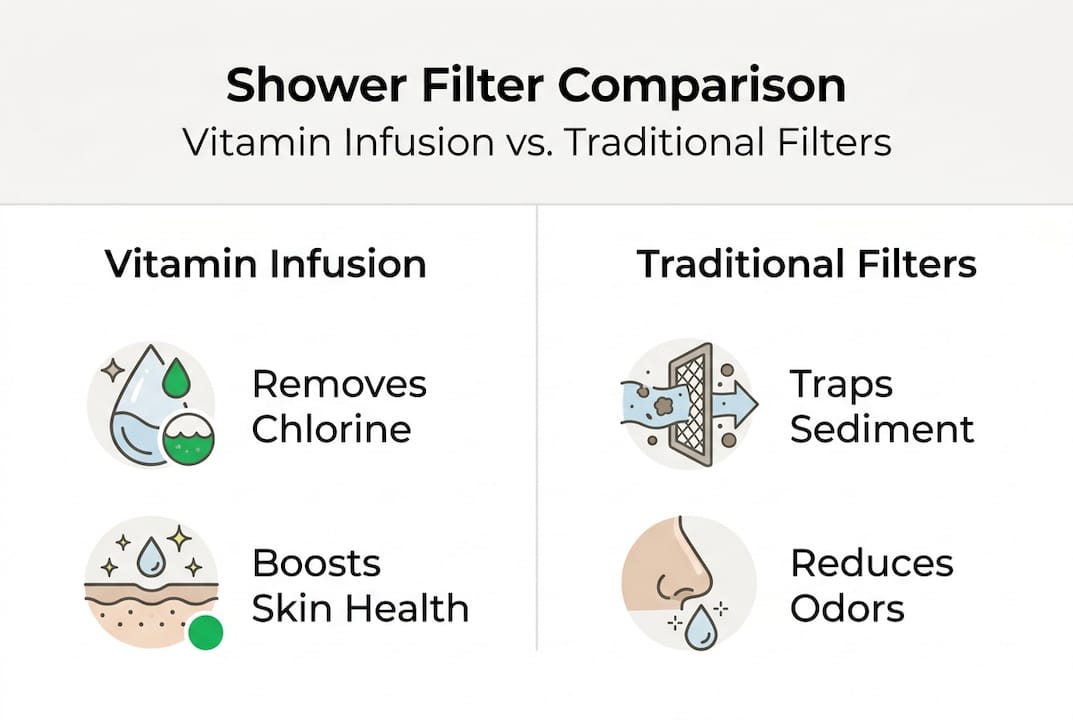
Traditional shower filters rely on physical and chemical filtration methods that work well for certain contaminants but struggle with chlorine removal. Understanding these differences helps you choose the right solution for your water quality concerns.
Activated carbon filters use porous carbon to trap contaminants through adsorption. They excel at removing volatile organic compounds, pesticides, and unpleasant odors. However, carbon’s effectiveness against chlorine decreases significantly in hot water, and the material requires frequent replacement as pores become saturated.
KDF (Kinetic Degradation Fluxion) filters use copper-zinc alloy media to remove heavy metals, hydrogen sulfide, and some bacteria through electrochemical oxidation. They work well in hot water and have longer lifespans than carbon, but chlorine removal capacity remains limited compared to Vitamin C.
Ceramic filters provide mechanical filtration, blocking sediment, rust, and particles down to 0.2 microns. They’re excellent for well water with high sediment loads and can be cleaned and reused. However, they don’t address dissolved chemicals like chlorine or chloramines.
| Feature | Vitamin C Infusion | Activated Carbon | KDF Media | Ceramic |
|---|---|---|---|---|
| Chlorine removal | 99.9% at all temps | 60-80%, drops in heat | 40-60% | None |
| Chloramine removal | Yes (with calcium sulfite) | Minimal | Limited | None |
| Heavy metals | No | Limited | Excellent | No |
| Sediment/particles | No | No | Limited | Excellent |
| Hot water performance | Excellent | Poor | Good | Excellent |
| Lifespan | 2-3 months | 3-6 months | 6-12 months | Reusable |
| Cost per year | $60-120 | $40-80 | $30-60 | $20-40 |
| Installation | Tool-free | Tool-free | May need wrench | May need wrench |
Vitamin C infusion stands out for its targeted chlorine neutralization through chemistry rather than physical filtration. The redox reaction works instantly and completely, regardless of water temperature or pressure. This makes it ideal for chlorinated municipal water, the most common concern for health-conscious consumers.
Pro Tip: Verify NSF/ANSI 177 certification before purchasing any shower filter. This independent testing confirms chlorine removal claims and ensures the filter doesn’t leach contaminants into your water. Replace cartridges on the manufacturer’s schedule, as depleted filters provide zero protection.
The best approach often combines technologies. If you have chlorinated city water with occasional sediment, pair a Vitamin C filter with a pre-filter containing ceramic media. For well water with heavy metals and sediment, start with KDF and ceramic filtration, then add Vitamin C if you notice chlorine from municipal backup supplies.
Choose based on your specific water issues. Test your water or review your annual water quality report to identify which contaminants need addressing. Vitamin C filters solve the chlorine problem that affects 90% of US households on municipal water, making them the most impactful upgrade for skin and hair health.
How to choose and maintain vitamin infusion shower filters for best results
Selecting the right vitamin infusion filter requires matching product features to your water quality, budget, and installation preferences. Follow these steps for optimal results:
-
Test your water chemistry. Request your annual water quality report from your utility or use a home test kit to measure chlorine, chloramine, and pH levels. Chloramine presence requires filters with both Vitamin C and calcium sulfite.
-
Verify NSF certification. Only purchase filters certified to NSF/ANSI 177 standards, which verify chlorine removal claims through independent laboratory testing. Uncertified products may contain ineffective Vitamin C concentrations.
-
Check compatibility. Measure your existing shower arm diameter (most are standard 1/2-inch NPT) and confirm the filter fits your showerhead type. Universal models work with handheld and fixed heads.
-
Calculate annual costs. Divide the filter price by its lifespan in months, then multiply by 12. Quality filters cost $60-120 annually with replacement cartridges, making them affordable for most budgets.
-
Prioritize replaceable cartridges. Systems with snap-in Vitamin C shots cost less long-term than disposable filter housings. You replace only the media, not the entire unit.
-
Consider water pressure. Some filters reduce flow rate by 10-20%. If you have low pressure, choose models with larger filter chambers that maintain flow while providing adequate contact time.
Maintenance determines whether your filter continues protecting your skin and hair. Vitamin C crystals dissolve gradually with each shower, depleting completely after 2-3 months of typical use (based on 10-minute showers for a family of four). Once depleted, the filter provides zero chlorine removal, even if it looks clean.
Set a replacement reminder on your phone or calendar for every 60 days. Some brands offer subscription services that ship cartridges automatically, ensuring you never shower with depleted filters. This convenience matters more than the slight cost premium.
Pro Tip: Shop for filters with replaceable Vitamin C shots rather than sealed cartridges. You’ll spend 40-60% less on replacements while reducing plastic waste. The shots snap into place without tools, taking under 30 seconds to change.
Installation takes 5-10 minutes and requires no plumbing experience. Remove your existing showerhead by turning counterclockwise (use a cloth-wrapped wrench if it’s tight). Wrap the shower arm threads with 3-4 layers of plumber’s tape, moving clockwise. Screw on the filter hand-tight, then attach your showerhead to the filter’s output. Turn on the water and check for leaks at both connections.
Clean the filter housing monthly by wiping with a damp cloth and mild soap. Don’t use harsh chemicals that might degrade the plastic housing. If you notice reduced water pressure before the cartridge replacement date, remove the filter and check for sediment buildup at the inlet screen. Rinse under running water to restore flow.
For homes with high chloramine levels, combine your Vitamin C filter with ceramic filter media in a two-stage system. The ceramic pre-filter removes sediment, extending Vitamin C cartridge life, while calcium sulfite in the main filter handles chloramines that Vitamin C alone can’t neutralize in hot water.
Explore vitamin infusion shower filters and accessories
Transform your daily shower into a wellness ritual with products designed specifically for chlorine neutralization and water quality improvement. Our collection focuses on health-conscious solutions that deliver measurable benefits for your skin and hair.

Start with replaceable Vitamin C shower filter shots that provide 2-3 months of chlorine removal in an eco-friendly, cost-effective format. These snap-in cartridges work with most standard filter housings and take seconds to replace. For comprehensive filtration, explore ceramic filters that remove sediment and particles while extending Vitamin C cartridge life. Complete your setup with shower accessories including handheld units, wall mounts, and flow restrictors that maintain pressure while conserving water.
Key product categories for your shower upgrade:
- Vitamin C filter cartridges with NSF-certified chlorine removal
- Multi-stage filter systems combining Vitamin C, ceramic, and antibacterial media
- Handheld showerheads with integrated filtration for flexibility
- Wall-mounted systems for permanent installation
- Replacement shots and refills for ongoing maintenance
Every product emphasizes ease of installation, verified performance, and affordable maintenance. Most customers notice softer skin and improved hair texture within two weeks of consistent use.
Frequently asked questions about vitamin infusion in showering
How often should vitamin infusion filters be replaced?
Replace Vitamin C cartridges every 2-3 months based on household size and shower frequency. A family of four taking 10-minute showers daily will deplete the filter in approximately 60 days. Single users may extend this to 90 days. Set a calendar reminder to ensure continuous chlorine protection.
Do vitamin C shower filters remove other impurities besides chlorine?
Vitamin C specifically neutralizes chlorine and chloramines through chemical reaction. For comprehensive filtration, choose multi-stage systems that combine Vitamin C with activated carbon (for VOCs), KDF media (for heavy metals), and ceramic elements (for sediment). Single-stage Vitamin C filters focus exclusively on chlorine removal.
Can vitamin infusion showers help with eczema or sensitive skin?
Yes, dermatologists recommend vitamin C shower filters for eczema, psoriasis, and sensitive skin management. Removing chlorine prevents disruption of the skin’s protective barrier, reducing irritation and dryness. Combine filtered showers with prescribed topical treatments for best results. Most users notice reduced itching and redness within 2-4 weeks.
Are vitamin C shower heads suitable for all water types?
Vitamin C filters work best with chlorinated municipal water. For well water containing heavy metals or high sediment, add pre-filtration stages with KDF or ceramic media. If your water contains chloramines (check your utility report), choose filters with calcium sulfite alongside Vitamin C for complete neutralization.
Is installation of vitamin infusion filters difficult for beginners?
Installation requires no plumbing experience and takes under 10 minutes. Remove your existing showerhead, wrap the shower arm threads with plumber’s tape, and hand-tighten the filter. Attach your showerhead to the filter’s output. No tools needed for most models, though a cloth-wrapped wrench helps with stuck showerheads.