
How to remove water impurities for healthier skin and hair
TL;DR:
- Using shower filters can significantly improve skin hydration and reduce dryness caused by chlorine, heavy metals, and sediment in tap water. Installing a filter is quick and easy, with options like carbon, ceramic, or Vitamin C filters suited for different concerns, and verification can be done through simple home water tests. Filtering your shower water addresses a root cause of skin and hair issues, enhancing overall wellness and delivering spa-like benefits daily.
Every time you step into the shower, you expect to feel clean and refreshed. But if your water is loaded with chlorine, heavy metals, and sediment, you might actually be stepping out with drier skin, duller hair, and an itchy scalp. Shower filters can improve skin hydration, reduce dryness and irritation, and leave hair noticeably softer and shinier. The fix is simpler than you think, and this guide walks you through everything from understanding what’s in your water to installing a filter that turns your daily shower into a genuine spa experience.
Table of Contents
- Understanding water impurities and their effects
- What you need: Tools and materials for at-home water filtration
- Step-by-step: How to install a shower filter
- How to tell: Verifying your water is truly purified
- Why true water purity is the missing link for skin and hair wellness
- Transform your shower with the right filtration solution
- Frequently asked questions
Key Takeaways
| Point | Details |
|---|---|
| Impurities matter | Chlorine and heavy metals can worsen dryness and irritation for your skin and hair. |
| Choose the right filter | Picking a high-quality shower filter can bring noticeable, spa-like improvements. |
| Simple DIY upgrade | Installing a filter is easy and doesn’t require plumbing expertise. |
| Track your results | Look for reduced dryness, less irritation, and softer hair after the change. |
Understanding water impurities and their effects
Your tap water travels through miles of pipes before it reaches your showerhead. Along the way, it picks up a surprising range of contaminants that municipalities add intentionally, like chlorine for disinfection, and others that leach in naturally, like iron, copper, and sediment.
Chlorine is the most common offender. Water treatment plants use it to kill bacteria, which is genuinely important for public safety. The problem is that chlorine doesn’t stop working once it hits your skin. It strips away the natural oils your skin produces to stay soft and protected, leaving behind that tight, dry feeling most of us just accept as normal after a shower.
Heavy metals like lead, copper, iron, and magnesium can cause their own brand of damage. Iron in particular is notorious for making hair look dull and feel brittle, because it oxidizes on the hair shaft and dulls the cuticle. Copper can trigger free radical damage in skin cells, accelerating the breakdown of collagen over time.
Sediment is essentially tiny particles of rust, sand, and mineral deposits that may be invisible to the eye but rough on your skin barrier. If you have sensitive skin or a condition like eczema or psoriasis, this low-level daily abrasion makes flare-ups far more likely. Removing these irritants via shower filters for sensitive skin can dramatically reduce the frequency and severity of those episodes.
Common tap water contaminants and their skin and hair effects
| Contaminant | Source | Effect on skin | Effect on hair |
|---|---|---|---|
| Chlorine | Added by water treatment | Dryness, tightness, irritation | Frizz, color fade, brittleness |
| Iron | Old pipes, groundwater | Pore congestion, dullness | Rust-like discoloration, dullness |
| Lead | Older plumbing | Inflammation, barrier damage | Breakage, slow growth |
| Copper | Copper piping | Free radical damage | Green tint, weakened strands |
| Sediment | Soil, rust particles | Micro-irritation, redness | Scalp buildup, dryness |
| Calcium/Magnesium | Hard water regions | Flakiness, blocked pores | Heavy, stiff, hard to manage |
Research consistently links these contaminants to worsened outcomes for people with existing skin conditions. Reducing chlorine and heavy metals via shower filters improves skin hydration and reduces dryness, itchiness, and eczema flares. That’s not a minor cosmetic win. For anyone managing a chronic skin condition, it can genuinely change day-to-day comfort.
Here’s a quick summary of the most common problems unfiltered shower water causes:
- Persistent skin dryness even after applying moisturizer
- Itchy, flaky scalp that doesn’t respond to dandruff shampoo
- Hair that feels rough, looks lifeless, or tangles easily
- Skin breakouts around the hairline and back
- Accelerated fade in color-treated hair
- Worsened eczema or psoriasis symptoms after showering
Now that you know impurities matter, let’s see what you need to address them.
What you need: Tools and materials for at-home water filtration
The good news is that improving your shower water doesn’t require a plumber, a permit, or any special tools. Most shower filters install in minutes and work with standard plumbing. The trickier part is choosing the right type for your situation.
Types of shower filters
Carbon filters use activated carbon to trap chlorine, chloramines, and some heavy metals. They’re widely available and generally affordable. The limitation is that carbon is less effective at high water temperatures, which matters since most people shower in warm to hot water.
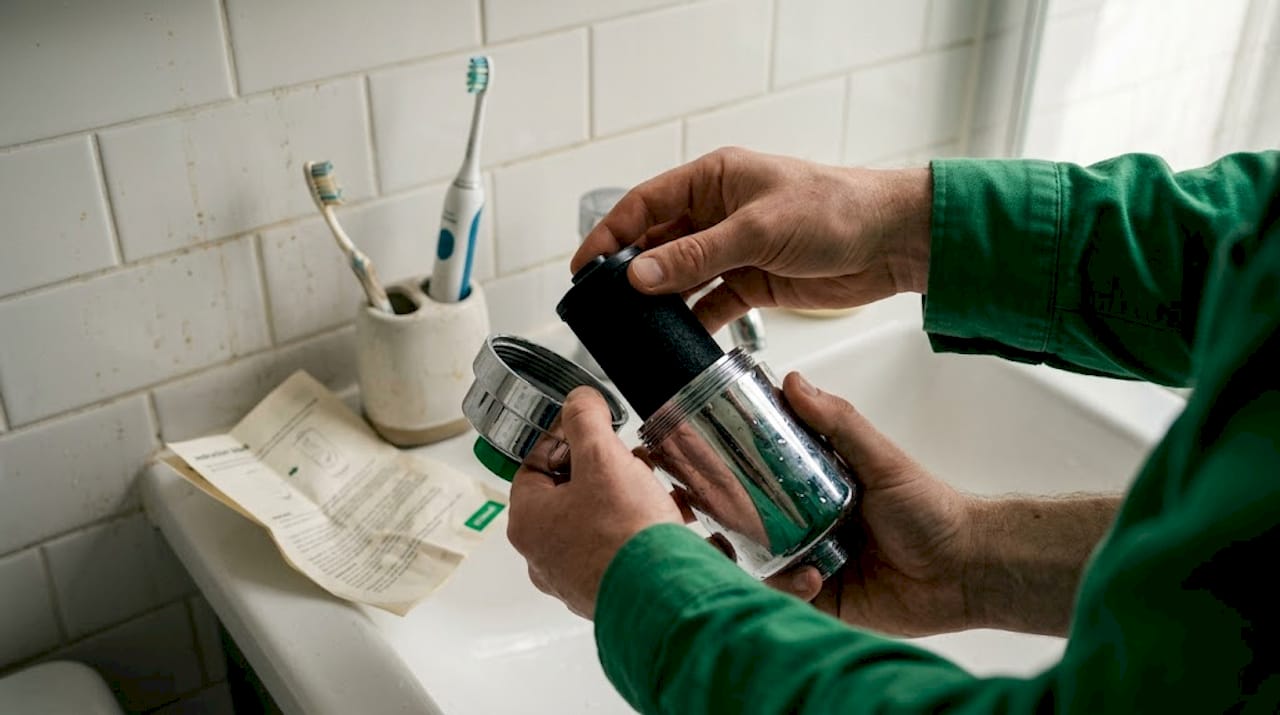
Ceramic filters use porous ceramic media, often combined with mineral balls like maifan stone or tourmaline, to reduce heavy metals and bacteria while balancing water pH. They tend to perform well across a range of temperatures and are very gentle on sensitive skin.
Vitamin C filters work differently. Ascorbic acid (the technical name for Vitamin C) neutralizes chlorine and chloramines on contact through a chemical reaction, not absorption. This makes them highly effective even in hot water, which is exactly when your skin is most open and vulnerable. They also carry bonus benefits: Vitamin C is an antioxidant that may support collagen production, so it’s doing double duty for your skin.
Dermatologists recommend filters for people with sensitive skin and eczema, and users consistently report that filtered water feels noticeably softer and more spa-like. That combination of expert endorsement and real-world results makes it worth understanding how to choose wisely.
Comparison of shower filter types
| Filter type | Best for | Temperature performance | Ease of replacement | Bonus benefits |
|---|---|---|---|---|
| Carbon | General chlorine removal | Moderate | Easy | None |
| Ceramic | Heavy metal and pH concerns | Good | Moderate | pH balancing |
| Vitamin C | Chlorine, chloramines, all skin types | Excellent | Very easy | Antioxidant boost |
When choosing your filter, look for these key features:
- Compatibility with your existing showerhead (thread size matters)
- Replacement cycle (most need changing every 2 to 6 months)
- Flow rate (make sure filtration doesn’t sacrifice water pressure)
- Certifications from bodies like NSF International for verified performance
- Ease of installation (hand-tight is ideal, no tools required)
Pro Tip: Look for filters that include vitamin infusions like Vitamin C or aroma therapy minerals. These add a genuine spa quality to your shower without any extra effort, and they complement the filtration work the filter is already doing.
Once you’ve chosen your filter, you’re ready to transform your shower experience from the inside out. With the right filter in hand, it’s time to get started.
Step-by-step: How to install a shower filter
Installing a shower filter is genuinely one of the easiest home upgrades you can make. Most people complete the job in under ten minutes without any special tools. Here’s how to do it cleanly and correctly.
- Turn off the water supply or simply make sure the shower is off before you begin. You don’t need to shut off the main water line for most installations.
- Remove your existing showerhead by turning it counterclockwise. Use a cloth or towel to protect the finish if you need extra grip.
- Clean the shower arm threads with a damp cloth to remove any old tape or mineral buildup. This step prevents leaks.
- Wrap the threads with plumber’s tape (also called Teflon tape) in a clockwise direction. Two to three wraps is usually enough. This creates a watertight seal.
- Attach the filter housing to the shower arm by screwing it on clockwise. Hand-tighten firmly. Avoid using a wrench directly on the filter body as it can crack the casing.
- Reattach your showerhead to the filter outlet port, again using fresh plumber’s tape on the threads.
- Turn the water on slowly and check all connection points for drips. Tighten gently if needed.
- Run water for 30 to 60 seconds before your first use to flush the system.
Most installation problems come from skipping the plumber’s tape step. It takes thirty seconds and prevents almost every drip issue people run into after swapping a filter.
Pro Tip: Flush the filter with cold water for a full minute before your first shower. This clears any loose carbon particles or manufacturing residue and ensures you’re getting clean, filtered water from the very first use.
Following the right filtration step-by-step process ensures you get the full benefit from your filter right away. Understanding filter cartridge benefits also helps you make the most of each replacement cycle. Once you’ve installed your filter, you’ll want to make sure it’s working and see the difference in your skin and hair.
Research supports that removing impurities from shower water reduces dryness, eczema flares, and itchiness while leaving hair shinier and softer. The installation is just the beginning of that transformation.
How to tell: Verifying your water is truly purified
Installing a filter is step one. Confirming it’s actually doing its job is step two. Fortunately, your body gives you feedback almost immediately, and there are simple home tests that provide more objective confirmation.
Signs your filter is working
The most immediate sign is smell. Chlorinated water has a distinctly sharp, pool-like odor. Within one or two showers, that smell should be noticeably reduced or gone entirely. If it’s still strong after a week, your filter may not be installed correctly or may need to be replaced.
Next, pay attention to how your skin feels immediately after stepping out of the shower. Filtered water users typically notice that their skin doesn’t feel as tight or dry. Moisturizer seems to absorb better too, because the skin barrier isn’t being constantly stripped. Hair tends to feel softer to the touch and easier to comb through when still wet.
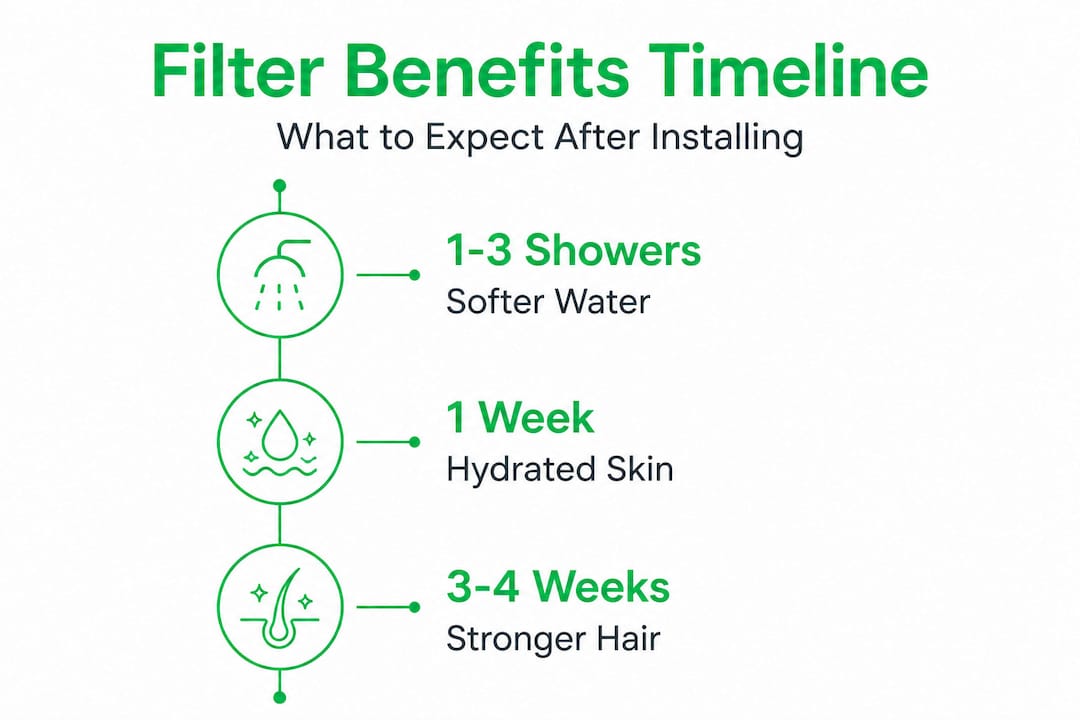
Timeline of noticeable improvements
| Timeframe | What most users notice |
|---|---|
| First 1 to 3 showers | Reduced chlorine smell, water feels softer |
| Week 1 | Less skin tightness, improved lather with soap/shampoo |
| Weeks 2 to 4 | Visibly softer, shinier hair, reduced scalp itchiness |
| Month 2 onward | Improved skin hydration, fewer breakouts, calmer eczema |
For objective confirmation, pick up a simple water test kit from any hardware store. These use test strips that change color in the presence of chlorine, iron, and other common contaminants. Test before and after your filter installation to see exactly what it’s removing.
Here’s what healthy, filtered shower water should show:
- Little to no detectable chlorine (below 0.1 ppm is ideal)
- Neutral to slightly acidic pH (between 6.5 and 7.5 is ideal for skin)
- No visible discoloration or particulate matter
- No metallic taste or odor when water makes contact with your face
Understanding the benefits of water softening alongside filtration helps you appreciate why these changes happen at a biological level. For anyone dealing with chronic skin issues, learning how shower water affects eczema provides deeper context for why filtered water brings relief.
Shower filters improve skin hydration and reduce dryness, itchiness, and eczema flares. Seeing those results confirm your filter is doing exactly what it’s supposed to do.
Pro Tip: Write the installation date on a piece of tape and stick it to the inside of your shower cabinet. Set a phone reminder for two to three months later. Filters lose effectiveness gradually, so you often won’t notice the decline until you’ve replaced it and feel the difference again.
Having confirmed your water is purer, let’s explore why the spa-like results are more than just a beauty benefit.
Why true water purity is the missing link for skin and hair wellness
Here’s an uncomfortable truth about the wellness industry. We collectively spend billions every year on serums, conditioners, masks, and supplements, yet most people completely ignore the one thing that touches their skin every single day without exception: their shower water.
Think about it this way. You wouldn’t spend money on a high-quality moisturizer and then scrub your face with sandpaper before applying it. But that’s essentially what’s happening when you apply premium skincare products after showering in chlorinated, heavy-metal-laden water. You’ve already compromised the skin barrier before the product even makes contact.
The benefits for your hair and skin from using shower filters often exceed what people expect, especially those who’ve spent years trying to solve dryness, frizz, or scalp problems with topical products alone. The real variable was the water all along.
We’ve seen this pattern repeatedly. Someone tries every shampoo on the market for a flaky scalp. They switch shower filters and the problem clears up within a month. Another person deals with skin that breaks out no matter how gentle their face wash is. Filtered water is the only change they make, and their complexion noticeably improves. Water quality sits at the base of the pyramid. Products sit on top. Without a clean foundation, even the best products can only do so much.
Dermatologists recommend shower filters for sensitive skin and eczema precisely because they recognize this dynamic. It’s not alternative wellness thinking. It’s basic biology: when you remove the irritants that damage your skin barrier, the barrier can actually repair and function properly.
The real opportunity here is a mindset shift. Instead of asking “which product should I add?”, try asking “what can I remove from my water that’s causing the problem?” That single question leads to faster, more lasting results than any product ever will.
Transform your shower with the right filtration solution
You’ve learned exactly what’s in your water, why it matters, and how to fix it. Now it’s time to find the right products to make it happen in your specific shower.
Vitaclean makes it straightforward to get started without guesswork. The Vitamin C shower filter shots are a standout choice for anyone dealing with chlorine sensitivity, dryness, or color-treated hair, delivering targeted neutralization exactly where your skin needs it. If you prefer a media-based approach, the ceramic filter options balance heavy metal reduction with gentle pH optimization. Not sure which system fits your needs? The shower head benefits page breaks down every option clearly so you can choose with confidence and start seeing real results within your first week.
Frequently asked questions
What kinds of impurities are most common in shower water?
Chlorine, heavy metals like iron and lead, and sediment are the most common contaminants found in household shower water, and all three impact skin hydration and hair health negatively.
How often should I replace my shower filter?
Most shower filters need to be replaced every two to six months, depending on your daily usage and the hardness or contamination level of your local water supply.
Will filtering my shower water really help with eczema or sensitive skin?
Yes. Dermatologists recommend filters specifically for people with sensitive skin and eczema, and consistent user feedback confirms reduced irritation and improved skin comfort after switching to filtered water.
Can a shower filter change the smell or feel of my water?
Absolutely. A quality filter removes chlorine odor quickly, often within the first shower, and the water feels noticeably softer and gentler on your skin, much like the difference between spa-like filtered water and a standard tap shower.
Recommended
- Solve hard water step by step: healthier skin & hair
- How to Maintain Water Filters for Healthier Skin and Hair
- How filtered water transforms your skincare routine (2026)
- How to address hard water issues for healthier skin
- Detoxify your skin at home: simple routines for results – SMPL SKIN South Africa