
What chlorine in tap water really does to your skin and hair
TL;DR:
- Chlorine disinfects tap water to prevent disease but can cause skin, hair, and respiratory irritation during hot showers. Using targeted shower filters, especially those with Vitamin C, can significantly reduce chlorine and byproduct exposure, improving skin and hair health. While safe for most, vulnerable individuals should prioritize filtration to mitigate sensitivities caused by chlorine and its byproducts.
Chlorine keeps your tap water free of harmful bacteria and viruses, and that’s genuinely important. But most people stop there, assuming “safe to drink” automatically means “good for your skin and hair.” It doesn’t. Chlorine’s role in tap water is to disinfect quickly and maintain a protective residual through the distribution system. What that same residual does during a long, hot shower is a different conversation entirely, and one worth having before your next wash day.
Table of Contents
- Why is chlorine added to tap water?
- How chlorine works: The science and safety
- Chlorine’s impact on your skin, hair, and overall shower experience
- What about disinfection byproducts and regulation?
- Our take: Getting real about chlorine in your shower routine
- How to elevate your shower: Solutions for reduced chlorine
- Frequently asked questions
Key Takeaways
| Point | Details |
|---|---|
| Chlorine’s core function | Chlorine keeps tap water safe by killing pathogens and maintaining a protective residual through pipes. |
| Why your shower matters | Showering increases exposure to chlorine by skin contact and inhalation, affecting sensitive individuals. |
| Potential side effects | Dryness, irritation, and odor changes can occur, especially during maintenance events or with hot water. |
| Balance is key | Most homes get safe water, but proactive filtering improves comfort and reduces exposure risks. |
| Simple solutions exist | High-quality shower filters help you enjoy cleaner, softer water for a healthier shower experience. |
Why is chlorine added to tap water?
Chlorine has been the backbone of municipal water treatment for over a century, and for good reason. Before widespread disinfection, waterborne diseases like typhoid fever and cholera were common public health crises. Chlorine changed all of that, almost overnight.
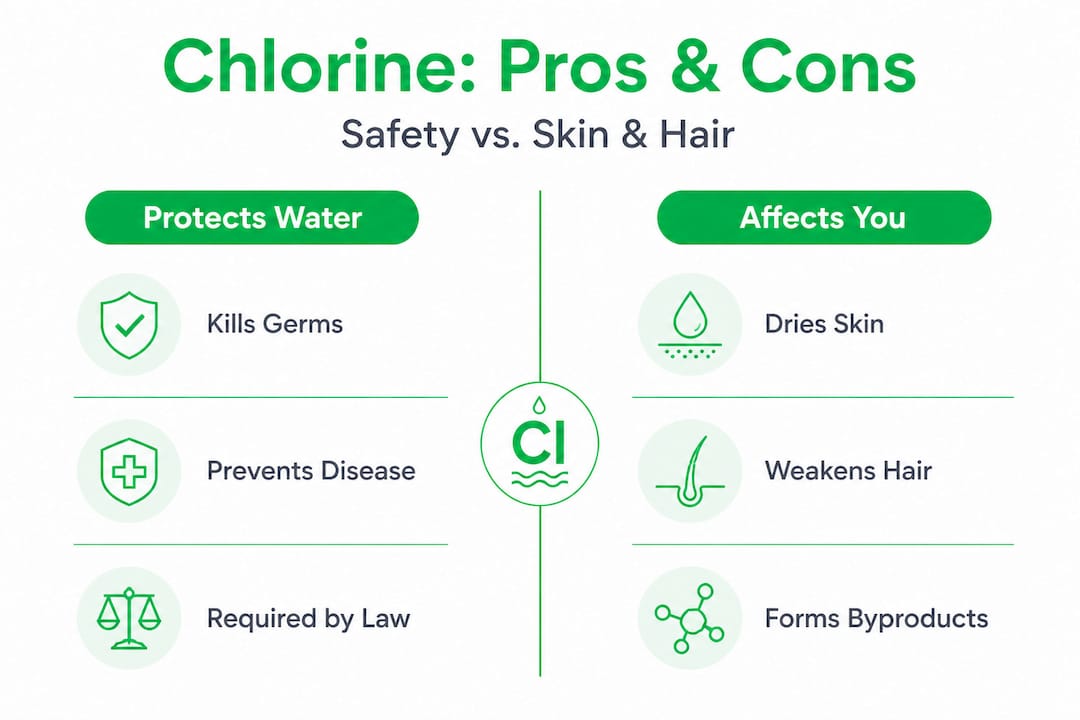
When water utilities add chlorine, the goal is two-part. First, the chlorine needs to destroy pathogens present at the treatment plant. Second, and just as critically, it needs to persist as a disinfectant residual throughout the pipe network so that by the time water reaches your tap, it’s still protected from microbial regrowth.
There are two main forms of residual chlorine you’ll hear about:
- Free chlorine consists of hypochlorous acid (HOCl) and hypochlorite ion (OCl⁻). This is the most potent disinfectant form.
- Combined chlorine, or chloramines, forms when chlorine reacts with nitrogen compounds (like ammonia) in water. Some utilities deliberately use chloramines as a secondary disinfectant.
Here’s a quick comparison of how these two forms perform:
| Property | Free chlorine | Combined chlorine (chloramines) |
|---|---|---|
| Disinfection speed | Fast | Slower |
| Residual longevity | Shorter | Longer |
| Byproduct formation | Higher THM/HAA5 risk | Lower THM/HAA5, higher nitrosamine risk |
| Odor profile | Stronger “pool smell” | Milder odor |
Understanding which type your utility uses matters more than most people realize. It directly affects the chlorine risks for skin and hair you experience daily, as well as the signs of chlorine in water you might already be noticing at home.
“Chlorine residuals in distribution systems are essential to prevent pathogen recontamination between the treatment plant and your tap. Without them, safe treated water can become unsafe water by the time it arrives in your home.”
Now that you know why chlorine is in your water, let’s break down what happens chemically and how it interacts with your shower.
How chlorine works: The science and safety
Not all chlorine is equally effective. Disinfection strength depends heavily on the fraction of free chlorine present as hypochlorous acid (HOCl), and that fraction shifts with pH and temperature.
Here’s the core principle: at lower pH levels (more acidic water), a higher proportion of chlorine exists as HOCl, which is the more aggressive disinfectant. At higher pH (more alkaline), more chlorine shifts to OCl⁻, which is significantly less effective as a pathogen killer. Most utilities target a pH of around 7.0 to 8.0, which balances pipe corrosion concerns with reasonable disinfection efficiency.
Temperature also plays a role. Warmer water increases chlorine reactivity, which means your hot shower is not just a comfort choice. It’s a chemistry event.
Key factors that influence chlorine effectiveness:
- pH of the water: Lower pH = more HOCl = stronger disinfection
- Temperature: Higher temperatures increase reaction rates and can accelerate chlorine breakdown
- Contact time: Longer exposure allows more thorough inactivation of pathogens
- Organic load: High levels of natural organic matter compete with and reduce available chlorine
- Chlorine dose: Utilities must dose enough to maintain adequate residuals all the way to the end of the distribution line
Statistic callout: Utilities are typically required to maintain a minimum free chlorine residual of 0.2 mg/L at the point of delivery, though many aim for 0.5 to 1.0 mg/L to ensure safety margin across the entire pipe network.
Pro Tip: If you notice a strong chlorine taste or odor at your tap, you’re likely near the beginning of a distribution zone or your utility is running a routine flushing event. This is when residual levels are freshest and often highest. A shower filter can help you reduce chlorine in water during these peak periods.
Understanding chlorine chemistry sets the stage for its potential impact on your health and daily shower experience.
Chlorine’s impact on your skin, hair, and overall shower experience
This is where things get personal. Tap water is safe by public health standards, but “safe to drink” and “gentle on your skin barrier” are measuring two different things entirely.
Research on chlorine exposure confirms that showering introduces unique exposure routes: direct skin contact and inhalation of steam. These are routes that drinking a glass of tap water simply doesn’t involve to the same extent. When you shower, chlorine touches your skin continuously for 5 to 15 minutes, penetrates the lipid barrier in the outer skin layer, and can be inhaled as volatilized gas in the steam.
Key skin and hair effects you should know:
- Skin dryness and barrier disruption: HOCl and OCl⁻ are oxidizing agents. They can strip natural oils and disrupt the lipid matrix in the outermost skin layer (the stratum corneum), leading to that tight, dry feeling after a shower.
- Scalp irritation: The scalp’s skin is thinner and more vascular than body skin, making it more sensitive to chemical exposure. Chlorine can destabilize the moisture balance of the scalp, contributing to flakiness or itchiness.
- Hair fragility: Oxidation from chlorine weakens protein bonds in hair strands, especially in color-treated or chemically processed hair, where the cuticle is already more open to damage.
- Eye and throat irritation: Steam inhalation in a poorly ventilated bathroom concentrates chlorine vapor, which can irritate the respiratory tract and eyes, particularly in people with asthma or allergies.
- Heightened sensitivity in certain groups: Babies, young children, and individuals with eczema, psoriasis, or rosacea have compromised or immature skin barriers and may react more noticeably to even standard tap water chlorine levels.
“Clinical chlorine toxicity from water-disinfection concentrations is uncommon at typical utility levels; however, individual response varies significantly based on skin condition, exposure duration, water temperature, and bathroom ventilation.”
The issue compounds with hot showers. Heat dilates the pores and accelerates skin absorption. It also increases the rate at which chlorine vaporizes into the steam you’re breathing. So if you love a long, steamy shower (and most of us do), your chlorine exposure is meaningfully higher than someone taking a quick lukewarm rinse.
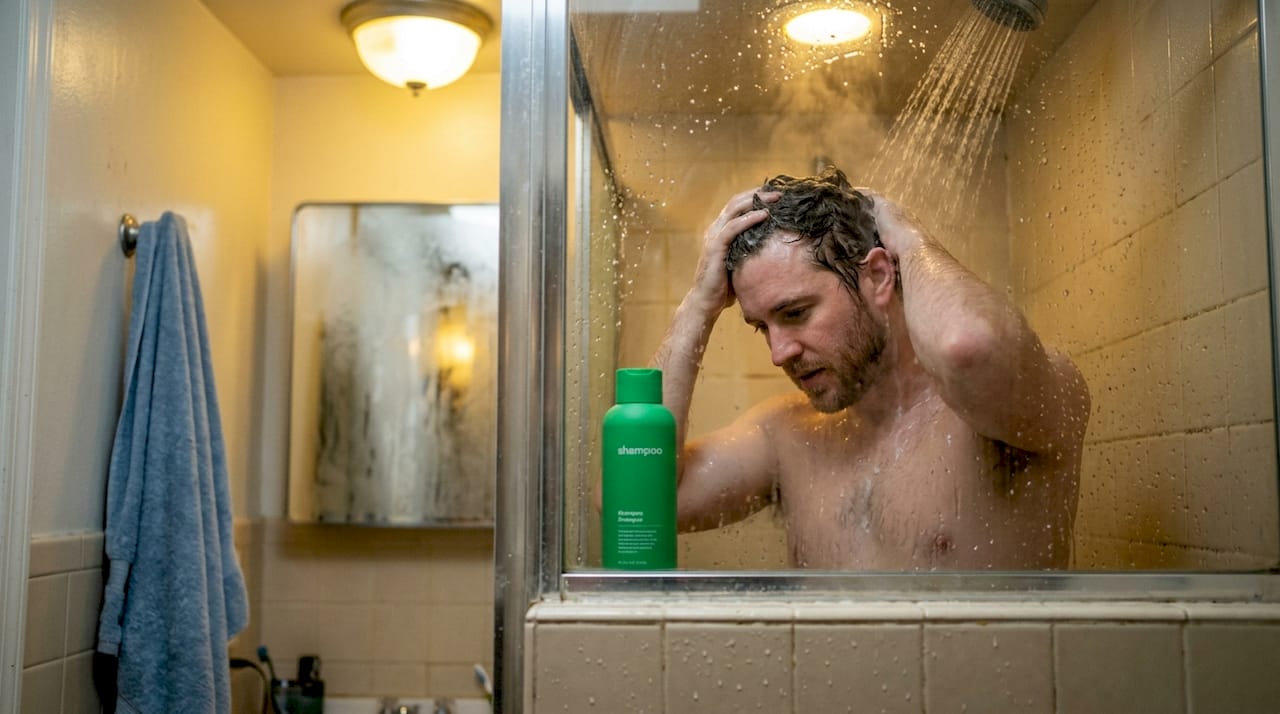
Pro Tip: Steam can carry more chlorine into your lungs per minute than drinking the same water. Improving bathroom ventilation or running a fan during showers is a simple first step. Pairing it with shower filters designed for chlorine sensitivity takes the strategy further.
If you’ve noticed your skin feels different after a vacation at a hotel with high-quality filtration, that’s not your imagination. There’s a real, measurable difference in what filtered water does for your skincare routine at the cellular level, both in terms of hydration and skin barrier resilience.
With these effects in mind, it’s also important to know about byproducts that result from chlorine and what health implications are being closely regulated.
What about disinfection byproducts and regulation?
Chlorine itself is just part of the picture. When chlorine reacts with natural organic matter already present in source water (things like decaying leaves, soil runoff, and algae), it creates a category of compounds called disinfection byproducts, or DBPs.
DBPs are a primary focus of EPA regulatory oversight because some have been associated with adverse health outcomes at elevated chronic exposures. The two main regulated groups are:
| DBP Group | Full name | Regulated limit (MCL) |
|---|---|---|
| TTHM | Total trihalomethanes | 80 µg/L |
| HAA5 | Haloacetic acids (five) | 60 µg/L |
DBP formation isn’t random. Several predictable factors drive how much forms in any given system:
- Organic matter content of the source water (rivers and lakes with heavy vegetation produce more precursors)
- Chlorine dose and contact time: Higher doses held for longer periods produce more byproducts
- Water temperature: Warmer seasons typically see higher DBP formation
- pH: Alkaline conditions favor formation of certain trihalomethanes
The good news is that utilities operating in the U.S. are legally required to monitor DBP levels routinely and report them annually in Consumer Confidence Reports (CCRs). These reports are publicly available, and your utility is required to notify you if levels exceed regulatory limits.
The concern for home shower users is that while drinking water limits are enforced at the tap, your total DBP exposure also includes inhalation and skin absorption during showers. For most people, regulatory levels keep risk low. But for health-focused households prioritizing optimal skin and hair outcomes, using an inline shower filter that targets both chlorine and DBPs adds a meaningful layer of protection beyond what the utility can control at your specific fixture.
Now, let’s review key takeaways and what you can do to protect your health and maintain a premium shower environment.
Our take: Getting real about chlorine in your shower routine
Here’s the perspective we hold, and it’s maybe not the one you’d expect from a water filtration brand.
Chlorine is not the villain. It is a carefully managed public health tool, and the global reduction in waterborne disease it enabled is one of the great achievements of the last 150 years. Respecting that matters.
But acknowledging safety doesn’t mean pretending chlorine is neutral once it leaves the treatment plant and hits your skin at 105°F for twelve minutes. Those are real effects, and the sensory irritation people experience, especially during maintenance periods when utilities temporarily switch disinfectant forms, is operationally normal but genuinely uncomfortable for sensitive individuals.
The practical takeaway is this: you don’t need to fear your tap water, but you also don’t have to accept the dryness, scalp irritation, and dulled hair texture that come with unfiltered chlorine exposure as inevitable. They’re not inevitable. They’re manageable.
Prioritize filtering for vulnerable members of your household first: infants, children, and anyone with chronic skin conditions. Then build the habit for yourself. A consistent workflow for cleaner shower water doesn’t require a plumber or a complicated installation. It requires choosing the right product and staying consistent with filter replacements.
The position we’d push back on is the binary thinking: either chlorine is dangerous or it’s completely fine. Reality is nuanced. Public water is safe. It’s also not optimized for skin health. Both things are true.
How to elevate your shower: Solutions for reduced chlorine
If this article has reinforced what your skin has been telling you for a while, the next step is practical action.
Our complete guide to reducing chlorine walks you through filtration options ranked by effectiveness, including how Vitamin C filters neutralize chlorine on contact, which is one of the fastest and most reliable mechanisms available. Vitamin C (ascorbic acid) reacts instantly with both free chlorine and chloramines, making it uniquely effective compared to carbon-only filters that can miss combined chlorine forms.
Vitaclean’s shower filtration systems are designed to install in minutes without tools, work with standard shower connections, and deliver measurably gentler water from the very first use. Whether you’re dealing with dry skin after every shower, a flaky scalp, or hair that’s lost its shine, understanding what shower filters actually do for your skin and hair is the starting point for building a shower routine that genuinely supports your wellness goals.
Frequently asked questions
Is showering in chlorinated water safe for sensitive skin?
For most people, showering in chlorinated water is safe at regulated levels, but those with sensitive skin, eczema, or psoriasis may notice increased dryness or irritation and can meaningfully benefit from reducing their chlorine exposure with a quality shower filter.
Does chlorine in tap water cause hair damage?
Chlorine can contribute to dryness and fragility in hair strands because HOCl and OCl⁻ are oxidizers that disrupt the protein bonds and moisture retention in the hair cuticle, particularly with frequent hot showers or in chemically processed hair.
What are chlorine disinfection byproducts (DBPs), and should I worry?
DBPs are regulated compounds that form when chlorine interacts with natural organic matter in source water; the EPA sets limits for TTHM and HAA5 groups and utilities are required to monitor and report these levels annually, keeping risk within acceptable ranges for most consumers.
Can I completely remove chlorine from my shower water?
You can reduce chlorine levels dramatically with a Vitamin C shower filter, which neutralizes both free chlorine and chloramines almost instantly on contact, making your shower water noticeably gentler on skin and hair from day one.
Recommended
- Shower Water Chlorine Risks: Effects on Skin, Hair & Lungs Explained
- Chlorine Sensitivity? Use a Shower Filter for Healthy Skin & Hair
- Chlorine Sensitivity? Shower Filters for Healthier Skin & Hair
- Chlorine: The Dangers of Shower Water and How to Secure Your Skin
- Vitamin C and Your Skin | Cosmedica Skincare
- Scalp pH & Dandruff: Why pH Balance Matters for Scalp Health – Victory Serums