
How to prevent shower scalp irritation: a step-by-step guide
TL;DR:
- Persistent scalp irritation despite medicated shampoos may be caused by shower water pollutants like chlorine, chloramines, and minerals. Identifying these triggers involves monitoring symptoms related to water quality and adjusting routines accordingly. Using water filters, gentle products, and proper shower techniques can significantly improve scalp health over time.
You scrub with medicated shampoo, avoid hot styling tools, and still wake up with an itchy, flaking scalp every single morning. The problem might not be your products at all. Shower water irritants like chlorine, chloramines, and mineral residue can trigger scalp symptoms that no dandruff shampoo can fix, because you’re reintroducing the irritant every single shower. This guide walks you through exactly how to identify the real cause, gather the right tools, overhaul your shower routine, and troubleshoot anything that still isn’t working.
Table of Contents
- Identify the true cause of your shower scalp irritation
- Gather your tools: What you need to prevent scalp irritation
- Step-by-step: Change your shower routine to protect your scalp
- Troubleshooting and verifying results: Next steps if irritation persists
- What others overlook about shower scalp irritation: The expert reality
- Start your journey to an irritation-free scalp
- Frequently asked questions
Key Takeaways
| Point | Details |
|---|---|
| Pinpoint the cause | Identifying whether your scalp irritation is from water quality, product residue, or a skin condition is the essential first step. |
| Choose the right tools | A filtered showerhead, gentle hair products, and consistent care are your best defenses against scalp irritation. |
| Follow a proven routine | Using lukewarm water, keeping showers short, and moisturizing promptly can significantly reduce irritation. |
| Troubleshoot persistent issues | If irritation remains, check for filter allergies or consult a dermatologist for deeper guidance. |
Identify the true cause of your shower scalp irritation
Before spending another dollar on specialty shampoos, it’s worth taking a step back. Scalp irritation has several possible triggers, and the fix depends entirely on which one you’re dealing with.
The most common culprits include:
- Hard water minerals (calcium and magnesium) that coat the scalp and block follicles
- Chlorine and chloramines added to municipal tap water as disinfectants
- Product buildup from shampoos, conditioners, and dry shampoo
- Contact dermatitis triggered by fragrance or preservatives in hair products
- Seborrheic dermatitis, a skin condition driven by yeast overgrowth
- Scalp psoriasis or eczema, both of which require medical management
The tricky part is that all of these can look nearly identical at first glance: itch, flaking, redness, and sensitivity. The key difference is when and how symptoms behave. If your scalp feels fine before your shower but burns or itches immediately after rinsing, water quality is likely involved. If switching to fragrance-free products made zero difference, water is an even stronger candidate. If you’ve moved cities or started using a new water source and symptoms appeared shortly after, that connection is hard to ignore.
“If scalp irritation occurs right after showering and your dandruff-type products do not help, the problem may be shower water irritants such as chlorine, chloramines, or mineral residue.”
Understanding scalp health risks from shower water is the critical first step, because treating the wrong cause wastes time, money, and your scalp’s patience.
Pro Tip: Keep a simple notes app log for two weeks. Write down your symptoms, when they appear, and what changed that day (new product, traveled somewhere, longer shower). Patterns become obvious fast, and you’ll walk into any dermatologist visit with genuinely useful data.
The reason traditional anti-dandruff shampoos fail so many people is structural: they target fungal overgrowth or excess oil, not chemical irritants dissolved in water. You can use the best medicated shampoo on the market and still be rinsing your scalp in water that strips its natural moisture barrier every single morning. That’s a losing battle from the start.
Gather your tools: What you need to prevent scalp irritation
Once you have a working theory about what’s driving your symptoms, it’s time to put together everything you need before changing your routine. Tackling multiple irritation factors at the same time produces faster, more reliable results than trying things one at a time over months.
The benefits of using shower filters go well beyond marketing claims. Vitamin C based filters work by chemically neutralizing chlorine and chloramines on contact, which is a different mechanism from carbon filters that absorb contaminants. Ceramic ball filters add another layer by adjusting water pH and reducing heavy metal content. Both options are worth knowing about when you’re selecting a filter.
| Tool | Purpose | What to look for |
|---|---|---|
| Shower filter (vitamin C or ceramic) | Neutralizes chlorine, chloramines, and heavy metals | Compatibility with your existing shower head, filter lifespan |
| Sulfate-free, fragrance-free shampoo | Cleanses without stripping the scalp barrier | No SLS, SLES, parabens, or synthetic fragrance |
| Post-shower scalp serum or oil | Locks in moisture and soothes irritation after rinsing | Lightweight, non-comedogenic, ideally contains niacinamide or panthenol |
| Soft microfiber towel | Reduces friction that worsens inflamed skin | Avoid terrycloth rubbing on sensitive areas |
| Symptom tracking calendar | Identifies patterns and progress | Simple paper or digital notes app |
Quick essentials to keep stocked:
- Replacement filter cartridges on a regular schedule (typically every 1 to 3 months depending on usage)
- A wide-tooth comb for gentle detangling while the scalp is still sensitive
- Unscented, alcohol-free scalp spray for between-wash hydration
- Latex-free gloves if you’re patch testing new products yourself
Shower filter guidance for sensitive skin is especially relevant if you’re already managing a diagnosed condition like eczema or psoriasis, since these scalps need every advantage they can get against chemical irritants.
Routine changes that support the skin barrier, including using lukewarm water, shorter showers, and fragrance-free products, reduce irritation significantly even when water quality isn’t the only factor at play. In other words, the tools you use AND how you use them both matter.
Step-by-step: Change your shower routine to protect your scalp
With the right supplies ready, here is how to put it all together into a daily practice that consistently protects your scalp.
-
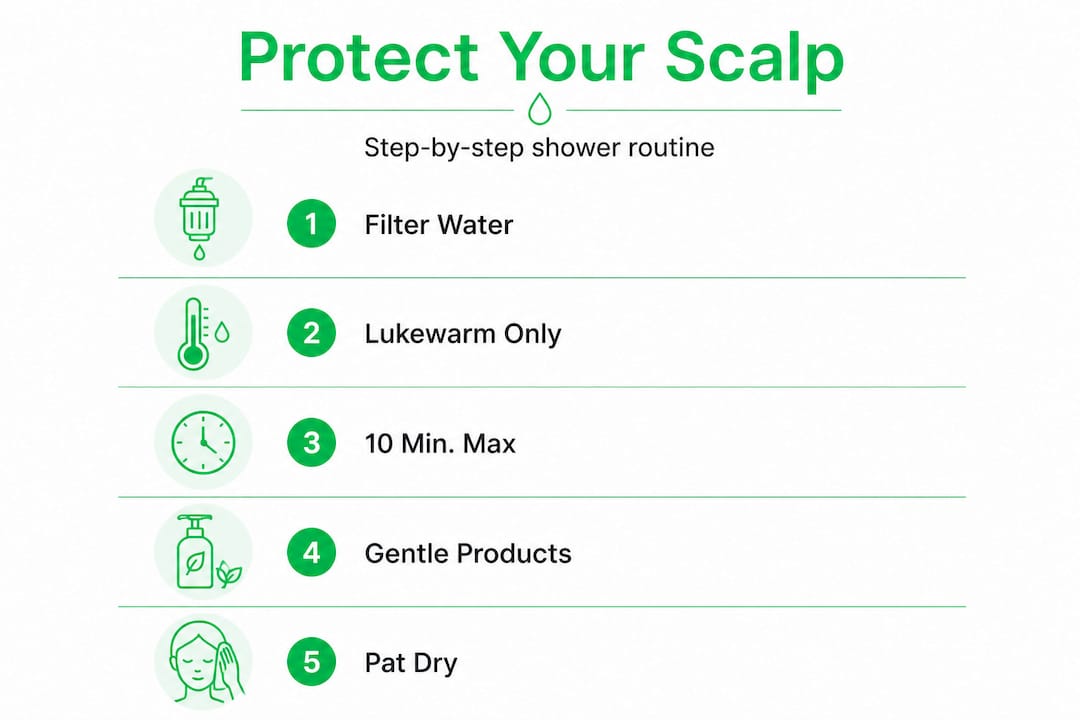
Install your shower filter. Mount it between your existing water pipe and shower head. Most vitamin C or ceramic filters take under five minutes and require no tools. Confirm it’s seated tightly so no unfiltered water bypasses the cartridge.
-
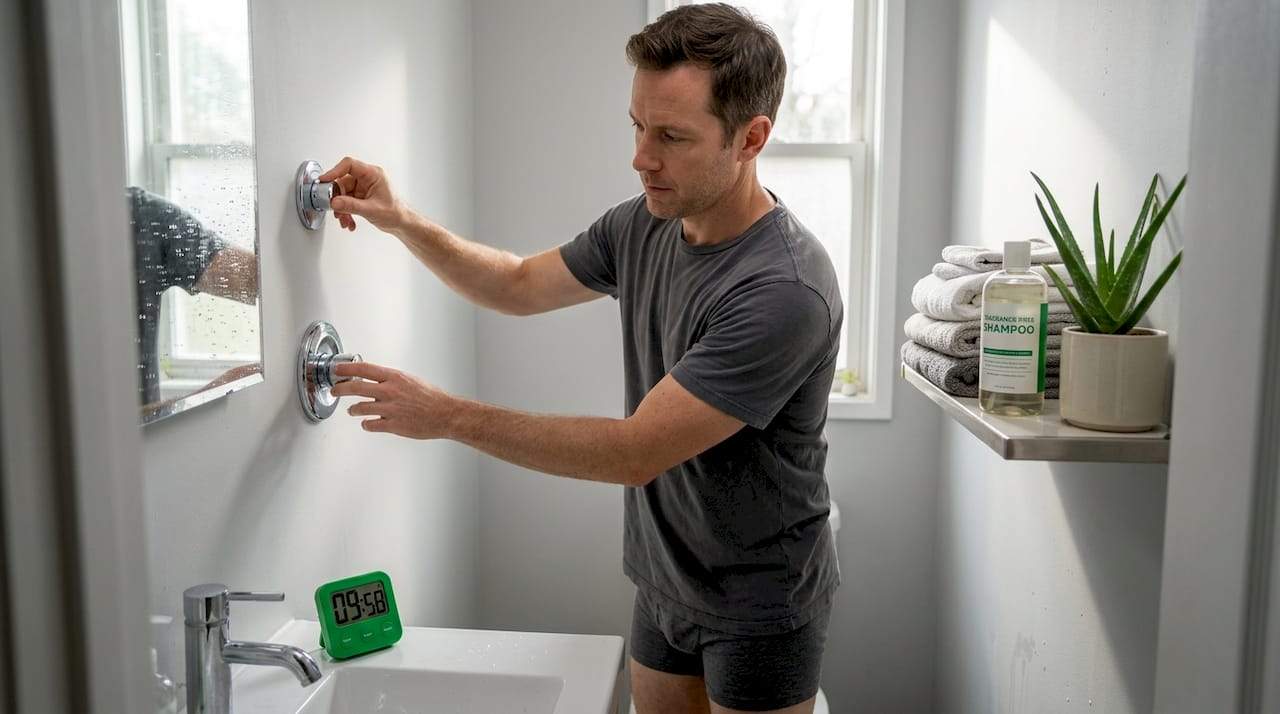
Set water temperature to lukewarm. Hot water feels incredible but actively damages the scalp’s lipid barrier, which is the thin protective layer of natural oils that prevents moisture loss. Lukewarm water, around 98 to 100 degrees Fahrenheit, rinses effectively without that trade-off.
-
Wet your hair thoroughly before applying shampoo. A fully saturated scalp needs far less product to lather, which means less residue to rinse out and less exposure to detergent ingredients.
-
Apply a small amount of sulfate-free shampoo to your scalp only. Work it in with the pads of your fingers, not your nails. Nail scrubbing micro-tears inflamed skin and makes irritation dramatically worse.
-
Rinse completely. Incomplete rinsing is one of the most underrated causes of scalp buildup. Take an extra 20 to 30 seconds to rinse longer than you think you need to.
-
Apply conditioner to mid-lengths and ends only. Conditioner on an irritated scalp can clog follicles and worsen symptoms for many people.
-
Finish with a cool rinse. Even 10 to 15 seconds of cool water helps close the hair cuticle and calm any residual scalp sensitivity from the cleansing process.
-
Pat dry gently with a microfiber towel. Never rub. Pat and press. The friction from vigorous towel drying on an inflamed scalp is surprisingly significant.
-
Apply a lightweight scalp treatment within two minutes of exiting the shower. This window is when your scalp is most receptive to absorbing hydrating and soothing ingredients.
Statistic callout: Consistent use of barrier-supporting shower routines can show noticeable improvement in skin and scalp comfort within one to two weeks, according to dermatology guidance, making small daily adjustments one of the fastest available interventions.
If your scalp shows yellow, greasy-looking scales alongside the itch rather than dry white flakes, that presentation points toward seborrheic dermatitis rather than a simple irritation response. In that case, seborrheic dermatitis management typically involves medicated antifungal or anti-inflammatory shampoos used more frequently, sometimes daily during flare periods.
Pro Tip: Keep showers under 10 minutes total. The longer you’re in there, the more your scalp barrier breaks down, even with filtered water and gentle products. Set a timer until the habit feels natural.
Supporting hair vitality in the shower is about the whole system, not just one product swap. Every step in this routine protects a different layer of the problem. And if you live somewhere with particularly dry winters, shower filters for dry skin become even more valuable since cold weather already depletes scalp moisture before you even turn on the tap.
Troubleshooting and verifying results: Next steps if irritation persists
You’ve installed a filter, switched products, optimized your technique, and given it two full weeks. The itch is still there. What now?
| Ongoing symptom | Possible cause | Recommended next step |
|---|---|---|
| Itch and flaking return quickly after washing | Hard water mineral buildup not fully addressed | Check filter age and replace cartridge; verify your water hardness level |
| Burning sensation specifically in the shower | Chloramine sensitivity (harder to filter than chlorine) | Upgrade to a vitamin C filter rated for chloramine neutralization |
| Irritation started after installing a new filter | Reaction to filter media or antimicrobial components | Stop using the filter temporarily; book a patch test with a dermatologist |
| Localized red patches with clear borders | Contact dermatitis from a product ingredient | Eliminate one product at a time over two-week intervals |
| Thick, silvery, well-defined plaques | Possible scalp psoriasis | Consult a dermatologist for prescription treatment |
Advanced troubleshooting steps to consider:
- Request a water quality report from your municipal supplier to identify your exact chlorine and mineral levels
- Ask your dermatologist or allergist for a formal patch test panel covering common hair care ingredients
- Review the full ingredient list on every product touching your scalp, including your shower filter’s materials
- Consider temporarily switching to a handheld filter to test whether the water change alone reduces symptoms
- Track whether symptoms correlate with your menstrual cycle or stress levels, since hormonal changes also affect scalp oil and sensitivity
“Not all reactions to shower filters are due to water chemistry. Filter materials themselves can cause irritation or allergic contact reactions in some users, so patch testing with a dermatologist can clarify the true cause.”
This is an important point that most water filtration content never addresses. A filter that works beautifully for most people might contain a component that your immune system flags as a threat. That doesn’t mean filters are bad for you. It means individual variation is real, and troubleshooting sometimes requires professional input.
For those managing persistent flaking alongside irritation, shower filter guidance for dandruff management covers how filtered water can complement (but not replace) targeted dandruff treatments when both factors are at play.
What others overlook about shower scalp irritation: The expert reality
Here’s something the mainstream conversation around scalp care rarely admits: most scalp problems are multi-factor, and a single solution will almost never fix all of them. The wellness industry has a financial incentive to sell you the one magic shampoo or the one perfect filter, but real relief usually comes from addressing two or three contributing factors simultaneously.
The other thing people consistently underestimate is the chemical risks in shower water. Chlorine and chloramines are effective disinfectants, but they weren’t designed with your scalp barrier in mind. For some people with robust skin, this is a non-issue. For others, daily exposure creates a slow, cumulative breakdown of the protective oils that keep the scalp comfortable and microbiome-balanced.
What we find most interesting is the irony that filters can occasionally be part of the problem, not just the solution. Cheap, poorly vetted filter materials sometimes introduce new irritants while removing old ones. This is why choosing a product with transparent ingredient and material disclosures matters as much as the filtration technology itself.
The most effective approach, and the one we see consistently produce lasting comfort, combines clean filtered water with a simplified product routine and genuine attention to your individual scalp’s signals. That means being willing to spend three to four weeks methodically changing one variable at a time, not because it’s the easiest path, but because it’s the only one that tells you what’s actually happening. Your scalp is giving you information every single day. The question is whether you’re listening carefully enough to use it.
Start your journey to an irritation-free scalp
If this guide has helped you see your scalp irritation through a new lens, the practical next step is putting better water at the center of your routine.
Vitaclean’s vitamin C shower filter shots are specifically designed to neutralize chlorine and chloramines on contact, removing the most common water-based scalp irritants before they ever reach your skin. For those who want an upgrade to their full shower setup, the handheld vitamin C shower head combines targeted filtration with a flexible design that makes rinsing the scalp thoroughly much easier. Whether you’re managing mild post-shower itch or something more persistent, cleaner water is the most logical and immediate place to start.
Frequently asked questions
What are the main causes of scalp irritation after showering?
Hard water minerals, chlorine, and certain shower products are leading triggers, especially when irritation appears right after showering and standard dandruff products provide no relief.
How soon will I see results after changing my shower routine?
Most people notice improvement within one to two weeks once routine changes support the skin barrier consistently, though more severe cases may take longer.
Can a shower filter make scalp irritation worse?
Rarely, yes. Filter materials can cause reactions in some individuals, so consult a dermatologist if your symptoms worsen after installing a new filter rather than improving.
What’s the difference between dandruff and seborrheic dermatitis?
Seborrheic dermatitis produces yellow, oily scales with intense itch and requires medicated anti-seborrheic shampoos, while common dry dandruff typically responds to gentler, moisturizing interventions.