
Shower wellness trends for 2026: Elevate hair and skin health
TL;DR:
- In 2026, shower wellness systems are becoming personalized, multi-modal, and focused on proven filtration rather than trendy features.
- Third-party certification, especially NSF/ANSI 177, is essential to ensure actual contaminant removal for healthy hair and skin.
The shower is no longer just a place to rinse off. In 2026, it is one of the most actively upgraded spaces in the home, and wellness-focused individuals are demanding more from every minute spent under the water. The 2026 bathroom trend increasingly frames the shower as a personalized, technology-enabled ritual, with evidence-backed filtration, multi-modal therapy, and precision water quality sitting at the center of that shift. But with so many options on the market, knowing what actually works for your hair and skin has never been more important.
Table of Contents
- How to evaluate 2026’s top shower wellness systems
- The most innovative shower wellness trends for 2026
- 2026 comparison: Showerhead filter technologies and certifications
- Quick picks for every need: Which system for which scenario?
- Why evidence-backed filtration—not just trendy features—should drive your 2026 wellness shower upgrade
- Discover advanced shower filters and wellness systems for your 2026 routine
- Frequently asked questions
Key Takeaways
| Point | Details |
|---|---|
| Evidence-based selection matters | Prioritize third-party certifications and clearly defined contaminant targets when picking a wellness shower solution. |
| Tech and therapy combine | 2026 showers integrate advanced technologies like filtration and phototherapy for next-level skin and hair health. |
| Know your needs | Match your system choice to your unique water quality, skin sensitivity, and wellness goals for best results. |
| Avoid marketing traps | Focus on proven mechanisms instead of hype or buzzwords when shopping for new shower filters. |
How to evaluate 2026’s top shower wellness systems
Now that you see what is driving the future of shower wellness, let’s break down what actually matters most when choosing your next upgrade.
The single biggest mistake shoppers make is confusing impressive-sounding features with real results. Marketing language like “purified water,” “mineral-infused,” or “next-gen filtration” rarely translates to measurable improvements for your scalp or skin unless there is documented testing behind the claims. That is why your first filter for any product should be its certification status.
Third-party certification is non-negotiable. Residential shower filters are not federally regulated, which means any brand can make filtration claims without independent verification. The most reliable signal is NSF/ANSI 177 certification, which specifically covers free chlorine reduction in showerheads. If a product carries this mark, it has been tested to a recognized standard. If it does not, the claims rest entirely on the brand’s own word.
Know the contaminants that actually affect your hair and skin:
- Free chlorine: Added by municipal water systems to kill bacteria, chlorine strips natural oils from both skin and hair, leaving them dry, brittle, and irritated.
- Chloramines: A combination of chlorine and ammonia that some utilities use as an alternative disinfectant. Harder to remove than free chlorine and just as damaging to sensitive skin.
- Heavy metals: Lead, copper, and iron from aging pipes can clog follicles, dull hair color, and worsen conditions like eczema.
- Microplastics: An emerging concern in 2026, with new research identifying microplastic particles in tap water that may interact with skin barrier function.
Understanding the benefits for your hair and skin from proper filtration sets a clear baseline for what you should be expecting from any system you choose.
Must-have vs. nice-to-have features:
Must-haves include effective removal of free chlorine and chloramines, a filter lifespan of at least two to three months for daily use, and straightforward installation and replacement. Nice-to-haves include smart thermostatic controls, customizable spray modes, aromatherapy cartridges, and integrated light therapy. These can genuinely add comfort and even adjunctive wellness benefits, but they do not replace the core filtration function.
Pro Tip: Before you buy, search the NSF Product and Service Listings database online to verify any certification claim a brand makes. It takes about 30 seconds and removes guesswork entirely.
“Understand what a shower filter does before investing in upgrades. A filter that addresses your specific water quality issue will always outperform a feature-rich model that misses the mark on contaminant removal.”
The most innovative shower wellness trends for 2026
With the right criteria in mind, here’s what’s setting apart the most advanced options on the market this year.
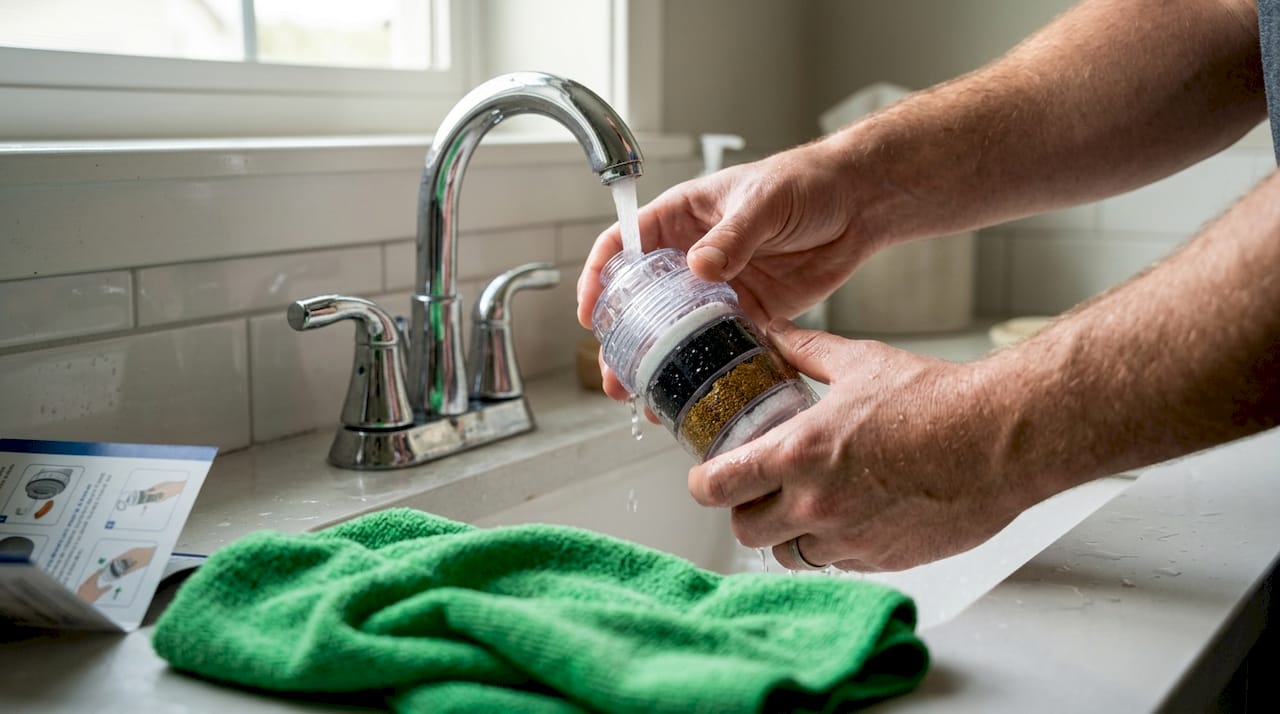
This year’s leading systems do not just filter water. They layer multiple wellness modalities into a single fixture, creating what the industry is calling the “wellness ritual shower.” The most meaningful trend is the move toward filters that target multiple contaminants simultaneously, rather than just chlorine. Multi-stage systems combine vitamin C neutralization, KDF (kinetic degradation fluxion) media, ceramic balls, and activated carbon to address a broader spectrum of water quality issues in one pass.
Equally notable is the rise of modality integration. Red light therapy in showerheads has moved from a novelty concept to a genuine product category in 2026, with brands claiming photobiomodulation benefits for scalp circulation and skin cell renewal. These systems pair LED panels with traditional filtration, aiming to deliver compounded benefits in a single daily session. Whether you use a shower head filter for your skin or a multi-modal system, the water quality foundation matters most.
Key innovations defining 2026 wellness showers:
- Smart thermostatic controls: Digital temperature locks that maintain your exact preferred temperature, preventing the thermal stress on skin that fluctuating water causes.
- Personalized spray modes: Multiple pressure settings targeting scalp massage, fine misting for skin hydration, and high-pressure rinse modes for post-workout routines.
- Multi-stage filtration cartridges: Systems with four or more filtration stages that address chlorine, heavy metals, bacteria, and sediment in sequence.
- Aromatherapy integration: Cartridge slots that infuse essential oils like eucalyptus or lavender directly into water flow for both sensory and respiratory wellness.
- Photobiomodulation (red light) panels: Integrated LEDs emitting wavelengths between 630 and 850 nanometers, targeting collagen production and scalp health.
| Feature | Primary benefit | Status in 2026 |
|---|---|---|
| Multi-stage filtration | Broad contaminant removal | Widely available |
| Smart thermostatic control | Skin thermal protection | Growing mainstream |
| Red light therapy integration | Scalp and skin cell support | Emerging, limited data |
| Aromatherapy cartridges | Sensory and stress wellness | Available across price points |
| Vitamin C neutralization | Instant chlorine reduction | Established, widely trusted |
Learning how filter cartridges enhance your skin gives you a practical understanding of how these layered systems work together to deliver real results at the skin surface level.
2026 comparison: Showerhead filter technologies and certifications
To make sense of your options, let’s look at how the leading filter technologies stack up in 2026.
Not all filtration media are created equal, and knowing the difference can save you from spending on a system that does not address your actual water quality problem. Here is how the main technologies compare:
| Filter type | Best for | Certified to NSF/ANSI 177? | Limitations |
|---|---|---|---|
| Vitamin C (ascorbic acid) | Instant chlorine and chloramine neutralization | Some brands, verify independently | Does not remove heavy metals |
| KDF media | Chlorine and heavy metal reduction | Some brands | Reduced effectiveness in warm water |
| Activated carbon | Broad organic compound removal | Varies | Shorter lifespan at high flow rates |
| Ceramic balls | pH balance, mineral infusion | Rarely certified | Limited contaminant removal data |
| Multi-stage hybrid | Multiple contaminants at once | Select brands | Higher cost, more complex maintenance |
| Red light + filter combo | Filtration plus phototherapy | Filter stage only | Light therapy claims largely unverified |
The key insight from mainstream buyer guidance is that contaminant targeting and recognized third-party testing standards matter far more than whether a product uses “vitamin C” or “multi-stage” language in its marketing. Those terms only mean something when paired with verified reduction data.
Key takeaways for technology selection:
- Vitamin C filters are exceptionally effective for chlorine and chloramine neutralization at point of use, making them ideal for urban water systems that rely on chloramine disinfection.
- KDF 55 media works well for chlorine and hydrogen sulfide but degrades faster in high-flow scenarios, which matters if you prefer a powerful shower pressure.
- Ceramic filter balls offer pH modulation and can add trace minerals, but independent efficacy data for skin-specific outcomes is limited. They work best as a supplementary stage within a multi-stage system.
- Activated carbon remains one of the broadest filtration media available, addressing taste, odor, volatile organic compounds, and some disinfection byproducts.
If you are seeing signs you need a filter like increased dryness, scalp flaking, or dull hair color despite good hair care products, the issue is almost certainly in your water rather than your routine. Understanding shower water filtration steps helps you map the right technology to your specific symptoms.
Quick picks for every need: Which system for which scenario?
Armed with the facts, you can now match a system to your exact goals. Here are hand-picked recommendations for common needs.
1. Best for sensitive skin and scalp: Choose a multi-stage system that includes vitamin C neutralization and activated carbon. The vitamin C handles chlorine and chloramines instantly at the point of contact, while carbon removes residual organic compounds. Look for NSF/ANSI 177 certification to confirm the free chlorine reduction claim. People with eczema, psoriasis, or rosacea will notice the difference within two to four weeks of consistent use.
2. Best for hard water regions: KDF media combined with a softening ceramic stage will address both chlorine and the calcium and magnesium scaling that hard water produces. Hard water is defined as water containing more than 120 milligrams per liter of dissolved calcium carbonate, and it makes hair feel coarse, dull, and difficult to manage regardless of the shampoo you use.
3. Best for those wanting multi-modal therapies: A red light integrated filtration system can be a worthwhile experiment, but enter with calibrated expectations. Red light therapy showerheads combine modalities in ways that can produce compounded outcomes, making it difficult to attribute any improvement to the light component versus the filtration component. Test your skin response over four to six weeks and remove one variable at a time to get clear feedback.
4. Best eco-friendly and budget option: A single-stage vitamin C shot filter attached to an existing showerhead is the most cost-effective, lowest-waste entry point. These cartridges are compact, easy to replace, and specifically engineered to neutralize chlorine before it contacts your skin. They are particularly well suited for renters who cannot install permanent fixtures.
5. When certified filtration is absolutely essential: If you have a diagnosed skin condition, are recovering from scalp treatments, or have children with sensitive skin, do not compromise on certification. An NSF/ANSI 177 certified filter is the minimum bar. Understanding why water filters matter and how water filtration works will give you the confidence to make that call.
Pro Tip: When testing a new system, keep your hair care and skincare routine exactly the same for at least 30 days. This isolates the variable and gives you an honest read on what the filter is actually doing for your skin and hair.
Why evidence-backed filtration—not just trendy features—should drive your 2026 wellness shower upgrade
Here is the uncomfortable truth that gets lost in the excitement of every new product launch: the most sophisticated shower system in the world cannot compensate for water that is still stripping your skin barrier every morning.
We have watched the wellness shower category evolve dramatically over the past few years, and the pattern is consistent. Brands lead with the most photogenic feature, whether that is a glowing LED array, a sleek touchscreen temperature display, or a botanical aromatherapy pod. Those features are genuinely enjoyable. But enjoyment and efficacy are different things, and the people who see the most improvement in their hair and skin health are almost always the ones who prioritized filtration fundamentals first.
Third-party certification is the most emphasized evidence-backed selection criterion for a reason. It exists precisely because the wellness market is not regulated the same way pharmaceuticals or medical devices are. Without NSF/ANSI 177 or equivalent testing, you are taking a brand’s word for results your skin will have to verify the hard way.
The layered or hybrid systems are where things get genuinely complicated. Combining red light therapy with filtration is an interesting concept, and some of the early user reports are promising. But when two variables improve simultaneously, you cannot know which one is responsible. If your scalp irritation clears up after switching to a red-light-plus-filter system, was it the filtered water, the light wavelength, or the combination? You simply cannot tell. For most people, the smarter move is to nail the filtration foundation first, then layer in the extra modalities once you have a confirmed baseline.
Exploring 2026 shower filtration trends through an evidence lens rather than a marketing lens is the mindset shift that separates people who see real results from those who collect expensive bathroom gadgets. Simple, tested, certified improvements still outperform buzzier, unproven options every time.
Discover advanced shower filters and wellness systems for your 2026 routine
Ready to put these trends to work in your own bathroom? Vitaclean makes it straightforward to start with what matters most.
Our Vitamin C shower filter shots are engineered specifically for chlorine and chloramine neutralization, giving you an immediate, evidence-focused upgrade that works with your existing showerhead. For those ready to go further, our ceramic filter options add pH balancing and mineral support as a complementary stage. And when you want to build out a complete wellness routine, explore our range of wellness shower accessories designed to work seamlessly with Vitaclean’s filtration systems. Every product is built around the principle that your water quality is the foundation of your hair and skin health, and we make filter replacement simple with our subscription service so the benefits never lapse.
Frequently asked questions
What are the main contaminants to filter for better hair and skin in 2026?
Free chlorine, chloramines, heavy metals, and microplastics are the most important targets in 2026. Contaminant targeting is the most critical factor for hair and skin outcomes, ahead of brand or technology type.
How important is third-party certification for shower filters?
It is the most reliable verification available. NSF/ANSI 177 certification confirms free chlorine reduction to a recognized standard, especially important given that residential shower filters are not federally regulated.
Are red light therapy showerheads effective for skin and scalp?
They show promise, but the evidence is still developing. Combined modality systems produce compounded outcomes that make it difficult to isolate the contribution of the light therapy versus the filtration stage alone.
What features make a showerhead high-tech in 2026?
Smart thermostatic controls, customizable spray modes, multi-stage filtration, and integrated phototherapy define the technology-enabled shower ritual that the industry is positioning as the premium standard this year.