
How filtered water can improve your scalp health
TL;DR:
- Hard water does not cause follicular hair loss but can lead to mineral buildup on the hair shaft, making hair rough and prone to breakage. Using filtered water significantly reduces these minerals, supporting scalp health, enhancing hair softness, and decreasing irritation. The effectiveness of filtration depends on water hardness and consistent filter maintenance, especially for sensitive scalps or chemically treated hair.
Most people assume hard water is silently destroying their hair and scalp, triggering everything from chronic flaking to serious hair loss. That assumption has driven millions toward expensive treatments, medicated shampoos, and DIY remedies. But the real story is more nuanced, and understanding it changes everything about how you approach your shower routine. Filtered water does offer genuine benefits for your scalp and hair, but the mechanism matters more than the marketing. This article breaks down what the research actually shows, what you can realistically expect, and exactly how to make filtered water work for your specific hair type and scalp needs.
Table of Contents
- Debunking hard water myths: What does the evidence show?
- How filtered water supports a healthier scalp
- Scalp and hair: Filtered vs hard water results
- Making the switch: Practical steps for your shower routine
- Our insights: What most guides don’t tell you about filtered water and scalp health
- Ready to upgrade your shower? Discover solutions for scalp-friendly water
- Frequently asked questions
Key Takeaways
| Point | Details |
|---|---|
| Hard water effects | Hard water usually causes breakage and buildup, not true hair loss. |
| Filtered water benefits | Filtered water can reduce scalp irritation, flakes, and improve hair shine. |
| Personalization matters | Your results will depend on your local water quality and how consistently you use your filter. |
| Simple steps help | Testing water, choosing the right filter, and gentle care maximize scalp health gains. |
Debunking hard water myths: What does the evidence show?
Before diving into solutions, let’s unravel what’s actually happening when hard water meets your scalp.
Hard water contains elevated levels of dissolved minerals, primarily calcium and magnesium. Most people in hard water areas report dull, dry, or brittle hair and assume the water is doing serious long-term damage. That instinct is understandable. But it turns out the evidence is more nuanced than the headlines suggest.
“A 2013 study with 212 PPM exposure over 30 days found no significant difference in tensile strength or elasticity compared to distilled water. Importantly, there is no evidence that hard water causes true follicular hair loss. The observed damage relates to breakage and shedding, not follicle destruction.”
That is a meaningful distinction. Breakage and shedding feel alarming when you notice more hair in the drain, but follicular damage would mean permanent loss. Hard water does not appear to cause the latter. What it does do is coat the hair shaft with mineral deposits, making it rougher, harder to detangle, and more prone to snapping under tension.
Several factors influence how much your hair and scalp respond to hard water:
- Hair type and porosity: Fine or chemically treated hair absorbs minerals more readily and shows damage faster.
- Water hardness level: Exposure at 212 PPM for 30 days showed minimal harm. Higher concentrations or longer exposure periods may produce more significant effects.
- Pre-existing scalp conditions: People with seborrheic dermatitis, psoriasis, or dry scalp tend to react more strongly to mineral buildup.
- Washing frequency: Daily washers get longer cumulative exposure, which can intensify the mineral coating effect over time.
Understanding hard water and hair condition properly means resisting the “hard water destroys hair” myth while still acknowledging the real frustration so many people experience. The problem is real. It just works differently than most guides claim.
How filtered water supports a healthier scalp
Now that we understand the real risks of hard water, here’s how filtered water makes a measurable difference on your scalp’s well-being.
When calcium and magnesium minerals land on your scalp with every shower, they do not simply rinse away. They bind to the hair shaft and accumulate on the scalp surface, creating a filmy layer that clogs follicles, disrupts your scalp’s natural moisture balance, and makes it harder for your skin barrier to function properly. The result: itchiness, flakiness, excess oiliness as your scalp overcompensates, and hair that feels heavy or coated even after a fresh wash.
Filtered water removes or significantly reduces these minerals before they reach your head. The physical change is immediate: softer water lathers more easily, rinses more completely, and leaves no residue behind. Your scalp gets to function closer to its natural baseline.
| Water type | Mineral residue | Scalp effect | Hair texture after wash |
|---|---|---|---|
| Hard unfiltered | High calcium/magnesium | Buildup, dryness, itch | Dull, heavy, rough |
| Chlorinated tap | Chlorine + minerals | Irritation, dryness | Brittle, faded color |
| Filtered (Vitamin C) | Neutralized chlorine, reduced minerals | Calmer, hydrated | Softer, shinier |
| Filtered (ceramic) | Reduced heavy metals + minerals | Balanced, less reactive | Smoother, manageable |
Dermatologists who study scalp health and water quality note that while large randomized controlled trials on shower filters specifically are limited, the mechanistic evidence from water quality studies strongly supports the benefits, especially for people with sensitive scalps or oily skin types.
The hair and skin benefits of shower filters are not uniform across everyone. If you live in a very low-hardness area, the perceptible difference may be subtle. But if your tap water registers above 150 PPM of hardness, or you notice your showerhead accumulating white scale deposits quickly, the improvement from switching to filtered water tends to be quite noticeable. Understanding shower filter importance for scalp becomes especially relevant during winter months when scalp skin is already drier and more vulnerable.
Pro Tip: Check for visible limescale around your faucets or showerhead. If you see white crusty buildup forming within days, your water hardness is high enough that a filter will likely make a noticeable difference for your scalp and hair.
Scalp and hair: Filtered vs hard water results
What specific differences can you expect if you upgrade your shower routine? Let’s break it down.
The honest answer is that results vary, but the patterns are consistent enough to be useful. People with color-treated hair, fine hair, or sensitive scalps tend to see the most dramatic improvements. Those with thick, coarse, low-porosity hair in moderately hard water areas may notice smaller but still positive changes.
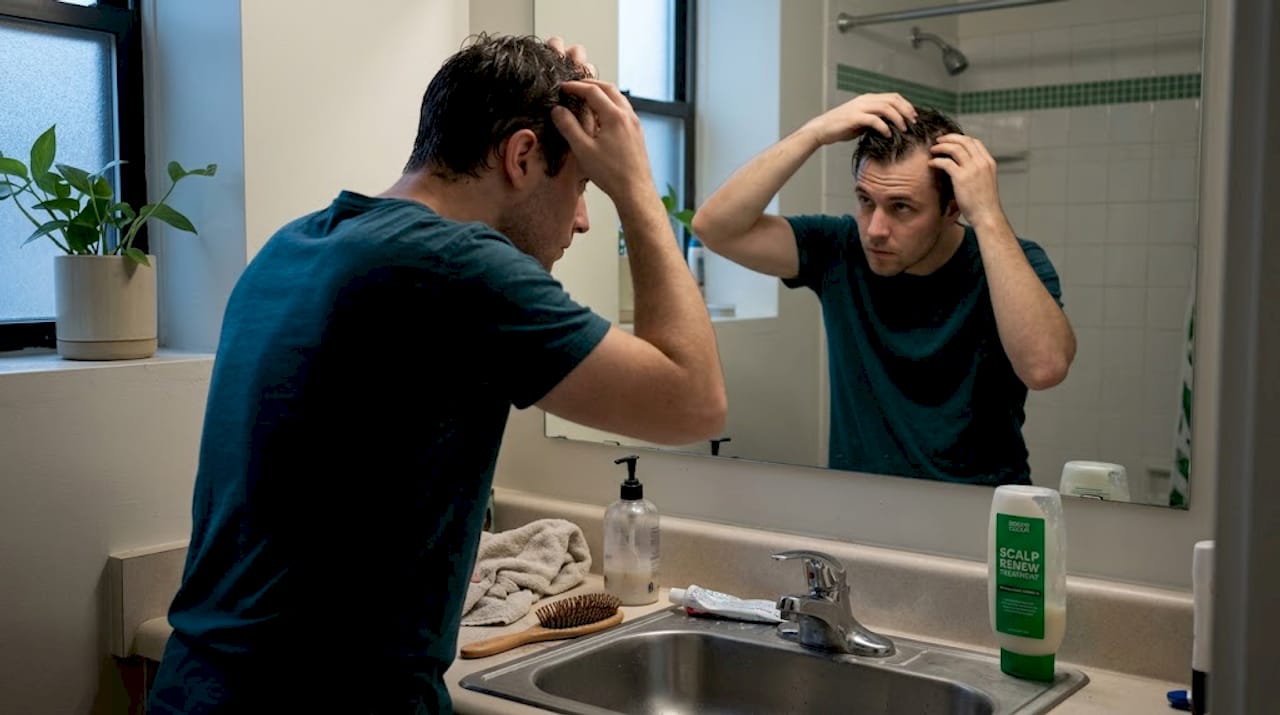
Here is what users and dermatologists most commonly report after making the switch:
| Concern | Hard water outcome | Filtered water outcome |
|---|---|---|
| Scalp flaking | Frequent, visible flakes | Reduced, less frequent |
| Scalp itchiness | Persistent, worsening | Calmer within weeks |
| Hair shine | Dull, coated appearance | Noticeably more reflective |
| Hair weight/feel | Heavy, weighed down | Lighter, more voluminous |
| Shampoo lather | Poor, requires more product | Rich lather with less product |
| Color-treated hair | Fades faster, looks brassy | Color lasts longer, stays vibrant |
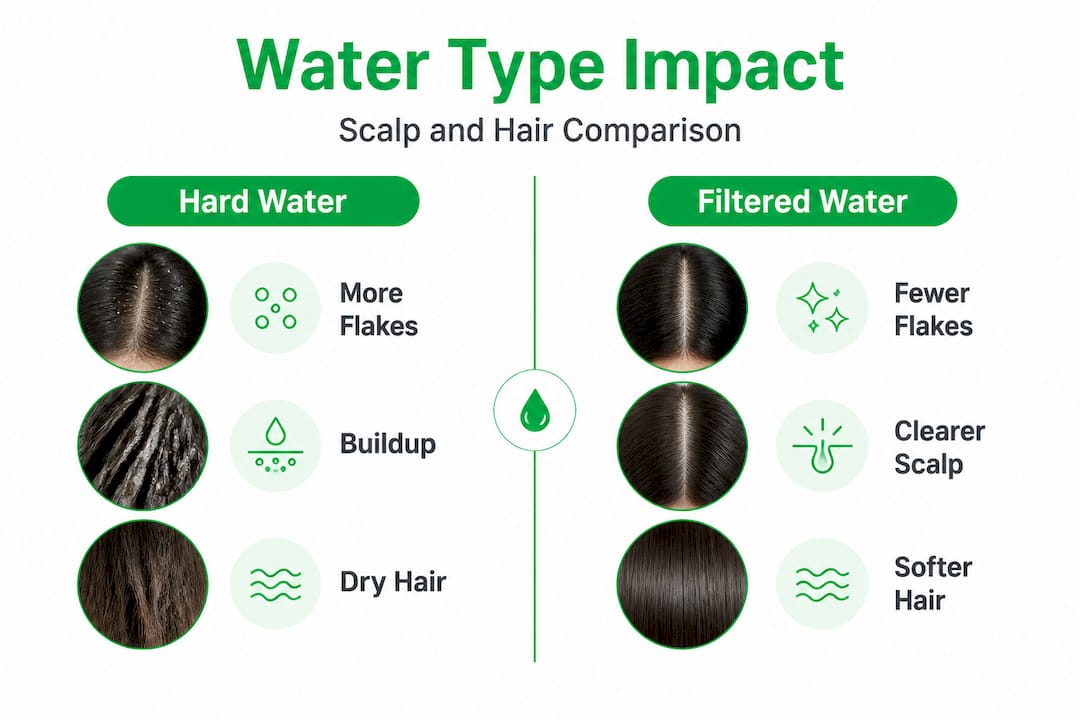
While no large-scale clinical trials on shower filters specifically focus on scalp health, the mechanistic evidence from hair damage research is strong, and user experience consistently points in the same direction.
The most common sequence of improvements people notice after switching to filtered water:
- Week one to two: Easier lather during washing, hair feels slightly cleaner after rinsing.
- Week three to four: Scalp feels less itchy, reduced tightness after showering.
- Month two: Visible reduction in scalp flaking, hair looks shinier with less product needed.
- Month three and beyond: Hair breakage decreases, color-treated hair holds its tone longer, and scalp irritation largely subsides for most users.
The scalp microbiome benefits that come with cleaner shower water deserve attention too. Chlorine in tap water does not discriminate: it disrupts the beneficial microbial balance on your scalp just as it kills harmful bacteria in municipal water supplies. A healthier scalp microbiome means less dandruff, better oil regulation, and a more resilient skin barrier overall. Learning how to support hair vitality in showers is not just about the products you apply but the water quality you start with.
Making the switch: Practical steps for your shower routine
Ready to see results for yourself? Here’s how to get started, step by step.
Most people overthink this transition. It does not require extensive testing equipment or a plumber. A few practical steps get you from uncertainty to action quickly.
Step one: Know your water. Before buying anything, find out what you are actually dealing with. Most municipal water suppliers publish annual water quality reports online. You can look yours up by city name. Alternatively, inexpensive at-home water test strips (available at hardware stores) give you a rough hardness reading within minutes. This matters because benefits vary by baseline water quality and your hair type, so knowing your starting point helps you set realistic expectations.
Step two: Choose the right filter type. Not all shower filters work the same way. Here is a quick breakdown of your main options:
- Vitamin C filters: Exceptionally effective at neutralizing chlorine and chloramines. Great for color-treated hair and sensitive scalps.
- Ceramic ball filters: Remove heavy metals, reduce bacteria and fungi, and soften water through far-infrared technology. Well-suited for people with dry or reactive scalps.
- Combination filters: Pair multiple filtration media for broader coverage. Ideal if your water report shows multiple concerns beyond just hardness.
- KDF/carbon filters: Common in budget options, solid for chlorine removal but less effective at addressing mineral hardness specifically.
Step three: Install and observe. Most shower filters attach directly to your existing shower arm with no tools required. The transformative power of shower head filters is only realized when the filter is changed on schedule, typically every two to three months depending on water hardness and usage frequency. Mark your calendar.
Step four: Track your scalp and hair changes. Take a quick mental (or physical) note of your baseline before you install the filter. How itchy is your scalp on a scale of one to ten? How often do you see flakes? How quickly does your hair feel greasy after washing? Revisit these questions at weeks two, four, and eight. The changes often happen gradually enough that you might not notice them without a reference point.
Step five: Pair the filter with supporting scalp habits. A good transformation with shower filters comes from layering complementary practices. Rinse with cooler water at the end of your shower to seal the hair cuticle. Reduce how often you use sulfate-heavy shampoos now that your water is gentler. Add a weekly scalp massage to encourage circulation. These best shower accessories and habits compound the filter’s benefits significantly.
Pro Tip: If your scalp feels worse in the first week after switching, do not panic. Your skin is adjusting to a new baseline. Give it at least three full weeks before evaluating whether the filter is working for you.
Our insights: What most guides don’t tell you about filtered water and scalp health
Most shower filter guides present a simple story: buy filter, insert filter, enjoy perfect hair. If only it worked that cleanly for everyone.
The truth is that benefits vary considerably based on water quality and hair type, and two people using the same filter in the same city can have meaningfully different experiences. What determines your outcome?
Your local water hardness is the single biggest variable. A person in Phoenix, Arizona, where water hardness regularly exceeds 200 PPM, will almost certainly notice a more dramatic difference than someone in Seattle, where water is naturally softer. Generic “try a filter” advice skips this entirely.
Consistency and filter maintenance matter more than most people realize. A clogged or expired filter can actually make your water worse by releasing accumulated contaminants back into the stream. We see this pattern repeatedly: someone buys a filter, loves the first two months, then gradually notices their scalp issues creeping back, often because the filter cartridge is overdue for replacement. The product works. The maintenance routine failed.
Individual scalp sensitivity shapes your results more than any filter spec. People with baseline sensitive skin, rosacea, or seborrheic dermatitis tend to notice improvements quickly and dramatically. People with resilient, oily scalps in moderate-hardness areas may see modest gains. Neither experience is wrong. It just means matching the vitamin C shower head benefits to your personal profile rather than following a one-size-fits-all recommendation.
The most important reframe: a shower filter is not a gadget you install once and forget. It is an ongoing element of your scalp care routine, just like your shampoo or scalp serum. The people who get the most out of filtered water are the ones who stay consistent, replace their cartridges on time, and combine cleaner water with sound scalp hygiene. That is the story most product guides skip.
Ready to upgrade your shower? Discover solutions for scalp-friendly water
You’ve learned the “why” and the “how.” Now it is time to explore proven options that match what your scalp and hair actually need.
At Vitaclean, we design shower filtration systems specifically for the health of your skin and hair. Our vitamin C shower filters are a top choice for neutralizing chlorine and supporting color-treated or chemically processed hair. If mineral buildup and heavy metals are your primary concern, our ceramic shower filters provide broad-spectrum filtration in an easy-to-install format. Both systems work with our full range of shower accessories designed to complement your daily routine. We also offer a subscription service so you never have to worry about an expired cartridge again. Finding your right fit starts with knowing your water and your scalp.
Frequently asked questions
Does filtered water really prevent hair loss?
Filtered water may reduce breakage and shedding caused by mineral buildup, but it does not prevent true follicular hair loss, which is driven by genetics, hormones, or medical conditions.
How long does it take to see changes with filtered shower water?
Most people notice reduced scalp irritation and silkier hair within two to four weeks, though results depend on water hardness and individual scalp sensitivity.
Which type of shower filter is best for sensitive scalps?
Ceramic and Vitamin C filters are widely recommended for sensitive scalps because they reduce a broad range of common water irritants, including chlorine, heavy metals, and mineral deposits.
Do I need to change my shampoo if I start using filtered water?
You likely will not need to change your shampoo, though many people find they can use less of it or switch to a milder formula once their water stops stripping and coating their hair with mineral residue.
Is a shower head filter different from a whole-house water filter?
Yes. A shower head filter treats water at the single point of use, while a whole-house filter treats all water entering your home at the main supply line, covering every tap, toilet, and appliance.
Recommended
- Can a Shower Filter Enhance Your Scalp Microbiome? Here’s What Science
- Why Shower Head Filters Are Essential for Scalp Health and Dry Skin Du
- Guide to healthier hair in 2026 through water filtration
- Could A Shower Head Filter Transform My Skin & Hair?
- Why Scalp Care Differs from Hair Care – Microbiome Insights – Victory Serums