
Why remove shower chemicals? Benefits and solutions
TL;DR:
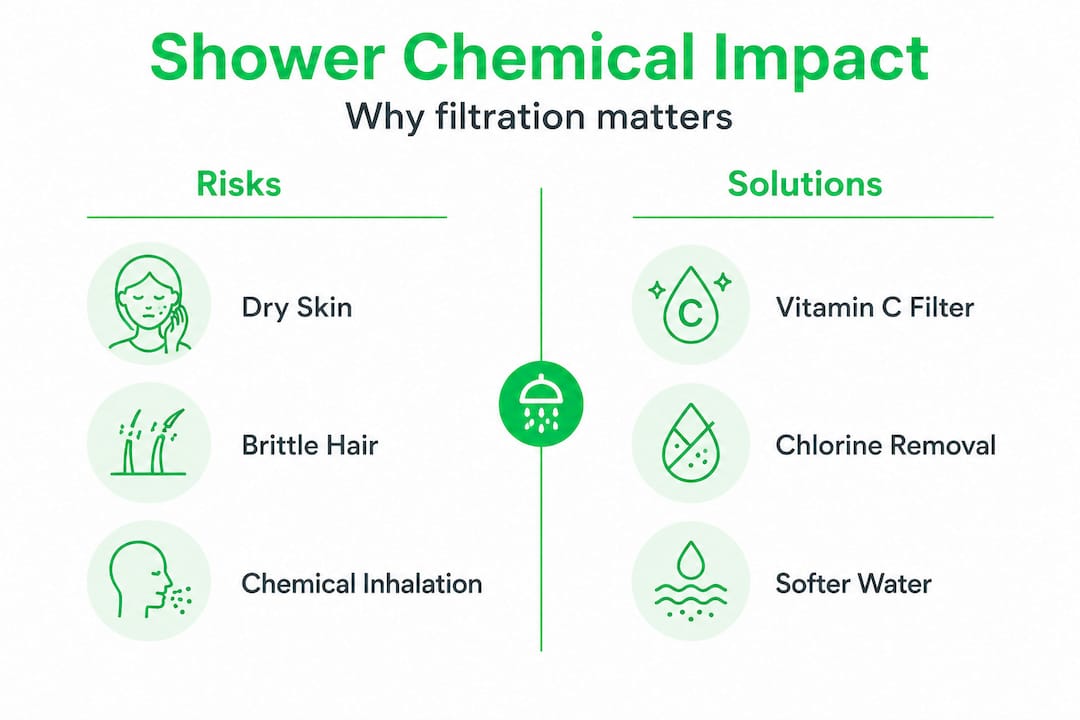
- Chlorine and chloramine in shower water can damage skin, hair, and respiratory health.
- Using shower filters reduces exposure to harmful chemicals, improving skin hydration and scalp health.
- Filtering shower water is a helpful part of a wellness routine, not a substitute for drinking water safety.
Most people assume that because their tap water is treated and tested, it’s perfectly gentle on their skin and hair. That assumption is worth questioning. Chlorine and other disinfectants are deliberately added to municipal water to keep it safe from pathogens, and they do that job well. But chlorine in shower water can strip the skin’s protective layer, increasing sensations of dryness and tightness. What keeps your drinking water safe may not be doing your skin any favors. This article breaks down what’s actually in your shower water, how it affects your body, and what you can realistically do about it.
Table of Contents
- What chemicals are in shower water?
- How shower chemicals affect your skin, hair, and health
- The case for removing shower chemicals: Health and comfort
- Limitations and expert tips: When is removing shower chemicals most effective?
- Our perspective: What most guides miss about shower water chemicals
- Improve your shower quality with targeted solutions
- Frequently asked questions
Key Takeaways
| Point | Details |
|---|---|
| Chlorine and byproducts matter | These chemicals are common in shower water and can affect sensitive skin and airways. |
| Filtration can reduce irritation | Using a shower filter helps lower exposure to skin and hair irritants for many people. |
| Not always the sole cause | Skin or hair discomfort might also come from soaps or environmental factors, not just water chemicals. |
| Personalize your approach | Consider your unique triggers and choose solutions that fit your needs and water quality. |
| Filtration supports wellness | Removing shower chemicals is one practical step for improving daily comfort and wellness. |
What chemicals are in shower water?
Your shower water isn’t just H2O. Municipal water suppliers add several chemicals to make tap water safe to drink and use. Those chemicals don’t disappear when water flows through your showerhead. Understanding what you’re actually standing under is the first step toward making a smarter decision for your skin and hair.
Shower water commonly contains disinfectants such as chlorine and chloramine, as well as their byproducts. Here’s a quick rundown of the key offenders:
- Chlorine: The most widely used disinfectant in municipal water. It neutralizes bacteria and viruses effectively but remains active in the water that reaches your home.
- Chloramine: A combination of chlorine and ammonia, often used as an alternative to free chlorine. It’s more stable, meaning it lingers longer in water distribution systems and can be harder to remove.
- Disinfection byproducts (DBPs): These are the chemicals formed when chlorine or chloramine reacts with naturally occurring organic matter in water. Disinfection byproducts form when chlorine reacts with organic matter and can be present in shower water. Common types include trihalomethanes (THMs) and haloacetic acids (HAAs).
- Heavy metals: Depending on your pipes and local infrastructure, trace amounts of lead, copper, and other metals can also appear in tap water.
- Sediment and particulates: Older plumbing systems can introduce rust and mineral deposits that affect water clarity and feel.
You can learn more about the full picture by looking into shower water contaminants and the documented effects on hair and skin.
| Chemical | Source | Primary Concern |
|---|---|---|
| Chlorine | Added for disinfection | Skin dryness, scalp irritation |
| Chloramine | Added as disinfectant alternative | Harder to filter, skin/respiratory irritant |
| THMs/HAAs | Chlorine reacting with organic matter | Long-term public health concern |
| Heavy metals | Pipe corrosion | Scalp and hair damage |
| Sediment | Aging infrastructure | Clogged pores, dull hair |
What makes this especially relevant in the shower is heat. Hot water opens your pores, softens hair cuticles, and converts some chemicals into vapor. That means your exposure isn’t limited to skin contact. You’re breathing them in too.
How shower chemicals affect your skin, hair, and health
With a clearer view of what’s in your shower water, the next step is to understand how these chemicals directly impact your well-being. The effects aren’t dramatic in the short term for most people, but they’re consistent and cumulative. That matters when you’re showering once or twice every single day.
Skin: Chlorine can strip skin’s protective lipids and increase dryness, tightness, and itching. Your skin has a natural barrier made up of oils, ceramides, and beneficial bacteria. Chlorine acts as an oxidizer, which means it’s chemically aggressive enough to disrupt that barrier. If you already deal with eczema, psoriasis, or chronic dryness, your skin’s natural defenses are already compromised, making chlorine exposure a more significant factor. For people with sensitive skin conditions, even minor ongoing exposure can be enough to keep symptoms from fully calming down.

Hair and scalp: Chlorine doesn’t just affect your face and body. It strips the natural oils from your scalp and hair shaft, contributing to frizz, brittleness, and a dry, itchy scalp. Hair treated regularly with color or chemical processes is even more vulnerable because the cuticle is already more open. Over time, chlorine exposure contributes to dullness and breakage that no conditioner alone can fully offset.
Respiratory exposure: This is the part most people don’t think about. Hot shower conditions can increase inhalation of chlorine-related byproducts, potentially irritating sensitive airways. When you take a long, hot shower in a small or poorly ventilated bathroom, you’re essentially sitting in a low-concentration chemical steam room. For people with asthma or chemical sensitivities, this adds up.
“The skin is the body’s largest organ and acts as a barrier. When that barrier is weakened daily by chemical exposure, everything from moisture retention to immune response at the skin level can be affected.”
Here’s a summary of how different body systems respond:
- Skin barrier: Protective lipids break down, leading to moisture loss and sensitivity.
- Hair cuticle: Outer layer roughens and lifts, causing frizz and weakening the strand.
- Scalp microbiome: Natural bacterial balance shifts, potentially increasing dandruff and irritation.
- Respiratory system: Chloramines and THMs in steam irritate airways, particularly in sensitive individuals.
- Eyes: Chlorinated water can cause redness and irritation, especially during long showers.
Pro Tip: Improve ventilation during your shower by running the bathroom fan or cracking a window. It won’t eliminate chemical exposure, but it significantly reduces the buildup of chemical-laden steam in the air you breathe. Pairing ventilation with a shower filter for reducing chlorine is an even more effective combination.
The case for removing shower chemicals: Health and comfort
Knowing the effects, let’s break down the practical reasons health-conscious people prioritize removing these chemicals. Daily showering creates a repeated exposure route that compounds over weeks, months, and years. Even if any single shower produces minimal impact, the cumulative load on your skin barrier and respiratory system is real.
Here’s why people choose to filter their shower water:
- Reduce skin dryness and irritation: The main rationale for health-conscious users is daily contact and the desire to lower irritation potential. People who shower twice a day face double the exposure.
- Support scalp health: Removing chlorine allows your scalp’s natural oils to stay more intact, which benefits both scalp comfort and hair growth conditions.
- Manage chronic skin conditions: Those with eczema, psoriasis, and rosacea often find that reducing chemical exposure is one practical piece of their overall management routine.
- Protect chemically or color-treated hair: Color fades faster in chlorinated water. Filtering helps protect your investment.
- Reduce respiratory irritation: People with asthma or chemical sensitivities benefit from reducing the airborne byproducts they inhale during showers.
- Children and infants: Young skin is thinner and absorbs more easily. Minimizing chemical contact during bath time is a common concern for parents.
Statistic callout: The average American showers for about eight minutes per day. Over a year, that’s nearly 49 hours of direct skin and inhalation exposure to whatever your water contains.
It’s worth being clear about something important. Water treatment protects public health by disinfection. Removing shower chemicals is a comfort and exposure tradeoff, not a substitute for water safety. A shower filter is not making your water safer to drink or protecting your community from waterborne disease. Those functions happen upstream at the utility level, and they’re essential. What a shower filter does is reduce the chemical load on your body during that daily routine, which is a separate and legitimate goal.
If you’re not sure whether your symptoms point to a water quality issue, checking the signs you need a shower filter is a helpful starting point. And if you want to understand the full scope of what better water can do, the benefits of shower filtration for hair and skin are well documented. If chlorine specifically seems to be a trigger for you, a chlorine sensitivity guide can help you identify patterns and take a more targeted approach.
Pro Tip: Keep a simple log for two to four weeks after installing a shower filter. Note changes in skin moisture, scalp comfort, and hair texture. Most people notice a difference within 10 to 14 days, which makes the cause-and-effect relationship much easier to see.
Limitations and expert tips: When is removing shower chemicals most effective?
However, removing shower chemicals isn’t a one-size-fits-all solution. Here’s when and how it really pays off, plus expert tips for maximizing results.
Chlorine is only one potential contributor to dry or irritated skin. Other factors like harsh soaps and low humidity can actually dominate the problem. That context matters because some people install a filter and expect dramatic results without addressing the other variables that were causing their issues all along.
Filtration works best when:
- Your tap water has measurable chlorine or chloramine levels. You can test this with inexpensive strips available at most hardware stores.
- Your skin irritation or hair issues began or worsened after moving to a new area with different water quality.
- You’ve already ruled out soap, shampoo, or conditioner as the primary culprits by simplifying your product routine.
- You’re dealing with a diagnosed skin condition that responds to environmental chemical reduction.
- You take long or very hot showers, which maximizes your exposure window.
Cases where other factors likely dominate:
- Severely dry skin in winter months in a dry climate. In this case, a humidifier may help as much or more than a filter.
- Reactions that appear only on the face but not the body, pointing to a specific product rather than water quality.
- Hair breakage concentrated at areas of mechanical stress like ponytail holders or brushing friction.
Pro Tip: When evaluating shower filters, look for products that are independently tested and rated to reduce specific contaminants. Vitamin C-based filters are among the most effective at neutralizing chlorine and chloramine quickly. Check filter replacement schedules carefully since an expired filter can perform worse than no filter at all. Exploring best shower accessories can help you find the right combination of tools for your specific routine.
Our perspective: What most guides miss about shower water chemicals
Most guides about shower chemicals either catastrophize the risk or dismiss it entirely. We think both extremes miss the point.
The chemicals in your shower water are real, their effects are documented, and filtering them out can genuinely improve your daily experience, particularly if you have sensitive skin, a compromised skin barrier, or you’ve noticed your hair and scalp declining without an obvious cause. At the same time, a shower filter isn’t a substitute for a thoughtful skincare and hair care routine, and it won’t fix every problem that gets blamed on water quality.
What we’ve observed over time is this: people who see the best results from shower filtration are those who treat it as one element of a broader wellness habit, not a single magic fix. They also pay attention. They notice whether their skin feels softer within the first week. They check whether their scalp itching decreases. They adjust other variables, such as shower temperature, soap formulation, and moisturizing habits, alongside the filter.
The more interesting conversation is about self-awareness and tracking. Most people don’t know what’s actually driving their skin and hair concerns because they’ve never systematically isolated variables. A shower filter forces that kind of attention. You install it, you watch for changes, and you learn something real about your body’s triggers. That process alone has value, even before you factor in the direct risks from shower water chlorine that filtration addresses.
The real takeaway is that health-conscious choices compound. Removing chlorine from your shower won’t transform your skin overnight. But combined with mindful product choices, good hydration, and consistent habits, it’s a meaningful piece of a genuinely wellness-oriented routine.
Improve your shower quality with targeted solutions
If you’re ready to take action on shower water quality, here’s how you can get started with trusted solutions.
At Vitaclean, we built our product line specifically around the challenge of filtering shower water effectively without complicated installation or expensive whole-home systems.
Our Vitamin C shower filters neutralize chlorine and chloramine at the point of use, before the water ever touches your skin or becomes steam you breathe. Vitamin C is one of the few compounds that reacts quickly enough to neutralize chloramine, which standard carbon filters often struggle with. For those who want additional mineral filtration, our ceramic filters add another layer of purification for a noticeably softer, cleaner shower experience. Both options are designed for easy installation and simple filter replacement, so the wellness habit actually stays consistent.
Frequently asked questions
Does filtering shower water really help with sensitive skin?
Yes, removing chlorine and related chemicals can reduce irritation, dryness, and tightness, particularly for those with sensitive or eczema-prone skin.
What are the main chemicals in shower water I should be concerned about?
Chlorine, chloramine, and their disinfection byproducts like THMs and HAAs are most common and linked to irritation and potential long-term health effects.
Can showering increase the risk of inhaling water chemicals?
Yes, hot showers can release chemicals and byproducts into steam, and hot shower conditions increase inhalation exposure to chlorine byproducts, especially for sensitive individuals.
Is filtering shower water necessary for everyone?
Not always. If your main triggers are soaps or your local water is already low in chemicals, the benefits may be limited since other factors like harsh soaps and low humidity can cause equal or greater irritation.
Does removing shower chemicals affect drinking water safety?
No. Shower filtration works at the point of use and doesn’t replace utility-level disinfection. Your drinking water safety is managed separately at the municipal level.
Recommended
- Shower Water Chlorine Risks: Effects on Skin, Hair & Lungs Explained
- Shower Water Contaminants: Effects on Hair & Skin
- Workflow for cleaner shower water: 99% chlorine removal
- Chlorine Sensitivity? Shower Filters for Healthier Skin & Hair
- Understanding anti-dandruff agents: sustainable relief – Victory Serums