
How to Maintain Water Filters for Healthier Skin and Hair
TL;DR:
- Overdue shower filters can harbor bacteria and reduce water pressure, harming skin and hair health.
- Regularly replacing certified cartridges and cleaning filter housings is essential for optimal water quality.
- Tailoring maintenance schedules to local water conditions and personal skin sensitivity ensures better skin and hair outcomes.
Your shower might be the reason your skin feels tight and your hair looks dull after every wash. Overdue filters stop neutralizing chlorine and other contaminants, and reduced pressure, odd odors and recurring dryness are early warnings you shouldn’t ignore. The good news is that maintaining your shower filter doesn’t require a plumber or a complicated toolkit. This guide walks you through exactly why filter upkeep matters, what tools you’ll need, and how to build a simple routine that keeps your skin hydrated and your hair strong wash after wash.
Table of Contents
- Why filter maintenance matters for skin and hair
- Essential tools and materials for water filter maintenance
- Step-by-step guide: Maintaining your water filter
- How to spot trouble and fix common filter mistakes
- Our take: What your skin and hair actually need from a filter routine
- Explore solutions for your shower filter maintenance
- Frequently asked questions
Key Takeaways
| Point | Details |
|---|---|
| Filter upkeep boosts hydration | Well-maintained shower filters help retain moisture and protect skin and hair from drying out. |
| Personalize your routine | Adjust your filter maintenance schedule based on water quality, replacement frequency, and skin needs. |
| Choose certified replacements | Using NSF/ANSI certified cartridges ensures health claims and safer water for skin and hair. |
| Watch for warning signs | Reduced pressure, odor, or dryness signal it’s time for filter maintenance or replacement. |
| Annual testing is essential | Testing your water quality each year guides optimal maintenance and filter selection. |
Why filter maintenance matters for skin and hair
Chlorine is added to municipal water supplies to kill bacteria, and it does that job well. The problem is that it doesn’t stop working when it hits your skin. Chlorine risks for skin and hair include stripping away the natural oils your body produces to keep your skin soft and your hair smooth. Without those oils, you’re left with a compromised moisture barrier, which leads to dryness, flaking, breakouts, and a scalp that itches without explanation.
A well-maintained shower filter works as your first line of defense. When it’s functioning properly, it neutralizes chlorine, catches sediment, and reduces mineral buildup before the water ever reaches your skin. Maintaining shower filters reduces chlorine exposure, which directly translates to better skin hydration and healthier hair by preserving those natural oils. But a filter that hasn’t been serviced in months can actually work against you.
Here’s what changes when a filter goes overdue:
- Water pressure drops noticeably
- The water starts to smell or taste different
- Visible scale or discoloration appears on the filter housing
- Skin dryness and scalp irritation return after weeks of improvement
- Hair feels brittle or loses its shine again
“An overdue filter doesn’t just stop working—it can harbor bacteria and become a source of contamination rather than protection.” That’s a hard truth most people don’t consider when they skip a replacement cycle.
For health-conscious users, this isn’t just about convenience. The skin and hair benefits of filters you’ve worked toward can disappear within weeks if the filter is neglected. Look for products that carry NSF/ANSI certifications to confirm they meet independent performance standards. Regular maintenance protects that investment and keeps your results consistent.
Now that we’ve established the link between filter maintenance and skin and hair health, let’s identify what you’ll need to maintain your filter effectively.
Essential tools and materials for water filter maintenance
Good maintenance starts with preparation. Walking in without the right tools usually means stopping halfway through, risking a leak, or putting the filter back together incorrectly. Gather everything before you start.
What you’ll need:
- Adjustable wrench or filter housing wrench (specific to your unit)
- A bucket or towel to catch residual water
- Protective gloves
- Replacement cartridges (matched to your filter model)
- White vinegar or mild cleaning solution for the housing
- A soft brush for scrubbing the interior
- A water quality test kit for annual benchmarking
Different filters use different cartridge types, and knowing which one you have determines how often you replace it. Here’s a quick reference:
| Filter type | Replacement frequency | Avg. replacement cost |
|---|---|---|
| Sediment filter | Every 3 months (high-sediment areas) | $5 to $15 |
| Carbon (activated) filter | Every 3 to 6 months | $10 to $30 |
| Vitamin C filter | Monthly to every 3 months | $8 to $25 |
| Ceramic filter | Every 6 to 12 months | $15 to $40 |
Hard water accelerates buildup, and in high-sediment or high-chlorine areas, you’ll want to replace sediment and carbon filters every three months rather than waiting. Testing your water quality annually gives you a real benchmark so you’re not guessing.

When sourcing replacements, check out recommended filter types for skin and hair health, and pair them with must-have shower accessories designed to support your filtration system.
Pro Tip: Always buy NSF/ANSI certified cartridges. Uncertified replacements may claim chlorine reduction without any independent testing to back that up. Certification is the only reliable verification of what a filter actually removes.
Step-by-step guide: Maintaining your water filter
Once you’ve assembled your tools and materials, follow these steps to maintain your water filter effectively.
- Turn off the water supply. Before doing anything else, shut off the water to your shower. This prevents unexpected pressure bursts when you open the housing.
- Remove the filter housing. Use your wrench to unscrew the housing unit. Have your bucket ready because residual water will spill out.
- Take out the cartridge. Note the orientation before you pull it out. Some cartridges are directional and must go back in the same way.
- Inspect the cartridge. If it’s discolored, compressed, or past its service window, replace it. Don’t try to rinse and reuse a saturated cartridge. Never clean saturated cartridges because it risks releasing trapped contaminants back into your water supply.
- Clean the housing. Use a soft brush and mild cleaning solution or white vinegar to scrub the interior. Rinse thoroughly before reinserting a new cartridge.
- Install the new cartridge. Slide in the certified replacement, confirm the orientation, and hand-tighten the housing before using your wrench for a final snug fit.
- Restore water flow and check for leaks. Turn the supply back on slowly. Run the shower for two to three minutes and look for drips at the housing joint.
- Test your water. Use a basic test kit to confirm chlorine levels are within range. For a fuller picture, do a comprehensive water quality test once a year.
For a clear visual of the full process, the filter maintenance steps guide walks through each stage with additional detail.
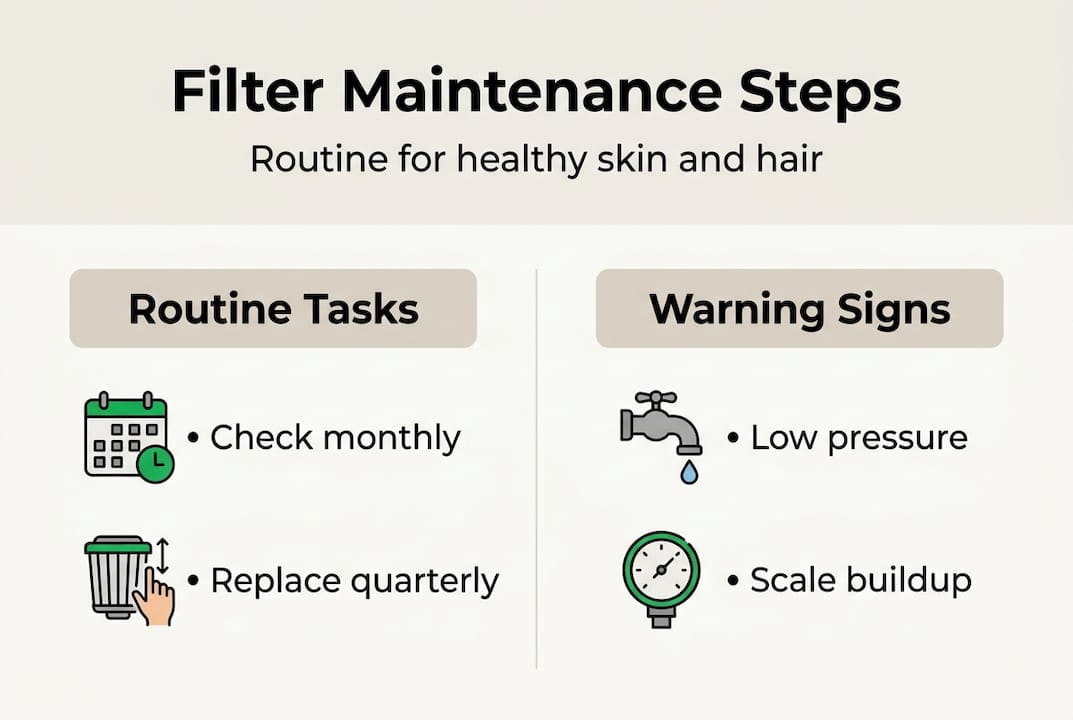
Maintenance schedule by filter type:
| Filter type | Cleaning frequency | Replacement cycle |
|---|---|---|
| Sediment | Monthly rinse | Every 3 months |
| Carbon | Monthly inspection | Every 3 to 6 months |
| Vitamin C | N/A (single-use shots) | Monthly to every 3 months |
| Ceramic | Quarterly cleaning | Every 6 to 12 months |
Pro Tip: Set a phone reminder on the first day of each month to check your filter. A two-minute visual inspection catches most problems before they become expensive ones.
How to spot trouble and fix common filter mistakes
Having completed your maintenance steps, stay alert for trouble signs and address mistakes quickly to protect your skin and hair.
Some warning signs are obvious. Others sneak up on you slowly. Here’s what to watch for:
- Water pressure drops without any change in your home’s main supply
- Strange taste or smell coming from the shower water
- Visible buildup or discoloration on the filter housing, showerhead, or surrounding tile
- Skin dryness and scalp irritation return after a period of improvement
- Hair feels rough or loses elasticity between washes
These are the signals described when signs of needed maintenance go unaddressed, and overdue filters don’t just stop working—they actively harbor bacteria.
“The biggest filter mistake isn’t skipping a replacement—it’s not knowing what to look for before things go wrong.”
Common mistakes and how to fix them:
Skipping replacement cycles is the most frequent error. It feels harmless until your skin starts reacting. Check when to change your filter if you’re unsure where you stand.
Using uncertified cartridges is a cost-cutting trap. Unverified filters may pass water without reducing contaminants at all. Always match the product to your unit and confirm NSF/ANSI certification.
Ignoring your local water quality is a planning failure. If you live in a hard-water area, generic replacement schedules don’t apply to you. Shielding your skin and hair from minerals starts with knowing what’s in your local supply. Tips for hair vitality support can also help you customize your approach based on your specific concerns.
Our take: What your skin and hair actually need from a filter routine
Most filter guides treat maintenance like an oil change: follow the schedule, check the box, move on. That approach misses the point entirely. The right maintenance routine is personal, and the factors that shape it include your local water hardness, the specific filter technology you use, and how sensitive your skin actually is.
Someone with reactive, dry skin in a high-chlorine city needs a different schedule than someone with oily skin in a soft-water town. A single universal timeline overlooks both of them. We’ve seen users swap cartridges religiously every three months and still deal with irritation, simply because their local water profile demanded monthly attention.
Knowing why you should invest in water filters is just the beginning. Real results come from adapting your routine to what your water, your skin, and your hair are actually telling you. Generic schedules are a starting point, not a finish line.
Explore solutions for your shower filter maintenance
Understanding your personal filter needs is half the work. The other half is having the right products ready before your next replacement cycle arrives.

At Vitaclean, we make that part simple. Our Vitamin C filter replacements are formulated to neutralize chlorine at the source and are compatible with our full range of shower systems. If you want to stop thinking about reorder dates entirely, the filter refill plan delivers certified replacements on a schedule that matches your filter type and usage. For longer-lasting filtration between replacements, explore our ceramic filter options designed to support consistent water purity and protect your skin and hair every single day.
Frequently asked questions
How often should I change my shower water filter?
Replace sediment and carbon filters every three months in high-chlorine or hard-water areas, and run a full water quality test once a year to confirm your actual replacement needs.
What signs indicate my shower filter needs maintenance?
Watch for reduced water pressure, unusual odor or taste, visible scale on the housing, and the return of skin dryness or hair brittleness after a period of improvement.
Can I clean and reuse shower filter cartridges?
No. Saturated cartridges should never be cleaned and reinserted because the process can release trapped contaminants back into your water. Always replace them with a certified new cartridge.
Which replacement filters are best for skin and hair health?
Look for filters carrying NSF/ANSI standard 177 certification, which specifically covers shower chlorine reduction and gives you independent verification of the product’s health claims.
How does filter maintenance affect skin and hair?
Consistent maintenance keeps chlorine reduction working as intended, which means preserving natural oils in your skin and hair and maintaining the moisture levels that prevent dryness, breakouts, and scalp irritation.
Recommended
- Benefits for your hair and skin when using shower filters
- Why invest in water filters? Healthier skin & hair made simple
- Top home water filtration examples for skin and hair
- Guide to healthier hair in 2026 through water filtration
- #Face #CleansingOil #MakeupRemoval #Waterproof #SkinPurification #DailyDetox #Nourish #GentleCleansing #ClearSkin #SkinCareRoutine #DailyEssential #GlowingComplexion #NaturalCleansing #Vegan Αρχεία - Eneleo - Natural Skin Care