
Why water quality affects hair: must-know tips for 2026
TL;DR:
- Hard water minerals deposit on hair, causing dullness, breakage, and rough texture over time.
- Chlorine strips natural oils, damaging the hair cuticle and increasing porosity and brittleness.
- Using water tests, chelating shampoos, shower filters, and vinegar rinses can effectively protect hair from water damage.
Your shampoo might be flawless, your conditioner award-winning, and your styling routine on point. Yet your hair still looks dull, breaks too easily, and feels rough by midweek. The culprit hiding in plain sight is your shower water. Hard water minerals like calcium and magnesium deposit directly onto the hair shaft, causing dullness and breakage that no serum can fix. In this article, you will learn exactly why water quality matters more than most guides admit, how to spot the warning signs early, and which practical fixes actually work for real hair.
Table of Contents
- How water quality changes your hair: The science explained
- Visible signs your water is hurting your hair (and what makes you vulnerable)
- What the research really says: Myths vs. facts about water and hair damage
- How to protect your hair from water damage: Practical solutions
- Our expert perspective: What most hair guides get wrong about water quality
- Protect your hair: Simple upgrades that make a difference
- Frequently asked questions
Key Takeaways
| Point | Details |
|---|---|
| Minerals block moisture | Hard water minerals coat hair, leading to dryness and loss of shine. |
| Chlorine strips oils | Even low levels of chlorine in tap water can weaken the hair cuticle and fade color. |
| Sensitive hair types risk more | Curly, colored, and porous hair is most easily damaged by poor water quality. |
| Research shows long-term impact | Clinical studies reveal that the most noticeable hair changes come from repeated or prolonged exposure, not just one wash. |
| Simple fixes work | Testing your water and installing a shower filter can greatly improve hair vitality. |
How water quality changes your hair: The science explained
Let’s look at exactly how water quality physically changes your hair and scalp at a chemical level.
When you shower with hard water, calcium and magnesium ions bind to the proteins in your hair through a process called ionic mineral binding, which lifts the outer cuticle layer and blocks moisture from getting in. Think of your hair cuticle like roof shingles: when they lie flat, water and nutrients seal inside. When minerals force them open, everything leaks out. The result is hair that feels rough, looks lackluster, and snaps under minimal tension.
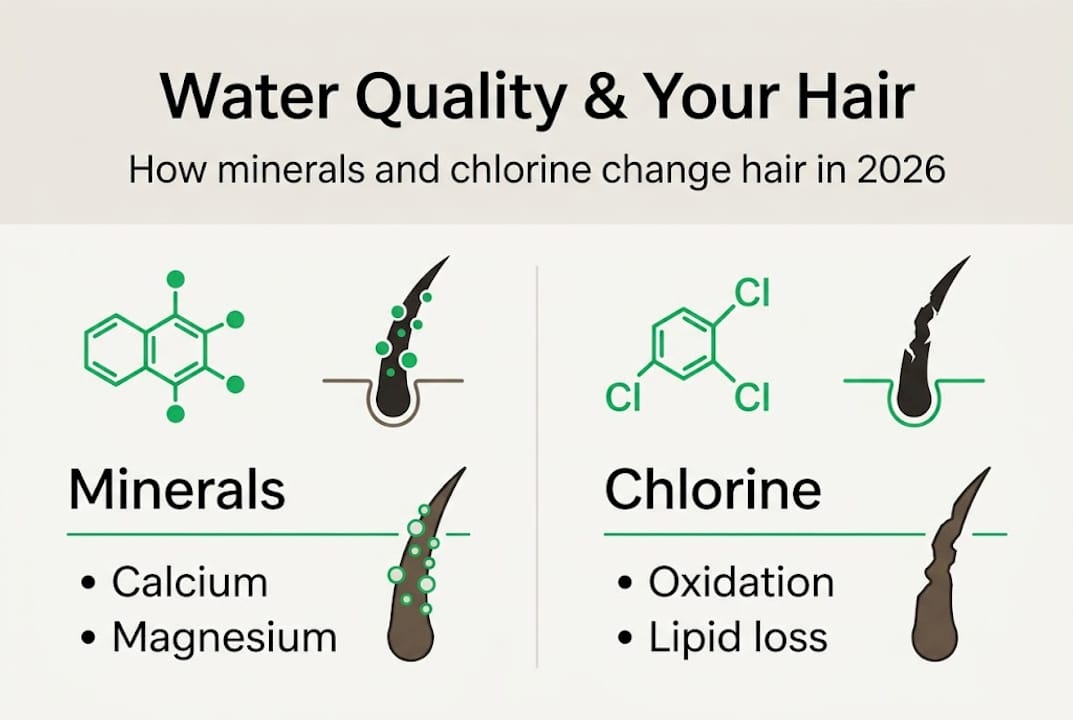
Chlorine adds another layer of damage. It oxidizes the cuticle and strips the natural lipids that keep hair soft and flexible. Those lipids are not just for shine; they are the structural glue holding your hair’s moisture barrier together. Without them, hair becomes porous and brittle fast.
Here is a quick comparison to show how water type impacts your hair differently:
| Water type | Effect on cuticle | Effect on moisture | Overall result |
|---|---|---|---|
| Soft water | Minimal disruption | Good retention | Smooth, flexible hair |
| Hard water | Cuticle lifted by minerals | Blocked moisture | Dull, brittle, rough |
| Chlorinated water | Cuticle oxidized | Lipids stripped | Dry, porous, faded color |
The most damaging combination is hard water that also contains chlorine, which describes the tap water in most American cities. If you want to understand more about hard water and hair condition or explore the broader hard water and wellness picture, the connection runs deeper than most people expect.
Here is what makes water damage especially sneaky:
- Mineral buildup accumulates gradually, so early damage feels subtle
- Most people blame products, heat tools, or stress instead of water
- Hair texture shifts slowly, making it hard to pinpoint the cause
- Scalp irritation often appears before visible hair changes
Pro Tip: Take a photo of your hair every two weeks. Small changes in shine and texture are hard to notice day to day, but a photo comparison over six weeks can reveal a clear pattern tied to your water.
Visible signs your water is hurting your hair (and what makes you vulnerable)
With that foundational science in mind, let’s focus on how water issues actually show up in your day-to-day hair and how to know if you are at risk.
The most common symptoms people experience from water-related damage include:
- Persistent dryness that does not respond to conditioner
- Increased breakage or split ends despite gentle handling
- Dull, flat appearance even after washing
- Scalp tightness, itchiness, or flaking
- Color fading faster than expected after salon visits
- A waxy or stiff feeling right after shampooing
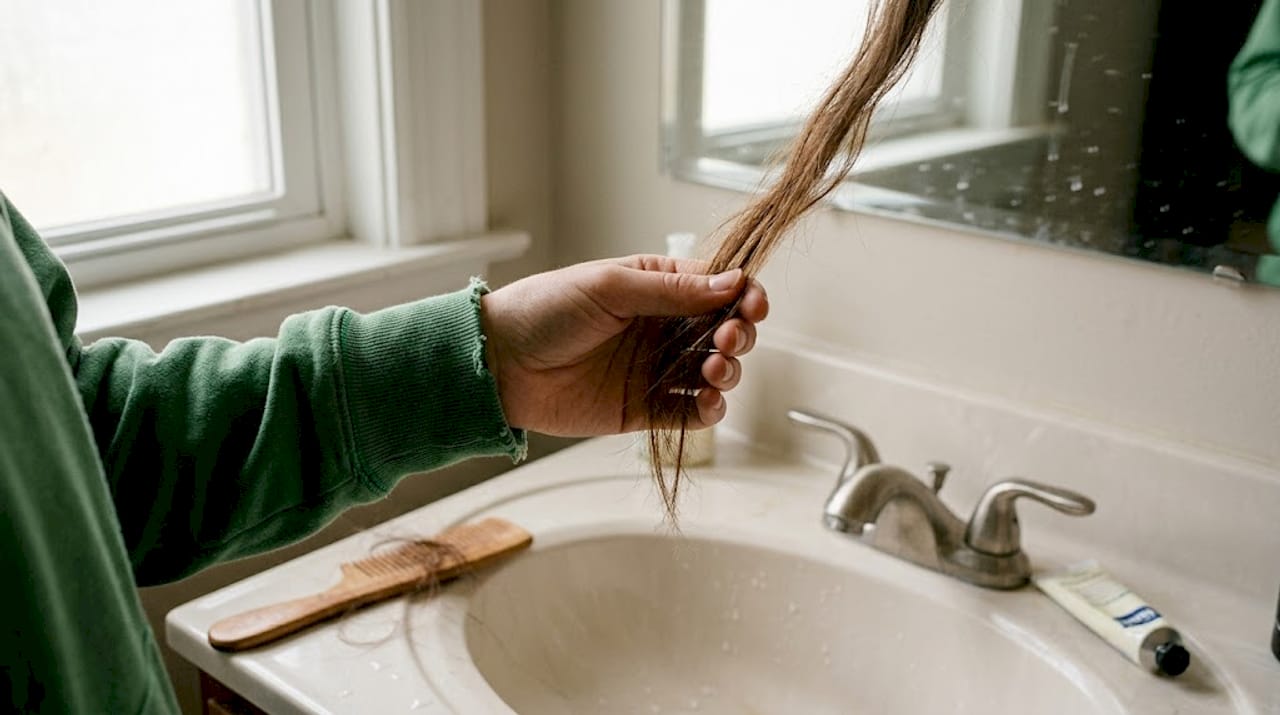
Not everyone experiences these equally. Bleached and porous hair binds significantly more minerals than healthy, intact hair, and color fades faster when mineral deposits interfere with dye molecules. Curly hair is also especially vulnerable because its spiral structure creates more surface area for minerals to cling to, and the natural oils from the scalp have a harder time traveling down the shaft to provide protection.
For hair care tips for hard water tailored to your hair type, it helps to first understand your specific vulnerability. Gray hair, which tends to have a more open cuticle structure, is prone to picking up yellowish mineral tones from iron or copper in pipes. Anyone with hard water and curly hair concerns knows how frustrating it is when moisture-locking routines just stop working.
The scalp risk deserves special attention. Research shows that psoriasis risk rises by approximately 3% for every 50 mg/L increase in calcium carbonate concentration, and people living in very hard water areas face up to 20% higher psoriasis risk overall.
If you already have a sensitive scalp, eczema, or any inflammatory skin condition, hard water is not just a cosmetic inconvenience. It is an active trigger that can worsen your symptoms with every single shower.
This is important because many people treat scalp issues with medicated shampoos and prescription creams without ever questioning the water delivering those products. You could be fighting a fire with one hand while pouring fuel with the other.
What the research really says: Myths vs. facts about water and hair damage
Seeing symptoms is important, but what does the actual research say about water and hair? Let’s clear up the confusion with some evidence.
One widely cited study found no significant short-term difference in tensile strength between hair washed with hard water versus distilled water over a brief period. That result gets used frequently to claim hard water is harmless. But the same body of research acknowledges an empirical conflict: laboratory short-term tests do not capture the cumulative, long-term mineral buildup that real-world users experience over months and years.
Here is how the science stacks up against common beliefs:
| Claim | What research says | Real-world reality |
|---|---|---|
| Hard water causes instant hair loss | False, no direct link | Gradual breakage mimics thinning |
| Chlorine causes permanent hair loss | Not supported | Increases breakage and perceived thinning |
| Short-term water tests show damage | Inconsistent in labs | Clear effects emerge over months |
| Soft water is always better | Partially true | Can over-moisturize fine hair |
Let’s bust the biggest myths directly:
- “Hard water causes immediate hair loss.” Hard water does not attack follicles. What it does is weaken the hair shaft over time until strands break before they shed naturally, giving the appearance of thinning.
- “My hair looks fine, so water is not the problem.” Water damage is cumulative. You may not see the effects for weeks or months, which is exactly why it goes undetected for so long.
- “Switching shampoo will fix it.” Shampoos work on the surface, but mineral buildup is structural. Without addressing the source, even the best shampoo can only do so much.
- “Chlorine from tap water is too diluted to matter.” Daily exposure adds up. The dose-response is real, especially for people who shower once or twice a day.
For a closer look at hard water and hair loss facts, the nuance matters. Short-term studies are not the full story, and dismissing the evidence because one lab test showed no effect is a mistake.
How to protect your hair from water damage: Practical solutions
Armed with the right knowledge, it is time to take action and protect your hair with practical, proven steps.
Start with testing your water. Many hardware stores sell inexpensive test strips that measure water hardness in parts per million. Knowing your baseline gives you a clearer picture of how aggressive your protection strategy needs to be. According to water quality research, the most effective solutions include testing water hardness, using chelating shampoos, installing shower filters, and performing apple cider vinegar (ACV) rinses.
Here is a step-by-step plan to work through:
- Test your water hardness using strips or send a sample to a local lab for a full mineral report.
- Switch to a chelating shampoo once or twice a week. These shampoos contain EDTA or citric acid, which bind to minerals and physically remove them from the hair shaft.
- Install a shower filter to neutralize chlorine and reduce mineral load before water ever touches your hair. This is the most impactful single change you can make.
- Try an ACV rinse after washing. Mix one tablespoon of apple cider vinegar into a cup of water, apply after conditioning, and rinse. The mild acidity flattens the cuticle and dissolves light mineral buildup.
- Use a leave-in conditioner with ingredients like panthenol or glycerin to reinforce the moisture barrier between washes.
For a full hard water solutions step-by-step guide, or to learn more about addressing hard water issues across your whole routine, these approaches stack well together.
Pro Tip: Do not pick just one fix and stop there. Chelating shampoo removes existing buildup, a shower filter prevents new buildup, and an ACV rinse maintains cuticle health between washes. Using all three together multiplies your results significantly.
Our expert perspective: What most hair guides get wrong about water quality
Most hair care guides jump straight to product recommendations without asking a single question about your water. That is a fundamental blind spot. We have heard from countless people in our community who spent years cycling through expensive shampoos, masks, and salon treatments while their water supply was quietly undoing every bit of progress.
The uncomfortable truth is that easy tips for hard water hair only work consistently when you deal with the water source itself. Product swaps are a band-aid. They can reduce visible damage, but they cannot reverse the daily accumulation of minerals pressing against your cuticle every morning.
What we advocate for is simple: track your results. Before you change your water quality setup, document your hair’s texture, shine, and breakage rate. Then reassess after four to six weeks. Real improvement shows in the data, not just your feelings about it. Most people who do this exercise are surprised by how quickly and clearly water-focused changes outperform product changes.
Protect your hair: Simple upgrades that make a difference
If the research and symptoms sound familiar, the next step is straightforward. You do not need a full plumbing overhaul to see real change.
At Vitaclean, we designed our Vitamin C shower filter shots specifically to neutralize chlorine and reduce the mineral load in your shower water from day one. Our replaceable shower filters make it simple to maintain clean water year-round without complicated installation. If you prefer flexibility, the handheld Vitamin C shot gives you targeted filtration right where it counts. These are not luxury extras. They are the practical foundation for a hair care routine that actually works.
Frequently asked questions
How does hard water actually damage hair?
Minerals in hard water form a film over your hair, lifting the cuticle, blocking moisture, and making hair dull and brittle. Over time, this weakens the entire hair shaft, not just the surface.
Is chlorinated water safe for hair?
Chlorine does not cause hair loss, but it strips natural oils and increases dryness and breakage significantly, while also accelerating color fading. Daily shower exposure is cumulative, even at tap-water concentrations.
Who is most sensitive to water quality when it comes to hair?
Curly, coily, colored, or porous hair is far more vulnerable to mineral buildup and chlorine damage than hair with a sealed, intact cuticle structure.
Does soft water ever cause hair problems?
Yes. Soft water can over-moisturize fine hair, making it limp and hard to style, especially if you use heavy conditioners or leave-in treatments on top.
Can I fix water-related hair issues without expensive treatments?
Absolutely. Chelating shampoos and shower filters are affordable and highly effective, especially when combined with simple at-home rinses like diluted apple cider vinegar.