
Tips for Scalp Health: Your 2026 Scalp Care Guide
TL;DR:
- A healthy scalp is clean, balanced, and irritation-free, supporting strong hair growth.
- Proper routine depends on identifying your scalp type and focusing on cleansing, exfoliating, and hydrating accordingly.
A healthy scalp is defined as skin that is clean, balanced in oil production, free from irritation, and able to support strong hair growth. Most people treat their scalp as an afterthought, yet every hair strand grows directly from it. Getting your tips for scalp health right means building a routine around your specific scalp type, not copying a generic regimen from a beauty blog. The core steps are cleansing, exfoliating, hydrating, and protecting, and the order and frequency of each depends entirely on whether your scalp runs oily, dry, sensitive, or somewhere in between.
1. How to identify your scalp type
Your scalp type determines every other decision in your care routine. Oily scalps produce excess sebum and feel greasy within 24 hours of washing. Dry scalps feel tight, flaky, and sometimes itchy, especially in cold or low-humidity weather. Sensitive scalps react to fragrances, sulfates, or heat with redness and stinging. Combination scalps are oily at the crown and drier at the hairline or nape.
A simple self-test: wash your scalp with a gentle shampoo, then wait 24 hours without applying any product. Check the texture at your crown and temples. Greasy roots point to an oily scalp. Tightness or visible white flakes point to dryness. Redness or itching after contact with products signals sensitivity.
- Oily scalp: Wash daily or every other day; avoid heavy conditioners on the scalp
- Dry scalp: Wash every 3–5 days; use moisturizing, sulfate-free formulas
- Sensitive scalp: Wash every 2–3 days; choose fragrance-free, pH-balanced products
- Combination scalp: Wash every 2 days; focus products on the oilier zones
Pro Tip: Write down how your scalp feels at 24, 48, and 72 hours after washing for two weeks. That log gives you a clearer picture than any single observation.
2. Top tips for scalp health: cleansing the right way

Cleansing is the foundation of any scalp care tips list, and technique matters as much as frequency. Focusing shampoo on the scalp skin rather than the hair lengths removes excess sebum, sweat, and debris without stripping the strands. Use your fingertips, not your nails, and work in small circular motions across the entire scalp surface.
Wash frequency should match your scalp type: daily or every other day for oily scalps to prevent sebum buildup, and every 3–5 days for dry scalps to preserve barrier health. Washing too often strips the acid mantle on a dry scalp. Washing too rarely on an oily scalp allows sebum and dead skin cells to clog follicles.
Product selection is equally important. A healthy scalp maintains a pH around 4.5, and alkaline shampoos disrupt that acid mantle, leading to irritation and sensitivity. Look for shampoos labeled pH-balanced or formulated for your scalp type. Jupiter’s scalp-focused shampoo range is one example of a line built around this principle.
Pro Tip: Rinse longer than you think you need to. Product residue left on the scalp is one of the most common causes of irritation and false dandruff symptoms.
3. How often should you exfoliate your scalp?
Scalp exfoliation, also called scalp peeling or scalp scrubbing in some product lines, removes dead skin cells and product buildup that regular shampooing misses. Exfoliation frequency varies by scalp type: weekly for oily scalps, every 1–2 weeks for combination types, and every 2–3 weeks for dry scalps. Some sensitive scalps should skip physical exfoliation entirely and use a gentle salicylic acid rinse instead.
Over-exfoliating damages the scalp barrier and triggers the very dryness or irritation you are trying to fix. A physical scrub, like Jupiter’s scalp brush, works well for oily and combination scalps. Chemical exfoliants with salicylic acid or glycolic acid suit those who find physical scrubbing too harsh.
Residue from styling products, dry shampoo, and hard water minerals often mimics dandruff. A clarifying wash every 1–4 weeks clears that buildup and restores natural scalp balance. Do not confuse a clarifying wash with daily exfoliation. They serve different purposes and should not overlap in the same week.
| Scalp type | Exfoliation frequency | Best method |
|---|---|---|
| Oily | Weekly | Physical scrub or salicylic acid |
| Combination | Every 1–2 weeks | Gentle scrub or chemical rinse |
| Dry | Every 2–3 weeks | Mild chemical exfoliant |
| Sensitive | Avoid or rarely | Diluted salicylic acid only |
4. Scalp massage and hydrating treatments
Scalp massage is one of the most underused tools in any scalp care routine. Scalp massage improves microcirculation in the scalp skin, supporting a healthier environment for hair follicles. Gentle massage 3–5 times weekly for a few minutes is enough to see a difference. You can do it dry before washing or with a lightweight oil during a pre-wash treatment.
Choosing the right hydrating treatment depends on your scalp type. Oily scalps benefit from water-based serums that hydrate without adding grease. Dry scalps respond well to lightweight oils like jojoba or squalane applied sparingly to the scalp, not the lengths. Check out the Vitacleanhq guide on scalp hydration for a deeper breakdown of what your scalp actually needs.
- Apply hydrating serums to a damp scalp after washing for better absorption
- Avoid layering multiple leave-on products, since buildup blocks follicles
- Use oils as a pre-wash treatment on dry scalps, not as a daily leave-in
- Massage with fingertips using gentle, circular pressure for 3–5 minutes
“The scalp is skin. It needs the same balance of cleansing and hydration that your face does. Treating it like a separate category is where most routines go wrong.”
5. Common scalp care mistakes and how to avoid them
The most damaging mistake in scalp care is misdiagnosing your flakes. Flakes can be dry or oily, and applying heavy oils to an already oily, flaky scalp makes buildup significantly worse. Dry flakes are white and powdery. Oily flakes are yellowish and tend to stick to the scalp. Treating them the same way produces the opposite result you want.
Other common mistakes include:
- Over-washing: Strips the scalp’s natural oils, triggering rebound oil production
- Daily oiling: Clogs follicles on oily or combination scalps and worsens dandruff
- Skipping the rinse: Shampoo residue left on the scalp causes irritation and false flaking
- Chasing trends: Applying viral TikTok treatments without checking your scalp type first
- Using harsh sulfates: Disrupts the acid mantle, especially on dry or sensitive scalps
Adjusting your routine based on how your scalp responds is more effective than following a fixed schedule. If your scalp feels tight after washing, extend the time between washes. If it feels greasy within a day, wash more frequently and check whether your conditioner is landing on the scalp.
6. When to seek professional help for scalp issues
Most scalp issues improve noticeably within 2–4 weeks of following a consistent, scalp-type appropriate routine. That timeline sets a realistic benchmark. If you see no improvement after a month of consistent care, the issue likely requires professional evaluation.
Warning signs that need a dermatologist or trichologist:
- Persistent itching that does not respond to gentle, fragrance-free products
- Burning or pain on the scalp
- Visible redness, swelling, or open sores
- Patchy hair loss alongside scalp symptoms
- Flaking that spreads to the face, ears, or eyebrows
Conditions like seborrheic dermatitis, scalp psoriasis, and scalp acne require medical diagnosis and targeted treatment. Seborrheic dermatitis, for example, involves a yeast called Malassezia and responds to antifungal shampoos. Medicated shampoos require leaving the product on the scalp for several minutes before rinsing. Rinsing too quickly reduces the efficacy of the active ingredients significantly.
Key takeaways
A consistent, scalp-type specific routine covering cleansing, exfoliation, hydration, and massage produces measurable improvement in scalp health within 2–4 weeks.
| Point | Details |
|---|---|
| Know your scalp type | Oily, dry, sensitive, and combination scalps each need different wash frequency and products. |
| Cleanse with technique | Apply shampoo to the scalp, not the lengths, and rinse thoroughly to prevent residue buildup. |
| Exfoliate on schedule | Match exfoliation frequency to your scalp type to avoid barrier damage. |
| Use massage regularly | Gentle scalp massage 3–5 times weekly supports circulation and follicle health. |
| Act on warning signs | Persistent itching, burning, or hair loss after four weeks of home care needs professional evaluation. |
What I’ve learned from years of watching people get scalp care wrong
Most people overcomplicate their scalp routine. They layer three serums, buy a new shampoo every month, and then wonder why nothing works. The scalp responds to consistency, not complexity. A simple routine done correctly and repeatedly outperforms an elaborate one done inconsistently every time.
The part that surprises people most is how much water quality affects their results. You can use the best shampoo on the market, but if your shower water is loaded with chlorine and mineral deposits, it is working against you. Hard water leaves a film on the scalp that mimics dryness and disrupts the acid mantle. That is a variable most scalp care guides never mention, and it explains why some people see no improvement despite doing everything else right.
I also think the obsession with hair products distracts from the scalp itself. Your scalp is skin. It needs cleansing, hydration, and protection just like your face. Once you start treating it that way, the results follow quickly. Start with identifying your scalp type, commit to a routine for four weeks, and adjust based on what you observe. That is the whole framework.
— Sara
How Vitacleanhq supports your scalp care routine
Unfiltered tap water contains chlorine and mineral deposits that strip the scalp’s natural oils and trigger dryness and irritation. Vitacleanhq’s Vitamin C shower filter shots neutralize chlorine at the source, so every wash starts with cleaner, gentler water. That single change removes one of the most overlooked causes of scalp irritation from your routine entirely.
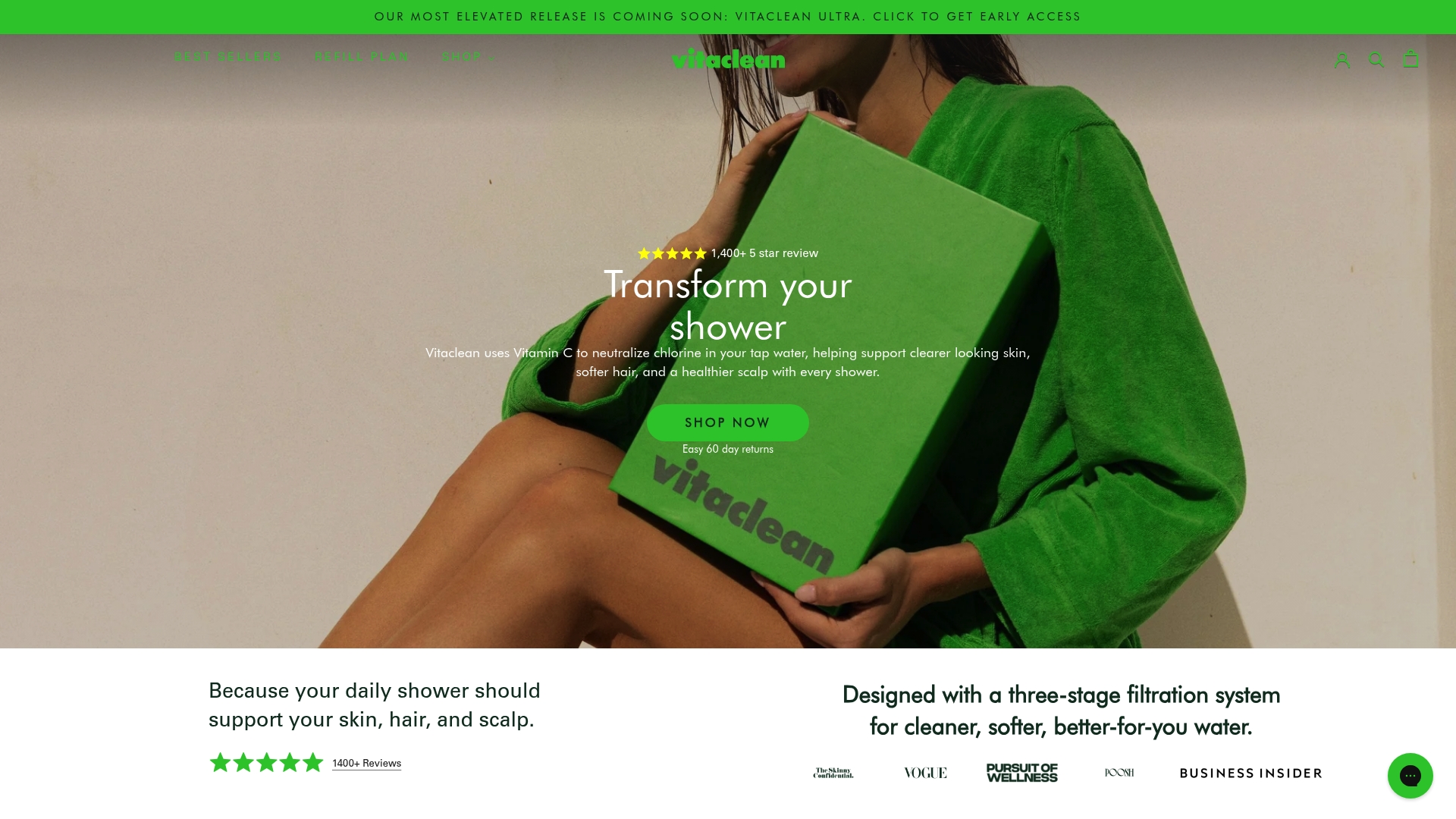
Vitacleanhq also offers ceramic shower filters and a filter refill subscription so your filtration stays effective without any guesswork. Cleaner shower water means your pH-balanced shampoo and scalp treatments can actually do their job, without competing against chlorine and hard water minerals on every wash day.
FAQ
What are the best scalp treatments for dandruff?
The best scalp treatments for dandruff depend on whether your flakes are dry or oily. Antifungal shampoos containing zinc pyrithione or ketoconazole address seborrheic dermatitis, while gentle moisturizing formulas work better for dry flake conditions.
How often should you wash your scalp for good scalp health?
Wash frequency depends on your scalp type. Oily scalps benefit from daily or every-other-day washing, while dry scalps do best with washing every 3–5 days to preserve their natural barrier.
Can hard water cause scalp problems?
Yes. Hard water deposits minerals on the scalp that disrupt the acid mantle, mimic dryness, and reduce the effectiveness of shampoos. A filtered shower head reduces mineral buildup at the source.
What are the signs of an unhealthy scalp?
An unhealthy scalp shows persistent itching, visible flaking, redness, tightness, or unusual hair shedding. Symptoms that do not improve after 2–4 weeks of consistent home care need professional evaluation.
Does scalp massage actually help hair growth?
Scalp massage improves microcirculation in the scalp skin, which supports a healthier environment for hair follicles. Consistent massage 3–5 times weekly is the recommended frequency for noticeable benefit.