
How Filters Improve Wellbeing: Skin, Hair, and Health
TL;DR:
- Filters in air and water systems protect health by removing harmful contaminants that damage skin, impair cognition, and raise cardiovascular risk. Clinical studies show that using HEPA air purifiers and proper water filters improves cognitive scores, reduces blood pressure, and enhances skin and hair health. Correct sizing, maintenance, and matching filter types to specific contaminants are essential for maximum health benefits.
Filters improve wellbeing by removing the contaminants in your air and water that quietly damage your skin, disrupt your sleep, and slow your thinking. Chlorine in tap water strips your skin barrier. Particulate matter in indoor air reduces brain white matter responsible for cognitive processing. The science connecting filtration to physical and mental health has grown sharply in 2026, with clinical studies now showing measurable gains in cardiovascular health, cognitive speed, and skin hydration from filter use. Whether you are focused on clearer skin, stronger hair, or sharper focus, the right filtration system delivers results you can feel.
How do air filters improve wellbeing and cognitive health?
Air filtration is one of the most direct ways to protect your brain and heart at home. Particulate matter reduces brain white matter responsible for cognitive processing, and HEPA purifiers may help protect or reverse these effects. That finding reframes air purifiers from a comfort product to a genuine health tool.
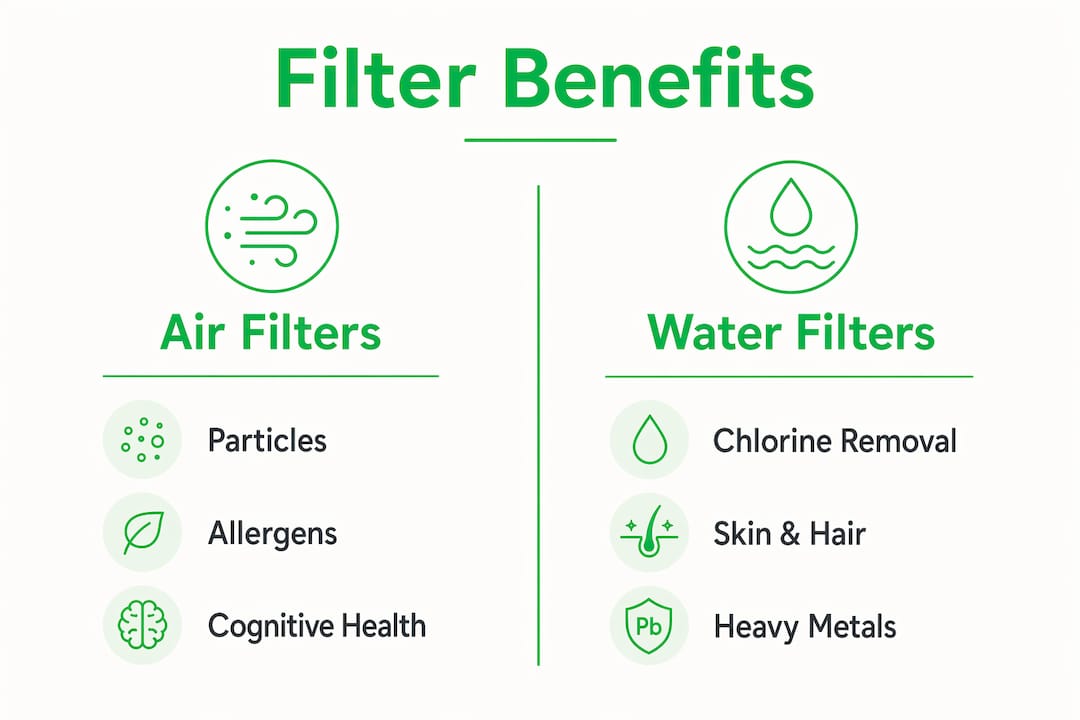
The clinical evidence is specific. HEPA purifier use for one month improves cognitive test scores by 12% in adults aged 40 and older, based on a study of 119 participants. That improvement reflects gains in mental flexibility, not just reaction time. Separately, HEPA purifiers reduce systolic blood pressure by an average of 3 mm Hg in people with elevated baseline readings. For anyone managing cardiovascular risk, that is a meaningful number from a device that runs quietly in the background.
True HEPA filters are certified to capture 99.97% of airborne particles at 0.3 microns. Indoor PM2.5 concentrations drop 29–56% with a properly sized HEPA unit, and allergy symptoms improve by 25–60%. Those ranges matter because performance varies widely depending on room size, filter quality, and how consistently you run the unit.
The EPA and cardiology experts are clear: air filtration works best as a supplement to pollutant source reduction and ventilation, not as a standalone fix. Open windows when outdoor air quality allows. Address moisture and mold at the source. Then add filtration on top.
- Choose a unit rated for your room’s square footage, not the next size down.
- Run it continuously on a low setting rather than intermittently on high.
- Replace filters on the manufacturer’s schedule, not when the indicator light forces you.
- Vacuum weekly with a HEPA-certified vacuum to remove settled particles that purifiers cannot reach.
- Damp-dust surfaces to prevent resuspension of allergens.
Pro Tip: Air purifiers do not clean settled dust on surfaces. Pair your HEPA unit with a HEPA-certified vacuum and damp dusting to cover what the purifier misses.
“Air cleaners alone cannot adequately remove all the pollutants typically found in indoor air.” — U.S. Environmental Protection Agency
How do water filters improve skin, hair, and general health?
Water filtration’s impact on your body works through two channels: what you drink and what touches your skin. Both matter, and most people only think about one of them.
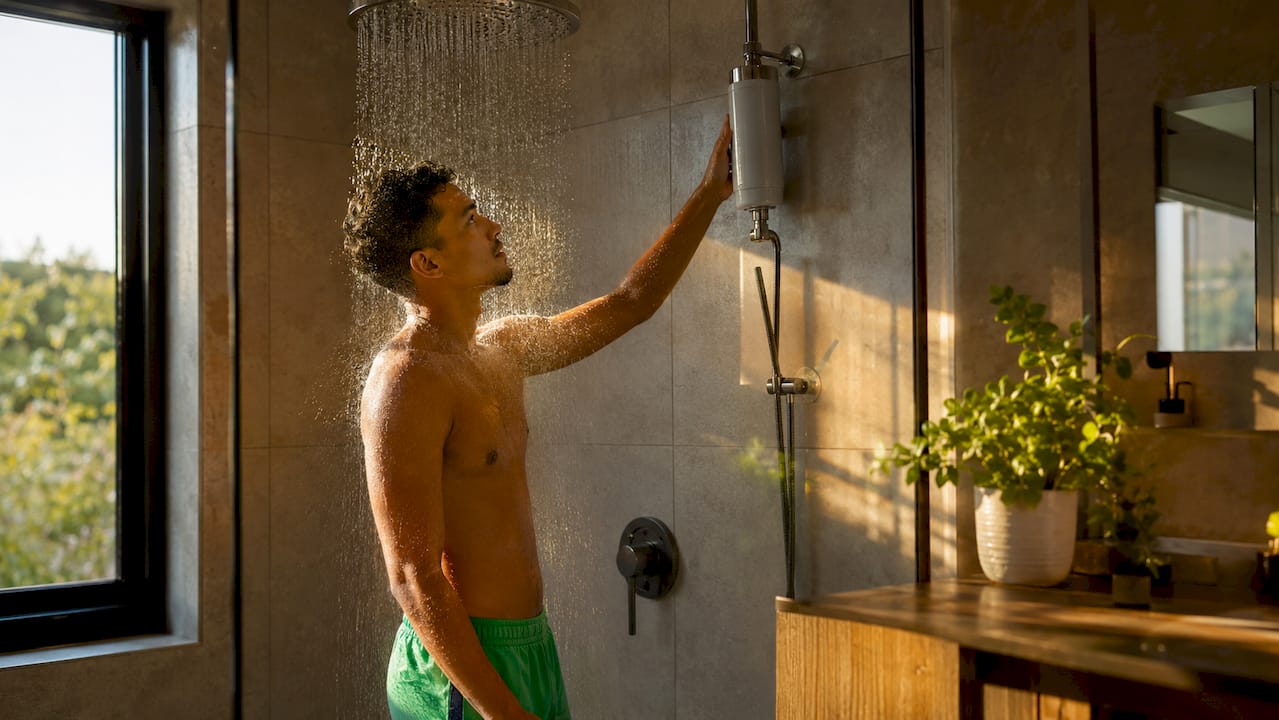
Filtered drinking water reduces lead intake critical for neurodevelopment and lowers microbial exposure. It also improves hydration habits because better-tasting water gets consumed more consistently. That steady hydration supports skin elasticity, kidney function, and energy levels in ways that no topical product can replicate.
The external benefits are equally direct. Chlorine in unfiltered tap water strips the skin’s natural oils and disrupts the scalp’s moisture balance. People with eczema, psoriasis, or chronic dryness often see improvement when they switch to filtered shower water. The mechanism is simple: less chemical exposure means less barrier damage. Vitacleanhq’s Vitamin C shower filters neutralize chlorine at the point of contact, adding antioxidant support to each shower rather than just removing a problem.
Hard water compounds the issue by depositing calcium and magnesium on hair strands, leaving them brittle and dull. Ion-exchange filters address this directly. Reverse osmosis systems go further, removing heavy metals like lead and arsenic that carbon filters alone cannot capture. Matching your filter to your actual water quality is the step most people skip, and it is the reason many filters underperform.
There is also a psychological dimension. Confidence in water quality reduces mental load and the low-grade anxiety that comes from uncertainty about what you are drinking or bathing in. Researchers call this “water anxiety,” and it is more common than most people realize. Removing that micro-stressor supports cognitive clarity in a way that is hard to quantify but easy to feel.
Pro Tip: Filtered water supports your skincare routine from the inside and outside. Pair internal hydration with a filtered shower routine to reduce chlorine exposure on your skin and scalp simultaneously.
Air vs. water filters: which system fits your health goals?
Choosing the right filtration system starts with knowing what problem you are solving. The tables below map filter types to their actual performance.
Air filter comparison
| Filter type | What it removes | Best for | Watch out for |
|---|---|---|---|
| True HEPA | Particles, allergens, PM2.5 | Allergies, cognitive health, cardiovascular support | Requires correct sizing and regular replacement |
| HEPA-like | Larger particles only | Budget option, low-risk environments | Does not meet 99.97% capture standard |
| Ionizer | Some particles via charge | Odor reduction | Produces ozone; not recommended for respiratory conditions |
| Ozone generator | Odors and some pathogens | Commercial deodorizing | Ozone is a lung irritant; avoid for home use |
Water filter comparison
| Filter type | What it removes | Best for | Limitation |
|---|---|---|---|
| Activated carbon | Chlorine, taste, odor | General drinking water improvement | Does not remove heavy metals or microorganisms |
| Ceramic | Bacteria, sediment, some cysts | Well water, general contaminants | Slow flow rate; requires cleaning |
| Reverse osmosis | Heavy metals, nitrates, fluoride, bacteria | High-contamination water sources | Wastes water; removes beneficial minerals |
| UV filter | Bacteria and viruses | Microbiological contamination | Does not remove chemical contaminants |
| Ion-exchange | Hard water minerals, some heavy metals | Hard water, hair and skin benefits | Requires regeneration; adds sodium |
| Vitamin C shower filter | Chlorine, chloramines | Skin and hair health in the shower | Focused on shower use, not drinking water |
The core rule: no single filter solves all problems. Test your water first, then select the technology that targets your specific contaminants. Buying a carbon filter when your issue is lead is a common and costly mistake.
Practical steps to get the most from your filtration routine
Getting real results from filtration requires more than buying a device. The setup and maintenance decisions determine whether you see measurable health benefits or marginal ones.
- Test your water before buying. Home test kits from brands like First Alert or laboratory services through your local utility reveal your actual contaminant profile. This step prevents mismatched purchases.
- Size your air purifier correctly. Check the CADR (Clean Air Delivery Rate) rating and match it to your room’s square footage. A unit rated for 200 square feet will not protect a 400-square-foot living room.
- Replace filters on schedule. Air purifier efficacy depends on true HEPA certification, correct sizing, and a strict maintenance schedule. Skipping any one of these three criteria drops performance to marginal levels.
- Pair your shower filter with a consistent skincare routine. Vitacleanhq’s Vitamin C filter shots neutralize chlorine and deliver antioxidants directly during your shower. Monthly facials can amplify these skin benefits when your baseline skin barrier is already protected by filtered water.
- Track changes over 30 days. Skin texture, hair shine, allergy frequency, and sleep quality all shift within a month of consistent filter use. Keeping a simple log helps you connect cause and effect.
Pro Tip: Vitacleanhq’s ceramic filter balls and Vitamin C shots work together in the shower to address both sediment and chemical exposure. Using both gives you layered protection that a single filter type cannot match.
Key takeaways
Filters improve wellbeing by removing the specific contaminants in your air and water that damage skin, impair cognition, and raise cardiovascular risk.
| Point | Details |
|---|---|
| HEPA filters boost brain performance | One month of HEPA use improves cognitive test scores by 12% in adults over 40. |
| Water filters protect skin and hair | Removing chlorine and heavy metals reduces barrier damage and scalp irritation. |
| Filter type must match contaminant | Carbon filters do not remove heavy metals; reverse osmosis and ion-exchange do. |
| Maintenance determines results | Correct sizing, true HEPA certification, and regular replacement are all required for real performance. |
| Filtration reduces mental load | Confidence in water and air quality lowers water anxiety and supports cognitive clarity. |
Why I think most people underestimate filtration’s daily impact
People treat air purifiers and shower filters as nice-to-have upgrades. I think that framing undersells what the evidence actually shows.
A 12% improvement in cognitive test scores from one month of HEPA use is not a marginal wellness benefit. That is the kind of gain people pay for in supplements, sleep trackers, and coaching programs. The difference is that a HEPA purifier runs in the background without any behavioral change required. That is rare in wellness.
The shower filter case is even more underappreciated. Most people spend real money on serums and conditioners while bathing in chlorinated water that undoes the work. Addressing the water quality first is the more logical sequence. Vitacleanhq’s approach, starting with what touches your skin before layering on topical products, reflects how dermatologists actually think about barrier health.
The psychological benefit is the piece I find most interesting. Reducing water anxiety is not a soft outcome. Chronic low-grade stress from environmental uncertainty accumulates. Removing it frees up cognitive bandwidth. The research on skin boosters and hydration points in the same direction: the foundation matters more than the finish.
My honest advice is to start with a water test and one quality HEPA unit in the room where you spend the most time. Add a shower filter with Vitamin C filtration. Then evaluate your skin, sleep, and focus after 30 days. The results tend to speak clearly.
— Sara
Upgrade your daily routine with Vitacleanhq
Your shower is the one daily ritual that touches your skin, scalp, and hair all at once, so the water quality there has an outsized effect on how you look and feel.
Vitacleanhq’s Vitamin C shower filter shots neutralize chlorine and chloramines at the point of contact, delivering antioxidant protection with every shower. The ceramic filter range adds a second layer of contaminant removal, targeting sediment and bacteria that basic filters miss. Both products install in minutes and fit standard shower fittings. If you want to see the full range of filtration and wellness products, the complete Vitacleanhq shop covers every step of a filtered daily routine.
FAQ
What does a HEPA filter actually do for your health?
A true HEPA filter captures 99.97% of airborne particles at 0.3 microns, including allergens, PM2.5, and pollutants. Clinical studies show one month of use improves cognitive scores by 12% in adults over 40 and reduces systolic blood pressure by an average of 3 mm Hg.
Do shower filters really improve skin and hair?
Yes, they do. Chlorine in unfiltered tap water strips skin oils and disrupts the scalp’s moisture balance, so removing it with a Vitamin C or ceramic shower filter reduces dryness, irritation, and hair brittleness.
What is the difference between carbon and reverse osmosis water filters?
Carbon filters remove chlorine, taste, and odor but do not remove heavy metals like lead or arsenic. Reverse osmosis systems remove heavy metals, nitrates, and bacteria, making them the right choice when water testing reveals those contaminants.
How often should I replace my water or air filter?
Follow the manufacturer’s replacement schedule without exception. Skipping filter changes drops performance to marginal levels and can allow contaminants to pass through a clogged or degraded filter medium.
Can filtered water reduce stress and anxiety?
Research shows that confidence in water quality reduces mental load and lowers water anxiety, a recognized form of low-grade psychological stress. Cleaner water removes one environmental uncertainty, which supports cognitive clarity and overall mood.