
How Unfiltered Water Affects Breakouts and Your Skin
TL;DR:
- Unfiltered tap water contributes to skin breakouts by depositing minerals, chemicals, and disrupting the skin barrier. Filtering water reduces mineral buildup, chlorine, and pH imbalance, helping to prevent acne and skin irritation. Using a shower filter can significantly improve skin health, especially for sensitive or acne-prone individuals.
Unfiltered tap water is a direct contributor to skin breakouts, delivering minerals, chemicals, and contaminants that degrade your skin’s protective barrier with every wash. Calcium, magnesium, and chlorine in standard municipal water disrupt the skin microbiome and strip natural moisture, creating the exact conditions that trigger acne. If you have acne-prone or sensitive skin and your routine is not working, water quality and breakouts may be more connected than your dermatologist has mentioned. Understanding how unfiltered water affects breakouts gives you a concrete, fixable variable to address.
What components in unfiltered water cause skin problems?
Unfiltered water carries three main categories of skin irritants: hard water minerals, disinfectant chemicals, and pH-altering compounds. Each one damages your skin through a different mechanism, and they often work together.
Hard water minerals and soap scum
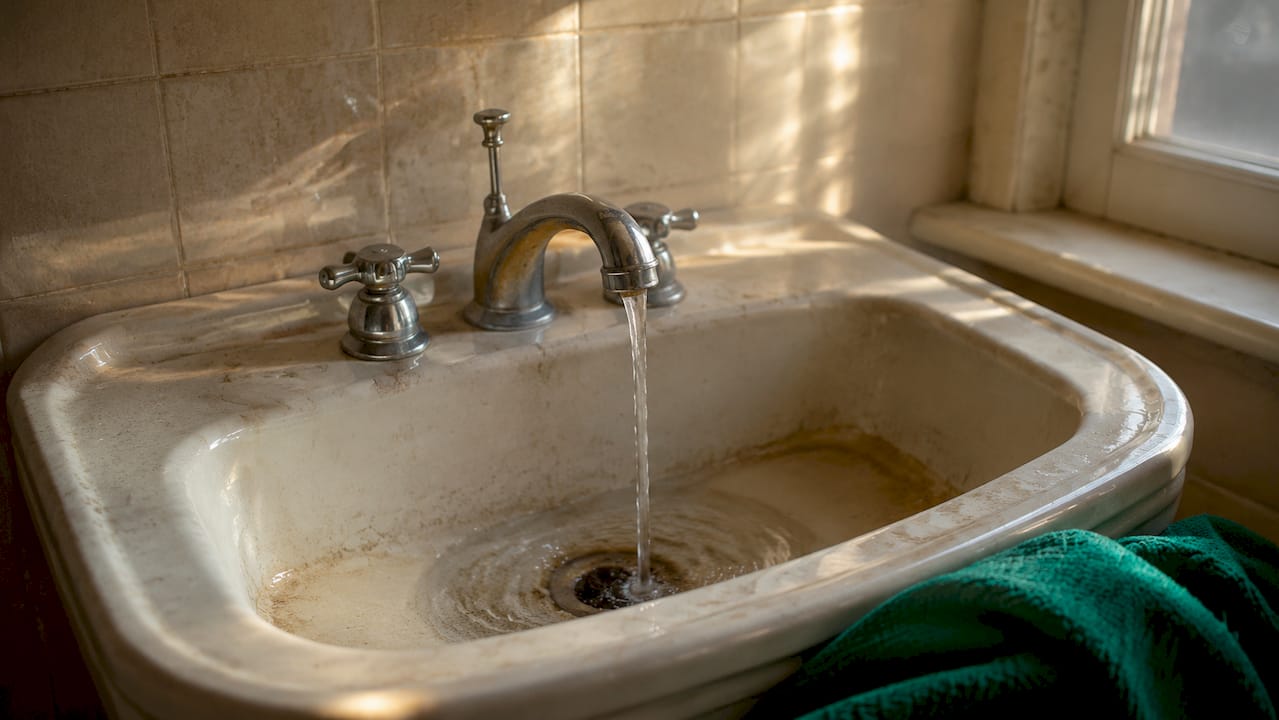
Hard water contains elevated levels of calcium and magnesium. When these minerals contact soap or cleanser, they react to form a waxy residue on skin that traps dead skin cells and bacteria against the surface. Dermatologists call this “soap scum,” and it does not rinse away with water alone. That film physically blocks pores and reduces the effectiveness of your cleanser, so your face wash is working against a layer of mineral residue every single time you cleanse.
The consequences compound over time. Long-term hard water exposure worsens inflammatory skin conditions including eczema and dermatitis, both of which share triggers with acne. People with sensitive skin notice the effects faster, but even those without a diagnosed condition experience increased dryness and irritation.
Chlorine and chloramine
Municipal water systems use chlorine and chloramine to kill pathogens. That process protects drinking water, but it creates a problem for your skin. Chlorine levels as low as 0.5 ppm in tap water increase skin sensitivity and worsen acne and eczema. That concentration is standard in most American city water supplies. The irritation is not a reaction to unusually high chemical levels. It is a response to the baseline levels your skin contacts every day.
pH disruption
Your skin’s surface maintains a natural acidity around pH 4.7. This acidity supports the protective barrier and keeps harmful bacteria in check. Tap water is typically more alkaline, and alkaline water raises skin surface pH, disturbing barrier function and making skin more vulnerable to irritation and bacterial overgrowth. A compromised pH environment is one reason why acne-prone skin flares after washing, even with a gentle cleanser.
Pro Tip: If your skin feels tight or dry immediately after washing your face with tap water, pH disruption is likely a factor. Try rinsing with filtered water and observe whether that tightness decreases within a few days.
How does water quality affect the skin barrier and acne?
The skin barrier is the outermost layer of your skin, made up of lipids, proteins, and natural moisturizing factors (NMF). It keeps moisture in and irritants out. Unfiltered water degrades this barrier through two primary routes: chemical stripping and microbiome disruption.
Microbiome disruption and bacterial overgrowth
Your skin hosts billions of beneficial bacteria that compete with acne-causing strains like Cutibacterium acnes. Dermatologist Dr. Shuting Hu explains that water contaminants compromise beneficial bacteria, creating an opening for acne-causing strains to proliferate. When chlorine kills off protective skin flora, the bacterial balance shifts. Acne-causing bacteria fill the gap, and breakouts follow. This is why skin problems from unfiltered water often look like sudden acne flares with no obvious dietary or hormonal trigger.
Loss of natural moisturizing factors
NMF includes amino acids, lactic acid, and urea that keep skin cells hydrated and flexible. Hard water minerals and chlorine strip these compounds from the skin surface. Once NMF levels drop, the skin barrier weakens, transepidermal water loss increases, and inflammation rises. That inflammatory state is the biological environment where acne forms and spreads.
Here is the sequence that connects water quality to active breakouts:
- Unfiltered water deposits minerals and chlorine on skin during washing.
- Minerals react with cleanser to form residue that blocks pores.
- Chlorine disrupts the skin microbiome, reducing protective bacterial populations.
- Alkaline pH weakens the acid mantle, reducing barrier integrity.
- Inflammation increases, creating conditions where acne-causing bacteria thrive.
- Clogged pores and bacterial overgrowth produce visible breakouts.
Each step in that chain is a direct result of water quality. Addressing the source, rather than only treating the breakout, is the more effective long-term approach.
Unfiltered vs. filtered water: what changes for your skin?
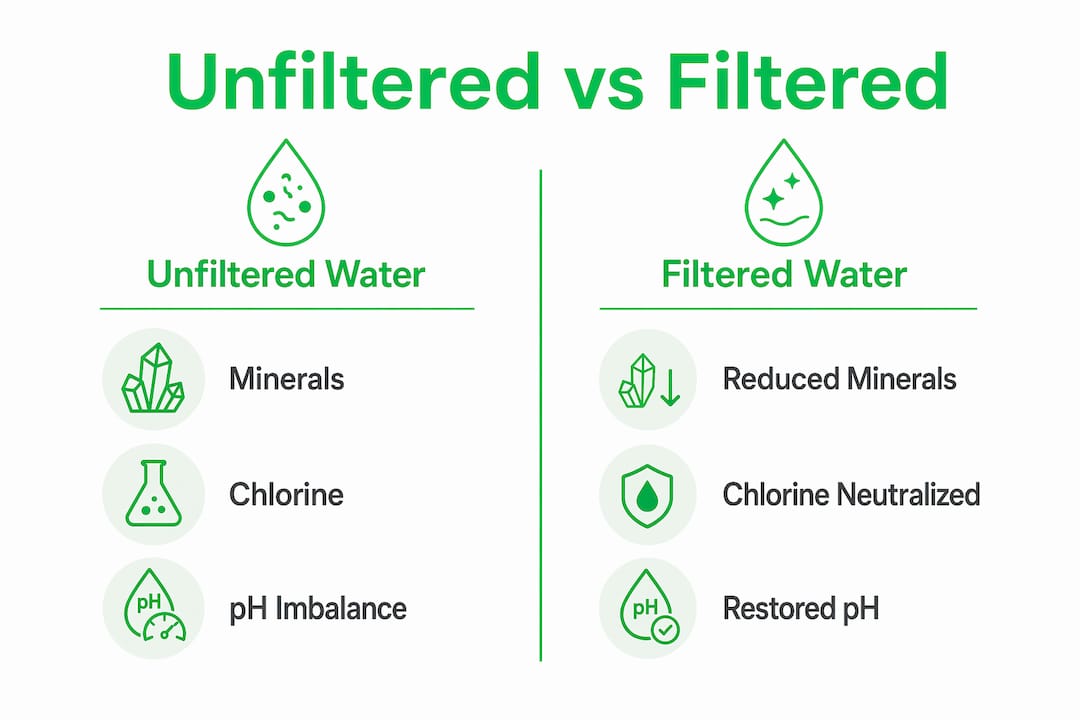
The difference between unfiltered and filtered water is not subtle when it comes to skin health. Filtration removes the specific compounds that drive the damage cycle described above.
| Factor | Unfiltered water | Filtered water |
|---|---|---|
| Mineral content | High calcium and magnesium, forms soap scum | Reduced mineral load, cleaner rinse |
| Chlorine and chloramine | Present at irritating concentrations | Neutralized or removed |
| Skin pH impact | Raises pH, weakens acid mantle | Closer to skin’s natural pH |
| Microbiome effect | Disrupts beneficial bacteria | Supports balanced skin flora |
| Pore clogging risk | High, due to residue buildup | Significantly reduced |
Filtration reduces chlorine, chloramines, and mineral content, leading to less skin barrier damage and fewer breakouts over time. People who install shower filters consistently report smoother skin and reduced irritation. The benefits of filtered water for skin extend beyond acne. Dryness, redness, and sensitivity all decrease when the water contacting your skin no longer carries a chemical and mineral load.
Vitamin C shower filters, like those offered by Vitacleanhq, work by neutralizing chlorine through an ascorbic acid reaction. This approach is particularly effective because it addresses chlorine at the point of contact rather than relying on carbon alone.
Pro Tip: When selecting a shower filter, look for one that specifically targets both chlorine and chloramine. Many basic carbon filters address chlorine but leave chloramine untouched, and chloramine is equally irritating to sensitive skin.
Practical steps to reduce breakouts from water exposure
Changing your water quality is the highest-impact step, but your shower habits and post-shower routine also determine how much damage unfiltered water causes.
- Install a shower filter. A filter that removes chlorine, chloramines, and minerals is the most direct way to reduce skin problems from unfiltered water. Vitacleanhq’s Vitamin C shot filters and ceramic filter options address both chemical and mineral contaminants.
- Keep showers short and lukewarm. Showers over 10 minutes, especially hot ones, accelerate moisture loss and break down natural moisturizing factors. Dermatologists recommend lukewarm water to preserve skin hydration and barrier integrity.
- Apply moisturizer within two minutes of showering. This window is when your skin is most receptive to locking in hydration. Use a moisturizer with niacinamide or hyaluronic acid to replenish what washing removes.
- Use a gentle, pH-balanced cleanser. A cleanser formulated for acne-prone skin at a pH of 4.5–5.5 counteracts the alkalizing effect of tap water and supports the acid mantle.
- Rinse your face with filtered or bottled water if a shower filter is not yet installed. This simple step removes mineral residue before it has time to react with your cleanser.
- Stay consistently hydrated. Drinking clean water supports skin hydration, though hydration alone does not cure acne. It is one component of a broader skin health approach.
Avoiding hot showers is as important as water filtration for preserving your skin’s natural oils. Both changes work together, and neither alone delivers the full benefit.
Key takeaways
Unfiltered water disrupts the skin barrier and microbiome through mineral residue, chlorine, and pH changes, making it a direct and underaddressed cause of acne breakouts.
| Point | Details |
|---|---|
| Minerals form soap scum | Calcium and magnesium react with cleanser to create pore-clogging residue that washes cannot remove. |
| Chlorine disrupts skin flora | Even standard tap water chlorine levels compromise beneficial bacteria, opening the door to acne-causing strains. |
| pH imbalance weakens the barrier | Alkaline tap water raises skin pH above its natural 4.7, reducing barrier protection and increasing inflammation. |
| Filtered water reduces breakouts | Removing chlorine, chloramines, and minerals measurably lowers skin irritation and pore-clogging risk. |
| Shower habits amplify the effect | Lukewarm showers under 10 minutes combined with filtration give the skin barrier its best chance to recover. |
What I’ve learned after years of watching people overlook their water
Most people with persistent acne have tried everything except their water. They switch cleansers, add serums, cut dairy, and still break out. When I ask about their shower setup, the answer is almost always the same: standard tap water, often hot, often long.
The research on water quality and skin is not new. What is new is the accessibility of solutions. A Vitamin C shower filter costs less than one month of most prescription acne treatments, and it addresses a root cause rather than a symptom. I have seen people with years of stubborn breakouts report clearer skin within weeks of switching to filtered shower water, not because filtration is magic, but because they finally removed a daily irritant their skin was fighting every single morning.
The misconception I push back on hardest is that water is neutral. Water is not neutral. It carries minerals, chemicals, and a pH that your skin responds to every time you wash. Treating water quality as a skincare variable, not an afterthought, changes the entire logic of a breakout routine.
One more thing worth saying: the impact of water on skin is cumulative. A single shower with hard water will not destroy your barrier. But 365 showers a year, every year, with water that strips your NMF and deposits mineral residue? That adds up to chronic inflammation. Start with the water.
— Sara
Upgrade your shower with Vitacleanhq filtration
If your skincare routine is solid but breakouts persist, your shower water is the variable worth changing next. Vitacleanhq designs Vitamin C filtered shower heads and replacement cartridges specifically to neutralize chlorine, reduce mineral buildup, and support healthier skin from the first rinse.
The Vitamin C shower filter shots use ascorbic acid to neutralize chlorine and chloramine at the point of contact, protecting your skin microbiome with every shower. Vitacleanhq also offers a filter refill subscription so your filtration stays effective without the hassle of remembering to reorder. Installation takes minutes, and the difference your skin notices is not subtle.
FAQ
Can unfiltered water directly cause acne?
Unfiltered water does not cause acne on its own, but it creates the conditions that make breakouts more frequent and harder to clear. Minerals, chlorine, and pH disruption weaken the skin barrier and shift the microbiome toward acne-causing bacteria.
Do minerals in water affect skin more than chlorine?
Both cause damage through different mechanisms. Minerals form physical residue that clogs pores, while chlorine disrupts the skin microbiome and strips natural moisturizing factors. People with hard water and chlorinated tap water face both problems simultaneously.
How quickly can filtered water improve skin?
Many people notice reduced dryness and irritation within one to two weeks of switching to filtered shower water. Breakout frequency typically decreases over four to six weeks as the skin barrier rebuilds and microbiome balance improves.
Does drinking more water clear up acne?
Drinking clean water supports skin hydration, but hydration alone does not cure acne. Acne depends on multiple factors including genetics, hormones, and skin barrier health. Filtered shower water addresses the external barrier directly, which has a more targeted effect on breakouts.
What type of shower filter works best for acne-prone skin?
A filter that removes both chlorine and chloramine is most effective for acne-prone skin. Vitamin C filters neutralize these chemicals through an ascorbic acid reaction, and ceramic filters address mineral content. Combining both types gives the most complete protection.