
Your Skin Hydration Checklist for Lasting Moisture
TL;DR:
- A comprehensive skin hydration routine involves layering humectants, emollients, and occlusives within 60 seconds of cleansing to lock in moisture effectively. Adjustments for seasonal changes, indoor environments, and water quality are essential for maintaining a healthy moisture barrier. Supporting habits include proper water intake, gentle skincare, protecting skin from harsh water, and using quality filters like Vitacleanhq to optimize hydration.
A skin hydration checklist is a structured, step-by-step system that combines the right routine, ingredients, and lifestyle habits to restore and maintain your skin’s moisture barrier. Most people treat hydration as a single product decision, but dry vs. dehydrated skin are two distinct conditions requiring different approaches. Dry skin lacks oil production; dehydrated skin lacks water, and it can affect any skin type, including oily. Getting this distinction right is the first step in any effective daily hydration checklist. The checklist below covers routine, ingredient selection, environmental adjustments, and lifestyle habits, with named products and ingredient categories at every step.
1. Your skin hydration checklist: the daily routine
The foundation of any skin moisture guide is a repeatable daily sequence. Origins’ hydration layering approach outlines five core steps: a gentle cleanser, a hydrating mist or toner, a serum, a moisturizer applied on damp skin, and a broad-spectrum sunscreen in the morning. Each step serves a specific function, and skipping one undermines the next.
Step 1: Gentle, hydrating cleanser. Harsh cleansers strip the skin’s natural lipid barrier. Choose a cream or gel cleanser with glycerin or ceramides, such as CeraVe Hydrating Cleanser or La Roche-Posay Toleriane Hydrating Gentle Cleanser. Foam cleansers with sulfates are the most common cause of post-wash tightness.
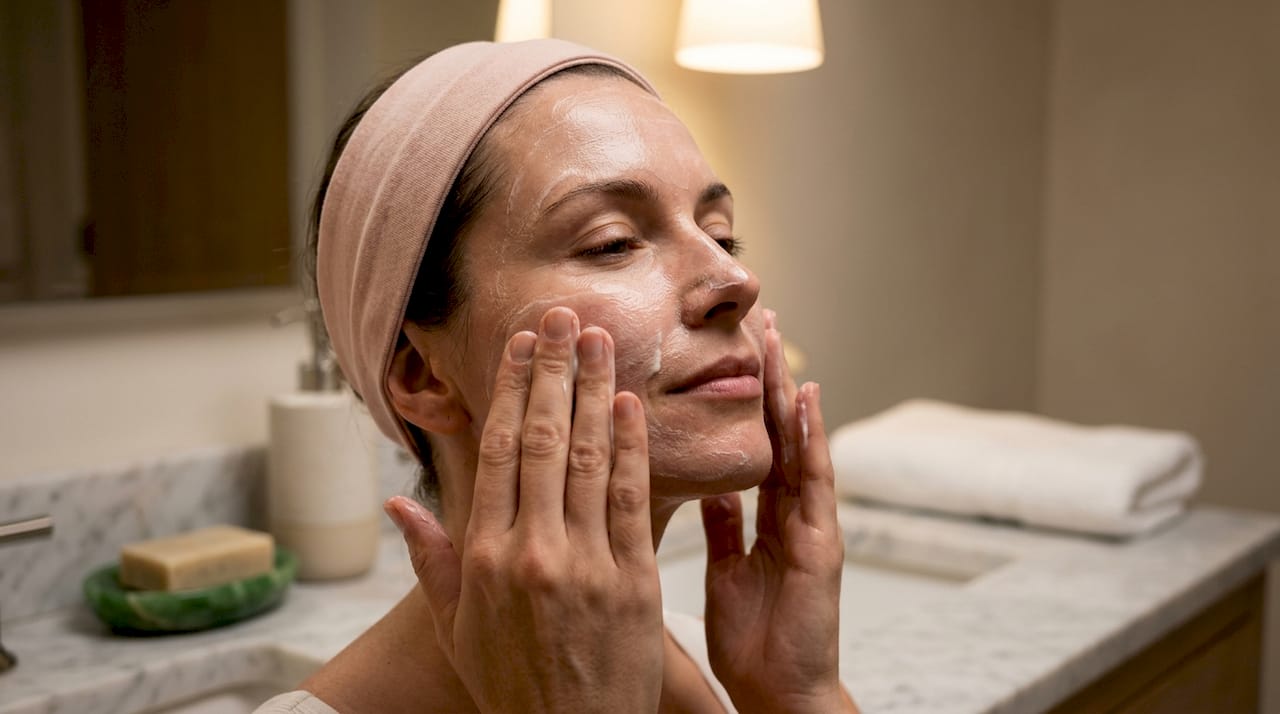
Step 2: Hydrating mist or toner. Apply a hydrating mist or alcohol-free toner immediately after cleansing while skin is still damp. Products with hyaluronic acid or rose water, like Mario Badescu Facial Spray, prep the skin to absorb the next layer more effectively.
Step 3: Serum with humectants. Serums with hyaluronic acid and glycerin draw water into the skin’s upper layers. Apply a few drops to damp skin and press gently rather than rubbing, which reduces friction on a compromised barrier.
Step 4: Moisturizer within 60 seconds. Apply moisturizer on damp skin within 60 seconds of your serum or cleansing step. This timing locks in the water already present on the skin’s surface. Waiting until skin is fully dry reduces absorption and sealing efficiency.
Step 5: SPF 30+ sunscreen (morning only). Broad-spectrum SPF 30+ is the final morning step. UV exposure degrades the skin barrier, which accelerates moisture loss throughout the day. Sunscreen is not optional in a hydration routine. It is structural protection.
Optional: Overnight hydration mask. Two to three nights per week, swap your regular moisturizer for a sleeping mask with shea butter, ceramides, or squalane. Laneige Water Sleeping Mask and Tatcha Water Cream are well-regarded options that work during the skin’s natural overnight repair cycle.
Pro Tip: If your skin still feels tight after moisturizer, you are likely skipping the occlusive seal. Add a thin layer of a product containing petrolatum or dimethicone over your moisturizer at night.
2. Which key ingredients must be in your hydration products
Understanding ingredient categories is what separates a routine that works from one that just feels like it works. Humectants, emollients, and occlusives each perform a distinct function, and combining all three outperforms any single-ingredient strategy.
| Ingredient class | Function | Examples |
|---|---|---|
| Humectants | Draw water into the skin | Hyaluronic acid, glycerin, aloe vera |
| Emollients | Smooth and soften skin texture | Squalane, shea butter, jojoba oil |
| Occlusives | Seal moisture and prevent evaporation | Petrolatum, dimethicone, beeswax |
| Barrier lipids | Reinforce the skin’s protective layer | Ceramides, fatty acids, cholesterol |
Humectants attract water to the skin’s surface, but they do not hold it there. Occlusives layered on top prevent that water from evaporating, which is why applying hyaluronic acid without a sealing layer often leaves skin feeling drier after an hour. This is the most common hydration mistake in otherwise well-intentioned routines.
Combining ingredient classes with ceramides for long-term barrier support produces better results than rotating single hero ingredients. Ceramides, which are lipids naturally found in the skin, help the barrier retain water over time rather than just temporarily plumping the surface. Products like CeraVe Moisturizing Cream and Repêchage Hydra Dew Pure Moisturizer combine multiple classes in a single formula.
Pro Tip: For skin that is dehydrated but not dry, prioritize humectants and emollients over heavy oils. Heavy occlusives on oily or acne-prone skin can clog pores. Use a lightweight gel moisturizer with hyaluronic acid and niacinamide instead.
For those with sensitive skin hydration needs, a simplified ingredient list with fewer actives reduces the risk of irritation while still delivering barrier support.
3. How to adjust your checklist for environment and seasons
Your skin does not experience the same conditions year-round, and a static routine produces inconsistent results. Cold, dry air pulls moisture from the skin faster than warm, humid air. Air conditioning and central heating both reduce indoor humidity, creating conditions similar to a dry winter day regardless of the season outside.
Seasonal adjustments to your hydration routine tips include:
- Winter and cold climates: Switch from lightweight gel moisturizers to cream or balm textures with higher occlusive content. Add a ceramide-rich barrier cream as the final step at night. Reduce harsh actives like retinoids and exfoliating acids during barrier-depleted periods and increase occlusive support instead.
- Summer and humid climates: Lighter gel formulas with hyaluronic acid and niacinamide work better in humidity. Heavy creams can feel suffocating and may contribute to breakouts in warm weather.
- Air-conditioned or heated indoor spaces: Use a humidifier to maintain indoor moisture levels. A room humidity of 40 to 60 percent reduces transepidermal water loss, which is the passive evaporation of water through the skin.
- Traveling by air: Airplane cabin humidity drops below 20 percent. Apply a hydrating serum and a heavier moisturizer before boarding, and carry a facial mist for reapplication during long flights.
For a deeper look at winter skin adjustments, Vitacleanhq covers eight specific steps for protecting skin in cold, dry conditions.
4. What lifestyle habits support long-term skin hydration
Topical products address the surface, but lasting hydration depends on what happens internally and behaviorally. Internal hydration through water intake and water-rich foods contributes directly to skin moisture and elasticity. Cucumbers, watermelon, celery, and oranges are among the highest water-content foods and make a measurable difference when eaten consistently.
Key lifestyle habits for your skin moisture guide:
- Drink water consistently throughout the day. Spacing intake across waking hours maintains steady hydration levels better than drinking large amounts at once.
- Avoid long, hot showers. Hot water strips the skin’s natural oils faster than warm water. Keep showers under 10 minutes and use lukewarm water to preserve the lipid barrier.
- Exfoliate gently and infrequently. Dead skin cell buildup blocks moisturizer absorption. Use a gentle chemical exfoliant like lactic acid once or twice per week. Over-exfoliation is a direct cause of barrier damage and dehydration.
- Prioritize sleep. Skin repairs its barrier during sleep. Chronic sleep deprivation reduces the skin’s ability to recover from daily moisture loss.
- Manage stress actively. Cortisol, the primary stress hormone, degrades collagen and weakens the skin barrier. Practices like consistent sleep schedules, exercise, and reduced screen time before bed lower baseline cortisol.
- Check your shower water quality. Chlorine and hard water minerals in unfiltered tap water strip the skin’s natural oils during every shower. This is a daily source of barrier damage that most people never address. Vitacleanhq’s evidence-backed shower tips explain how water quality directly affects skin moisture balance.
Applying moisturizer immediately after a maximized moisturizing routine locks in the hydration gained from a properly timed shower, making the two habits work together rather than independently.
Key takeaways
Lasting skin hydration requires layering humectants, emollients, and occlusives in the right sequence, timed within 60 seconds of cleansing, and supported by consistent lifestyle and environmental habits.
| Point | Details |
|---|---|
| Classify before you treat | Identify whether skin is dry or dehydrated before selecting products. |
| Layer all three ingredient classes | Humectants, emollients, and occlusives work together; none works well alone. |
| Time your moisturizer | Apply within 60 seconds on damp skin to seal in surface moisture effectively. |
| Adjust for environment | Switch to heavier occlusives in cold or dry air; use a humidifier indoors. |
| Address shower water quality | Chlorine in unfiltered tap water strips the barrier at the start of every routine. |
Why most hydration routines fail before they start
I have reviewed hundreds of skincare routines over the years, and the single most common failure point is not the products. It is the sequence and the sealing step. People invest in high-quality hyaluronic acid serums and then apply them to completely dry skin, skip the occlusive layer, and wonder why their skin still feels tight by midday.
The second most overlooked factor is the shower itself. Every routine starts in the shower, and if the water stripping your barrier is the first thing your skin encounters each day, no moisturizer can fully compensate. I started paying attention to shower water quality after noticing that clients with identical product routines had dramatically different results depending on where they lived. Hard water and chlorinated municipal water are not minor variables. They are daily barrier damage that compounds over time.
My honest recommendation: build your checklist from the inside out. Start with water intake and shower quality, then layer your topical routine on top. Consistency in a simple routine beats occasional intensive care every time. A ceramide moisturizer applied every single morning outperforms a luxury overnight mask used twice a month. And if your routine is not working, check what you are doing in the shower before you change your products.
— Sara
How Vitacleanhq supports your hydration routine
Every skin hydration routine starts in the shower, and the quality of that water determines how much work your moisturizer has to do afterward. Chlorine and hard water minerals strip the skin’s natural oils during cleansing, creating a barrier deficit before any serum or cream is applied. Vitacleanhq’s Vitamin C shower filter shots neutralize chlorine and reduce impurities at the source, so your skin retains more of its natural moisture from the first rinse. Pairing filtered shower water with the layered routine above gives your products a clean, intact barrier to work with. That is the difference between maintaining hydration and constantly trying to recover it.
FAQ
What is a skin hydration checklist?
A skin hydration checklist is a structured daily routine that combines a gentle cleanser, hydrating serum, moisturizer applied on damp skin, and sunscreen, supported by ingredient layering and lifestyle habits. It distinguishes between dry and dehydrated skin to guide product selection.
How do humectants and occlusives work together?
Humectants like hyaluronic acid draw water to the skin’s surface, while occlusives like petrolatum seal that moisture in place. Using humectants without an occlusive layer often results in moisture evaporating within an hour.
How often should I adjust my hydration routine?
Adjust your routine seasonally and whenever your environment changes significantly. Switch to heavier, occlusive-rich formulas in cold or dry air, and use lighter gel textures in warm, humid conditions.
Does shower water affect skin hydration?
Chlorinated and hard tap water strip the skin’s natural lipid barrier during every shower, creating daily moisture loss that topical products must compensate for. Filtering shower water reduces this barrier damage at the source.
What are the best moisturizers for skin hydration?
The best moisturizers for skin combine all three ingredient classes: a humectant like glycerin, an emollient like squalane or shea butter, and an occlusive like petrolatum or dimethicone. CeraVe Moisturizing Cream and Repêchage Hydra Dew Pure Moisturizer are strong examples that also include ceramides for barrier support.