
How Filters Remove Heavy Metals from Your Water
TL;DR:
- Filtration removes heavy metals from water via size exclusion, chemical adsorption, and ion exchange, often combining multiple mechanisms for effective removal. The efficiency depends on the metal’s chemical form, water chemistry, and certified system performance, making testing essential before choosing a filter. Whole-house and point-of-use systems differ in target contaminants, maintenance, and suitability, with activated carbon, KDF media, and reverse osmosis providing tailored solutions for specific metal types.
Filtration removes heavy metals from water through three core mechanisms: physical size exclusion, chemical adsorption, and ion exchange. These processes target contaminants like lead, arsenic, copper, and mercury that standard municipal treatment leaves behind. Technologies including reverse osmosis, activated carbon, KDF media, and ion exchange resins each address different metals with varying degrees of effectiveness. Understanding how filters remove heavy metals helps you choose a system that actually works for your specific water supply, not just one with persuasive marketing copy.
How do filters remove heavy metals from water?
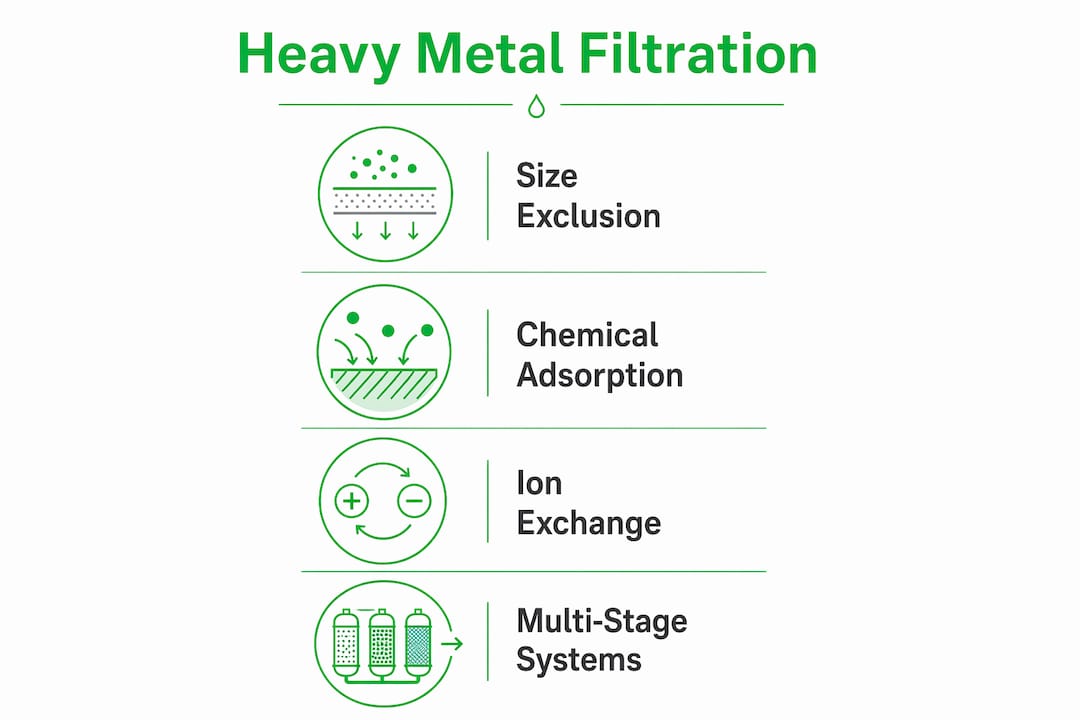
Heavy metal filtration is the technical term for the process of separating dissolved or particulate metal ions from water using physical barriers, chemical reactions, or ionic substitution. Each mechanism works differently, and the best systems combine more than one.
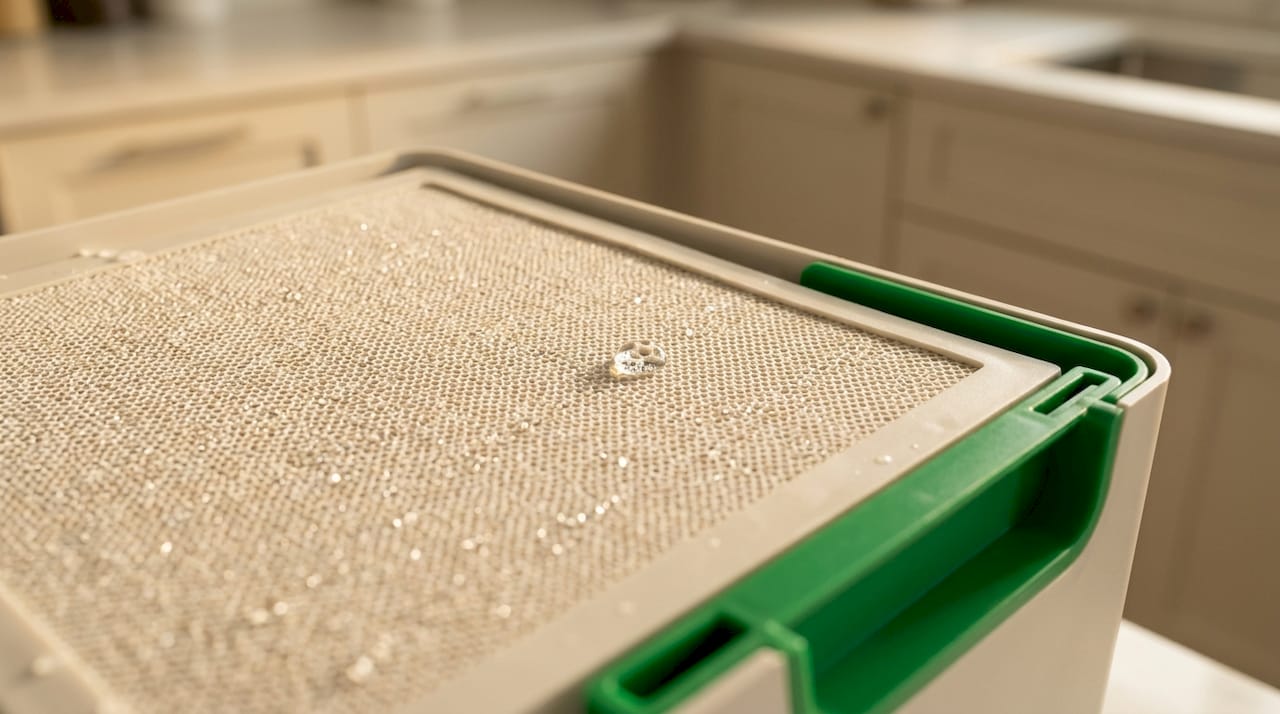
Physical size exclusion is the most straightforward method. Membranes with microscopic pores block metal ions based on size. The hierarchy runs from microfiltration (MF) at the largest pore size down through ultrafiltration (UF), nanofiltration (NF), and reverse osmosis (RO) at the smallest. Reverse osmosis removes up to 99% of dissolved heavy metals using a semipermeable membrane with pores around 0.0001 micrometers. That level of precision catches copper, lead, cadmium, and arsenic ions that pass right through coarser filters.
Chemical adsorption works differently. Activated carbon attracts contaminants to its surface through van der Waals forces, trapping them in its porous structure. Activated carbon reduces some heavy metals like lead in certified filter designs, but performance varies significantly and is not universal. Carbon works best as one stage in a multi-stage system rather than a standalone solution for metals.
Ion exchange takes a more targeted approach. Specialized resins carry charged sites that attract heavy metal ions and release safer ions in their place. Ion exchange targets heavy metals by swapping harmful ions like lead for sodium or hydrogen. The catch is that resin effectiveness depends entirely on matching the resin type to the specific contaminant and the water chemistry of your supply.
Multi-stage systems combine all three mechanisms. A typical residential RO setup runs water through a sediment prefilter, then an activated carbon stage, then the RO membrane, and finally a post-carbon polishing filter. Each stage handles a different class of contaminants, and together they deliver far more reliable heavy metal removal than any single medium alone.
Pro Tip: Always replace sediment and carbon prefilters on schedule. Skipping expired pre-filters in RO systems sharply reduces heavy metal removal reliability because fouled membranes lose their rejection capacity fast.
Does the type of heavy metal change how well filters work?
The chemical form of a metal matters as much as the filter type. This is the detail most product descriptions skip entirely, and it directly affects whether your filter actually removes what you think it does.
Arsenic is the clearest example. Arsenic removal efficiency depends on chemical form: RO and electrodialysis remove As(V) far more effectively than As(III), which means water containing the trivalent form requires a pre-oxidation step before filtration. Without that step, a certified RO system can still underperform on arsenic. The same principle applies to iron and manganese, which shift between oxidation states depending on pH and dissolved oxygen levels.
Dissolved versus particulate metal forms also change the equation. Particulate lead from corroded pipes can be caught by a sediment filter or even a high-quality carbon block. Dissolved lead ions require either RO or a certified ion exchange resin. Testing for total metal concentration alone does not tell you which form you are dealing with.
Testing water for the species of heavy metals rather than total concentration helps in selecting the optimal filtration method, as some forms are significantly harder to remove. — Heavy Metal Ion Removal: A Global Review
This is why water testing before buying any filter is not optional. A basic test kit from a hardware store gives you total metal levels. A certified lab test from a service like the EPA’s Safe Drinking Water Hotline network gives you speciation data, meaning the actual chemical forms present. That data determines whether you need pre-oxidation, which resin type to select, and whether RO alone is sufficient.
Certification standards exist precisely because of this complexity. NSF/ANSI/CAN 61-2025 certification evaluates health effects and contaminant leaching of drinking water system components, providing objective performance data rather than manufacturer claims. Filters certified under NSF/ANSI 53 are specifically tested for lead reduction, making that certification the most reliable indicator for consumers targeting lead in particular.
Whole-house vs. point-of-use: which system removes more metals?
The right system depends on what you need to protect. Drinking water, bathing water, and appliance water each have different risk profiles, and the best filters for metal removal in one context may be overkill or insufficient in another.
| System type | Primary mechanism | Metals targeted | Best use case | Maintenance |
|---|---|---|---|---|
| Whole-house multi-stage | Sediment + KDF + carbon | Lead, mercury, iron, copper | All household water | Filter changes every 3-6 months |
| Under-sink RO | Membrane + pre/post carbon | Lead, arsenic, cadmium, copper | Drinking and cooking water | Annual membrane, quarterly prefilters |
| Shower filter (carbon/KDF) | Redox + adsorption | Lead, mercury, chlorine | Bathing water | Cartridge every 3-6 months |
| Countertop pitcher | Carbon block | Lead (certified designs only) | Drinking water, low volume | Weekly cartridge monitoring |
Whole-house systems remove heavy metals effectively when fitted with appropriate media like KDF, activated carbon, or RO membranes, but no single universal filter exists. Multi-stage design is almost always necessary for comprehensive removal across all metal types.
KDF media are particularly effective in whole-house filters for reducing lead, mercury, and iron through redox reactions. KDF works by converting dissolved metal ions into insoluble forms that precipitate out of the water, a fundamentally different process from adsorption or size exclusion. Combined with carbon and sediment stages, KDF-based whole-house systems handle a broad range of contaminants without requiring the high water pressure that RO demands.
Point-of-use RO systems under the sink remain the gold standard for drinking water. Typical residential RO systems include sediment and carbon prefilters to protect the membrane, improving reliability and lifespan. The trade-off is water waste: most residential RO units discharge two to four gallons of reject water for every gallon of filtered output.
For bathing water specifically, the concern shifts from ingestion to skin and scalp absorption. Shower filters using KDF and vitamin C media reduce dissolved metals and chlorine that contact your skin directly. You can read more about shower filter skin benefits and how metal reduction in bathing water supports healthier skin and hair over time.
What practical steps help you choose and maintain the right filter?
Choosing a filter without testing your water first is like buying prescription glasses without an eye exam. The steps below apply whether you are selecting a whole-house system or a single shower filter.
- Test your water. Order a certified lab test that identifies metal species, not just total concentration. This determines which filtration mechanisms you actually need.
- Match the filter to the contaminant. Lead in drinking water calls for NSF/ANSI 53 certified RO or carbon block. Arsenic As(III) requires pre-oxidation plus RO. Mercury responds well to KDF and activated carbon combinations.
- Verify certification numbers. Certified testing standards like NSF/ANSI/CAN 61-2025 provide objective measures of health-related contaminant reduction. Look for the specific certification number and the list of tested contaminants on the product, not just a logo.
- Plan your maintenance schedule. Cartridge replacement intervals are not suggestions. An expired carbon block or sediment prefilter stops protecting the downstream membrane and can actually release trapped contaminants back into the water.
- Consider pre-treatment needs. If your water contains arsenic, iron, or manganese in reduced oxidation states, add an oxidation step before the main filter. This is often as simple as an aeration stage or a small oxidizing media canister.
Pro Tip: Install a total dissolved solids (TDS) meter on the outlet of your RO system. A sudden rise in TDS readings is the earliest warning that your membrane is failing and heavy metal rejection is dropping, often weeks before a scheduled replacement date.
For shower-specific filtration, look for home water filtration options that combine KDF media with vitamin C to address both metals and chlorine in a single cartridge. This matters most if you have sensitive skin or scalp conditions that react to mineral-heavy water.
Key takeaways
Effective heavy metal filtration requires matching the right mechanism to the specific metal’s chemical form, then maintaining the system consistently to preserve that performance.
| Point | Details |
|---|---|
| RO is the most effective method | Reverse osmosis removes up to 99% of dissolved metals including lead, arsenic, and cadmium. |
| Chemical form determines filter choice | Arsenic As(III) requires pre-oxidation before filtration; total concentration tests alone are insufficient. |
| Multi-stage systems outperform single media | Combining sediment, carbon, KDF, and RO stages covers a broader range of metal types and forms. |
| Certification is non-negotiable | NSF/ANSI 53 and NSF/ANSI/CAN 61-2025 are the standards that verify actual metal reduction performance. |
| Maintenance preserves removal efficiency | Expired prefilters and membranes reduce heavy metal rejection and can reintroduce contaminants. |
What I’ve learned after years of watching filtration claims fall apart
I’ve reviewed enough filter marketing to recognize a pattern: the broader the claim, the thinner the evidence. “Removes heavy metals” printed on a box tells you almost nothing. It does not specify which metals, at what concentrations, in what chemical form, or under what water chemistry conditions. That vagueness is not accidental.
The most reliable systems I’ve seen are the ones built around a specific water test result. A household with arsenic in a reduced oxidation state needs a fundamentally different setup than one with particulate lead from aging pipes. Treating both with the same off-the-shelf carbon pitcher is a false sense of security.
What genuinely impresses me about 2026 filtration technology is the progress in adsorptive media. Iron-based granular materials and modified zeolites now target arsenic and fluoride at concentrations that activated carbon cannot touch. Electrically enhanced membrane systems are moving from industrial to residential scale. These are real advances, not marketing language.
My practical advice: spend $50 on a certified lab water test before spending $500 on a filter. The test result tells you exactly which certification numbers to look for, which mechanisms you need, and whether pre-treatment is required. That one step eliminates most of the guesswork and most of the wasted money.
If your concern extends to bathing water, do not assume drinking water filtration covers you. Shower water contacts your skin and scalp for minutes at a time. Metals and chlorine in that water affect sensitive skin and scalp conditions in ways that are easy to overlook until you switch to filtered water and notice the difference.
— Sara
How Vitacleanhq addresses heavy metals in your shower water
Shower water is not just a comfort issue. Dissolved metals and chlorine in unfiltered tap water contact your skin and scalp every day, and that exposure adds up. Vitacleanhq’s filtration systems are designed specifically for bathing water quality, combining KDF media and vitamin C technology to reduce heavy metals, chlorine, and mineral buildup in a single cartridge.
The Vitamin C shower filter shots are engineered for easy replacement with no tools required, making consistent maintenance realistic rather than aspirational. Both handheld and wall-mounted options fit standard connections and install in minutes. For anyone dealing with dry skin, scalp irritation, or dull hair linked to hard or metal-heavy water, Vitacleanhq’s shower filters offer a targeted, maintenance-friendly solution built around the same filtration science covered in this article.
FAQ
How do filters remove heavy metals from drinking water?
Filters remove heavy metals through physical size exclusion (reverse osmosis membranes), chemical adsorption (activated carbon), and ion exchange resins that swap harmful metal ions for safer ones. Most effective systems combine two or more of these mechanisms in sequence.
Do all water filters eliminate heavy metals?
No. Standard pitcher filters with basic carbon media do not reliably remove all heavy metals. Only filters certified to NSF/ANSI 53 or tested under NSF/ANSI/CAN 61-2025 have verified performance for specific metal reduction.
What is the best filter for lead removal?
Reverse osmosis systems and NSF/ANSI 53 certified carbon block filters are the most effective options for lead reduction in drinking water. RO removes up to 99% of dissolved lead ions at the point of use.
Does water chemistry affect heavy metal filtration?
Yes. pH, dissolved oxygen, and the oxidation state of the metal all influence how well a filter performs. Arsenic As(III), for example, requires pre-oxidation to As(V) before RO or electrodialysis can remove it effectively.
Can shower filters reduce heavy metals in bathing water?
Yes. Shower filters using KDF media and vitamin C reduce dissolved metals like lead and mercury through redox reactions and adsorption. This matters for skin and scalp health, since bathing water contacts your body directly for extended periods.