
Showers & Skin Hydration: How Filtration Helps
TL;DR:
- Hot water and long showers damage the skin’s barrier, increasing dryness and irritation.
- Chlorine in tap water disrupts skin oils and can worsen skin conditions like eczema.
- Using a vitamin C shower filter and appropriate skincare routines can significantly improve skin hydration.
Most people step out of the shower expecting softer, refreshed skin. But if your skin feels tight, itchy, or dry minutes after toweling off, your shower routine may be working against you. The temperature of your water, how long you stay in, and the chemicals flowing through your pipes all shape how hydrated your skin actually is. Understanding these factors, especially the role of chlorine and how vitamin C filtration counters it, gives you real control over your skin health every single day.
Table of Contents
- How showers impact your skin barrier and hydration
- The effects of water temperature and shower length on hydration
- Chlorine: The hidden culprit behind dry skin after showers
- Vitamin C filtration: Can shower filters really help skin hydration?
- Our take: What most people get wrong about showers and skin
- Take your skin hydration to the next level
- Frequently asked questions
Key Takeaways
| Point | Details |
|---|---|
| Short, lukewarm showers are best | Limiting time and heat helps preserve your skin’s moisture barrier. |
| Chlorine damages skin hydration | Unfiltered tap water can strip oils and lead to dryness, especially in sensitive skin. |
| Vitamin C filtration protects your skin | Shower filters neutralize chlorine and support a healthier, more hydrated barrier. |
| Moisturize promptly after showering | Applying lotion within minutes of drying off maximizes long-term hydration. |
How showers impact your skin barrier and hydration
Your skin barrier is a thin but powerful shield made of lipids, proteins, and natural oils. It keeps moisture in and irritants out. When it’s intact, your skin feels soft and balanced. When it’s compromised, water escapes faster than your body can replace it, a process called transepidermal water loss, or TEWL.
Showers are one of the most common ways this barrier gets disrupted. Water itself, especially hot water, dissolves the natural oils that hold your barrier together. Hot showers strip sebum from the skin, disrupting the moisture barrier and increasing TEWL, which leads to dryness, irritation, and worsened conditions like eczema. This isn’t a minor inconvenience. For people with sensitive or aging skin, a single hot shower can trigger hours of discomfort.
The people most affected are those with eczema, psoriasis, rosacea, or naturally dry skin types. Aging skin is also more vulnerable because sebum production slows over time, making the barrier thinner and easier to damage. Even if you don’t have a diagnosed condition, repeated barrier disruption adds up over weeks and months.
Knowing your winter shower tips becomes especially important in colder months when indoor heating already dries the air and stresses your skin further.
| Shower factor | Effect on skin hydration |
|---|---|
| Hot water (above 105°F) | Strips oils, increases TEWL, causes dryness |
| Long duration (15+ minutes) | Prolonged barrier exposure, greater moisture loss |
| Hard/chlorinated water | Disrupts acid mantle, irritates skin surface |
| Lukewarm water (98-100°F) | Preserves oils, supports barrier integrity |
| Short shower (5-10 minutes) | Minimizes cumulative barrier damage |
Your skin barrier doesn’t care how clean you feel. It responds to what you expose it to, and hot, chlorinated water is one of the most consistent stressors it faces daily.
The effects of water temperature and shower length on hydration
Now that you understand how the barrier works, let’s explore how adjusting your shower’s heat and timing can safeguard your skin’s moisture.
Water temperature is one of the easiest variables to control, and it makes a measurable difference. Dermatologists recommend 5-10 minute showers with lukewarm water at 98-100°F to minimize barrier damage, and moisturizing within 3-5 minutes post-shower can reduce TEWL by up to 30%. That’s a significant improvement from a simple timing change.
Hot showers feel relaxing, but they work against your skin in two ways. First, the heat dissolves the lipid layer faster. Second, the longer you stay in, the more cumulative damage occurs. A 20-minute hot shower does far more harm than a 7-minute lukewarm one, even if both feel equally clean.
Timing your moisturizer matters just as much as temperature. After you shower, your skin surface holds a small amount of water. Applying lotion or cream while your skin is still slightly damp traps that moisture before it evaporates. Wait too long and that window closes.
Best practices for a skin-friendly shower routine:
- Keep water temperature between 98-100°F (lukewarm, not hot)
- Limit shower time to 5-10 minutes
- Pat skin dry gently with a soft towel instead of rubbing
- Apply moisturizer within 3-5 minutes of stepping out
- Use fragrance-free, barrier-supporting body lotions or creams
- Consider post-shower hydration products with ceramides or hyaluronic acid
Pro Tip: Apply your moisturizer while your skin is still slightly damp, not soaking wet, not fully dry. That brief window is when your skin absorbs and retains the most hydration.
Chlorine: The hidden culprit behind dry skin after showers
Outside of heat and timing, the water’s chemistry plays a major role in how hydrated your skin feels after a rinse.
Most municipal tap water is treated with chlorine to kill bacteria and pathogens. That’s good for drinking safety, but not great for your skin. Chlorine acts as an oxidizer, stripping skin oils, disrupting the acid mantle, and increasing dryness and irritation, particularly for sensitive or aging skin. The acid mantle is a thin, slightly acidic film on your skin’s surface that protects against bacteria and locks in moisture. Chlorine raises the skin’s pH, throwing this protective layer off balance.

For most healthy adults, the effects are subtle but cumulative. For children, elderly individuals, or anyone with eczema or psoriasis, the impact is more immediate. Flare-ups, itching, and redness can follow a single chlorine-heavy shower.
Here’s what you can do to reduce chlorine’s impact on your skin:
- Install a shower filter designed to remove or neutralize chlorine
- Shorten your shower time to limit total chlorine exposure
- Use a gentle, pH-balanced cleanser instead of harsh soaps
- Apply a barrier-repair moisturizer immediately after showering
- Look into a shower filter for dry skin to address the root cause
If you’ve tried everything and still struggle with post-shower dryness, chlorine exposure is worth investigating. People with diagnosed conditions like eczema or psoriasis especially benefit from exploring shower filters for sensitive skin as part of a broader skin management plan.
Vitamin C filtration: Can shower filters really help skin hydration?
Once you understand the problem with chlorine, the conversation naturally turns to filtration and whether it really works.
Vitamin C (ascorbic acid) neutralizes chlorine through a straightforward chemical reaction. When chlorinated water passes through a vitamin C filter, the ascorbic acid binds to the chlorine molecules and renders them inactive before the water ever touches your skin. It’s fast, effective, and doesn’t require electricity or complex installation.
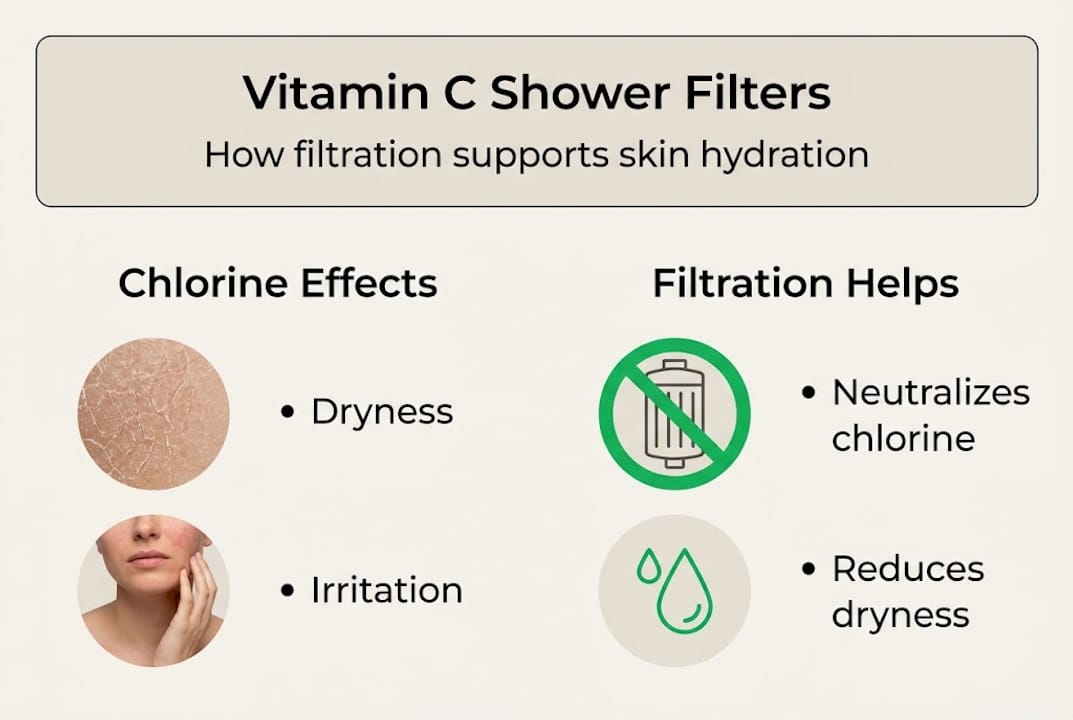
Chlorinated water links to increased TEWL and skin barrier dysfunction, and removing chlorine reduces dryness, irritation, and eczema/psoriasis flares. Activated carbon and vitamin C filters are both recommended approaches. However, no robust clinical trials directly prove vitamin C filters hydrate skin beyond dechlorination, but the mechanism of chlorine removal combined with user and dermatologist reports strongly supports improved hydration through a preserved barrier.
Understanding vitamin C shower filter benefits helps you set realistic expectations. Filters aren’t magic. They address one specific stressor, and that’s enough to make a real difference for many people.
| Filter type | Chlorine removal | Skin hydration support | Best for |
|---|---|---|---|
| Vitamin C filter | Excellent | Strong (via barrier preservation) | Sensitive, dry, eczema-prone skin |
| Activated carbon | Good | Moderate | General dry skin concerns |
| No filter | None | Minimal | N/A |
Signs a shower filter might benefit your skin:
- Skin feels tight or itchy immediately after showering
- You notice more dryness in areas exposed to shower water
- Existing skin conditions flare after bathing
- Your hair feels brittle or your scalp gets irritated
- You live in an area with heavily chlorinated municipal water
Exploring antioxidant shower filters and understanding how shower filter cartridges work can help you choose the right option for your routine.
Pro Tip: Don’t expect a filter to replace your post-shower moisturizer. The best results come from combining dechlorinated water with a good barrier-repair lotion applied within minutes of stepping out.
Our take: What most people get wrong about showers and skin
Here’s the uncomfortable truth: most people optimize their shower for comfort and convenience, not for skin health. Hot water feels good. Long showers feel thorough. And somewhere along the way, we’ve equated more washing with better care.
The medical and beauty industries have spent decades selling us creams, serums, and treatments for dry skin. What gets far less attention is the daily ritual that may be causing the problem in the first place. Your shower is not neutral. It’s either working for your skin or against it.
We’ve seen real-world shower filter results that surprise people who assumed their dry skin was just genetic or seasonal. Simple changes, turning down the temperature, cutting shower time in half, adding a vitamin C filter, and moisturizing immediately after, often outperform expensive skincare products because they address the root cause rather than the symptom. You don’t need a 12-step routine. You need a smarter 7-minute shower.
Take your skin hydration to the next level
If your skin has felt persistently dry, irritated, or dull despite trying different products, your shower water itself may be the missing piece.
Vitaclean makes it straightforward to upgrade your daily shower with targeted filtration solutions. Our Vitamin C Shower Filter Shots neutralize chlorine at the source, while our ceramic filter options provide additional purification for a cleaner, gentler rinse. Whether you’re managing a skin condition or simply want softer, more hydrated skin every day, there’s a solution sized for your routine. Browse our full range of replaceable shower filters and find the fit that works for you.
Frequently asked questions
Does taking longer showers improve skin hydration?
No, longer showers, especially with hot water, actually increase moisture loss and dry out your skin. Dermatologists recommend 5-10 minutes with lukewarm water to protect your barrier.
Can a Vitamin C shower filter fix dry skin?
Vitamin C filters help by removing chlorine that strips your skin’s natural oils, supporting better hydration overall. They work best when paired with a good post-shower moisturizing routine. Activated carbon or Vitamin C filters are both recommended for reducing chlorine-related dryness.
Who benefits most from a shower filter for skin hydration?
People with sensitive, aging, or eczema/psoriasis-prone skin see the biggest improvements after switching to filtered showers. Eczema and psoriasis-prone skin suffers more from chlorine exposure, making filtration especially impactful for these groups.
How soon after showering should I apply moisturizer for best skin hydration?
Apply moisturizer within 3-5 minutes of finishing your shower for maximum hydration retention. Moisturizing within this window can reduce TEWL by up to 30%, making it one of the most effective habits you can build.