
Water Filtration vs Purification: What Your Shower Needs
Water filtration removes physical and chemical impurities, like chlorine, sediment, and some bacteria, by passing water through a physical barrier or chemical media. Water purification goes further, using UV light, reverse osmosis, or sub-micron filtration to eliminate viruses and dissolved contaminants that filters cannot catch. For your shower, filtration is sufficient: the goal is to protect your skin and hair from chlorine and hard water minerals, not sterilizing water to drinking-grade purity.
Here is the core distinction at a glance:
- Water filtration traps particles, chlorine, sediment, and some bacteria using pore sizes of 0.1–0.2 microns. It improves water clarity, odor, and feel.
- Water purification targets viruses and dissolved chemicals through UV treatment, reverse osmosis, or distillation. It meets high purity standards, primarily for drinking water.
- For shower use, filtration addresses the actual problem: chlorine and hardness minerals that strip skin moisture and damage hair protein.
- NSF/ANSI certification is the standard to look for when choosing a shower filter, confirming it removes what the label claims.
Table of Contents
- How does water filtration improve your skin and hair in the shower?
- When do you actually need purification instead of filtration?
- How Vitacleanhq addresses shower water filtration for healthier skin and hair
- What are the real drawbacks of filtration and purification for shower water?
- Filtration vs purification: which actually improves shower water quality more?
- Vitacleanhq makes cleaner shower water simple
- Key takeaways
How does water filtration improve your skin and hair in the shower?
Chlorine in tap water disrupts your skin’s natural oils and breaks down the protein structure in hair, leading to dryness, brittleness, and scalp irritation. Studies cited by the BBC confirm that reducing chlorine exposure through shower filtration supports skin hydration and hair health. Hard water minerals compound the problem by leaving a residue that makes hair feel rough and skin feel tight after washing.
Activated carbon and multi-stage filtration are the two most effective approaches for shower water. Activated carbon adsorbs chlorine and some organic compounds. Multi-stage systems layer sediment pre-filters, carbon media, and sometimes ceramic or KDF media to catch a broader range of impurities. The result is softer water that rinses soap away cleanly, leaving skin less irritated and hair more manageable.
Key filtration benefits for skin and hair:
- Reduces chlorine that dries out skin and weakens hair strands
- Lowers hard water mineral load, reducing scale buildup on hair and scalp
- Improves soap lather and rinse, cutting residue that clogs pores
- Supports the skin’s natural moisture barrier between showers
- Decreases scalp irritation linked to chemical sensitivity
Pro Tip: Replace your shower filter cartridge on schedule. Overdue cartridges can harbor bacterial growth and lose their chlorine-removal capacity, giving you worse water than if you had no filter at all.
When do you actually need purification instead of filtration?
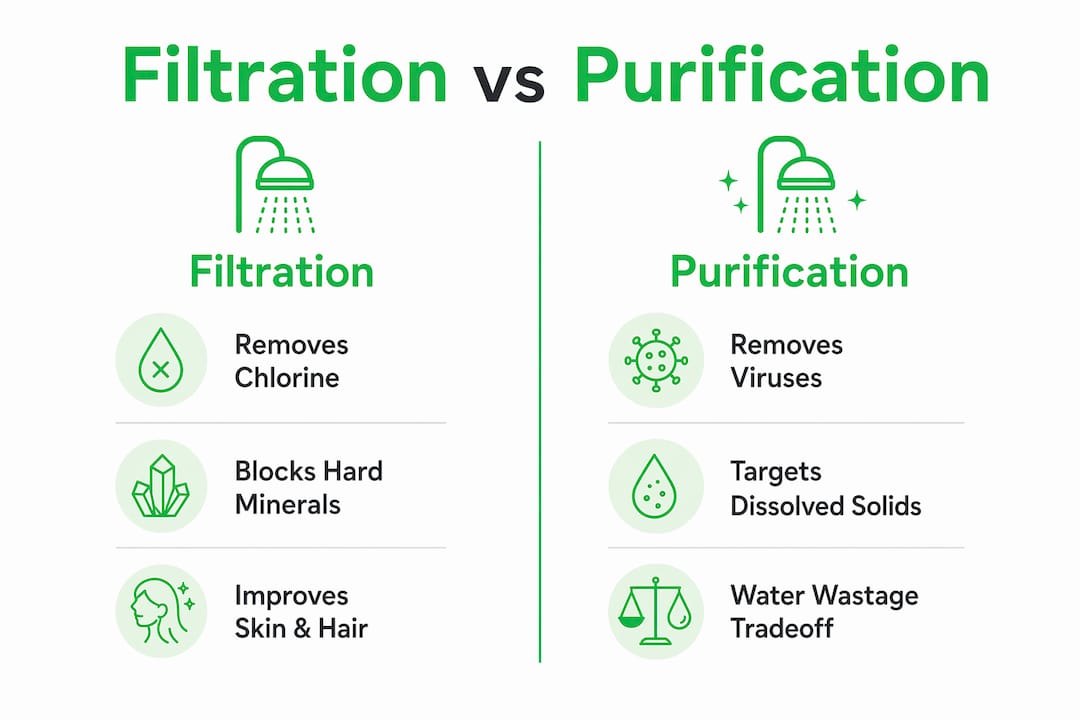
For most American households, purification is not necessary for shower water. Gregory Pierce of UCLA’s Human Right to Water Solutions Lab notes that in over 90% of the US, tap water is safe without advanced treatment. Purification becomes relevant when the water source may carry viruses, which standard filters with 0.1–0.2 micron pores cannot remove.
Purification technologies include UV light, reverse osmosis, chemical treatment, and sub-micron filtration at 0.02 microns. These are installed at drinking water points, not showers, because the cost, complexity, and electricity requirements make whole-home purification impractical for most people.
When purification is the right call versus filtration alone:
- Purification needed: drinking water with confirmed viral or chemical contamination, international travel to areas with compromised water supplies, emergency situations with flooded or unknown water sources
- Filtration sufficient: standard US municipal shower water, removing chlorine and hardness for skin and hair comfort, everyday quality-of-life improvements in regulated water systems
How Vitacleanhq addresses shower water filtration for healthier skin and hair
Vitacleanhq builds its shower filters around two core media: Vitamin C and ceramic filtration. Vitamin C (ascorbic acid) neutralizes chlorine and chloramines on contact, which is faster and more complete than activated carbon alone for shower applications. Ceramic media then catches fine particles and impurities, giving you a two-stage approach in a compact shower head format.
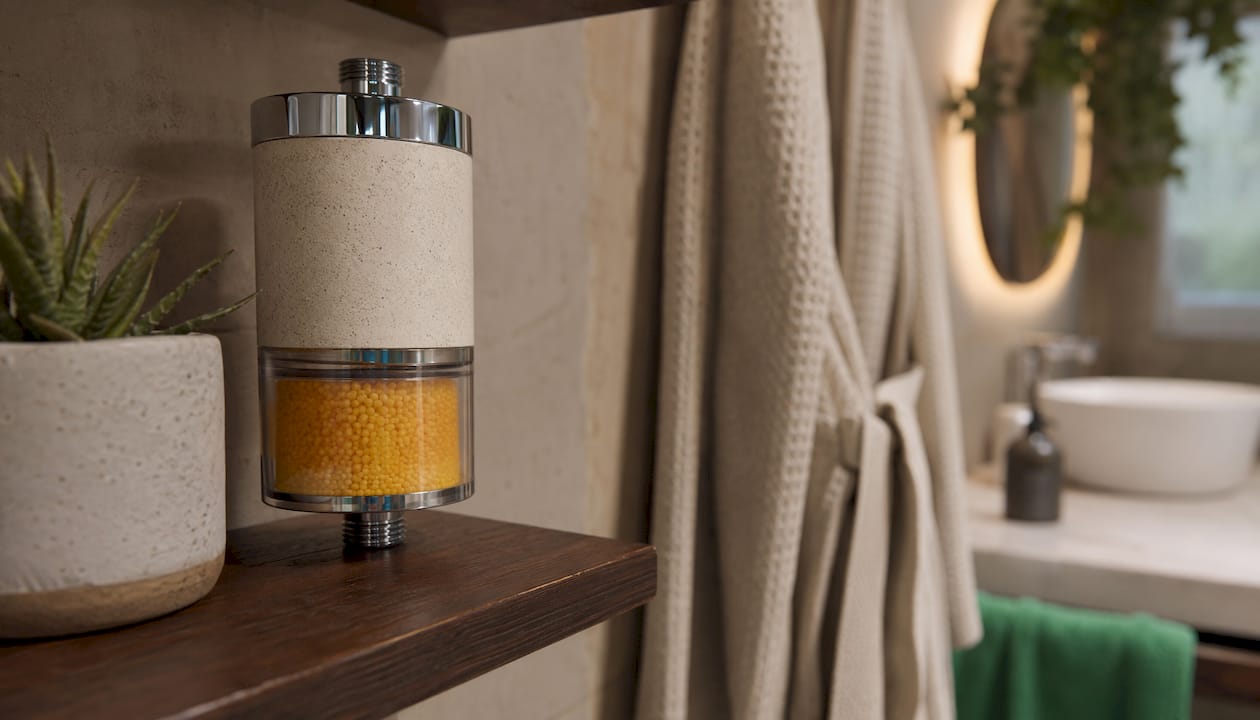
Installation takes minutes with no tools or plumbing knowledge required, which matters for renters and anyone who wants results without a contractor. The subscription-based filter refill plan removes the guesswork from maintenance: replacement cartridges arrive before the old one loses effectiveness, keeping chlorine neutralization consistent.
Vitacleanhq product benefits for skin and hair:
- Vitamin C shots neutralize chlorine and chloramines immediately at the shower head
- Ceramic filters remove fine particles and sediment that irritate skin
- Skin and hair benefits include reduced dryness, less scalp irritation, and improved hair texture
- Easy cartridge swaps maintain performance without professional help
- Subscription refills prevent the bacterial buildup risk of overdue cartridges
Pro Tip: Pair your Vitacleanhq shower filter with a bioactive skincare routine for compounding results. Filtered shower water reduces the baseline irritation load, so active skincare ingredients can work on cleaner, less compromised skin.
What are the real drawbacks of filtration and purification for shower water?
Filtration has genuine limits worth knowing. Standard shower filters do not remove viruses or dissolved chemicals like heavy metals and pesticides. Activated carbon filters also saturate over time, and a cartridge left in place too long can actually breed bacteria, delivering water that is worse than unfiltered tap. The CDC notes that over-filtering can strip beneficial minerals like calcium and magnesium, which support skin and hair health when present in moderate amounts.
Purification systems carry their own trade-offs for shower use. Reverse osmosis wastes water in the filtration process and requires professional installation. UV systems need electricity and clear water to work effectively. Neither is designed for the high flow rates a shower demands, making them impractical and expensive for this application.
The practical takeaway: choose an NSF/ANSI certified shower filter matched to your actual water quality concerns, replace it on schedule, and you get the benefits without the risks.
Filtration vs purification: which actually improves shower water quality more?
For shower water specifically, filtration wins on every practical measure. Purification targets dissolved solids and viruses, which are not the contaminants causing dry skin and damaged hair. Chlorine and hard water minerals are, and filtration handles both.
| Criterion | Filtration | Purification |
|---|---|---|
| Removes chlorine | Yes | Yes |
| Removes hard water minerals | Partially (with KDF or softening media) | Yes (reverse osmosis) |
| Removes viruses | No | Yes |
| Practical for showers | Yes | No |
| Cost and complexity | Low | High |
| Skin and hair benefit | Direct and significant | Indirect, excessive for this use |
Purification is generally reserved for drinking water safety in high-risk conditions. For your daily shower and the skin and hair outcomes that come with it, a well-maintained multi-stage filter does the job cleanly.
Vitacleanhq makes cleaner shower water simple
Chlorine-free shower water is not a luxury upgrade. It is the baseline your skin and hair need to stay hydrated, strong, and irritation-free. Vitacleanhq’s Vitamin C shower filter shots neutralize chlorine on contact, while the ceramic filter line catches fine particles that standard filters miss. No plumber, no complicated setup.
The subscription refill plan keeps your filter performing at full capacity without you having to remember when to order. Browse the full Vitacleanhq collection and upgrade your shower water today.
Key takeaways
Filtration is the right solution for shower water: it removes chlorine and hard water minerals that damage skin and hair, while purification addresses viruses and dissolved contaminants relevant only to drinking water safety.
| Point | Details |
|---|---|
| Filtration vs purification scope | Filtration removes chlorine, sediment, and bacteria; purification also eliminates viruses and dissolved chemicals. |
| Shower water needs filtration | Chlorine and hard water minerals cause skin dryness and hair damage; filtration addresses both directly. |
| Purification is excessive for showers | UV and reverse osmosis systems are impractical for shower flow rates and target contaminants not relevant to skin or hair. |
| Filter maintenance is critical | Overdue cartridges lose effectiveness and can harbor bacteria, negating the benefits of filtration entirely. |
| Vitacleanhq’s approach | Certain media such as Vitamin C and ceramic are used to neutralize chlorine on contact, with subscription refills keeping performance consistent. |