
Multi-stage water filtration: better skin & hair in 2026
TL;DR:
- Multi-stage water filtration removes contaminants better than single-stage systems.
- Filtered water improves skin and hair health by reducing irritants like chlorine and heavy metals.
- Ongoing maintenance ensures long-term health benefits from cleaner, gentler shower water.
Your showerhead might be working against you. Most people invest heavily in serums, conditioners, and scalp treatments without ever questioning the water those products are rinsed off with. Unfiltered tap water carries chlorine, heavy metals, sediment, and other contaminants that strip moisture, irritate skin, and weaken hair over time. Research confirms that better water quality correlates with improved self-assessed health, placing water quality right at the center of any serious wellness routine. Multi-stage filtration systems are designed to tackle this problem at the source, and understanding how they work is the first step toward genuinely healthier skin and hair.
Table of Contents
- What is multi-stage water filtration?
- How multi-stage filtration improves water quality
- Skin and hair health: the overlooked impact of water quality
- Choosing and maintaining your multi-stage system
- Why water filtration is the missing link in beauty and wellness routines
- Explore premium multi-stage filtration solutions
- Frequently asked questions
Key Takeaways
| Point | Details |
|---|---|
| Multiple stages matter | Using several filtration stages is more effective for removing a broad range of contaminants and improving water quality. |
| Direct beauty benefits | Filtered water provides noticeable improvements in skin clarity and hair texture by reducing irritants. |
| Maintenance is essential | Regularly replacing filters keeps water quality high and ensures ongoing health benefits. |
| Evidence supports filtration | Research shows filtered and mineral water correlate with improved self-assessed health compared to untreated water. |
What is multi-stage water filtration?
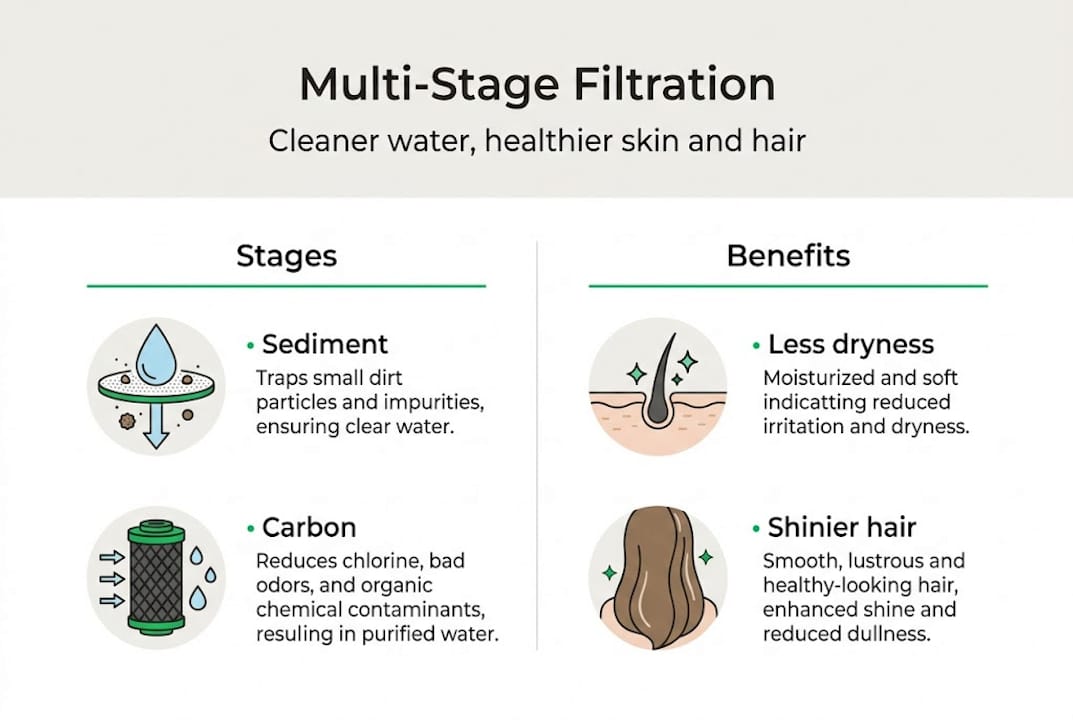
Multi-stage filtration is exactly what it sounds like: water passes through several distinct filter layers before it reaches your skin. Each layer is engineered to remove a specific category of contaminants. A single-stage filter might catch sediment or chlorine, but it leaves everything else untouched. Multi-stage systems stack these layers so that what one stage misses, the next one catches.
Here is a breakdown of the most common stages you will find in quality shower filtration systems:
- Sediment filter: The first line of defense. Captures visible particles like rust, dirt, and sand that travel through aging pipes.
- Activated carbon filter: Absorbs chlorine, chloramines, and volatile organic compounds (VOCs). This is the stage that eliminates that faint chemical smell from tap water.
- Vitamin C stage: Neutralizes any remaining chlorine and chloramines through a chemical reaction. Particularly effective for people with sensitive skin.
- Antibacterial stage: Targets bacteria and microorganisms that survive earlier stages, reducing the risk of scalp and skin infections.
- Ceramic balls: Emit far-infrared energy and negative ions that soften water, improve its structure, and support skin hydration at a cellular level.
Each stage builds on the last. The result is water that is measurably cleaner and noticeably gentler. Studies show that filtered water reduces pollutant burden compared to untreated tap water, which explains why so many people notice visible improvements in their hair and skin benefits within weeks of switching.
Single-stage filters are better than nothing, but they create a false sense of security. If your filter only removes chlorine, you are still showering in water that may contain heavy metals, bacteria, and sediment. Multi-stage systems close those gaps. For anyone serious about filtered water for hair and skin health, a multi-stage approach is not optional. It is the baseline.
How multi-stage filtration improves water quality
With the basics in mind, let’s examine the real impact multi-stage filtration has on your water quality.
Tap water arrives at your home after traveling through miles of pipes, picking up contaminants along the way. Municipalities add chlorine to kill bacteria, which is necessary but not ideal for your skin barrier or scalp microbiome. By the time water reaches your showerhead, it may carry chlorine, chloramines, heavy metals like lead and copper, sediment, and trace pharmaceuticals.
Here is how multi-stage systems compare across key performance areas:
| Water type | Chlorine removal | Heavy metals | Bacteria | Sediment |
|---|---|---|---|---|
| Tap water | None | None | Partial | None |
| Single-stage filter | High | Low | None | Low |
| Multi-stage filter | Very high | High | High | Very high |
The difference is not marginal. Multi-stage filtration is linked to measurably improved health assessments and reduced pollutant intake across multiple studies. For families with children, elderly members, or anyone with compromised skin conditions, this gap matters enormously.
“Water quality is not just a plumbing issue. It is a health issue that shows up on your skin every single day.”
Pro Tip: If your home has older pipes or you live in an area with hard water, prioritize systems that include both a sediment pre-filter and a heavy metal reduction stage. You can check your local water quality report (available from your municipality) to identify which contaminants are most relevant to your household.
For practical home water filtration examples and a step-by-step approach to steps for better skin and hair, the difference between tap and multi-stage filtered water becomes very clear very quickly.
Skin and hair health: the overlooked impact of water quality
Having seen its effect on water quality, now discover how these improvements translate to your skin and hair.

Chlorine is one of the most common skin irritants hiding in plain sight. It disrupts the skin’s natural lipid barrier, the thin layer of oils that keeps moisture in and irritants out. When that barrier is compromised, you get dryness, redness, and increased sensitivity. For people with eczema or acne-prone skin, chlorinated water can actively trigger flare-ups.
Here is what unfiltered water can do to your skin and hair over time:
- Skin dryness and tightness after every shower, even with moisturizer applied immediately after
- Scalp irritation and dandruff caused by chlorine disrupting the scalp’s natural microbiome
- Dull, brittle hair from mineral buildup coating each strand and blocking moisture absorption
- Acne flare-ups linked to bacteria and chemical residues in water contacting pores
- Color-treated hair fading faster because chlorine chemically strips pigment from the hair shaft
Research confirms that filtered water reduces pollutant burden and improves perceived health, which aligns directly with what people report after switching to filtered shower systems. Softer, calmer skin. Less scalp flaking. Hair that holds moisture and color longer.
“The skin is the body’s largest organ. What touches it every day, including shower water, shapes its long-term condition more than most people realize.”
The vitamin C filtered shower benefits go beyond just neutralizing chlorine. Vitamin C is an antioxidant that actively supports skin health at the point of contact. For those dealing with breakouts, a shower filter for acne-prone skin can be a genuinely meaningful addition to a skincare routine, not just a nice-to-have.
The scalp microbiome and filtration connection is one of the more exciting areas of emerging research. A balanced scalp microbiome supports healthy hair growth and reduces inflammation. Chlorinated water throws that balance off. Filtered water helps restore it. And with 2026 filtration trends moving toward more targeted, multi-stage solutions, the technology available to consumers today is more effective than ever.
Choosing and maintaining your multi-stage system
Ready to take action? Here is how to choose and care for your own system.
Selecting the right multi-stage system comes down to three things: your water quality, your specific skin and hair concerns, and how committed you are to ongoing maintenance. Here is a simple process to follow:
- Check your local water report. Most municipalities publish annual water quality reports online. Look for chlorine levels, hardness (measured in grains per gallon), and any flagged contaminants.
- Match stages to your concerns. Hard water? Prioritize a ceramic or mineral stage. Chlorine sensitivity? Make vitamin C your non-negotiable. Older home? Add a sediment pre-filter.
- Choose a system with easy filter replacement. The best filter in the world is useless if you skip replacements because they are complicated or expensive.
- Install it yourself. Most quality shower filters connect directly to your existing showerhead fitting with no tools required. Installation takes under five minutes.
- Set a replacement reminder. Mark your calendar or subscribe to a filter refill plan so you never shower through an expired filter.
Here is a general maintenance schedule to keep your system performing at its best:
| Filter stage | Replacement frequency | Signs it needs changing |
|---|---|---|
| Sediment filter | Every 3 months | Reduced water pressure |
| Carbon filter | Every 3-6 months | Return of chlorine smell |
| Vitamin C cartridge | Every 1-3 months | Skin feels tight again |
| Ceramic balls | Every 6-12 months | Water feels harder |
Pro Tip: Run your shower for 30 seconds after installing a new filter to flush out any loose carbon particles before your first use. This takes seconds and protects your skin from any residual filter material.
Research supports the idea that sustained pollutant reduction from ongoing filtration is what drives long-term health improvements, not a one-time fix. Consistent maintenance is what separates people who see lasting results from those who give up after a few months. For more guidance, explore our resources on healthier hair with filtration and filtration for healthy hair to build a routine that sticks.
Why water filtration is the missing link in beauty and wellness routines
Here is something most beauty guides will never tell you: you can spend hundreds of dollars on premium skincare and still be undermining every product with the water you wash your face in. We see it constantly. People layer on hydrating serums, invest in salon-quality conditioners, and follow elaborate hair-oiling routines, but they never question their shower water.
The wellness industry has trained us to focus on what we put on our bodies. Filtration shifts that focus to what we expose our bodies to, which is a more fundamental question. Reactive skincare treats symptoms. Filtered water addresses a root cause.
Most people only think about water quality after a problem appears: persistent dryness, a stubborn scalp condition, hair that suddenly feels lifeless. Preventive action is smarter and cheaper. A quality multi-stage system costs a fraction of what most people spend on skincare in a year. And unlike a serum that works on the surface, filtered water affects every inch of skin and every strand of hair, every single day.
For a grounded look at how filtration fits into beauty practices, the evidence is consistent: better water quality produces better outcomes, and the people who act on that early are the ones who maintain healthier skin and hair long-term.
Explore premium multi-stage filtration solutions
Understanding how multi-stage filtration works is the first step. The next is finding a system that fits your daily routine without adding friction.
At Vitaclean, we have built our product line around exactly this: premium filtration that is easy to install, simple to maintain, and genuinely effective. Our vitamin C shower filter shots deliver targeted chlorine neutralization with every shower. Our ceramic filters add water-softening mineral benefits that support skin hydration. And our filter refill plan makes maintenance effortless so your system always performs at its best. Your skin and hair deserve water that works with them, not against them.
Frequently asked questions
What are the main stages in multi-stage water filtration?
Most systems feature sediment, carbon, vitamin C, and antibacterial stages, each targeting specific contaminants. Together, these stages remove a wider range of pollutants than any single-stage filter can manage alone.
How does filtered water affect skin and hair?
Filtered water removes chlorine and other irritants that disrupt the skin barrier and scalp microbiome. Research shows filtered water reduces pollutant burden and improves self-assessed health, which translates to less dryness, irritation, and scalp imbalance over time.
How often should filters be replaced in a multi-stage system?
Most filters need replacement every 3 to 6 months depending on usage and local water quality. Ongoing maintenance is what sustains the health benefits rather than delivering a short-term improvement.
Is multi-stage filtration necessary for all homes?
Homes with hard water or older plumbing benefit most, but filtered water provides measurable benefits over untreated tap water for anyone prioritizing healthier skin and hair, regardless of their water source.