
The Role of Hydrogen in Shower Water for Skin and Hair
TL;DR:
- Hydrogen in shower water acts as a topical antioxidant, improving skin and hair health through direct penetration.
- Its nano-bubbles dislodge keratin plugs and expand capillaries, increasing circulation and nutrient delivery.
- Effective benefits require clean water through proper filtration and regular system maintenance.
Hydrogen in shower water is a topical antioxidant that penetrates your skin directly, removes keratin plugs from hair follicles, and promotes capillary blood flow beneath the skin’s surface. These aren’t marketing claims. Published research confirms that hydrogen-rich warm water cleanses keratin-plug-clogged hair pores more effectively than regular tap water and measurably improves local blood circulation. Here’s what that means for your daily shower:
- Antioxidant protection: Hydrogen neutralizes harmful reactive oxygen species (ROS) that damage skin cells and sebum lipids.
- Follicle cleansing: Hydrogen molecules penetrate small skin openings and dislodge keratin plugs that ordinary water leaves behind.
- Circulation boost: Capillary blood flow improves after hydrogen-rich water exposure, enhancing nutrient delivery and warmth retention in the skin.
- Nano-bubble stability: Hydrogen exists in shower water as nano-sized bubbles that resist heat, keeping the antioxidant effect active even at warm shower temperatures.
- Moisture support: Skin moisture increases after hydrogen-rich water bathing, with more stable results appearing after consistent use over several days.
None of this happens automatically with any showerhead. Water quality, filtration, and the right system all shape how much of this benefit you actually get.
Table of Contents
- How hydrogen-rich shower water works on your skin and hair
- Why your baseline shower water quality matters more than you think
- How Vitamin C filtration complements hydrogen’s effects
- Practical tips for maintaining optimal shower water quality
- Key Takeaways
How hydrogen-rich shower water works on your skin and hair
Hydrogen’s topical antioxidant delivery is more direct than oral intake for skin health. When you shower in hydrogen-rich water, dissolved hydrogen passes through your skin’s biomembranes because its molecular size is the smallest of any element. That physical fact alone sets it apart from most skincare ingredients, which sit on the surface.
Once inside the skin, hydrogen selectively scavenges hydroxyl radicals, the most destructive form of ROS, without interfering with beneficial molecules like nitric oxide. This selective action protects skin lipids from peroxidation and shields DNA in skin cells. Electrolytically produced hydrogen water also contains trace platinum nanoparticles from the electrode process, which increase radical-scavenging efficacy beyond what dissolved hydrogen alone provides.
For your scalp specifically, hydrogen molecules disperse through water as nano-bubbles in the 20–290 nm range. These bubbles are small enough to enter hair follicle openings and physically dislodge keratin plugs that accumulate over time. Regular water simply can’t reach those deposits as effectively. The result is a cleaner follicle environment, which matters for both scalp hygiene and hair growth conditions.

Circulation is the other major mechanism. Research using clinical thermography shows that hydrogen-rich water bathing expands subcutaneous capillaries, improving local blood flow and heat retention in the skin after bathing. Better circulation means more efficient nutrient delivery to skin cells and faster removal of cellular waste.
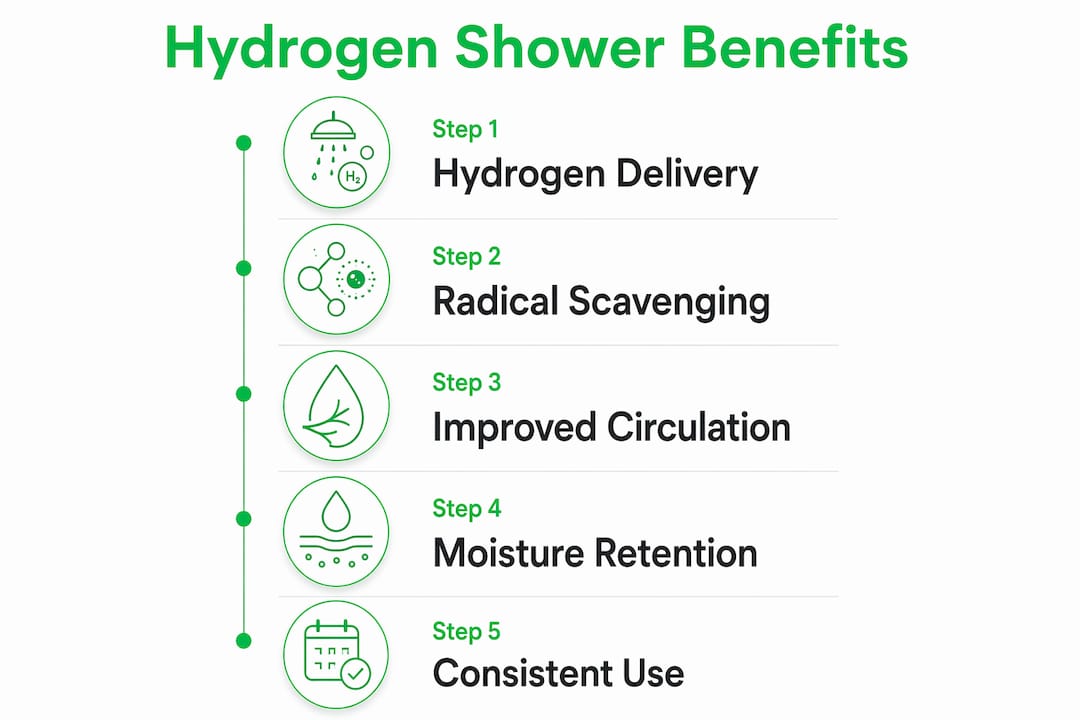
Pro Tip: Consistent exposure matters more than a single session. Research suggests stable skin moisture improvements from hydrogen-rich water bathing appear after at least six days of regular use, so daily showers with a hydrogen-generating system compound over time.
The nano-bubble stability of electrolytically generated hydrogen water is what makes shower applications practical. These bubbles resist boiling and maintain dissolved hydrogen even in warm water at typical shower temperatures, preserving the antioxidant properties throughout your shower.
Why your baseline shower water quality matters more than you think
Hydrogen’s benefits don’t exist in a vacuum. The water delivering them carries its own set of problems, and those problems directly affect your skin and hair before hydrogen ever gets a chance to help.
Shower water quality depends heavily on plumbing age and biofilm accumulation. Older pipes and showerheads harbor biofilms that release opportunistic microbes into the water stream. You can’t see them, but your skin and scalp feel the effects through irritation, dryness, and breakouts.
Common water quality problems that undermine skin and hair health:
- Chlorine and chloramines: Standard municipal treatment chemicals that strip natural oils from skin and degrade hair proteins with every shower.
- Heavy metals: Copper, lead, and iron from aging pipes that accumulate on hair and skin, dulling appearance and causing irritation.
- Sediment and particulates: Fine particles that clog pores and roughen hair cuticles.
- Microbial contaminants: Bacteria from biofilm buildup in showerheads and plumbing, particularly in systems that aren’t regularly maintained.
Hydrogen presence alone does not make water clean. Certified filtration, such as systems meeting NSF/ANSI 177 standards, removes chlorine and contaminants but does not generate hydrogen. These are separate functions that serve different purposes. You need both for genuinely healthy shower water. Understanding how water quality impacts skin health is the first step toward building a shower routine that actually works.
How Vitamin C filtration complements hydrogen’s effects
Chlorine is the most common enemy of healthy shower water. It reacts with skin lipids and hair proteins on contact, causing the dryness and brittleness that many people blame on their shampoo or moisturizer. Vitamin C filtration neutralizes chlorine and chloramines chemically before the water reaches your skin, which is a fundamentally different approach than carbon-based filters.
The antioxidant properties of Vitamin C don’t stop at chlorine removal. By reducing oxidative compounds in the water itself, Vitamin C filtration creates a synergistic effect with hydrogen’s antioxidant activity. Your skin faces less oxidative stress from the water, and hydrogen’s ROS-scavenging work becomes more targeted and effective.
Vitacleanhq’s Vitamin C filtered shower systems are built around this principle. Their Vitamin C shower filter shots are designed for easy installation and consistent chlorine removal, protecting your skin and hair from the damage that unfiltered tap water causes daily. Key features worth knowing:
- Effective chlorine neutralization: Vitamin C reacts with chlorine and chloramines rapidly, providing protection from the first drop.
- Hair and skin protein protection: Removing chlorinated compounds prevents the protein degradation that leads to brittle hair and dry, reactive skin.
- Antioxidant synergy: Combined Vitamin C and hydrogen antioxidant activity creates layered protection against oxidative stress during every shower.
- Simple maintenance: Vitacleanhq’s filter cartridge design makes replacement straightforward, so you’re never showering through a spent filter without realizing it.
Pro Tip: Pair a Vitamin C filter with a hydrogen-generating showerhead for the most complete shower water treatment. The filter handles chlorine and contaminants; the hydrogen system handles antioxidant delivery. Together, they address shower water quality from two directions.
The benefits for skin and hair from filtered shower water compound when you remove the chemical interference that chlorine creates. Hydrogen works better in cleaner water.
Practical tips for maintaining optimal shower water quality
Good shower water doesn’t stay good without upkeep. Here’s what actually makes a difference:
- Replace Vitamin C cartridges on schedule. A depleted filter stops neutralizing chlorine, and you won’t notice until your skin tells you. Follow the manufacturer’s replacement timeline, not a rough estimate.
- Clean and descale your showerhead regularly. Biofilm buildup in showerheads is a real contamination risk. A monthly soak in white vinegar breaks down mineral deposits and disrupts biofilm formation before it becomes a problem.
- Know your water source. Municipal water and well water carry different contaminant profiles. If you’re on well water, sediment and mineral content may require additional filtration beyond a standard Vitamin C system.
- Check your plumbing age. Older pipes introduce heavy metals and harbor more biofilm. If your building’s plumbing is aging, a whole-showerhead filtration system matters more, not less.
- Consider a hydrogen-generating shower system if you want the antioxidant and circulation benefits described above. Electrolytic devices that generate hydrogen at the showerhead provide continuous infusion during your shower.
Pro Tip: Set a recurring calendar reminder for filter replacement and showerhead cleaning. Maintenance that’s scheduled gets done; maintenance that’s “whenever I remember” doesn’t.
Key Takeaways
Hydrogen in shower water delivers measurable antioxidant, cleansing, and circulation benefits, but those effects depend on clean baseline water quality and consistent filtration maintenance.
| Point | Details |
|---|---|
| Hydrogen penetrates skin directly | Its small molecular size allows it to pass through skin biomembranes and scavenge harmful ROS at the cellular level. |
| Follicle cleansing is a real benefit | Hydrogen nano-bubbles remove keratin plugs from hair pores more effectively than regular warm water. |
| Circulation improves post-shower | Hydrogen-rich water bathing expands subcutaneous capillaries, confirmed by clinical thermography. |
| Filtration and hydrogen are separate | NSF/ANSI 177-certified filters remove chlorine and contaminants but do not generate hydrogen; both functions are needed. |
| Vitamin C amplifies hydrogen’s effects | Removing chlorine with Vitamin C filtration reduces oxidative load, letting hydrogen’s antioxidant activity work more efficiently. |