
How to Reduce Mineral Buildup in Your Shower
TL;DR:
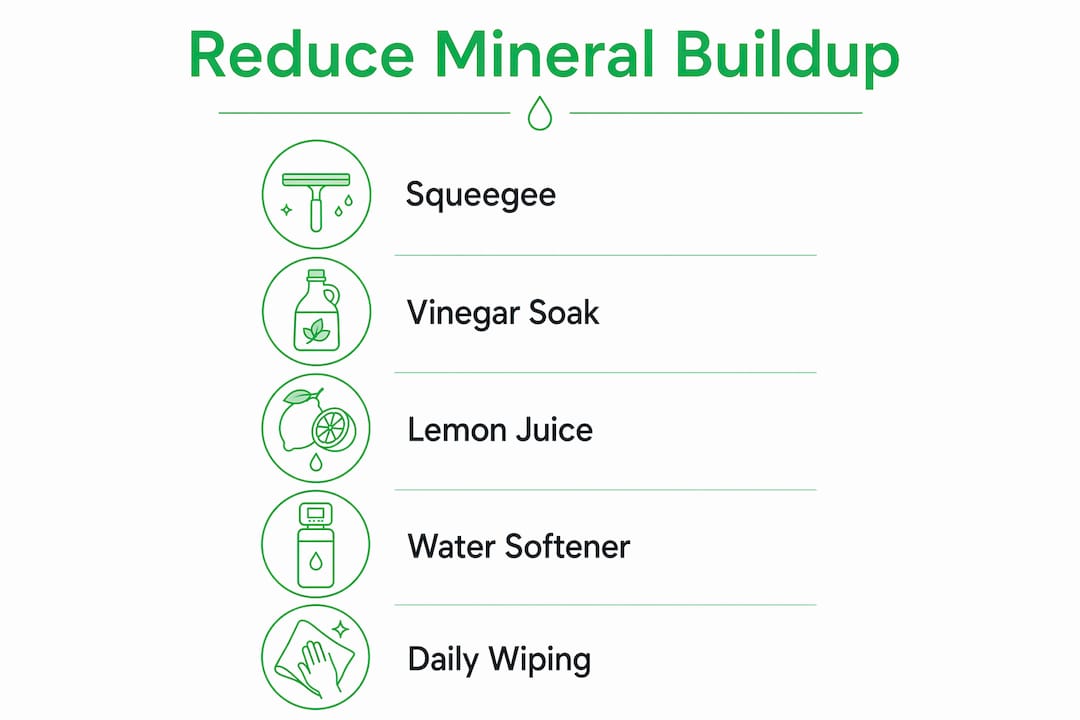
- Removing water immediately after showering with a squeegee prevents calcium and magnesium mineral buildup on surfaces.
- Using household acids like vinegar, baking soda, or lemon juice dissolves existing deposits effectively and safely.
- For long-term prevention, source-level water softening or filtering options are recommended based on water hardness levels.
Mineral buildup in showers, known in the industry as limescale or hard water scale, forms when calcium and magnesium dissolved in tap water are left behind after evaporation. The most effective way to reduce mineral buildup in showers combines three actions: removing water immediately after use, dissolving existing deposits with acidic cleaners like white vinegar or lemon juice, and treating water at the source with a softener or shower filter. Renters and homeowners who follow all three approaches consistently report cleaner fixtures, longer-lasting glass, and noticeably softer skin. The good news is that none of these steps require expensive contractors or permanent plumbing changes.
Why wiping your shower after every use prevents mineral buildup
The science here is straightforward. Hard water carries dissolved calcium and magnesium. When water sits on a surface and evaporates, those minerals crystallize and bond to glass, tile, and metal. The longer water sits, the stronger that bond becomes.
Removing water immediately after showering with a squeegee removes about 90% of water from glass surfaces and dramatically reduces mineral crystallization. That single number explains why a $10 squeegee is one of the highest-return tools in your bathroom. You are not cleaning minerals off. You are stopping them from forming in the first place.
Here is what works best for daily water removal:
- Squeegee first. Use a rubber-bladed squeegee on glass doors and tile walls immediately after your shower ends. Work top to bottom in overlapping strokes.
- Follow with a microfiber cloth. Microfiber picks up residual moisture that the squeegee misses, especially around fixtures and grout lines.
- Leave the door open. Keeping the shower door or curtain open after use speeds airflow and reduces the moisture that lingers on surfaces.
- Target the showerhead. A quick wipe of the showerhead face after each use prevents the nozzle holes from clogging with mineral deposits over time.
The key to lasting prevention is interrupting the drying and contact time of water on surfaces rather than relying only on periodic acidic cleanings. This habit takes about 60 seconds and cuts your deep-cleaning frequency in half.
Pro Tip: Hang your squeegee directly inside the shower so it is always within reach. If it lives under the sink, you will skip the step.
How to clean existing mineral deposits using household ingredients
Even with daily wiping, some scale will accumulate. The good news is that white vinegar, baking soda, and lemon juice dissolve calcium and magnesium deposits without the fumes or skin irritation of commercial descalers. These are the same acids used in professional cleaning, just at lower concentrations.
Removing stubborn scale with white vinegar
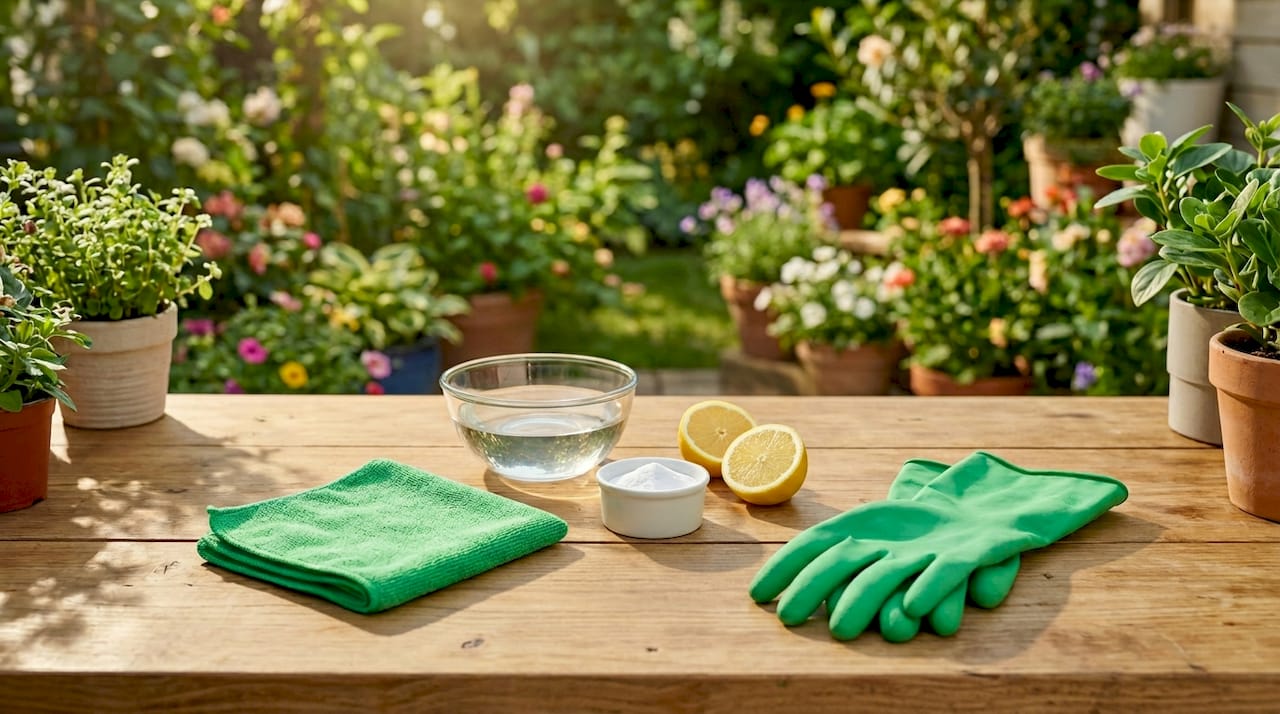
White vinegar’s acetic acid is the workhorse for eliminating limescale in showers. For moderate buildup on glass or tile, follow these steps:
- Warm one cup of undiluted white vinegar in the microwave for 30 to 45 seconds. Warm acid works faster than cold.
- Pour it into a spray bottle and apply generously to affected surfaces.
- Let it sit for 10 to 15 minutes. For heavy deposits, soak a paper towel in vinegar, press it against the surface, and leave it for 30 minutes.
- Scrub with a non-scratch sponge or soft-bristle brush. Avoid steel wool or abrasive pads, which scratch glass and tile permanently.
- Rinse thoroughly with water and dry with a microfiber cloth.
Vinegar and baking soda combine to dissolve and scrub away soap scum and mineral buildup effectively. The fizzing reaction loosens deposits that vinegar alone cannot penetrate. To use this method, spray vinegar first, then sprinkle baking soda directly onto the wet surface. Let it fizz for five minutes, then scrub and rinse.
Cleaning your showerhead with a vinegar soak
Showerhead nozzles clog faster than any other fixture because water sits in them between uses. Soaking your showerhead in a 1:3 vinegar-to-water solution for 15 to 60 minutes every two to six weeks dissolves calcium and magnesium deposits and restores full water flow. For a fixed showerhead, fill a plastic bag with the solution, secure it around the head with a rubber band, and let it soak.
Lemon juice for light maintenance
Lemon juice works well for weekly maintenance between deep cleans. Its citric acid is gentler than acetic acid, making it suitable for surfaces where prolonged vinegar contact could cause problems. Apply fresh or bottled lemon juice to a cloth, wipe down glass and chrome fixtures, leave for five minutes, and rinse.
Pro Tip: Acidic treatments like vinegar can damage black fixtures, matte finishes, and specialty coatings. Always test a small hidden area first and limit contact time on anything other than standard chrome or clear glass.
- Avoid vinegar on natural stone tiles like marble or travertine. The acid etches the surface.
- Do not use abrasive scrubbers on glass shower doors. Micro-scratches trap minerals and make future cleaning harder.
- Rinse all surfaces completely after any acid treatment to prevent residue from attracting new deposits.
What water softening and filtering options reduce buildup at the source
Cleaning removes existing scale. Softening and filtering prevent new scale from forming. These are two different problems requiring two different tools, and the right choice depends on your water hardness level and whether you own or rent your home.
| Method | Best for | Cost range | Renter-friendly | Effectiveness |
|---|---|---|---|---|
| Ion-exchange whole-house softener | Homeowners with severe hardness | $800 to $2,500 installed | No | High across all fixtures |
| Point-of-use shower filter | Renters, targeted use | $30 to $150 | Yes | Moderate at shower only |
| Electronic descaler | Homeowners, no salt preference | $150 to $500 | Limited | Moderate, no chemical removal |
| Vitamin C shower filter | Renters and homeowners | $40 to $120 | Yes | Moderate, also neutralizes chlorine |
Ion-exchange water softeners remove hardness minerals by exchanging calcium and magnesium ions for sodium, preventing scale formation throughout the entire home. These systems use strong-acid cation resins that require periodic regeneration with brine. They are the most thorough solution, but they require professional installation and ongoing salt purchases.
Point-of-use shower filters reduce mineral effects locally but do not address hardness throughout the rest of the home. For renters or anyone targeting a single fixture, this is the practical choice. Installation takes under five minutes with no tools required. The tradeoff is that you will still see buildup in sinks and other fixtures.
Electronic descalers use electromagnetic pulses to alter how minerals crystallize, causing them to stay suspended in water rather than bonding to surfaces. They do not remove minerals from the water, but they change mineral behavior enough to reduce scale adhesion. Results vary by water chemistry.
Choosing the right water treatment method depends on the scope of your hardness problem and your water test results. A basic water hardness test kit costs under $15 at most hardware stores and tells you whether you are dealing with moderately hard water (above 7 grains per gallon) or severely hard water (above 14 grains per gallon). That number determines whether a shower filter is enough or whether a whole-house system makes financial sense.
Reducing mineral contact with your skin also matters beyond fixture maintenance. Hard water minerals strip natural oils from skin and hair, contributing to dryness and irritation. Shower filters that also address chlorine and impurities offer benefits for your hair and skin that go beyond just keeping glass clean.
Additional habits that keep your shower surfaces cleaner longer
Prevention is not a single action. It is a set of overlapping habits that each reduce the conditions that allow scale to form and stick.
Glass sealants like Rain-X or EnduroShield create hydrophobic barriers that cause water to bead and roll off rather than dry flat and bond to the surface. These coatings do not eliminate buildup, but they make cleaning significantly easier and extend the time between deep cleans. Apply them to clean, dry glass every three to six months.
- Switch from bar soap to liquid body wash. Bar soap contains talc and fatty acids that combine with hard water minerals to form soap scum. Liquid soap produces far less residue.
- Use a daily shower spray. Products with mild surfactants, sprayed on surfaces immediately after your squeegee pass, prevent mineral and soap scum from bonding. You do not rinse them off.
- Improve bathroom ventilation. Running your exhaust fan during and for 20 minutes after your shower removes humid air that keeps surfaces wet longer. Faster drying means less mineral adhesion.
- Inspect fixtures monthly. Regular visual inspection helps catch mineral buildup early, enabling spot treatments before deposits harden and become difficult to remove. A small white haze on glass is far easier to treat than a thick chalky crust.
Pro Tip: Apply Rain-X or EnduroShield to your shower glass the same day you deep-clean it. The sealant bonds better to a completely clean surface and lasts noticeably longer.
For anyone dealing with hard water effects on skin and hair, addressing the problem at the water level is worth exploring. Vitacleanhq’s guide on solving hard water step by step covers how mineral-rich water affects your skin barrier and what filtration approaches work best for different water types.
Key takeaways
Reducing mineral buildup in showers requires combining daily water removal, regular acid-based cleaning, and source-level water treatment for lasting results.
| Point | Details |
|---|---|
| Squeegee after every shower | Removes about 90% of water, stopping mineral crystallization before it starts. |
| Use vinegar and baking soda | Warm vinegar dissolves limescale; baking soda adds scrubbing action for textured buildup. |
| Soak showerheads regularly | A vinegar soak every two to six weeks prevents clogging and restores full water pressure. |
| Match treatment to water hardness | Test your water before investing in a softener; a shower filter is enough for moderate hardness. |
| Protect glass with sealants | Rain-X or EnduroShield creates a hydrophobic barrier that makes future cleaning faster and easier. |
What I’ve learned after years of fighting hard water
The advice I wish someone had given me earlier is this: the squeegee is not optional. Every other step, from vinegar soaks to shower filters, works better when you are not fighting a fresh layer of scale every week. I spent months trying different cleaning products before I realized the problem was not my cleaning method. It was that I was letting water sit on the glass for hours after every shower.
For renters specifically, the combination of a point-of-use shower filter and a daily squeegee habit is the most practical setup available without touching the plumbing. You get cleaner glass and noticeably softer water at the showerhead, and you can take both items with you when you move. I have seen this combination make a visible difference in skin texture within a few weeks, which tracks with what Vitacleanhq covers in their hard water and skin health resources.
One thing most guides skip: heavy buildup does not come off in one treatment. If your shower has years of accumulated scale, plan for two or three vinegar applications over several days. Trying to scrub it all off in one session usually means reaching for something abrasive, which scratches the glass and makes the problem worse long-term. Patience and repetition beat force every time.
— Sara
Upgrade your shower water with Vitacleanhq
If you want to address mineral buildup at the source rather than just cleaning it off the walls, Vitacleanhq’s shower filtration products are built for exactly that. Their Vitamin C shower filter shots neutralize chlorine and reduce mineral effects on skin and hair with a simple, replaceable cartridge system that fits most shower setups.
For renters or anyone who wants a no-tools installation, the handheld shower filter and wall-mounted option both connect in minutes and come with replacement filters on a subscription schedule so you never forget to swap them out. If you prefer ceramic filtration, the ceramic filter collection offers another point-of-use option that reduces impurities without chemicals. Cleaner water means less scale on your fixtures and less mineral contact with your skin every single day.
FAQ
What causes white buildup in my shower?
White buildup in showers is limescale, formed when calcium and magnesium in hard water are left behind after water evaporates from surfaces. The harder your local water supply, the faster this buildup accumulates.
How often should I clean my showerhead for mineral buildup?
Soak your showerhead in a 1:3 vinegar-to-water solution for 15 to 60 minutes every two to six weeks to dissolve calcium and magnesium deposits and maintain full water flow.
Is white vinegar safe to use on all shower surfaces?
White vinegar is safe on standard chrome fixtures and clear glass, but it can damage natural stone tiles, matte black finishes, and specialty coatings. Always test a small hidden area before applying it broadly.
Do shower filters actually reduce limescale?
Point-of-use shower filters reduce mineral effects at the showerhead and can lower the amount of scale that forms on nearby surfaces, though they do not soften water throughout the entire home the way a whole-house ion-exchange system does.
How do I know if my water is hard enough to need a softener?
A basic water hardness test kit, available at most hardware stores for under $15, measures mineral concentration in grains per gallon. Water above 7 grains per gallon is considered hard; above 14 grains per gallon typically warrants a whole-house softener rather than a point-of-use filter alone.