
How to Measure Water Purity: A Practical Guide
TL;DR:
- Water purity depends on measuring indicators like pH, TDS, turbidity, and microbial contamination through various testing methods. Combining lab tests, electronic meters, and test strips provides the most comprehensive assessment to protect health and detect water changes early. Regular testing and proper sample collection are essential for accurate results and effective water treatment.
Water purity is defined by its chemical, physical, and microbiological profile. Knowing how to measure water purity means testing for specific indicators like pH, total dissolved solids (TDS), turbidity, and microbial contamination using tools that range from simple test strips to certified laboratory kits. What you find in your water directly affects your skin, hair, and long-term health. This guide covers every practical method, what the results mean, and how to build a testing routine that actually protects you.
What parameters indicate water purity and why they matter
Water quality testing methods work by measuring specific parameters that each reveal a different type of risk. No single number tells the whole story. You need to understand what each indicator means before you can act on it.
pH measures how acidic or alkaline your water is on a scale of 0 to 14. The EPA recommends a pH range of 6.5 to 8.5 for drinking water. Water outside this range can corrode pipes, leach metals, and irritate skin and mucous membranes.
Total Dissolved Solids (TDS) measures the concentration of dissolved minerals, salts, and metals in water. A high TDS reading signals that a lot of material is dissolved in your water, but it does not tell you what that material is. TDS meters do not detect harmful contaminants like lead or bacteria. A low TDS reading does not guarantee safety either.
Turbidity measures water clarity. The EPA standard for turbidity is below 1 NTU, with most safe samples reading below 0.3 NTU. Cloudy or murky water suggests sediment, organic matter, or microbial activity.
Microbial indicators are among the most serious parameters. Coliform bacteria and E. coli signal fecal contamination. Their presence means the water is unsafe to drink without treatment, regardless of how clear or odorless it appears.
Regulatory limits exist as legal minimums, not health ideals. Water that meets EPA secondary guidelines can still contain contaminants at levels that affect sensitive individuals, particularly those with skin conditions or compromised immune systems.
Heavy metals and organic contaminants round out the picture. Lead, arsenic, nitrates, and volatile organic compounds (VOCs) require laboratory analysis to detect. No home test strip can reliably identify these at health-relevant concentrations.
How to measure water purity at home: tools and methods
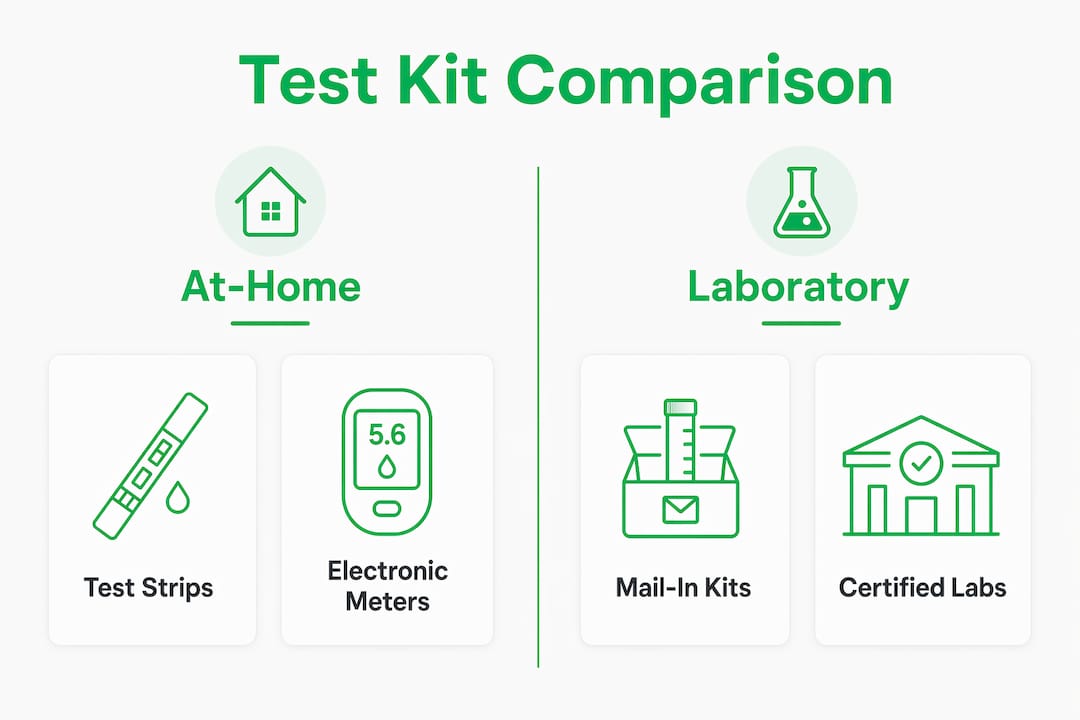
Measuring water cleanliness at home falls into three main categories: test strips, electronic meters, and mail-in laboratory kits. Each serves a different purpose, and none replaces the others entirely.
1. DIY test strips
Test strips are the fastest and cheapest entry point. DIY test strips cost $25–$32 for 100 strips and test up to 17 parameters in minutes. You dip the strip, wait 30–60 seconds, and compare the color change to a reference chart.
The limitation is significant. Test strips use colorimetry to give approximate ranges, not precise measurements. They cannot detect arsenic, radon, PFAS, or most VOCs. Use them for routine screening, not for making health decisions.
2. Electronic meters
TDS meters, pH meters, and conductivity meters give you a numeric reading in seconds. They are reusable and cost anywhere from $15 to $150 depending on quality. A TDS meter is useful for tracking whether your filter is still performing. If your TDS reading spikes after a filter change, something is wrong.
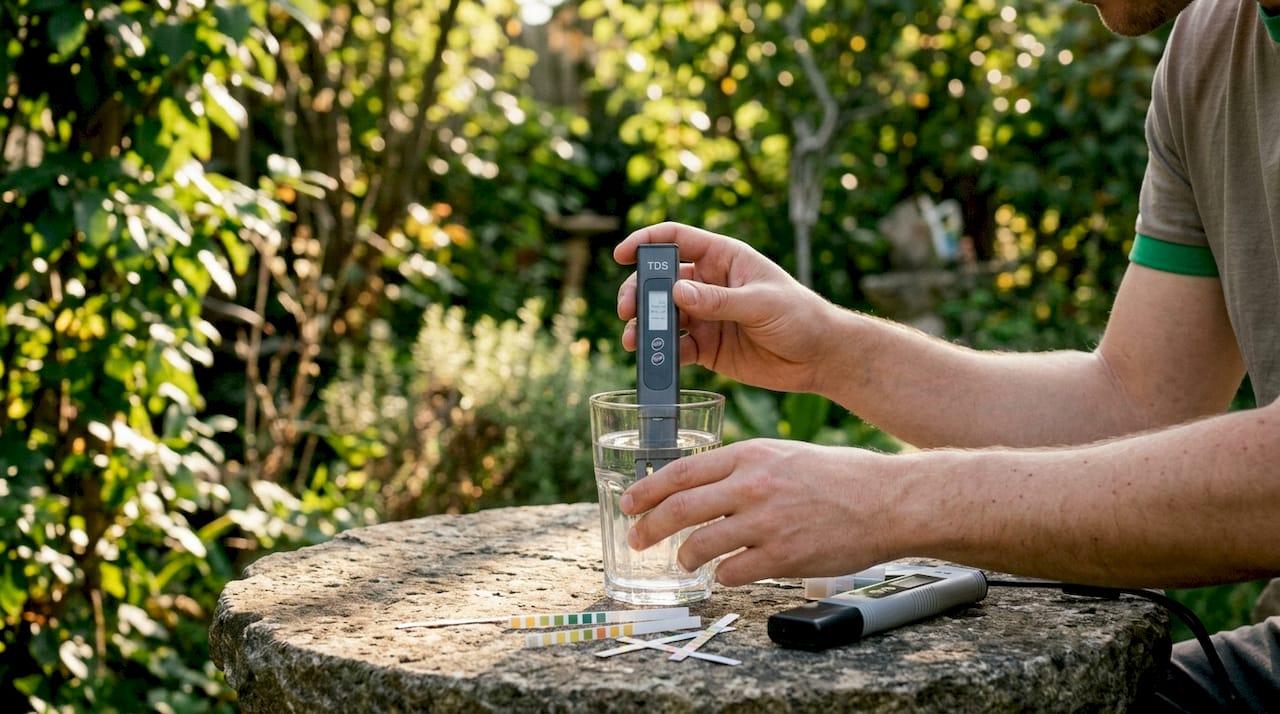
The critical caveat: TDS meters measure dissolved ionic content but are widely misunderstood as direct safety indicators. A reading of 50 ppm does not mean your water is safe. A reading of 300 ppm does not mean it is dangerous. Use meters to track trends, not to declare water safe.
3. Mail-in laboratory test kits
Lab kits are the gold standard for comprehensive water quality testing. Mail-in lab tests cost $193–$500 depending on scope. Essential screening covers 50 or more analytes. Advanced kits test 200 or more, including VOCs. Results come back in approximately 5 business days.
Lab tests quantify contaminants with precision. Certified labs measure arsenic at 8 ppb, nitrates at 12 mg/L, and lead at 18 ppb against regulatory benchmarks. This level of detail is the only way to make informed decisions about filtration or treatment.
4. Sample collection: the step most people get wrong
How you collect your sample determines whether your results are accurate. Lead and copper testing requires a first-draw sample collected after at least 6 hours of stagnation. This captures what has leached from your pipes overnight. For source water assessment, you flush the tap first to get a representative sample of incoming water.
Pro Tip: Use two separate samples for every lab test. Collect one first-draw sample before anyone uses the tap in the morning, and one flushed sample after 2 minutes of running. The difference between the two reveals pipe contamination versus source contamination.
Water purity test kits compared: strips vs. meters vs. lab tests
Choosing the right water purity test kit depends on what you need to know and how often you need to know it. The three methods are not competing options. They are complementary layers of a complete testing strategy.
| Method | Cost | Speed | Parameters | Best use |
|---|---|---|---|---|
| Test strips | $25–$32 per 100 | Minutes | Up to 17 | Routine weekly screening |
| Electronic meters | $15–$150 | Seconds | 1–3 per device | Tracking filtration performance |
| Mail-in lab kits | $193–$500 | 5 business days | 50–200+ | Annual baseline and problem investigation |
The most common mistake is relying on a single method. A TDS meter tells you your filter is working. It does not tell you whether your source water contains lead. A test strip tells you your pH is normal. It does not tell you whether PFAS are present.
Experts recommend combining frequent at-home tests with annual certified lab testing for the best monitoring outcome. The lab test sets your baseline. Strips and meters track changes between lab tests.
Pro Tip: Schedule your annual lab test in spring, after snowmelt and heavy rain. Seasonal runoff introduces the highest concentrations of agricultural chemicals, sediment, and microbial contamination into groundwater and municipal systems.
Water quality fluctuates over time due to environmental and plumbing changes. Consistent annual baseline testing with interim monitoring is the only way to catch problems before they become health risks. If you have hard water, that fluctuation also shows up in your hair and scalp health in ways that are easy to overlook.
How to interpret water purity test results and take action
A test result is only useful if you know what to do with it. Numbers without context lead to either false reassurance or unnecessary panic.
For pH results: A reading between 6.5 and 8.5 is within the EPA’s recommended range. Below 6.5 means acidic water that can corrode copper and lead pipes, increasing metal contamination risk. Above 8.5 means alkaline water that may cause scale buildup and affect the taste and effectiveness of disinfectants.
For TDS results: There is no universal safe TDS level. Context matters. If your TDS was 150 ppm last month and is now 400 ppm, something changed. That change warrants investigation, not the number itself.
For turbidity results: Any reading above 1 NTU requires follow-up. Turbid water can harbor pathogens that disinfection alone may not eliminate. Do not drink it until you identify the cause.
For microbial results: Any detection of coliform bacteria or E. coli requires immediate action. Boil water until you identify the contamination source and treat it. This is not a situation for monitoring. It requires a fix.
For heavy metals and VOCs: Compare your lab results against EPA maximum contaminant levels (MCLs). If arsenic exceeds 10 ppb or lead exceeds 15 ppb, you need a certified point-of-use filter rated for those specific contaminants. Not all filters remove all contaminants.
Setting personalized alert limits based on your baseline water quality helps you detect contamination early. If your baseline TDS is 120 ppm and it rises to 200 ppm, that is your alert signal, even if 200 ppm is technically within general guidelines.
Regular sanitary inspections alongside testing are part of complete water safety management. Testing tells you what is in the water. Inspections tell you why it is there and how to stop it.
Understanding your shower water specifically matters for skin and hair. Learning how water filtration works helps you choose the right solution once you know what your water contains.
Key takeaways
Measuring water purity requires a layered approach: annual lab testing for baseline data, electronic meters for ongoing tracking, and test strips for routine screening.
| Point | Details |
|---|---|
| Start with a lab test | Mail-in kits covering 50+ analytes give you the baseline no strip or meter can provide. |
| Use meters to track trends | TDS and pH meters reveal changes over time but do not confirm water is safe on their own. |
| Sample collection matters | First-draw samples after 6 hours of stagnation are required for accurate lead and copper readings. |
| Set personal alert limits | Track your own baseline and flag deviations, not just regulatory maximums. |
| Combine methods for full coverage | Strips, meters, and lab tests each catch what the others miss. |
What I’ve learned from years of watching people test their water wrong
The most common mistake I see is treating a TDS meter as a pass/fail safety test. People buy a $20 meter, see a low reading, and conclude their water is clean. That is not how it works. TDS measures dissolved ions. It does not see lead, bacteria, PFAS, or pesticides. A glass of distilled water with a dissolved lead pipe would show a low TDS and still be dangerous.
The second mistake is testing once and considering the job done. Water quality changes. A pipe repair in your neighborhood, a heavy rain event, or an aging water heater can shift your water chemistry within days. Annual lab testing is the floor, not the ceiling.
What actually works is treating water testing like a health checkup. You get a thorough lab test once a year to set your baseline. You use strips and meters between those tests to watch for changes. If something shifts, you investigate. That combination catches problems early, before they show up in your skin, hair, or health.
One more thing: your shower water deserves the same attention as your drinking water. Chlorine and dissolved minerals absorb through skin during a shower. People spend years treating skin dryness and scalp irritation without ever testing the water they bathe in. The fix is often simpler than they expect.
— Sara
Vitacleanhq shower filters: clean water for your skin and hair
Once you know what is in your water, the next step is doing something about it at the source.
Vitacleanhq’s vitamin C shower filter shots neutralize chlorine and chloramines on contact, reducing the chemical load your skin and hair absorb with every shower. The ceramic filter range removes additional impurities and supports balanced water for sensitive skin. Both systems install in minutes with no tools required. Vitacleanhq also offers a filter refill plan so your filtration stays effective without the hassle of remembering to reorder. Testing your water tells you the problem. Vitacleanhq’s filters address it every single day.
FAQ
What is the most accurate way to test water purity?
Mail-in certified laboratory tests are the most accurate method. They measure 50 to 200 or more contaminants with quantified results against EPA benchmarks, including lead, arsenic, nitrates, and VOCs that home kits cannot detect.
Can a TDS meter tell me if my water is safe to drink?
No. A TDS meter measures dissolved ionic content but cannot detect lead, bacteria, PFAS, or most organic contaminants. Use it to track filtration performance, not to confirm water safety.
How often should I test my water quality?
Annual certified lab testing sets your baseline. Use test strips or electronic meters monthly or after any plumbing changes, flooding, or unusual taste and odor to monitor between lab tests.
What does turbidity above 1 NTU mean?
Turbidity above 1 NTU indicates suspended particles that may include sediment, organic matter, or pathogens. The EPA recommends most drinking water samples read below 0.3 NTU for safety and clarity.
Do I need to test my shower water separately from my drinking water?
Your shower water comes from the same source, but chlorine and dissolved minerals affect skin and hair even when the water is safe to drink. Testing for chlorine and hardness specifically helps you choose the right shower filter for your needs.