
How to Create Toxin-Free Showers for Skin and Hair
TL;DR:
- A toxin-free shower minimizes chemical exposure by filtering water, using non-toxic materials, and choosing safe personal care products. Changing the shower curtain liner to natural fibers and installing certified filters greatly reduce inhalation of VOCs and heavy metals. Switching products one at a time and improving bathroom ventilation help create a healthier, chemical-free shower environment.
A toxin-free shower is defined as one that minimizes your chemical exposure through filtered water, non-toxic materials, and clean personal care products. Most people focus on what they eat or drink, but the shower is one of the most concentrated sources of daily chemical contact. Hot water opens your pores, steam carries volatile compounds directly into your lungs, and synthetic materials off-gas into the air you breathe. Knowing how to create toxin-free showers is the first step toward protecting your skin, hair, and overall health every single day.
How to create toxin-free showers: what you need to know first
The shower is not a neutral environment. VOCs evaporate and concentrate in shower steam, and inhalation exposure during a hot shower can exceed the chemical dose you get from drinking tap water. That fact changes how you should think about your daily routine. The problem is not just what goes on your skin. It is what you breathe, what your skin absorbs, and what materials surround you while you are standing in a warm, enclosed space.
Three categories drive the most meaningful change: your water quality, your shower environment materials, and your personal care products. Addressing all three is what separates a genuinely chemical-free shower from one that simply looks cleaner. The good news is that each category has well-tested solutions, and you do not need to overhaul everything at once.
What materials in your shower are contributing to toxin exposure?
The biggest overlooked source of toxins in the shower is the curtain liner. PVC liners contain chlorine and phthalate plasticizers that off-gas under steam, releasing VOCs directly into the air you breathe during every shower. PEVA is a PVC-free alternative with significantly lower VOC emissions. Natural fibers like hemp or GOTS-certified organic cotton eliminate off-gassing entirely.
Towels are the second hidden source. Synthetic towels shed plastic microfibers with every wash and every use. Natural fiber towels shed biodegradable cellulose instead. GOTS-certified cotton is the standard to look for when choosing towels that do not add microplastic exposure to your skin after every shower.
Personal care products are the third category. The word “clean” on a shampoo or body wash label carries no legal meaning. The term “clean” in shower and beauty products is unregulated, which means a product can use that word while still containing parabens, sulfates, or synthetic fragrance. Third-party certifications are the only reliable filter.
The most common problem ingredients to avoid include:
- Parabens: preservatives linked to hormone disruption
- Sulfates (SLS/SLES): detergents that strip the skin barrier and irritate the scalp
- Synthetic fragrance: a catch-all term that can mask dozens of undisclosed chemicals
- Phthalates: plasticizers found in some personal care products and PVC materials
- Formaldehyde-releasing preservatives: found in some shampoos and body washes
Pro Tip: Scan ingredient lists for “parfum” or “fragrance” as a single entry. That single word can represent a blend of dozens of undisclosed chemicals, including known irritants and sensitizers.
How can you effectively filter shower water to reduce chlorine and other irritants?
Water filtration is the single highest-impact change you can make for a chemical-free shower. Hot showers increase dermal absorption and inhalation of volatile contaminants, making the water quality itself a direct health variable. Chlorine, chloramines, VOCs, and heavy metals are all present in standard municipal tap water. They do not stay in the water. They vaporize into steam and enter your body through your skin and your lungs simultaneously.
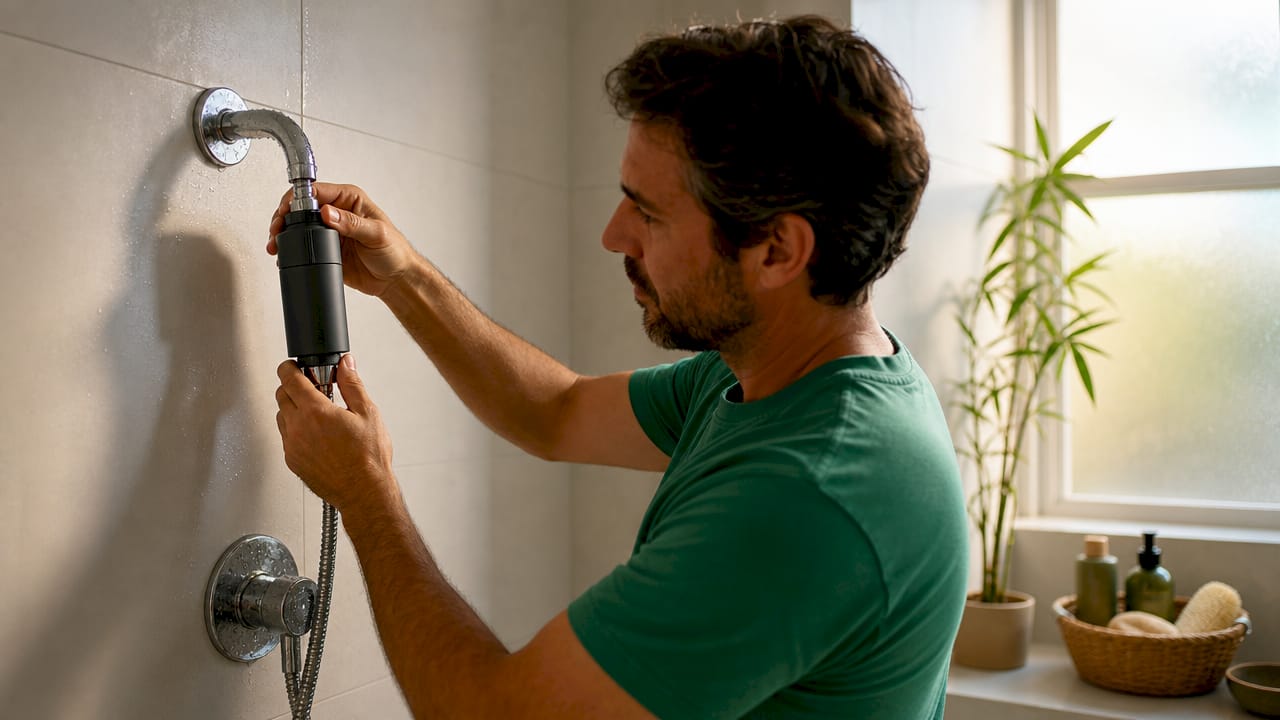
Not all filters are equal. Activated carbon filters trap chlorine, VOCs, and microplastics effectively, while basic steel mesh or sand filters do not remove molecular contaminants at all. The difference matters because most entry-level shower filters sold in hardware stores use only mesh or basic media that catches sediment but leaves chemical contaminants untouched.
Multi-stage filtration combining activated carbon, KDF, and Vitamin C layers provides the most comprehensive removal of chlorine, chloramines, VOCs, heavy metals, and microplastics. Each layer targets a different class of contaminant. KDF media handles heavy metals and bacteria. Activated carbon handles chlorine and organic compounds. Vitamin C neutralizes both chlorine and chloramines, which carbon alone cannot fully address.
| Filter type | Removes chlorine | Removes chloramines | Removes VOCs | Removes heavy metals |
|---|---|---|---|---|
| Steel mesh / sand | No | No | No | No |
| Activated carbon (single stage) | Yes | Partial | Yes | No |
| KDF media | Yes | No | Partial | Yes |
| Multi-stage (carbon + KDF + Vitamin C) | Yes | Yes | Yes | Yes |
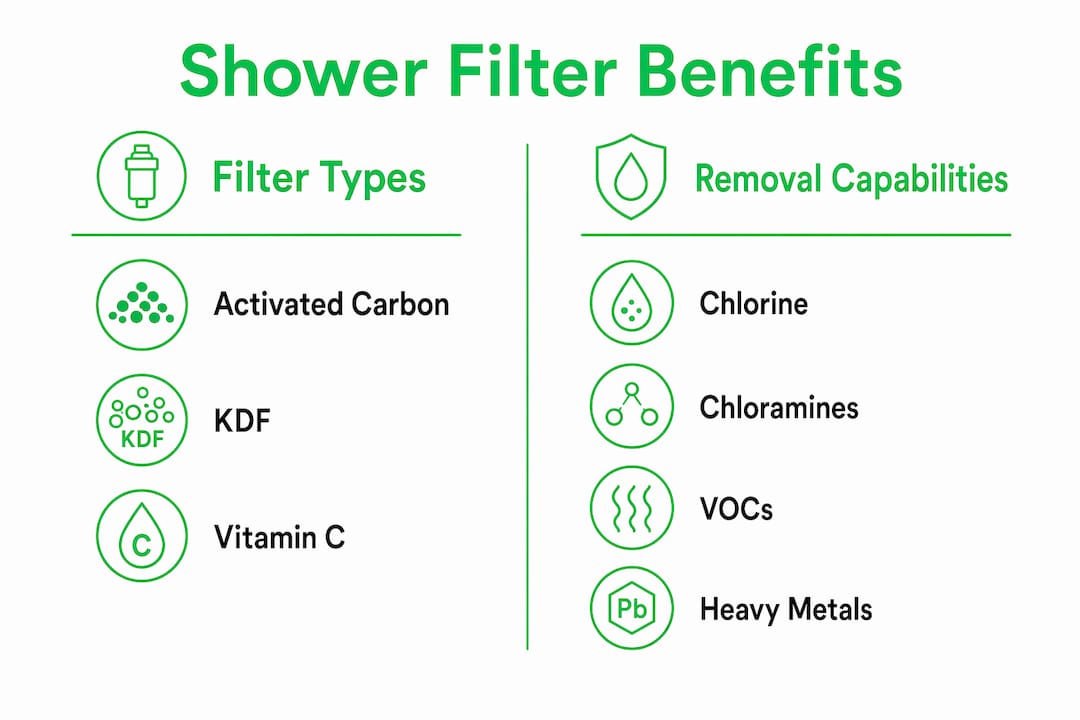
When selecting a filter, NSF/ANSI 177 certification is the benchmark for chlorine removal performance. A filter carrying this certification has been independently tested and verified. Without it, performance claims are unverified marketing. You can learn more about chlorine’s effects on skin and hair to understand exactly what you are filtering out.
Pro Tip: Replace your shower filter cartridge on schedule, not just when water pressure drops. An overloaded filter stops removing contaminants while still allowing full water flow, giving you false confidence in water quality.
What steps should you take to swap to non-toxic shower products safely?
The most practical approach to detoxifying your shower products is the one-at-a-time method. Swapping products one at a time reduces stress and financial burden while keeping the transition manageable. Trying to replace everything at once leads to decision fatigue and wasted money on products that do not work for your hair or skin type.
Follow this sequence to get the most impact from each swap:
-
Shampoo first. Your scalp is highly absorbent and in direct contact with lathered product for several minutes per shower. Switch to a sulfate-free, paraben-free shampoo scented with essential oils or unscented. This single swap removes two of the most common irritants from your routine immediately.
-
Body wash second. Body wash covers the largest surface area of skin. Replace your current formula with one carrying EWG Verified, MADE SAFE, or Leaping Bunny certification. These three marks indicate independent testing, not just brand claims.
-
Conditioner third. Conditioner sits on hair and scalp for longer than shampoo. Look for silicone-free formulas with natural conditioning agents like shea butter or plant-based oils.
-
Scrubbing tools last. Synthetic loofahs trap bacteria and shed plastic fibers. Replace them with natural sea sponges or silicone scrubbers, both of which are easier to clean and do not shed microplastics.
Certifications to look for on every product label:
- EWG Verified: meets the Environmental Working Group’s strict standards for ingredient safety
- MADE SAFE: screens for known harmful chemicals across multiple health categories
- Leaping Bunny: confirms no animal testing at any stage of production
If you want a structured plan for the full transition, the shower wellness routine guide from Vitacleanhq walks through each step in detail.
How do you choose safer shower environment materials for long-term toxin reduction?
The shower curtain is the largest surface area item in your shower environment. Replacing it has a bigger impact on VOC exposure than any smaller swap. PVC shower curtains should be replaced by PEVA or, ideally, hemp or GOTS-certified organic cotton for the lowest VOC exposure and natural mold resistance. PEVA significantly reduces off-gassing compared to PVC. Natural fibers eliminate it entirely.
| Material | VOC off-gassing | Mold resistance | Biodegradable |
|---|---|---|---|
| PVC | High | Low | No |
| PEVA | Low | Moderate | No |
| Hemp | None | High | Yes |
| GOTS-certified cotton | None | Moderate | Yes |
For towels, the priority is avoiding microfiber shedding. Synthetic microfiber towels feel soft but deposit plastic particles on your skin after every shower. GOTS-certified cotton and linen towels are the cleanest options. They also resist odor buildup better than synthetic fabrics, which reduces the need for chemical fabric softeners.
Maintaining your shower environment without toxic cleaners is straightforward with the right approach:
- Use white vinegar and baking soda to clean grout and tile surfaces
- Wash natural fiber curtains monthly to prevent mold without chemical sprays
- Dry towels fully between uses to prevent bacterial growth without antibacterial treatments
- Run the exhaust fan during and for 15 minutes after every shower to reduce steam buildup
Bathroom ventilation is critical to reduce inhalation of toxic steam. Trapping steam in an enclosed bathroom multiplies your exposure to chlorine and VOCs even after you have installed a good filter. Ventilation and filtration work together. Neither alone is sufficient.
Key Takeaways
Creating a toxin-free shower requires addressing water quality, environment materials, and personal care products together, with certified filtration as the highest-impact starting point.
| Point | Details |
|---|---|
| Filter water with certified technology | Choose multi-stage filters with NSF/ANSI 177 certification to remove chlorine, chloramines, and VOCs. |
| Replace PVC with natural materials | Swap PVC curtain liners for PEVA or GOTS-certified cotton to eliminate VOC off-gassing. |
| Swap products one at a time | Start with shampoo and body wash, prioritizing EWG Verified or MADE SAFE certified formulas. |
| Verify every certification claim | “Clean” on a label is unregulated; only third-party marks like EWG Verified carry real meaning. |
| Add ventilation to your routine | Run your exhaust fan during and after every shower to reduce inhalation of steam-borne toxins. |
What most guides get wrong about toxin-free showers
The advice I see repeated most often is to start with your shampoo. That is not wrong, but it misses the bigger picture. In my experience, the shower curtain liner is the change that makes the most immediate difference to air quality inside the bathroom. You are standing next to a large sheet of off-gassing PVC in a hot, steamy, enclosed space. Replacing it with a hemp or GOTS-certified cotton liner costs about the same as a premium shampoo and has a larger total impact on what you are breathing.
The second thing most guides ignore is ventilation. You can install a certified multi-stage filter and switch every product in your routine, but if you shower with the door closed and no exhaust fan running, you are still inhaling concentrated steam loaded with whatever your filter did not catch. Ventilation is free. It just requires a habit change.
The third issue is certification skepticism. I have seen products with “clean” and “non-toxic” on the front label that contain synthetic fragrance and preservatives that would not pass EWG Verified screening. The label on the front of the bottle is marketing. The ingredient list on the back is the truth. Cross-reference anything you buy against the EWG Skin Deep database before committing to it. The best shower filters for skin and hair follow the same rule: certification matters more than brand claims.
Long-term, the people who see the most improvement in skin hydration and hair texture are the ones who addressed water quality first. Products work better when the water delivering them is not stripping your skin barrier at the same time.
— Sara
Vitacleanhq’s filtered shower heads for a cleaner shower
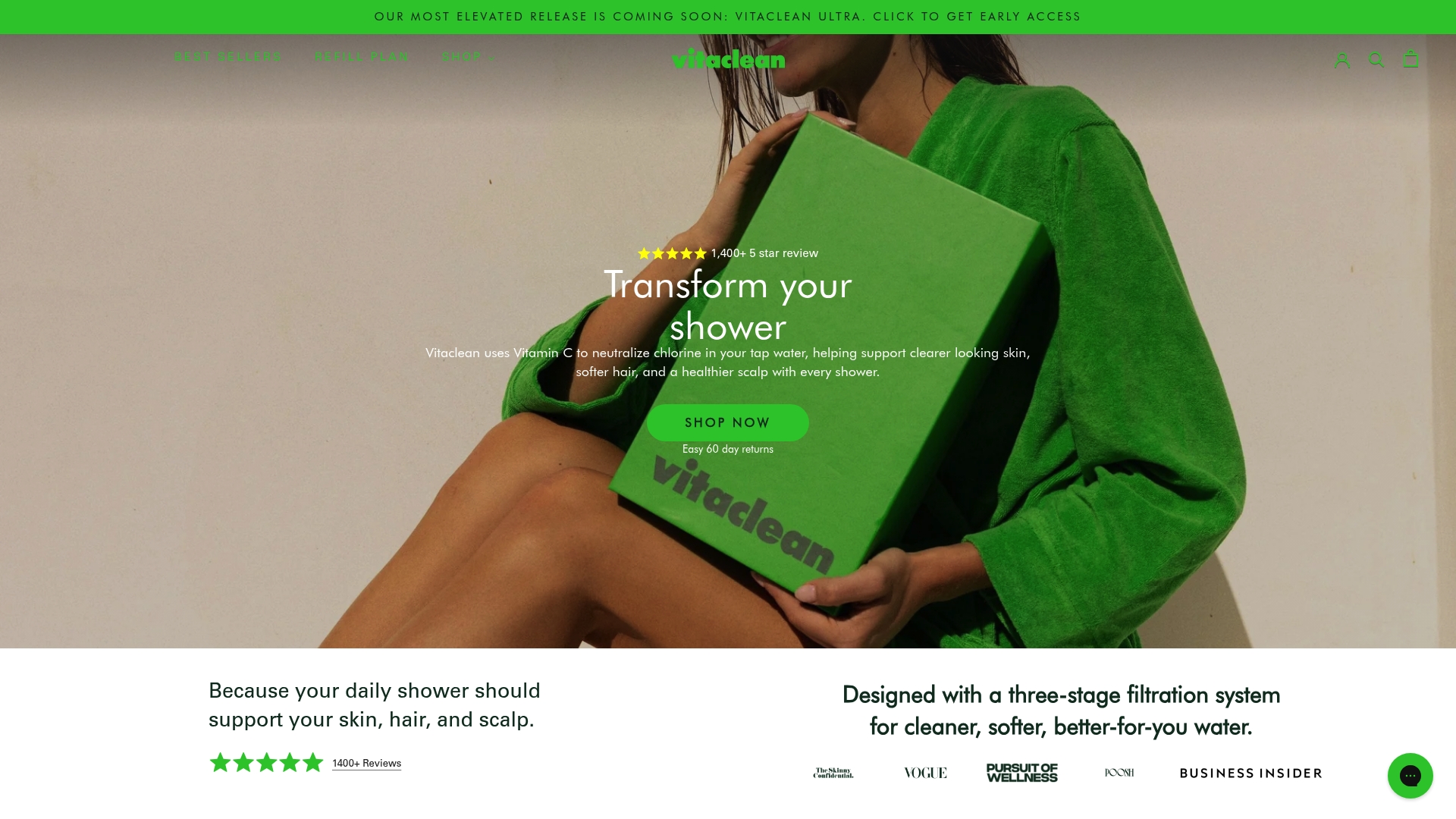
Vitacleanhq builds shower filters specifically around the multi-stage filtration approach this guide recommends. Their Vitamin C shower filter shots neutralize both chlorine and chloramines, the two contaminants that activated carbon alone cannot fully address. The replaceable cartridge design makes filter maintenance straightforward, with no tools required. For people who want a complete filtered shower head solution, the Vitacleanhq filtered shower head range covers both handheld and wall-mounted options, all designed to reduce the chemical load on your skin and hair with every shower.
FAQ
What are the main toxins found in shower water?
The primary toxins in shower water are chlorine, chloramines, VOCs, and heavy metals, all of which vaporize in hot water and enter the body through inhalation and skin absorption.
Do shower filters actually work for skin and hair?
Yes, filters with NSF/ANSI 177 certification are independently verified to remove free available chlorine, which is a leading cause of dry skin, scalp irritation, and brittle hair.
What is the safest shower curtain material?
Hemp and GOTS-certified organic cotton are the safest options because they produce no VOC off-gassing and resist mold naturally, unlike PVC or even PEVA alternatives.
How do I know if a shower product is truly non-toxic?
Ignore front-label claims like “clean” or “natural” since these terms are unregulated. Look for EWG Verified, MADE SAFE, or Leaping Bunny certification marks on the packaging instead.
What is the best first step to detoxify my shower?
Install a multi-stage shower filter with NSF/ANSI 177 certification first. Water quality affects every other part of your shower routine, including how well your skin and hair respond to the products you use.