
How impure showers affect your skin and hair: what to know
TL;DR:
- Impurities like chlorine, heavy metals, and minerals in shower water harm skin and hair health.
- Hot water increases absorption of chemicals, worsening skin irritation and hair damage over time.
- Using targeted shower filters can improve skin, hair condition, and overall wellness.
Your shower is supposed to be the cleanest part of your day. But for millions of people, stepping under that stream of hot water is actually exposing their skin and hair to a cocktail of chemicals, minerals, and contaminants they never signed up for. Tap water that looks clear is not necessarily pure, and the effects of those hidden impurities accumulate quietly over months and years. If your skin feels tight after every shower, your hair looks dull despite expensive products, or your scalp never quite settles down, your water quality may be the missing piece of the puzzle.
Table of Contents
- What is an impure shower?
- How impure showers affect your skin and hair
- Who is most at risk from impure showers?
- How to recognize and reduce the risks of an impure shower
- Our take: Why addressing impure shower water is a beauty and wellness game-changer
- Discover solutions for pure showers and glowing results
- Frequently asked questions
Key Takeaways
| Point | Details |
|---|---|
| Hidden impurities | Common shower water impurities like chlorine, metals, and microbes can subtly impact your skin and hair. |
| Beauty impacts | Impure showers can worsen dryness, irritation, acne, and hair frizz or fading, especially for women with sensitive skin. |
| Who is at risk | People with eczema, color-treated hair, or weakened immune systems are most vulnerable to these effects. |
| Prevention steps | Installing a quality shower filter and using cooler water can dramatically reduce the risks of an impure shower. |
| Wellness foundation | Addressing shower water quality is a foundational step to healthier skin, hair, and overall beauty routines. |
What is an impure shower?
An “impure shower” simply means you are bathing in water that carries more than just H2O. Municipal water treatment adds chemicals to make water safe to drink, but those same chemicals do not disappear before they reach your skin. On top of that, the pipes delivering water to your home introduce their own problems.
Here are the most common categories of impurities found in household shower water:
- Chlorine and chloramine: Added by water treatment facilities to kill bacteria. Chloramine, a blend of chlorine and ammonia, is increasingly used because it lasts longer in the distribution system.
- Heavy metals: Lead, copper, and iron can leach from aging pipes and fixtures.
- Hard minerals: Calcium and magnesium build up in water as it travels through rock and soil. Hard water effects on skin and hair are well documented and often underestimated.
- Sediment and microbes: Rust particles, biofilm, and bacteria can enter water through corroded pipes or poorly maintained systems.
What makes the shower specifically risky compared to drinking the same tap water? Heat. Hot water amplifies the absorption and inhalation of vapors, increasing your exposure to impurities through your skin and lungs simultaneously. Steam carries chlorine and chloramine directly into your respiratory tract, while your open pores absorb minerals and chemicals more readily than they would in cold water.
The table below summarizes the most common impurities and their primary sources:
| Impurity | Common source | Primary concern |
|---|---|---|
| Chlorine | Municipal treatment | Skin dryness, hair damage |
| Chloramine | Municipal treatment | Harder to filter, respiratory irritation |
| Lead and copper | Aging pipes | Long-term health risks |
| Calcium and magnesium | Natural groundwater | Scale buildup, dull hair |
| Sediment and rust | Corroded infrastructure | Clogged pores, scalp irritation |
Understanding this list matters because each impurity affects your body differently, and a single filter type does not address all of them equally. Knowing what is in your water is the first step toward choosing the right solution.
How impure showers affect your skin and hair
With an understanding of what makes a shower impure, it becomes easier to connect the dots between your water and the skin or hair frustrations you have been dealing with.
Skin effects are often the first thing people notice. Dry, itchy skin, eczema, and rosacea aggravation are all linked to impure shower water. Chlorine strips your skin’s natural oils, breaking down the moisture barrier that keeps irritants out and hydration in. Hard minerals leave a residue that blocks pores and prevents moisturizers from absorbing properly. The result is skin that feels perpetually tight, looks flaky, or breaks out more than it should.

Hair effects tend to build up more slowly but are just as damaging. Chlorine bonds to the protein structure of your hair shaft, causing brittleness and frizz. Mineral deposits coat each strand, making hair look dull and feel rough. If you color your hair, hard water accelerates fading significantly because minerals interfere with the dye molecules. Scalp irritation from chemical exposure can also trigger excess oil production or flaking, which no dry shampoo will truly fix.
Here is a side-by-side look at how filtered versus unfiltered water affects your daily experience:
| Category | Unfiltered water | Filtered water |
|---|---|---|
| Skin moisture | Stripped, tight feeling | Balanced, hydrated |
| Hair texture | Frizzy, brittle | Smooth, manageable |
| Scalp condition | Irritated, flaky | Calm, balanced |
| Color-treated hair | Rapid fading | Color lasts longer |
| Pore health | Blocked, prone to breakouts | Clear, better absorption |
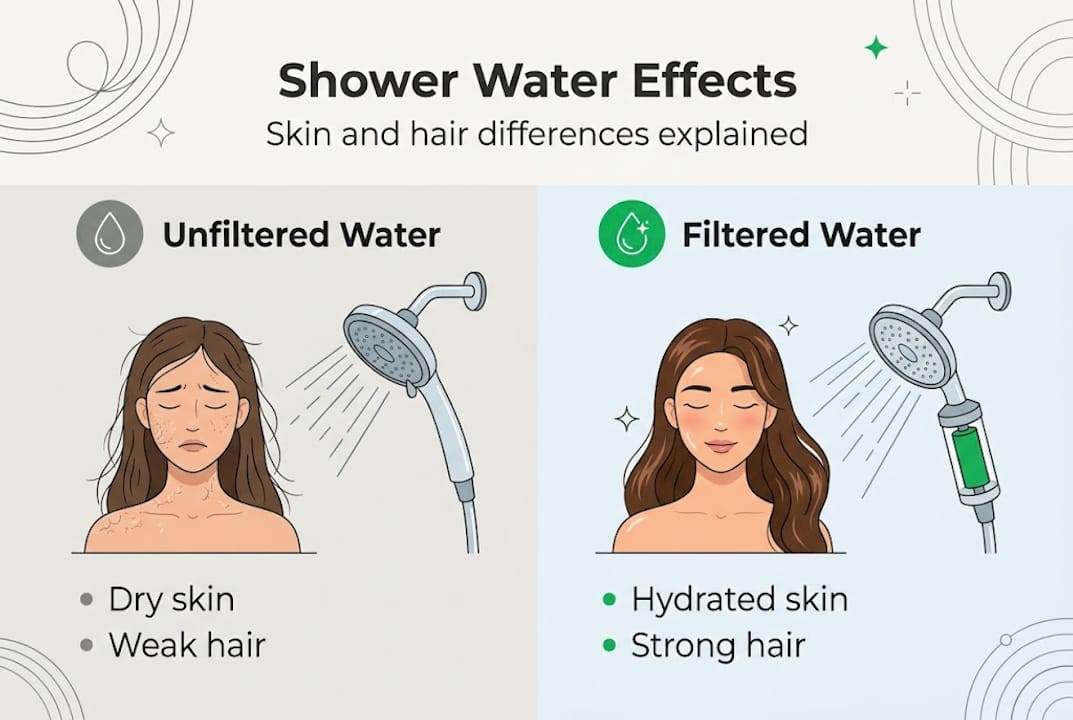
For women between 25 and 45, the picture gets more complicated. Hormonal fluctuations during this life stage make skin more reactive and less resilient. Estrogen shifts affect your skin barrier function, meaning the same water that barely bothers someone in their teens can trigger real inflammation in your 30s. The benefits of shower filters become especially relevant here because filtering out irritants reduces the total inflammatory load your skin has to manage every single day.
Pro Tip: Swap to a slightly cooler shower temperature while you transition to filtered water. This reduces pore exposure to impurities and gives your skin barrier time to recover faster.
The right filter cartridges target specific impurities, so if you are seeing signs you need a shower filter like persistent dryness or scalp irritation, that is your body telling you something your skincare routine cannot fix alone.
Who is most at risk from impure showers?
After seeing the effects, it is worth understanding who bears the heaviest burden, because targeted solutions matter more for some people than others.
These groups face the highest risk from impure shower water:
- People with eczema or rosacea: Compromised skin barriers react more intensely to chlorine and hard minerals.
- Women aged 25 to 45: Hormonal skin sensitivity during this window amplifies reactions to water contaminants.
- Color-treated or chemically processed hair: Already weakened hair structure is more vulnerable to mineral and chlorine damage.
- People with fine or thinning hair: Less structural resilience means breakage happens faster.
- Immunocompromised individuals: Aerosolized impurities from shower steam, particularly mycobacteria in certain water systems, pose a real respiratory and immune risk for this group.
One important clarification that often gets lost: impure shower water does not directly cause baldness or permanent hair loss. What it does is worsen breakage and thinning in hair that is already stressed. If you are noticing more hair in the drain, water quality is worth investigating before assuming the worst.
“The skin is your largest organ, and it absorbs what it is exposed to every single day. Treating shower water as a neutral variable in your health routine is a mistake most people make until the damage becomes visible.”
For those dealing with eczema triggered by hard water, the connection is well established. Minerals disrupt the skin’s acid mantle, making it easier for allergens and bacteria to penetrate. Understanding what a shower filter actually does helps you see it not as a luxury add-on but as a protective tool for your skin’s daily defense.
How to recognize and reduce the risks of an impure shower
Having identified who is most at risk, here are practical ways to spot the problem and take control of your water quality.
Signs to watch for after showering:
- Skin feels tight or itchy within minutes of stepping out.
- Hair looks dull or feels rough even after conditioning.
- Your hair color fades faster than your stylist expects.
- Scalp flaking or irritation persists despite changing shampoos.
- Frizz increases noticeably in humid weather, a sign of mineral-coated strands.
Steps to reduce your risk:
- Test your water. Home water testing kits are inexpensive and reveal chlorine levels, hardness, and metal content within minutes.
- Choose the right filter. Chloramine is harder to filter than chlorine, so look for Vitamin C or ceramic-based filters that address both. The best shower filters for 2026 are designed to tackle multiple impurity types at once.
- Lower your water temperature. Cooler water keeps pores tighter and reduces vapor inhalation.
- Upgrade your accessories. Certain shower accessories for skin and hair work alongside filters to further reduce irritation.
- Replace filters on schedule. A clogged or expired filter can actually concentrate impurities. If you live in a hard water area or see visible buildup on your fixtures, change your cartridge more frequently. A shower filter for mineral deposits needs regular maintenance to stay effective.
Pro Tip: Mark your filter replacement date on your phone calendar the day you install it. Most filters last 60 to 90 days, but hard water areas may require changes every 4 to 6 weeks.
Small, consistent changes compound quickly. Even switching to cooler water while your filter is on order will reduce your daily chemical exposure and give your skin a chance to start recovering.
Our take: Why addressing impure shower water is a beauty and wellness game-changer
Here is something we see constantly: someone spends hundreds of dollars on serums, masks, and salon treatments, and still cannot figure out why their skin stays dull or their hair keeps breaking. The answer is almost always upstream, literally. The water hitting your skin twice a day is undoing every product you apply afterward.
Most beauty advice treats water as a neutral backdrop. It is not. Chlorine oxidizes the same way it bleaches fabric. Hard minerals create a physical film that blocks every moisturizer you layer on top. No serum, no matter how expensive, can fully penetrate a mineral-coated skin barrier.
We believe filtering your shower water is not a secondary wellness upgrade. It is the foundation. Once you transform your skin with a filter, you often find that the products you already own start working better because your skin can finally absorb them. That is not a marketing claim. It is simple chemistry.
Investing in water quality first makes everything else more effective.
Discover solutions for pure showers and glowing results
If this article has you rethinking your shower routine, you are in the right place. Vitaclean’s filtration systems are designed specifically around the concerns covered here, from chlorine and chloramine removal to hard mineral reduction.
For targeted chemical neutralization, Vitamin C shower filter shots are one of the most effective options available, especially for color-treated hair and sensitive skin. If mineral buildup is your primary concern, ceramic shower filters offer durable, long-lasting protection. Browse the full range of all wellness products to find the combination that fits your water type, hair type, and skin goals. Your shower should work for you, not against you.
Frequently asked questions
What are the most common impurities in shower water?
The most common impurities are chlorine, chloramine, heavy metals, hard minerals, and sometimes microbes from aging pipes. Municipal treatments and pipe corrosion introduce these chemicals and metals into home showers regularly.
Can shower water cause hair loss directly?
Impure shower water does not cause baldness, but it does worsen breakage and thinning, especially in sensitive individuals. Water impurities worsen breakage by weakening the hair shaft structure over time.
Why do women notice more skin issues after showers?
Hormonal fluctuations amplify skin sensitivity in women aged 25 to 45, making them more reactive to water impurities. Women in this age range may experience stronger inflammatory responses to the same contaminant levels that barely affect others.
Is it safe to shower if I have eczema or rosacea?
You can shower safely, but using a high-quality water filter and avoiding hot water significantly reduces flare-up risk. Eczema and rosacea aggravation are directly linked to impure shower water exposure.
What type of filter is best for a typical home shower?
Vitamin C and ceramic filters are most effective for removing chlorine, chloramine, and minerals in most households. Chloramine is harder to filter than chlorine alone, so these filter types are specifically recommended for complete protection.