
How Filtration Promotes Hydration for Skin and Hair
TL;DR:
- Filtered water improves hydration behaviorally by removing unpleasant tastes, encouraging increased consumption. Proper filtration enhances skin and hair health by reducing irritants like chlorine and hard water minerals that damage the skin barrier and hair cuticles. Regular filter maintenance and choosing appropriate technology based on local water quality maximize these wellness benefits.
Most people assume filtered water hydrates better because of something special in the water itself. That assumption is mostly wrong, and understanding how filtration promotes hydration actually changes how you approach your entire wellness routine. The real mechanism is behavioral, not chemical. Filtration removes the chlorine, metallic taste, and off-flavors that make tap water unappealing, so you drink more of it. More water consumed means better hydration. That’s the core of it. But the story gets more interesting when you factor in your skin barrier, your shower water, and the specific filter technology you’re using.
Table of Contents
- Key takeaways
- How filtration improves hydration through taste
- Filtration technologies and what they actually remove
- How filtered water and hydration affect skin and hair
- Practical ways to maximize hydration with filtration
- My take on filtration and hydration
- Upgrade your water with Vitacleanhq
- FAQ
Key takeaways
| Point | Details |
|---|---|
| Filtration drives hydration behaviorally | Cleaner-tasting water encourages you to drink more, which is the primary hydration benefit. |
| Filter type matters | Matching your filter to your specific contaminants determines how much your water quality actually improves. |
| Skin needs more than water | A damaged skin barrier loses moisture even when you’re drinking plenty of water. |
| Shower filtration counts too | Removing chlorine from shower water reduces dryness and protects hair cuticles directly. |
| Consistency beats perfection | Regular filter maintenance sustains water quality better than any single high-end filter purchase. |
How filtration improves hydration through taste
Here’s the part most articles skip: filtration does not make water absorb faster or hydrate your cells more efficiently. Your body processes clean filtered water and tap water through the same physiological pathways. What changes is how much water you actually drink.
Taste improvements from filtration are the primary driver. Studies show people drank 17 to 28% more water when they rated the taste as clean compared to water with chlorine or metallic off-flavors. That gap is significant. If you’re currently drinking 1.5 liters a day but find tap water unpleasant, switching to filtered water could push you closer to 2 liters without any conscious effort. That’s hydration through filtration working exactly as it should.
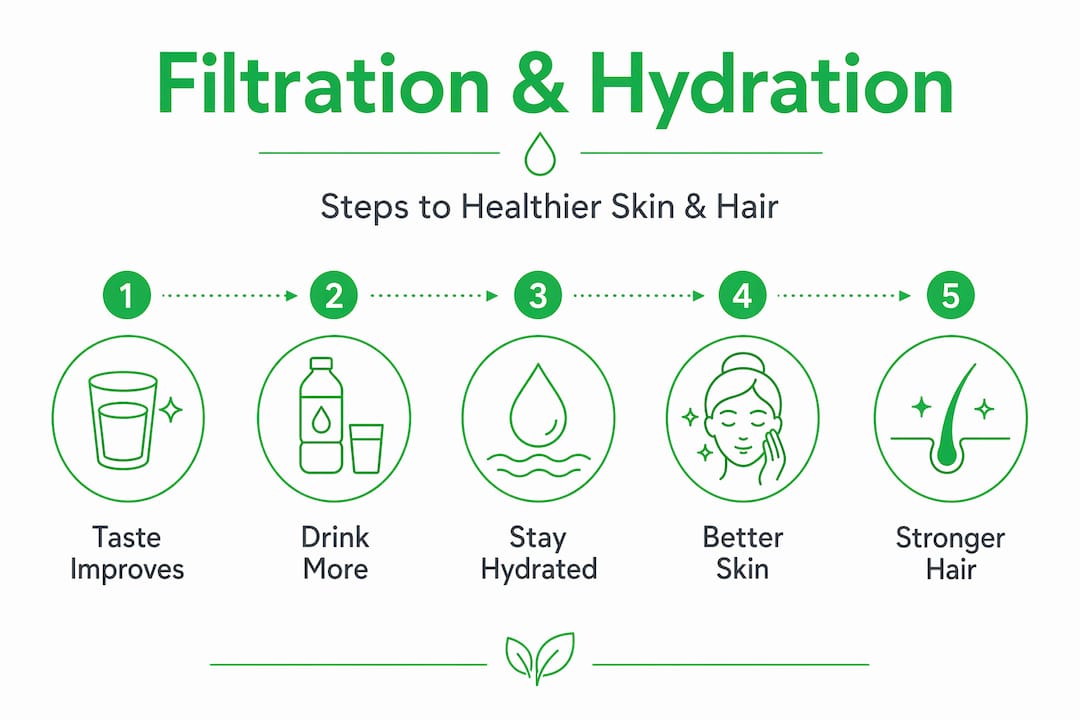
Filtration removes the compounds that make water taste bad. Chlorine and chloramine are added during municipal treatment and leave a chemical aftertaste. Dissolved metals like copper and iron from older pipes create that flat, metallic flavor. Organic compounds from soil and decaying matter can give water an earthy or musty smell. Activated carbon filters address most of these effectively, cutting the sensory barriers that keep people from drinking enough.
Pro Tip: Keep a filtered water pitcher or bottle on your desk at eye level. Visibility is one of the strongest behavioral nudges for increasing daily water intake.
The physiological benefit of drinking more water is well-documented. A six-month trial found that increasing daily intake by about one liter raised 24-hour water turnover by roughly 359 mL without affecting blood sodium, kidney function, or blood pressure. Your body handles the extra volume well. The challenge is getting people to drink it consistently, and that’s exactly where filtered water earns its place.
Filtration technologies and what they actually remove
Not all filters do the same job. Understanding the mechanisms of water filtration helps you pick the right tool for your specific water quality issues, which directly affects how much your hydration and wellness actually improve.
Here’s a breakdown of the main filtration methods:
| Technology | What it removes | Best for |
|---|---|---|
| Sediment filter | Dirt, rust, particles | Pre-filtration, older pipes |
| Activated carbon | Chlorine, chloramine, VOCs, taste/odor | Most household tap water |
| Reverse osmosis | Dissolved salts, heavy metals, fluoride | High TDS or contaminated well water |
| Nanofiltration | Hardness ions, some contaminants | Balancing softness and mineral retention |
| Vitamin C filter | Chlorine and chloramine neutralization | Shower water, skin and hair protection |
Activated carbon cuts THMs by 80 to 95% and handles most taste and odor complaints effectively. It’s the most practical starting point for the majority of households on municipal water. Reverse osmosis goes further, stripping out dissolved salts and heavy metals, but it also removes beneficial minerals and produces wastewater in the process.
Nanofiltration sits between those two extremes in a useful way. Nanofiltration membranes remove over 90% of divalent hardness ions like calcium and magnesium while allowing monovalent ions to pass through. The result is softer water that still tastes natural and retains minerals your body actually uses. For people who find reverse osmosis water flat or lifeless in taste, nanofiltration is worth considering.
The critical mistake people make is buying a filter without knowing what’s actually in their water. Mismatched filters and contaminants reduce effectiveness and can discourage people from continuing to use their system. A carbon filter cannot remove arsenic or nitrates. A reverse osmosis system is overkill if your only issue is chlorine taste. Check your local water quality report first, then choose.
Pro Tip: Most municipalities publish an annual water quality report online. Search your city name plus “water quality report” to find the specific contaminants in your supply before purchasing any filter.
How filtered water and hydration affect skin and hair
This is where the science gets nuanced, and where a lot of wellness content oversimplifies things. Drinking more filtered water does support skin health, but not in the way most people picture it.
Water doesn’t travel directly from your stomach to your skin cells. When you’re well-hydrated, your blood volume stays healthy, which supports circulation and nutrient delivery to skin tissue. 500 mL of water intake measurably increased skin blood flow in a controlled study, which means better nutrient delivery and waste removal at the cellular level. That’s real. But it’s an indirect benefit, not a direct moisturizing effect.

The bigger factor for skin hydration is your skin barrier. The outermost layer of your skin, the stratum corneum, controls how much moisture your skin retains. When that barrier is damaged by harsh cleansers, environmental stress, or irritants like chlorine, transepidermal water loss occurs. Your skin loses moisture to the air regardless of how much water you’re drinking. Fixing a damaged barrier requires topical care, not just better hydration.
This is where shower filtration becomes genuinely relevant to your skin and hair:
- Chlorine in shower water strips the skin’s natural oils, weakening the barrier over time
- Hard water minerals leave deposits that disrupt the skin’s pH balance
- Chlorine damages hair cuticles, causing dryness, frizz, and color fade
- Filtered shower water reduces these irritants at the point of contact, every single day
“Skin barrier integrity is the missing piece in most hydration conversations. You can drink two liters of filtered water daily and still have dry, reactive skin if your barrier is compromised. Filtration helps most when it addresses both what you drink and what touches your skin.”
For people with sensitive skin, eczema, or color-treated hair, the benefits of shower filters for skin and hair are often more immediately noticeable than dietary changes. The skin encounters shower water for several minutes every day. That daily exposure adds up fast.
Practical ways to maximize hydration with filtration
Knowing how filtration affects hydration is one thing. Applying it consistently is another. Here’s how to get the most out of your filtration setup for hydration, skin, and hair health.
-
Identify your water issues first. Request your municipal water quality report or use an at-home test kit. Look for chlorine levels, hardness, and any flagged contaminants. This tells you exactly which filter technology to prioritize.
-
Layer your filtration if needed. For drinking water, a multi-stage system combining sediment, activated carbon, and a secondary stage addresses the widest range of contaminants. For shower water, a dedicated shower filter handles chlorine and chloramine at the source.
-
Replace filters on schedule. A clogged or expired filter can become a source of contamination itself. Most carbon filters need replacement every two to three months depending on usage. Set a calendar reminder or use a subscription service so you never miss it.
-
Pair filtered water with electrolytes when needed. Plain water hydrates well, but if you exercise heavily or sweat a lot, adding a small amount of electrolytes supports cellular hydration more effectively than water alone.
-
Support your skin barrier topically. Use a gentle, non-stripping cleanser and apply a moisturizer with ceramides or hyaluronic acid after showering while your skin is still slightly damp. Filtered shower water reduces irritant exposure, but topical care seals in the benefit.
-
Track your intake honestly. Most people overestimate how much water they drink. A marked water bottle makes it easy to see exactly where you are throughout the day. If filtered water tastes better to you, use that preference as a tool.
Pro Tip: Drink a full glass of filtered water first thing in the morning before coffee. Your body is mildly dehydrated after sleep, and this one habit can meaningfully raise your daily total without any other changes.
If you want to go further with your skincare routine, filtered water in skincare can also make a difference when used to rinse your face or mix DIY treatments, since chlorine in tap water can disrupt the active ingredients in some products.
My take on filtration and hydration
I’ve spent years reading research on water quality and watching how people actually respond to it, and the pattern I keep seeing is this: people dramatically overestimate what filtration does chemically and dramatically underestimate what it does behaviorally.
The biggest wins from filtered water aren’t about exotic mineral profiles or special hydration chemistry. They’re about removing the sensory friction that stops people from drinking enough. When water tastes clean and fresh, people reach for it more. That simple shift in behavior compounds over weeks and months into genuinely better hydration status, better skin, and more energy.
What I find most underappreciated is the trust factor. People who don’t trust their tap water, whether because of taste, smell, or news coverage of local water issues, often default to sugary drinks or expensive bottled water. A good home filtration system removes that friction entirely. You stop second-guessing your water and just drink it.
The skin and hair piece is real, but it’s also more nuanced than most wellness content admits. Drinking more filtered water helps, especially if you were underhydrated before. But if your skin is still dry and reactive after months of better hydration, look at your shower water and your skincare routine. Those two factors often explain what better drinking habits alone cannot.
— Sara
Upgrade your water with Vitacleanhq
If this article has you rethinking your water quality at home, Vitacleanhq makes it straightforward to act on that.
Vitacleanhq’s shower filtration systems use Vitamin C technology to neutralize chlorine and chloramine on contact, protecting your skin and hair during every shower. Their Vitamin C shower filter shots are easy to replace and compatible with both handheld and wall-mounted systems, so you’re not locked into a complicated setup. For households dealing with harder water or broader contaminant concerns, the ceramic filter line provides an additional layer of protection. And if filter maintenance is the thing that always slips through the cracks, the filter refill subscription keeps your system performing at its best without the hassle of remembering to reorder.
FAQ
Does filtered water hydrate you better than tap water?
Filtered water promotes better hydration primarily by improving taste, which encourages people to drink more. The hydration efficiency inside the body is the same; the difference is in how much water you actually consume.
What contaminants make tap water taste bad?
Chlorine, chloramine, dissolved metals like copper and iron, and organic compounds are the main culprits. Activated carbon filtration removes most of these effectively and is the most practical solution for municipal tap water.
How does filtration affect skin hydration?
Drinking more filtered water supports skin health by improving blood flow and nutrient delivery. Shower filtration reduces chlorine exposure, which protects the skin barrier and prevents the dryness and irritation that lead to moisture loss.
Can shower filters really improve hair health?
Yes. Chlorine in shower water damages hair cuticles over time, causing dryness, breakage, and color fade. Filtering chlorine and chloramine from shower water reduces this daily damage, which shows up as softer, shinier hair with consistent use.
How often should I replace my water filter?
Most activated carbon drinking water filters need replacement every two to three months. Shower filters typically last one to three months depending on usage and local water chlorine levels. Following the manufacturer’s schedule keeps your filtration performing as intended.