
Benefits of Vitamin C for Skin: Your Science-Backed Guide
TL;DR:
- Consistent topical and dietary vitamin C intake support skin collagen, antioxidant defenses, and pigmentation regulation. Proper application, storage, and pairing with SPF are essential for visible, long-term results. Incorporating vitamin C-rich foods alongside serums enhances skin health more effectively than relying on topical use alone.
Most people think slapping on a vitamin C serum each morning is enough to get glowing, firm skin. New research says that picture is incomplete. The real benefits of vitamin C for skin come from a combination of what you apply and what you eat, working together at the cellular level. This guide breaks down the science behind how vitamin C helps skin, which formulations actually work, and how to build a routine that delivers visible results. No guesswork, no filler.
Table of Contents
- Key takeaways
- Benefits of vitamin C for skin: the science behind it
- Topical vitamin C: how to use it correctly
- Dietary vitamin C and its impact on skin
- Building a practical vitamin C skincare routine
- My take on vitamin C and realistic skin results
- How Vitacleanhq brings vitamin C into your shower
- FAQ
Key takeaways
| Point | Details |
|---|---|
| Collagen support starts early | Vitamin C is a required cofactor for collagen production, and its effects compound over time with consistent use. |
| Topical concentration matters | Serums between 10% and 20% L-ascorbic acid hit the sweet spot between efficacy and skin tolerance. |
| Diet amplifies topical results | Eating vitamin C-rich foods raises skin levels more effectively than topical application alone. |
| Stability is a real issue | Oxidized serum does nothing. Proper storage protects your investment and your skin. |
| Sunscreen is non-negotiable | Vitamin C enhances UV protection but does not replace SPF. Use both, every morning. |
Benefits of vitamin C for skin: the science behind it
Vitamin C is not just a wellness buzzword. It performs specific, documented biological functions in the skin that no other ingredient replicates exactly.
Collagen production
Collagen is the structural protein that keeps skin firm and plump. Collagen declines roughly 1% per year after age 30, which is why fine lines and sagging become more noticeable over time. Vitamin C acts as a required cofactor for two enzymes, prolyl hydroxylase and lysyl hydroxylase, that stabilize the collagen molecule during synthesis. Without adequate vitamin C, those enzymes cannot function properly, and the collagen your body produces is structurally weak.

Antioxidant protection
Your skin faces oxidative stress every day from UV radiation, air pollution, and environmental toxins. Free radicals generated by these exposures damage cell membranes, DNA, and proteins. Vitamin C neutralizes these free radicals before they cause lasting harm. Think of it as a sacrificial shield. The vitamin C molecule absorbs the oxidative hit so your skin cells do not have to.
Pigmentation control
Uneven skin tone and dark spots form when an enzyme called tyrosinase converts the amino acid tyrosine into melanin. Vitamin C interrupts that process by inhibiting tyrosinase activity. Daily topical use over 12 weeks can reduce visible hyperpigmentation by up to 30%. That is a meaningful number for anyone dealing with post-acne marks or sun spots.
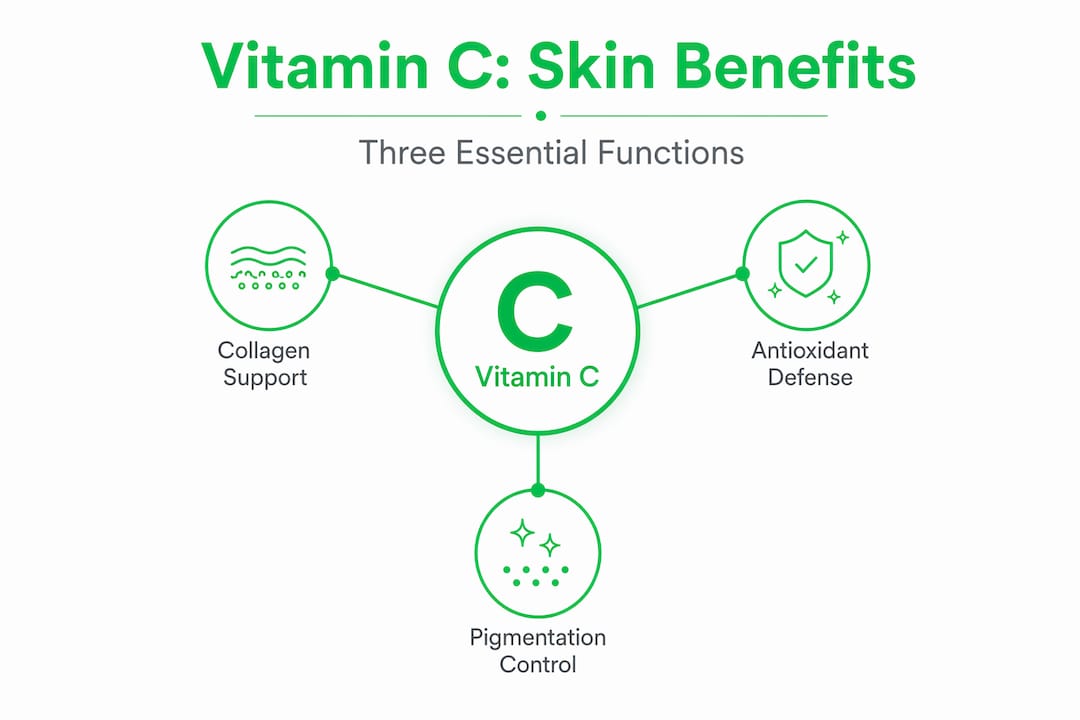
These three roles, collagen synthesis, antioxidant defense, and pigmentation regulation, explain why the vitamin C skin advantages you see in clinical studies are so consistent across different skin types and concerns. The role of vitamin C for skin is not cosmetic in the superficial sense. It operates at the biochemical level.
Pro Tip: If you have sensitive skin, look for vitamin C derivatives like ascorbyl glucoside or sodium ascorbyl phosphate. They are more stable and gentler than pure L-ascorbic acid, though they take slightly longer to show results.
Topical vitamin C: how to use it correctly
Knowing the science is one thing. Getting results from a serum you bought requires understanding how to use it properly, because most people are making at least one mistake that undercuts the product’s effectiveness.
Choosing the right formulation
Dermatologists recommend 10% to 20% concentration for topical vitamin C serums. Below 10%, you are unlikely to see meaningful results. Above 20%, you get more irritation without additional benefit. L-ascorbic acid is the most studied and most potent form, but it is also the most unstable and the most likely to cause redness in sensitive skin.
The stability problem
Vitamin C serum oxidizes quickly when exposed to light and air. When your serum turns yellow, orange, or brown, it has oxidized. At that point, it is not just less effective. It may actually cause free radical damage rather than prevent it. Store your serum in a dark, cool place. Look for packaging that limits air exposure, such as airless pump bottles or opaque tubes.
Applying it the right way
Here is the correct application sequence for maximum absorption:
- Cleanse your face and pat it dry. Wait 30 seconds to let skin pH normalize.
- Apply vitamin C serum to clean, dry skin before any other products. Applying on dry skin before moisturizer maximizes absorption significantly.
- Let the serum absorb for 60 to 90 seconds.
- Layer your moisturizer on top.
- Finish with broad-spectrum SPF 30 or higher. Vitamin C paired with SPF provides better photoprotection than sunscreen alone, but vitamin C is not a sunscreen substitute.
Visible improvements in tone, texture, and hyperpigmentation typically become noticeable after 8 to 12 weeks of consistent daily use. If you quit after three weeks because you see no change, you are stopping too soon.
Pro Tip: Do not mix vitamin C with benzoyl peroxide in the same routine. Benzoyl peroxide oxidizes vitamin C on contact, rendering it ineffective. Use vitamin C in the morning and benzoyl peroxide at night if you need both.
Dietary vitamin C and its impact on skin
Here is the part most skincare articles skip entirely. Topical application has real limits. The skin’s outer barrier, the stratum corneum, physically restricts how much vitamin C can penetrate from the surface. Eating vitamin C bypasses that barrier completely.
Skin vitamin C levels closely correlate with blood plasma levels. When you eat vitamin C-rich foods, the nutrient travels through your bloodstream and reaches all layers of the skin, including the deeper dermis where collagen synthesis actually happens. Topical serums primarily affect the epidermis. Dietary intake reaches further.
Research on this is striking. Eating two kiwifruit daily raised plasma and skin vitamin C levels measurably, increasing skin thickness and renewal over eight weeks. That is a structural change, not just a surface glow.
The table below compares common vitamin C-rich foods by approximate content and practical daily use:
| Food | Vitamin C per serving | Ease of daily use |
|---|---|---|
| Red bell pepper (1/2 cup) | 95 mg | High |
| Kiwifruit (1 medium) | 64 mg | High |
| Broccoli (1/2 cup, cooked) | 51 mg | Medium |
| Strawberries (1/2 cup) | 49 mg | High |
| Orange (1 medium) | 70 mg | High |
The recommended daily intake for adults is 75 to 90 mg, but research on skin-specific benefits suggests that higher intakes, around 200 mg per day from food sources, may produce more noticeable improvements in skin texture and firmness. Supplements can fill gaps, but whole foods deliver vitamin C alongside other compounds that support absorption and skin function.
The takeaway is not that topical vitamin C is useless. It is that treating these two approaches as competitors misses the point. They work on different layers of the skin through different mechanisms. Using both together gives you the most thorough coverage for vitamin C for glowing skin.
Building a practical vitamin C skincare routine
Knowing what works is only useful if you can actually do it consistently. Here is how to integrate the uses of vitamin C for skincare into a routine that fits real life.
Morning skincare sequence:
- Cleanse with a gentle, pH-balanced cleanser
- Apply vitamin C serum (10% to 20% L-ascorbic acid or a stable derivative)
- Follow with a hydrating moisturizer
- Finish with broad-spectrum SPF 30 or higher
Daily dietary habits:
- Add one or two vitamin C-rich foods to every meal. A handful of strawberries at breakfast, bell pepper strips at lunch, and broccoli at dinner gets you well above the baseline requirement without any supplements.
- Avoid cooking vitamin C-rich vegetables at high heat for extended periods. Vitamin C degrades with prolonged heat exposure. Light steaming or eating raw preserves more of the nutrient.
Common mistakes to avoid:
- Skipping sunscreen after applying vitamin C serum. This defeats a significant portion of the benefit.
- Using an oxidized serum. Check the color before applying.
- Layering vitamin C over a thick moisturizer. It cannot penetrate effectively through a barrier.
- Expecting results in two weeks. Eight to twelve weeks is the realistic window.
Topical vitamin C paired with niacinamide and retinol creates a genuinely strong anti-aging and brightening stack. Use vitamin C in the morning for antioxidant protection, and retinol at night for cell turnover. Niacinamide works well in either routine. The combination addresses collagen support, pigmentation, and skin renewal from multiple angles simultaneously.
My take on vitamin C and realistic skin results
I have spent years reading the research on this ingredient and watching how people actually use it, and the pattern I keep seeing is this: vitamin C is genuinely one of the most well-supported ingredients in skincare, but it gets oversold in ways that set people up for disappointment.
The clinical evidence for collagen support, brightening, and antioxidant protection is real. What I find gets glossed over is the delivery problem. Most people buy a vitamin C serum, store it incorrectly, apply it over a moisturizer, skip sunscreen, and then declare that vitamin C does not work for them. The ingredient did not fail. The routine did.
What I have learned is that the dietary side of this equation is where most people leave the most benefit on the table. You can spend $80 on a serum and get modest results, or you can spend $80 on a serum and eat two kiwifruit a day and get noticeably better results. The skin absorbs vitamin C from the bloodstream far more efficiently than from the surface. That is not a minor footnote. It changes how you should think about your whole approach.
My honest advice: start with the diet, get the serum right, and be patient. Skin renewal takes time. If you want to accelerate results, pairing vitamin C with microneedling for collagen is one of the more evidence-backed clinical combinations available right now. But the fundamentals, clean application, proper storage, SPF, and consistent dietary intake, will take you further than any single product upgrade.
— Sara
How Vitacleanhq brings vitamin C into your shower
Your skincare routine does not start at the bathroom mirror. It starts the moment water touches your skin.

Chlorinated tap water strips the skin’s natural moisture barrier and can worsen dryness, sensitivity, and breakouts before your serum even has a chance to work. Vitacleanhq’s vitamin C shower filter shots neutralize chlorine and impurities at the source, so every shower supports rather than undermines your skin health goals. Pair that with a vitamin C-infused shower experience and you are protecting your skin barrier from the first rinse. When your topical vitamin C serum and your dietary habits are already working hard, starting with cleaner water makes the whole system more effective.
FAQ
What are the main benefits of vitamin C for skin?
Vitamin C supports collagen production, neutralizes free radicals from UV and pollution exposure, and reduces hyperpigmentation by inhibiting melanin synthesis. Consistent use over 8 to 12 weeks produces visible improvements in tone, texture, and firmness.
Is vitamin C good for skin when taken through diet?
Yes. Dietary vitamin C raises blood plasma levels, which directly increases skin vitamin C concentrations throughout all skin layers. Research shows that eating two kiwifruit daily improved skin thickness and collagen production over eight weeks, often more effectively than topical application alone.
What concentration of vitamin C serum should I use?
Dermatologists recommend serums with 10% to 20% L-ascorbic acid. Below 10% is unlikely to produce meaningful results, and above 20% increases irritation risk without adding benefit.
How do I know if my vitamin C serum has gone bad?
A color change from clear or pale yellow to orange or brown indicates oxidation. Oxidized serum has lost its potency and should be replaced. Store your serum in a cool, dark location in airtight or airless packaging to extend its shelf life.
Can I use vitamin C serum and sunscreen together?
You should. Vitamin C enhances the photoprotective effects of SPF, but it does not replace sunscreen. Apply vitamin C serum first on clean, dry skin, then layer your moisturizer and SPF on top for the strongest possible protection against UV damage.