
How Chlorine Affects Hair: What Swimmers Need to Know
TL;DR:
- Chlorine weakens hair by stripping lipids, lifting cuticles, and degrading keratin, increasing breakage. Green tint results from copper oxidation, mainly affecting light or bleached hair, not chlorine alone. Proper pre-swimming protection and frequent rinsing can significantly reduce chlorine-related damage and promote hair restoration.
If you’ve ever stepped out of a pool and noticed your hair feels like straw, you’re not imagining it. Understanding how chlorine affects hair goes far deeper than simple dryness. Chlorine chemically alters your hair’s protective layers, weakens its internal structure, and can even change its color. Whether you swim twice a week or just dip in occasionally, chlorine exposure adds up. This article breaks down exactly what’s happening to your hair in that water, clears up the myths around hair loss and green tint, and gives you a practical plan to protect and restore what you’ve got.
Table of Contents
- Key takeaways
- How chlorine affects hair structure at the molecular level
- Chlorine and hair color: the green tint mystery
- Hair loss vs. hair damage: a distinction that matters
- Practical strategies for preventing and repairing chlorine damage
- Chlorine’s impact on your scalp
- My honest take on chlorine and hair care
- Give your hair a break from chlorine at home
- FAQ
Key takeaways
| Point | Details |
|---|---|
| Chlorine weakens hair structure | It strips protective lipids and lifts the cuticle, increasing fragility and breakage risk. |
| Green tint isn’t chlorine’s fault alone | Copper minerals in pool water bind to hair, causing discoloration, not chlorine by itself. |
| Hair loss fears are usually overblown | Chlorine causes shaft breakage that looks like thinning, not actual follicle damage. |
| Pre-wetting is your best defense | Saturating hair with clean water before swimming significantly lowers chlorine absorption. |
| Your shower matters too | Unfiltered tap water continues chlorine exposure daily, compounding pool-related damage. |
How chlorine affects hair structure at the molecular level
Most people think of chlorine as a drying agent. It’s more accurate to think of it as a chemical stripper. Chlorine strips hair lipids and lifts cuticle scales, compromising the outermost protective layer that keeps moisture in and damage out. Once those scales are raised instead of lying flat, your hair loses its natural shine and becomes far more porous.
Here’s why porosity matters so much. When cuticle scales are lifted, water rushes in and out of the hair shaft too quickly. Cuticle disruption increases porosity, causing faster tangling and a dramatically higher breakage risk, especially without proper care. Think of it like a pinecone. Closed scales protect and hold; open scales expose the soft interior to everything around them.
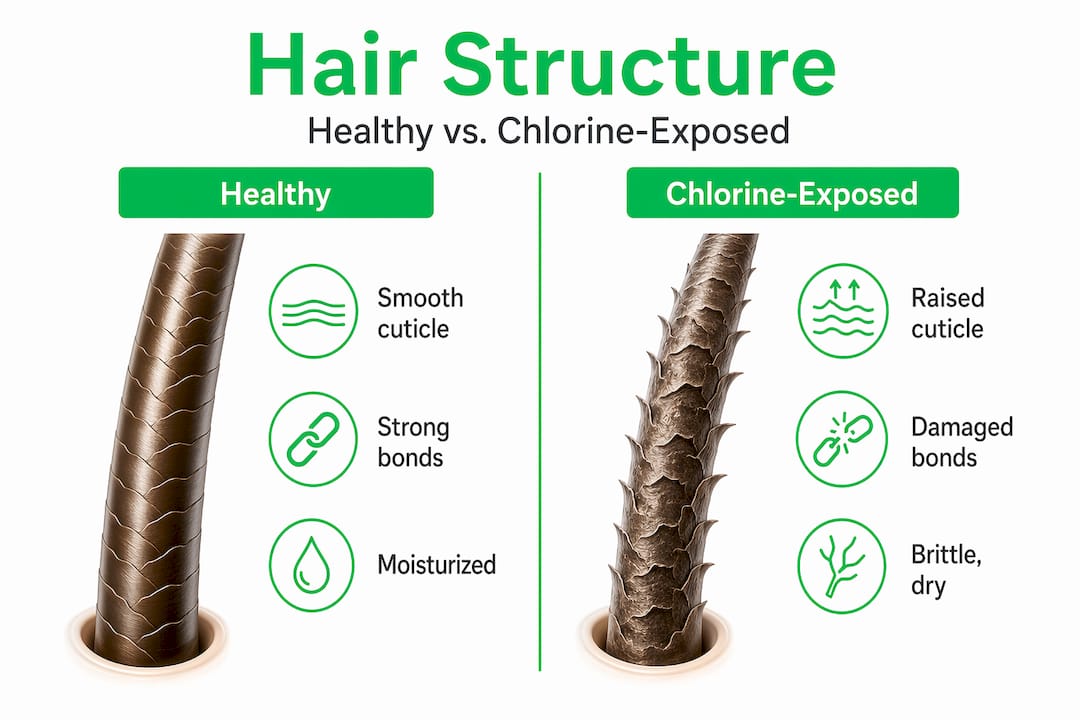
The damage goes deeper than the surface, too. Repeated chlorine exposure degrades hair keratin, specifically the cysteine-rich bonds that give hair its tensile strength and elasticity. Electron microscopy has confirmed this protein loss. The result is hair that snaps rather than stretches, frays rather than flexes.
| Feature | Healthy hair | Chlorine-exposed hair |
|---|---|---|
| Cuticle condition | Smooth, flat scales | Raised, rough scales |
| Porosity | Low to normal | High |
| Keratin integrity | Strong, intact bonds | Degraded, weakened bonds |
| Elasticity | Stretches before breaking | Brittle, snaps easily |
| Appearance | Shiny, smooth | Dull, frizzy, rough |
Pro Tip: Run a single strand of your hair between two fingers after swimming. If it feels rough going one direction and smooth the other, your cuticle is already lifted. That’s your early warning sign to start a repair routine immediately.
Chlorine and hair color: the green tint mystery
The green hair you see on some swimmers is one of the most misunderstood effects of chlorine on hair color. Many people blame chlorine directly, but the real culprit is more specific. Green hair results from copper minerals binding to the hair shaft, not from chlorine acting alone. Chlorine oxidizes the copper naturally present in pool water, and that oxidized copper then sticks to porous, bleached, or light hair like paint to a rough wall.
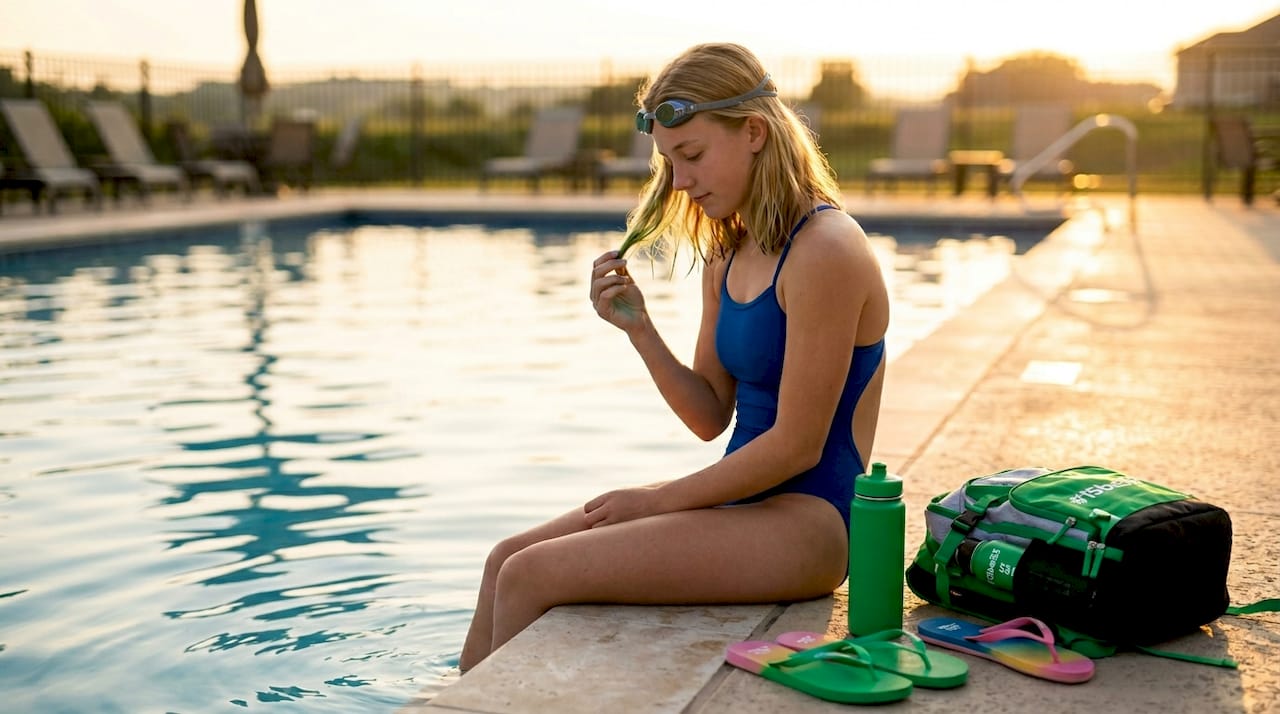
This is why green tint appears almost exclusively in blonde, platinum, or chemically lightened hair. Dark hair lacks the visual contrast to show the discoloration, but that doesn’t mean it escapes damage.
Here’s what chlorine does to different hair types and colors:
- Blonde and light hair: Most vulnerable to the green tint from copper oxidation. Also prone to overall brassiness and uneven lightening.
- Dark hair: Less visible discoloration, but chlorine still fades depth and vibrancy over time.
- Color-treated hair: Dye molecules are particularly vulnerable. Chlorine accelerates fading because it raises the cuticle, allowing color molecules to escape faster.
- Gray or white hair: Can take on a yellowish or greenish cast from mineral deposits and oxidation.
- Chemically relaxed or permed hair: Already structurally compromised, so chlorine accelerates breakage and textural changes significantly.
To address green tint specifically, the fix isn’t a clarifying shampoo. You need to target the mineral buildup itself. A hair metal detox removes copper and mineral deposits that standard shampoos leave behind.
Pro Tip: Mixing a tablespoon of baking soda into your regular shampoo and working it through green-tinted hair before rinsing can help break down copper deposits in a pinch. Follow immediately with a deep conditioner to offset the dryness.
Hair loss vs. hair damage: a distinction that matters
This is where a lot of unnecessary panic starts. After a few weeks of regular swimming, people notice more hair on their towel or comb and assume chlorine is making them go bald. That fear is understandable, but the biology doesn’t support it.
Chlorine causes hair shaft breakage, not damage to the hair follicle. The follicle is embedded in your scalp and protected by layers of tissue. Chlorine in pool or shower water simply doesn’t penetrate that deeply. What you’re seeing on your brush isn’t hair that has fallen out at the root. It’s fragmented hair that snapped mid-shaft because the keratin bonds were weakened.
The difference between breakage and shedding is something you can actually check yourself. Pull a strand that’s come out and look at the end. A tapered, fine tip means the strand completed its natural growth cycle and shed. A blunt or rough end means it broke. If most of what you’re collecting looks blunt, you’re dealing with chlorine hair damage, not hair loss.
There’s currently no robust clinical evidence linking chlorine exposure to alopecia or permanent follicle damage. If you’re genuinely worried about thinning or shedding that seems excessive and ongoing beyond what breakage explains, that warrants a conversation with a dermatologist. But for most swimmers, the answer is repair, not alarm.
Pro Tip: Take a photo of your hairline and the density at your temples once a month. If the hairline itself is unchanged but your ends look thinner and more broken, you’re dealing with shaft damage. That’s fully reversible with the right care routine.
Practical strategies for preventing and repairing chlorine damage
Prevention is significantly easier than repair. The good news is that the most effective strategies cost nothing and take under a minute.
- Pre-wet your hair before entering the pool. Your hair shaft is like a sponge. Pre-wetting with clean water reduces how much chlorinated water it can absorb, because the shaft is already saturated.
- Rinse immediately after swimming. Don’t wait until you get home. Prompt rinsing after swimming removes chlorine residues before they can continue oxidizing the hair shaft. Every minute counts.
- Apply a leave-in conditioner or hair oil before swimming. Oils create a physical barrier that slows chlorine penetration. Coconut oil, argan oil, or even a dedicated swim spray all work.
- Wear a silicone swim cap. Not glamorous, but genuinely effective. Silicone caps, unlike latex, create a near-waterproof seal that keeps pool water away from hair entirely.
- Wash with a sulfate-free, pH balanced shampoo. Sulfate-free shampoos remove chlorine residue without stripping the scalp’s remaining moisture or worsening cuticle damage.
- Never leave chlorine in overnight. Delayed rinsing worsens damage by prolonging oxidation. If you swim in the evening and skip the wash, chlorine continues working on your hair while you sleep.
- Deep condition weekly. Protein-rich treatments help temporarily rebuild the keratin bonds that chlorine degrades. Look for ingredients like hydrolyzed keratin, silk amino acids, or biotin.
| Strategy | Purpose | When to do it |
|---|---|---|
| Pre-wet with clean water | Reduces chlorine absorption | Before entering pool |
| Apply oil or leave-in conditioner | Physical barrier protection | Before entering pool |
| Rinse immediately | Removes residual chlorine | Right after swimming |
| Sulfate-free shampoo wash | Cleanses without stripping | After swim, same day |
| Deep conditioning treatment | Restores protein and moisture | Once or twice weekly |
| Avoid heat styling post-swim | Prevents compounded damage | Day of swimming |
For protecting your hair from all environmental stressors during warmer months, the guidance on protecting hair outdoors applies directly here too.
Chlorine’s impact on your scalp
Your scalp takes just as much of a hit as your hair, but it rarely gets the same attention. Chlorine disrupts the scalp’s pH and microbiome, weakening the acid mantle that keeps the skin barrier functional and the microbial environment balanced. Pool water is typically alkaline, which directly works against the slightly acidic environment your scalp needs to thrive.
The most common symptoms swimmers report after frequent chlorine exposure include:
- Persistent itching and tightness that starts within hours of swimming
- Flaking that resembles dandruff but appears mainly after pool sessions
- Redness and sensitivity along the hairline and behind the ears
- Increased oiliness as sebaceous glands overcorrect after being stripped
- Scalp odor from microbial imbalance caused by disrupted pH levels
The fix starts with how you wash. Harsh shampoos compound the damage chlorine has already done. Use a pH balanced cleanser and follow with a lightweight scalp moisturizer or serum containing ingredients like niacinamide, panthenol, or aloe vera. Also consider that your daily shower could be contributing to the problem. If your tap water contains chlorine, you’re stacking daily chemical exposure on top of whatever you absorbed at the pool. Addressing your shower water quality is one of the most overlooked steps in chlorine exposure hair care.
My honest take on chlorine and hair care
I’ve worked with a lot of people who came to me frustrated because they were doing everything right at the pool and still dealing with dry, broken hair. What I’ve learned is that the pool gets all the blame, but the daily shower is often the bigger problem. If you’re rinsing chlorine-damaged hair with more chlorine every morning, you’re undoing your recovery before it can start.
The other thing I’d push back on is the tendency to reach for heavy protein treatments immediately after noticing damage. Protein overload is a real issue, and if your hair is more moisture-depleted than protein-depleted, layering on keratin treatments can make brittleness worse, not better. I always recommend starting with moisture first, then reassessing.
What actually moves the needle, in my experience, is consistent moisture retention, not intensive weekly treatments. Sealing the cuticle after every wash with a cool water rinse, using a satin pillowcase, and genuinely cutting back on heat styling does more for chlorine-damaged hair than any expensive chlorine hair treatment. The structural changes are real, but they’re also reversible with patience and the right daily habits.
The most underrated step? Fixing the water you shower with. It’s the one change most people never think about, and it makes everything else work better.
— Sara
Give your hair a break from chlorine at home
If you’re already doing the right things after swimming, it’s time to look at what your shower is doing to your hair every single day.
Vitacleanhq’s Vitamin C shower filters neutralize chlorine at the source before it ever touches your hair and scalp. Vitamin C is one of the most effective compounds for breaking down chlorine, and Vitacleanhq has built that chemistry directly into an easy-to-install shower head you can swap in minutes. For those who want a broader filtration solution, the ceramic filter range goes further, targeting additional impurities alongside chlorine. Staying consistent is easy with the filter refill plan, which keeps your filter performing at its best without having to think about it. When your daily shower stops working against your hair, everything else in your routine gets easier.
FAQ
Does chlorine dry out your hair?
Yes. Chlorine strips the natural lipids and oils from the hair shaft and cuticle, reducing moisture retention and leaving hair feeling dry, rough, and brittle with repeated exposure.
Why does my hair turn green after swimming?
Green hair is caused by oxidized copper in pool water binding to the hair shaft, not chlorine itself. Blonde and chemically lightened hair is most susceptible because of its higher porosity.
Can chlorine cause permanent hair loss?
No. Chlorine damages the hair shaft through breakage, but it does not damage hair follicles. There is no clinical evidence linking chlorine exposure to alopecia or permanent hair loss.
How do I protect my hair from chlorine in pools?
Pre-wet your hair with clean water before swimming, apply a protective oil or leave-in conditioner, and rinse thoroughly with fresh water immediately after getting out. Use a sulfate-free shampoo on the same day.
Does chlorine in shower water affect hair too?
Yes. Daily exposure to chlorinated tap water during showering compounds the damage from pool swimming. Using a chlorine-filtering shower head removes this daily source of chemical stress on hair and scalp.