
Vitamin C Infusion: Benefits for Skin, Hair, and Water Quality
TL;DR:
- IV vitamin C infusion provides high-dose absorption for therapeutic purposes, requiring medical supervision.
- Vitamin C shower filters neutralize chlorine, improving skin and hair health through daily water treatment.
- The best option depends on individual wellness goals and lifestyle, with shower filters being a low-cost, low-risk everyday solution.
Most people hear “vitamin C infusion” and picture a clinic, an IV drip, and a medical chair. What many don’t realize is that infusing vitamin C into your daily routine doesn’t require a needle or a doctor’s appointment. A vitamin C shower filter does exactly what the name suggests: it infuses ascorbic acid directly into the water flowing over your skin and hair every single morning. Two completely different methods, one shared goal, and results that are worth understanding before you choose your path.
Table of Contents
- What is vitamin C infusion? Two approaches explained
- IV vitamin C infusion: How it works and health impacts
- Vitamin C shower filters: Transforming water for skin and hair
- Making vitamin C infusion work for you: Choosing the right method
- Why most people overlook the power of vitamin C-infused showers
- Find your vitamin C solution: Shower filters and more
- Frequently asked questions
Key Takeaways
| Point | Details |
|---|---|
| Dual infusion methods | Vitamin C infusion can mean an IV treatment or a shower filter solution, each improving skin and hair in different ways. |
| IV delivers peak absorption | IV vitamin C achieves much higher absorption and plasma levels than oral supplements, potentially boosting skin health. |
| Shower filters remove chlorine | Vitamin C shower filters outperform standard carbon filters in removing chlorine from shower water, supporting healthier skin and hair. |
| Choose based on needs | Select IV infusion for medical wellness goals and shower filters for practical, daily skincare and haircare improvements. |
| Consider risks and upkeep | IV therapy comes with medical risks, while shower filter effectiveness depends on regular replacement and maintenance. |
What is vitamin C infusion? Two approaches explained
Let’s be direct about what “vitamin C infusion” actually covers, because the term gets used loosely across very different wellness categories. According to research on infusion vitamin C therapy benefits, vitamin C infusion primarily refers to two distinct applications: intravenous (IV) high-dose vitamin C therapy, where ascorbic acid is infused directly into the bloodstream for therapeutic benefits including skin health, and vitamin C shower filters, where ascorbic acid is infused into shower water to neutralize chlorine and improve water quality for skin and hair.
Both approaches use ascorbic acid, the active form of vitamin C, and both aim to increase absorption beyond what a standard vitamin C tablet can deliver. But the methods, risks, and day-to-day practicalities could not be more different. Understanding vitamin C filtration benefits helps clarify which approach makes sense for your lifestyle.
Here’s a side-by-side comparison of the two methods:
| Feature | IV vitamin C infusion | Vitamin C shower filter |
|---|---|---|
| Delivery method | Direct bloodstream injection | Infused into shower water |
| Absorption rate | Nearly 100% | Topical, through skin and scalp |
| Typical use case | Medical/therapeutic | Daily skin and hair care |
| Cost | $100 to $200+ per session | One-time purchase plus filter replacement |
| Requires professional | Yes | No |
| FDA regulated | Not for wellness | No regulation required |
| Maintenance | Scheduled appointments | Regular filter replacement |
Key pros and cons at a glance:
- IV infusion pros: Maximum vitamin C absorption, high plasma concentrations, clinically studied benefits
- IV infusion cons: Expensive, requires a clinic visit, carries medical risks, not FDA-approved for wellness
- Shower filter pros: Easy to install, no appointments, neutralizes chlorine daily, supports skin and hair health over time
- Shower filter cons: Benefits are mostly user-reported rather than clinically proven, requires consistent filter replacement
The takeaway is simple: IV therapy is suited for people seeking high-dose therapeutic intervention, while shower filters are ideal for anyone wanting a low-maintenance, everyday upgrade to their skin and hair health routine.
IV vitamin C infusion: How it works and health impacts
IV vitamin C therapy works by delivering ascorbic acid directly into your bloodstream through an intravenous drip, completely bypassing the digestive system. This is a critical distinction. When you take an oral vitamin C supplement, your gut can only absorb between 20 and 50% of the dose, and the more you take at once, the lower that percentage drops. IV delivery sidesteps this entirely, achieving absorption rates approaching 100%.
The plasma concentrations reached through IV are staggering compared to oral intake. Studies show that plasma peaks reach 10 to 15 mM with high-dose IV therapy, compared to a maximum of just 0.22 mM with oral supplementation. That’s a difference of 70 times or more. At these concentrations, vitamin C can act as a pro-oxidant, generating hydrogen peroxide that may have effects on abnormal cells, which is why cancer researchers have studied it as an adjunct therapy.
Here’s what a typical IV vitamin C session looks like, step by step:
- Consultation: A licensed medical professional reviews your health history and checks for contraindications, including G6PD deficiency (a genetic condition that makes high-dose vitamin C dangerous)
- Blood work: Many clinics run baseline labs to assess kidney function and red blood cell health before your first session
- IV setup: A small catheter is placed in your arm, and the vitamin C solution is connected to a drip line
- Infusion: The session typically runs 30 to 90 minutes depending on the dose, commonly ranging from 7.5g to 50g of ascorbic acid
- Monitoring: A nurse or technician monitors you throughout for any reactions
- Recovery: Most people feel fine immediately after, though some report temporary fatigue or lightheadedness
“High-dose intravenous vitamin C achieves plasma concentrations 10 to 100 times higher than oral supplementation, enabling biological effects that simply cannot be replicated by swallowing a tablet.” This absorption gap is what makes IV therapy clinically interesting, but it also explains why it carries risks that oral vitamin C does not.
Reported benefits from clinics promoting IV vitamin C include improved collagen synthesis, enhanced immune function, and brighter, firmer-looking skin. Some studies support these outcomes at the cellular level, but large-scale randomized controlled trials (RCTs) in healthy individuals remain limited.

The risks are real and worth taking seriously. According to MD Anderson Cancer Center, IV vitamin C therapy carries risks including infection at the IV site, bleeding, fluid overload, and potential toxicity when combined with other supplements. It is not FDA-regulated for general wellness purposes, and its use during chemotherapy requires careful medical supervision.
Pro Tip: Before booking any IV infusion appointment, ask your provider specifically about G6PD deficiency testing. This enzyme deficiency affects an estimated 400 million people worldwide and makes high-dose IV vitamin C genuinely dangerous. A simple blood test can rule it out.
Vitamin C shower filters: Transforming water for skin and hair
Turning from medical applications, let’s examine vitamin C shower filters and their practical impact on your daily routine.
Your shower water carries chlorine. Municipal water treatment systems add it deliberately to kill bacteria and pathogens, which is important for public health. But the same chlorine that makes your tap water safe to drink also strips natural oils from your skin, disrupts your scalp’s microbiome, and leaves hair feeling dry and brittle after every wash. You feel it as tightness after showering, dull hair, or persistent scalp irritation that no shampoo seems to fix.
Vitamin C shower filters work through a straightforward chemical reaction. Ascorbic acid (vitamin C) reacts with free chlorine and chloramine (a chlorine-ammonia compound increasingly common in municipal water) to neutralize both almost instantly. Research using EPA and USDA testing methods confirms that vitamin C shower filters achieve superior chlorine removal compared to standard carbon filters, particularly in hot water where carbon filters tend to underperform significantly.
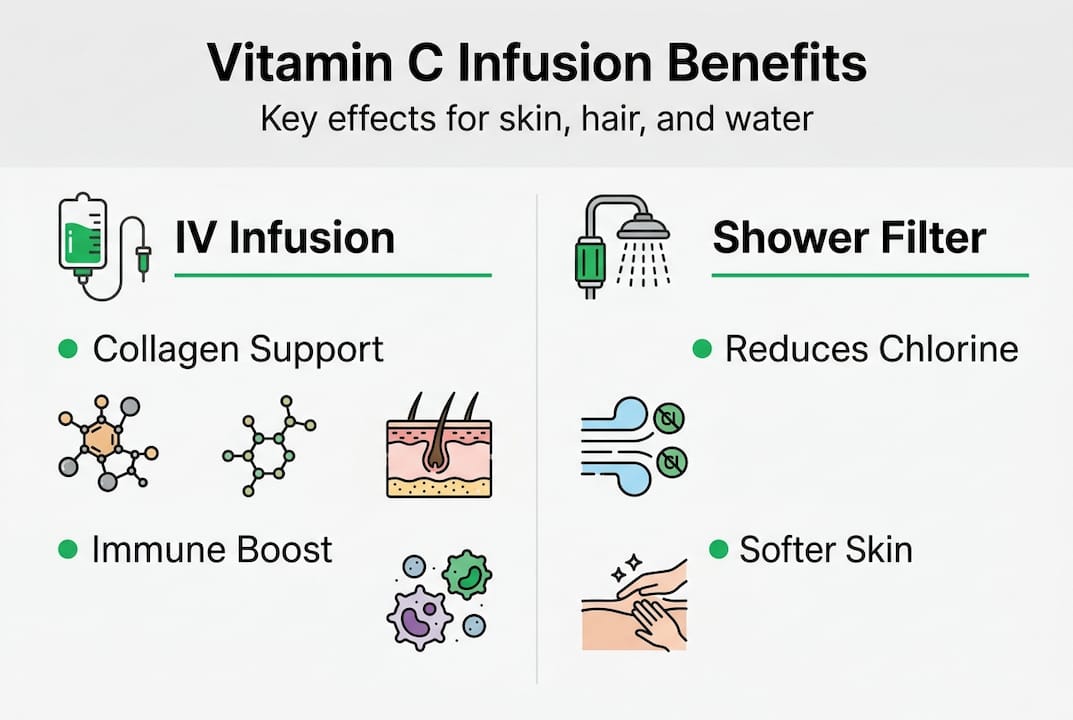
This matters because hot showers open your skin’s pores, meaning your skin is most vulnerable to chlorine absorption precisely when most people prefer to shower. A vitamin C filter positioned at the shower head addresses this exposure at the source.
Here’s what regular users report noticing within the first few weeks of switching to a vitamin C shower head:
- Reduced skin dryness: Skin feels more balanced and less tight after showering
- Softer hair: Hair retains more natural moisture and feels smoother between washes
- Calmer scalp: Reduced itchiness and flaking, particularly for those with sensitive scalps
- Fewer breakouts: Some users with back and chest acne report improvement after switching
- Improved color retention: People with dyed hair notice color fading more slowly
- Less eye irritation: Particularly relevant for those with contact lens sensitivity
The science-backed evidence for topical vitamin C absorption through shower water is still developing, and most current support comes from user experience rather than clinical trials. That said, the chlorine removal itself is well-documented and chemically verifiable. The skin and hair improvements follow logically from removing a known irritant from your daily water exposure.
Understanding how vitamin C shower helps skin comes down to this: it’s less about vitamin C doing something miraculous on your skin, and more about removing something harmful that was working against you every single day.
Pro Tip: Vitamin C filter cartridges typically last between one and three months depending on your water usage and chlorine levels. Mark your replacement date on your phone calendar from day one. A depleted filter provides zero protection, and many people continue assuming they’re filtering long after the ascorbic acid has been fully consumed.
Making vitamin C infusion work for you: Choosing the right method
Having explored how both approaches work, let’s focus on which vitamin C infusion method fits your lifestyle, needs, and wellness goals.
This decision doesn’t have to be complicated. The right method depends on what problem you’re actually trying to solve, what resources you have available, and how much disruption you’re willing to add to your routine.
Choose IV vitamin C infusion if you:
- Are working with a healthcare provider on a specific therapeutic goal such as immune support or post-illness recovery
- Have a diagnosed condition that your doctor believes may respond to high-dose vitamin C
- Can afford $100 to $200 or more per session on an ongoing basis
- Understand and accept the associated medical risks
- Have already ruled out G6PD deficiency and other contraindications
Choose a vitamin C shower filter if you:
- Experience regular dry skin, dull hair, scalp irritation, or sensitivity after showering
- Want a daily, passive improvement to your water quality without appointments or scheduling
- Are renting or moving frequently and need something portable and easy to install
- Prefer a low-cost solution with predictable monthly maintenance (filter replacements)
- Are interested in reducing chlorine exposure as part of a broader skincare strategy
It’s also worth noting that these methods are not mutually exclusive. Someone undergoing IV therapy for therapeutic reasons can absolutely also use a vitamin C shower head for daily skin and hair maintenance. The two approaches address entirely different layers of your health routine.
According to evidence reviewed at CentreSpring MD, IV vitamin C is promoted by clinics for skin and immune benefits, but lacks the robust randomized controlled trial data to be considered a standard care protocol. Shower filters, by contrast, show reliable chlorine removal by EPA and USDA measurement standards, even if the direct skin and hair benefits are largely user-reported.
When comparing shower filters to traditional carbon options, vitamin C clearly outperforms in hot water conditions, which is when most people actually shower.
Pro Tip: If you’re starting fresh, begin with a vitamin C shower filter. It’s the lower-risk, lower-cost, and easier-to-maintain option. Once you’ve noticed the baseline improvement in your skin and hair, you’ll have a much clearer sense of whether additional interventions like IV therapy are worth pursuing for your specific goals.
Why most people overlook the power of vitamin C-infused showers
IV vitamin C gets the spotlight in wellness media because it sounds dramatic. A clinic, a drip, a noticeable rush of energy after a session. That narrative is easy to market, easy to photograph, and easy to turn into content. Shower filters, by comparison, are quiet. Their benefits accumulate gradually over weeks rather than arriving in a single dramatic session.
But here’s what we’ve seen from real users who switch to vitamin C shower filters: the results may be subtle, but they’re daily. You don’t schedule a skin improvement. It just happens, every morning, every shower. Over months, the cumulative effect on skin texture, hair softness, and scalp health is genuinely significant. The problem is that people rarely credit their shower filter for the improvement. They attribute it to a new moisturizer or a different shampoo.
The IV wellness industry is worth billions precisely because it creates visible, marketable experiences. A shower filter creates invisible, consistent protection. Both have value. But if you’re a health-conscious person who showers every day, the everyday solution deserves far more attention than it currently receives.
Find your vitamin C solution: Shower filters and more
You’ve now seen both sides of the vitamin C infusion story. If IV therapy is part of your medical care plan, work with your provider. But if you’re ready to improve your daily skin and hair health without a clinic visit, your shower is the most practical place to start.
Vitaclean makes adopting vitamin C shower filtration genuinely simple. Whether you’re looking for a handheld system, a wall-mounted option, or just want to start with vitamin C shower filter shots to try the concept first, the range covers every setup. For a full look at compatible systems and replacement shower head filters, the collections page has everything organized by compatibility and use. A subscription option also means you never run out of filter replacements or lose protection without realizing it.
Frequently asked questions
Are vitamin C shower filters safe for daily use?
Yes, vitamin C shower filters are designed for daily use and effectively remove chlorine using EPA and USDA-validated methods, making them safe and beneficial for regular skin and hair exposure.
Can IV vitamin C infusion improve skin health more than oral supplements?
IV infusion achieves plasma concentrations 10 to 100 times higher than oral vitamin C, which means it has the potential to support skin health at a cellular level that tablets simply cannot match.
Are there risks to IV vitamin C infusion?
Yes, risks include infection at the IV site, fluid overload, overdose toxicity, and contraindications including G6PD deficiency, which is why MD Anderson advises careful supervision, especially during chemotherapy.
How does vitamin C infusion through shower filters compare to other water filters?
Vitamin C shower filters outperform carbon filters in hot water conditions, neutralizing both free chlorine and chloramine more effectively, which makes them better suited for the typical hot shower environment.