
Why Hard Water Affects Skincare Efficacy and What to Do
TL;DR:
- Hard water, containing high calcium and magnesium levels, blocks skincare absorption and damages the skin barrier. Switching to a pH-balanced syndet cleanser and installing a shower filter can prevent mineral buildup and improve skin health. Genetic factors and water hardness levels influence individual risk for skin problems like eczema and irritation.
Hard water is defined as water containing calcium and magnesium concentrations above 120 mg/L of calcium carbonate, and it directly blocks your skin’s ability to absorb the skincare products you apply. The mineral residues left behind after washing create an invisible film on the skin surface. That film stops active ingredients like hyaluronic acid from reaching the deeper layers where they work. Understanding why hard water affects skincare efficacy is the first step toward fixing a problem that millions of people misattribute to bad products. Water hardness above 200 mg/L is linked to a 12% increase in eczema prevalence, particularly in infants and genetically predisposed people. That figure comes from population data covering nearly 400,000 adults, and it signals that this is a public health issue, not just a cosmetic inconvenience.
Why hard water affects skincare efficacy at a chemical level
The core problem is a chemical reaction called saponification. When calcium and magnesium ions in hard water meet the fatty acids and surfactants in your cleanser or soap, they form insoluble salts, the white residue commonly called soap scum. That residue does not rinse away cleanly. It deposits directly onto your skin.

The consequences go beyond surface grime. Calcium and magnesium residues trap active ingredients on the skin’s outer layer, preventing penetration. A humectant like hyaluronic acid cannot pull moisture into the dermis if a waxy mineral film is sitting on top of the epidermis. Your expensive serum essentially sits on a sealed surface.
Hard water also disrupts skin pH. The acid mantle is a thin, slightly acidic film on the skin surface with a pH of around 4.5–5.5. It acts as the skin’s first line of defense against bacteria and moisture loss. Hard water raises skin pH and strips free fatty acids from the acid mantle, weakening the barrier and raising irritation risk. When the acid mantle is compromised, every product you apply performs worse.
- Soap scum formation: Calcium and magnesium ions react with soap surfactants to form insoluble deposits on skin.
- Active ingredient blockade: Mineral film prevents humectants and peptides from reaching deeper skin layers.
- pH disruption: Hard water raises skin alkalinity, destabilizing the acid mantle.
- Compounded residue: Sodium lauryl sulfate, a common cleanser ingredient, reacts especially poorly with hard water minerals, worsening deposit buildup.
Pro Tip: Switch from bar soap to a syndet (synthetic detergent) cleanser. Syndet cleansers are formulated at pH 5–5.5 and do not react with calcium or magnesium ions, so they produce no soap scum on your skin.
What are the skin health consequences of hard water?
The visible effects of mineral buildup go well beyond a dull complexion. Dry, tight, itchy skin after washing is the most common complaint in hard water areas. The mineral film disrupts moisture retention by blocking the skin’s natural moisturizing factors and preventing applied moisturizers from binding effectively. People in high-hardness regions often use more product and still feel dry. That is not a product failure. It is a delivery failure caused by the mineral barrier.
The deeper biological damage is more alarming. Topical calcium from hard water distorts the epidermal calcium gradient that controls keratinocyte differentiation and barrier repair, inhibiting recovery processes by up to 100%. The skin cannot fix itself efficiently when exogenous calcium is constantly disrupting the repair signal. This is not a passive deposit. It is an active interference with the skin’s own healing system.
“Misattributing skincare irritation to product faults overlooks hard water’s role in altering product chemistry and skin interaction. The water itself is changing how your cleanser behaves before it even reaches your skin.”
Acne-prone skin faces a specific risk. Mineral residues from hard water can clog pores, and the elevated skin pH creates conditions that favor acne-causing bacteria. People who switch cleansers repeatedly looking for a breakout fix often find the real culprit is their tap water, not their products.
| Skin concern | Hard water mechanism | Severity factor |
|---|---|---|
| Dryness and tightness | Mineral film blocks moisturizer absorption | Worsens with water hardness level |
| Eczema flares | pH disruption and barrier damage | Amplified by filaggrin mutations |
| Acne and congestion | Pore clogging from mineral residue | Higher risk in oily skin types |
| Barrier repair failure | Calcium disrupts epidermal gradient | Inhibits recovery by up to 100% |
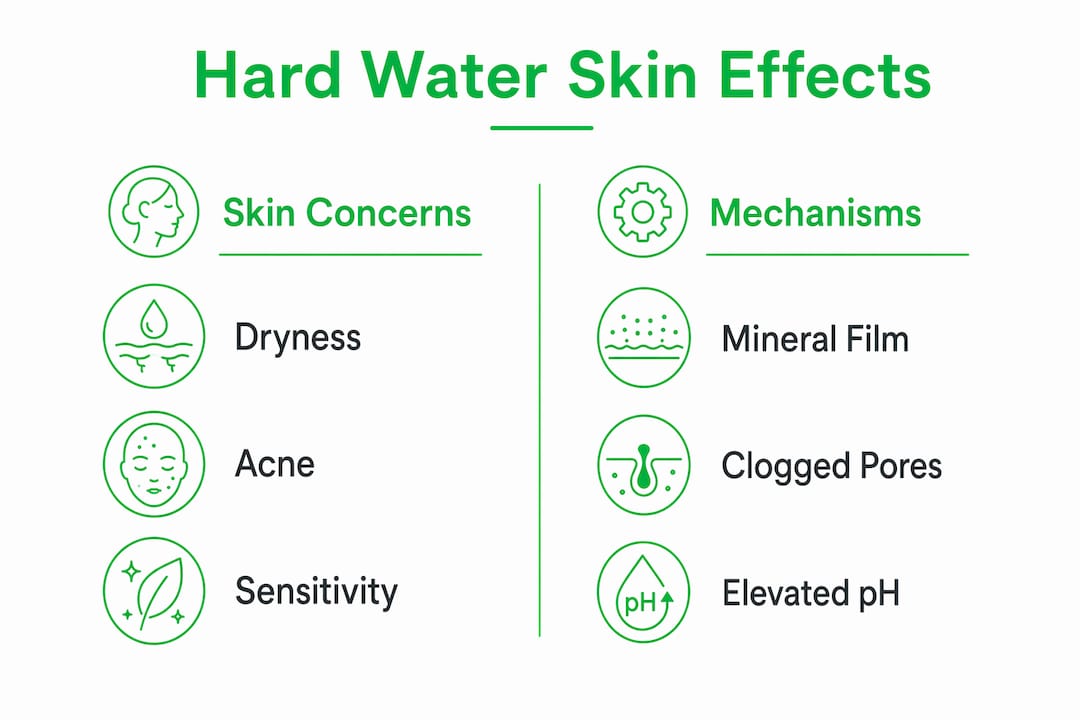
Sensitive skin responds fastest to hard water exposure. Redness, stinging after cleansing, and persistent flaking are all signs that the skin barrier is compromised. If you notice these symptoms worsen after moving to a new area or during dry seasons when water hardness concentrates, hard water is likely a primary driver. You can read more about the link between showering and eczema for a deeper look at prevention strategies.
How do genetics and water hardness levels shape your risk?
Not everyone in a hard water area develops the same skin problems. Genetic variation plays a major role in determining who suffers most. Filaggrin loss-of-function mutations increase susceptibility to hard water damage, with a hazard ratio of 2.72 for eczema development. Filaggrin is a protein that helps form the skin barrier and acidify the acid mantle. Without it, hard water minerals cause far greater disruption than they would in someone with intact filaggrin function.
Water hardness levels also matter in a graded way. Moderately hard water (120–200 mg/L CaCO₃) causes measurable but manageable barrier disruption. Above 200 mg/L, the risk of eczema and chronic dryness increases significantly. Very hard water, common in parts of the American Southwest, the UK, and the Middle East, sits well above that threshold.
| Hardness level | CaCO₃ concentration | Associated skin effects |
|---|---|---|
| Soft | Below 60 mg/L | Minimal barrier disruption |
| Moderately hard | 60–120 mg/L | Mild dryness, reduced product absorption |
| Hard | 120–200 mg/L | Barrier disruption, increased irritation risk |
| Very hard | Above 200 mg/L | Eczema risk, significant barrier impairment |
Age and skin condition also influence vulnerability. Infants have thinner, more permeable skin barriers and are disproportionately affected by hard water exposure. Older adults with naturally declining barrier function face similar amplified risk. If you already have atopic dermatitis or rosacea, hard water accelerates flares and slows recovery.
Pro Tip: If you have a family history of eczema or known filaggrin mutations, treat hard water as a clinical concern, not just a cosmetic one. Prioritize barrier-repair ingredients and consider a shower filter as a preventive measure, not a luxury.
What practical steps improve skincare efficacy in hard water areas?
Adjusting your routine is the most direct way to counter hard water’s effects. These steps are ranked by impact.
-
Switch to a syndet cleanser. Syndet cleansers at pH 5–5.5 show only 1.8% skin irritation rates compared to 40.4% with traditional alkaline soap. That difference is dramatic. Syndet cleansers do not react with calcium or magnesium, so no soap scum forms on your skin during washing.
-
Limit shower time to 5–10 minutes. Shorter showers with lukewarm water reduce mineral load on the skin and prevent excessive stripping of natural oils. Hot water opens pores and increases mineral penetration. Lukewarm water limits both.
-
Apply niacinamide at 2–5% concentration. Niacinamide stimulates filaggrin production and supports the skin’s natural moisturizing factor and acid mantle. It directly counters the barrier damage caused by hard water minerals, making it one of the most targeted ingredients you can use in a hard water skincare routine.
-
Layer ceramides and humectants immediately after washing. Apply moisturizer within 60 seconds of patting skin dry. The mineral film is thinnest at this point, and the skin is most receptive to absorption. Ceramides reinforce the lipid barrier that hard water strips away.
-
Install a shower filter. Vitamin C shower filters and ceramic filters reduce mineral content in shower water before it contacts your skin. Water softening prevents barrier dysfunction initiation in at-risk individuals, though it does not reverse established eczema inflammation. Prevention is the goal. For a full breakdown of shower habits that help, the hard water effects guide from Vitacleanhq covers simple daily fixes in detail.
Dietary support also contributes. Omega-3 fatty acids, found in fatty fish, flaxseed, and walnuts, support the skin’s lipid barrier from the inside. They do not replace topical care, but they make the barrier more resilient to external stressors like mineral exposure. Maintaining indoor humidity with a humidifier also helps. Ultrasonic humidification supports skin hydration in dry environments, which is especially relevant in hard water regions where indoor air tends to be drier.
Key Takeaways
Hard water blocks skincare efficacy by depositing calcium and magnesium residues that prevent active ingredients from penetrating the skin and actively disrupt the barrier’s ability to repair itself.
| Point | Details |
|---|---|
| Mineral film blocks absorption | Calcium and magnesium deposits prevent humectants and actives from reaching deeper skin layers. |
| Acid mantle disruption | Hard water raises skin pH, weakening the barrier and increasing irritation and dryness. |
| Genetic risk amplification | Filaggrin mutations raise eczema hazard ratio to 2.72 in hard water exposure. |
| Syndet cleansers are the top fix | Switching from alkaline soap to syndet cleansers reduces skin irritation from 40.4% to 1.8%. |
| Filters prevent, not cure | Shower filters reduce mineral load and prevent barrier damage but do not reverse existing eczema. |
What I’ve learned from years of watching people blame their products
People spend hundreds of dollars reformulating their skincare routines when the real variable is the water coming out of their showerhead. I have seen this pattern repeatedly. Someone switches from one cleanser to another, adds a new serum, cuts out fragrance, and still deals with dryness and breakouts. Then they move apartments, or they install a filter, and suddenly everything works. The products did not change. The water did.
The research on consistent dermocosmetic routines confirms that adapting your routine to your water type improves skin comfort significantly, even without a full water softening system. That is an important nuance. You do not need to overhaul your plumbing to see results. You need to understand the mechanism and adjust accordingly.
What I find most underappreciated is the genetic angle. Filaggrin mutations are more common than most people realize, and they turn a manageable environmental stressor into a clinical one. If you have struggled with eczema your whole life and live in a hard water area, that combination is not bad luck. It is a gene-environment interaction with a real biological explanation and real solutions.
The current research gap I watch closely is the long-term cumulative effect of moderate hard water exposure on people without obvious genetic risk. Most studies focus on eczema outcomes. The slower, subtler damage to barrier function in people who never develop clinical eczema is less studied and probably underestimated.
— Sara
Better water, better results: how Vitacleanhq can help
If your skincare routine is not performing the way it should, the water you shower in may be the reason. Vitacleanhq designs shower filtration products specifically to reduce the mineral content that undermines your skin barrier and blocks product absorption.
The Vitamin C shower filter shots neutralize chlorine and reduce mineral buildup before water contacts your skin, giving your cleanser and moisturizer a better surface to work with. The ceramic shower filters offer an additional layer of mineral reduction for high-hardness areas. For ongoing protection, the filter refill plan keeps your filtration system working at full capacity without the hassle of remembering to reorder. Cleaner water is the foundation your skincare routine needs to actually deliver results.
FAQ
What makes water “hard” and why does it matter for skin?
Hard water contains calcium and magnesium concentrations above 120 mg/L of calcium carbonate. These minerals deposit on the skin during washing, blocking product absorption and disrupting the skin’s acid mantle.
Can hard water cause eczema?
Hard water above 200 mg/L is linked to a 12% increase in eczema prevalence, particularly in people with filaggrin gene mutations. It does not cause eczema on its own, but it significantly raises risk in predisposed individuals.
Why do my skincare products stop working after I move to a new area?
Hard water in your new location may be forming a mineral film on your skin that blocks active ingredients from penetrating. The products have not changed. The water chemistry has.
What is the fastest fix for hard water skin problems?
Switching to a syndet cleanser is the most effective low-cost intervention. Syndet cleansers do not react with hard water minerals, eliminating soap scum formation and reducing skin irritation dramatically compared to alkaline bar soap.
Does a shower filter actually help skin?
Yes, shower filters reduce mineral load in the water before it contacts your skin, preventing barrier disruption. Clinical evidence shows water softening prevents barrier dysfunction initiation, though it does not reverse established inflammatory eczema.