
What Is a Tankless Water Filter? Your 2026 Guide
TL;DR:
- Tankless water filters clean water instantly without storing it, saving space and reducing water waste. They require an electrical outlet for the booster pump and can deliver higher flow rates with fresher water. Proper maintenance and pairing with shower filters improve skin and hair health while ensuring reliable performance.
A tankless water filter is defined as a water filtration system that cleans water on demand, the moment you open the tap, without storing filtered water in a tank. This design eliminates the bulky pressure tank found in traditional reverse osmosis (RO) systems, making it the most space-efficient filtration option available for home use. Tankless systems, also called tankless RO systems, save approximately 70% of under-sink cabinet space compared to tank-based models. They also waste significantly less water and deliver fresher results because nothing sits stagnant waiting to be used. If you’re weighing your options for cleaner, healthier water at home, understanding how these systems work is the right place to start.
What is a tankless water filter and how does it work?
A tankless water filter produces clean water the instant you turn on the faucet. There is no pre-filled storage tank. Instead, the system pulls water directly from your supply line, passes it through a series of filter stages, and delivers it straight to your tap in real time.
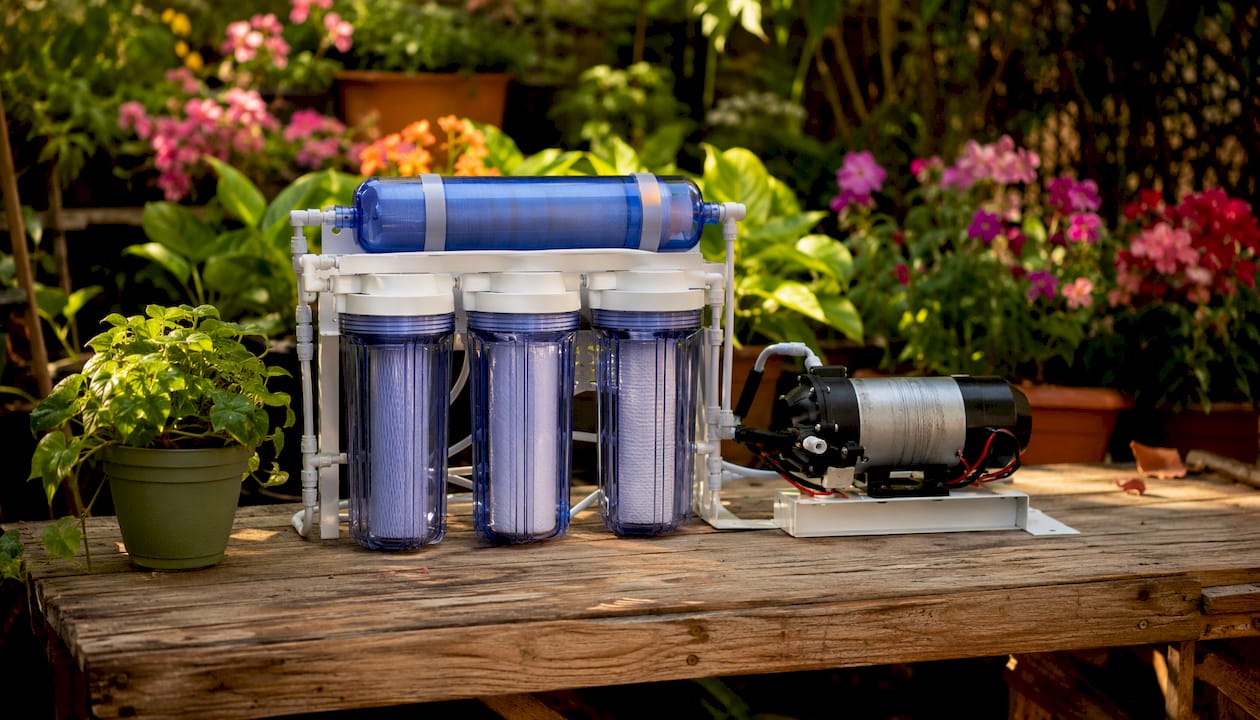
The core of most tankless systems is a reverse osmosis membrane, supported by pre-filters and post-filters. Pre-filters typically use sediment filtration at 5–20 micron ratings to catch debris, rust, and particles before they reach the membrane. The RO membrane then removes dissolved contaminants including heavy metals, chlorine, and fluoride. A final carbon post-filter polishes the taste before the water reaches your glass.
Because there is no gravity-fed tank, tankless systems rely on a built-in booster pump to push water through the membrane at the right pressure. That pump requires electricity. Homes without a dedicated outlet under the sink may need an electrical upgrade before installation, which is one of the most commonly overlooked setup costs.
Flow rates are a key performance metric. Tankless systems produce water at 400–1,600 gallons per day (GPD), compared to 50–100 GPD for traditional tank-based systems. That difference means a tankless system can keep up with household demand without making you wait for a tank to refill.
Pro Tip: Before buying a tankless system, check whether your under-sink cabinet has an electrical outlet. If it doesn’t, budget for an outlet installation to avoid a surprise cost on setup day.
What are the benefits of tankless water filters for home use?
Tankless water filter systems offer several concrete advantages over traditional setups, and most of them show up in your daily routine immediately.
Space savings you’ll actually notice
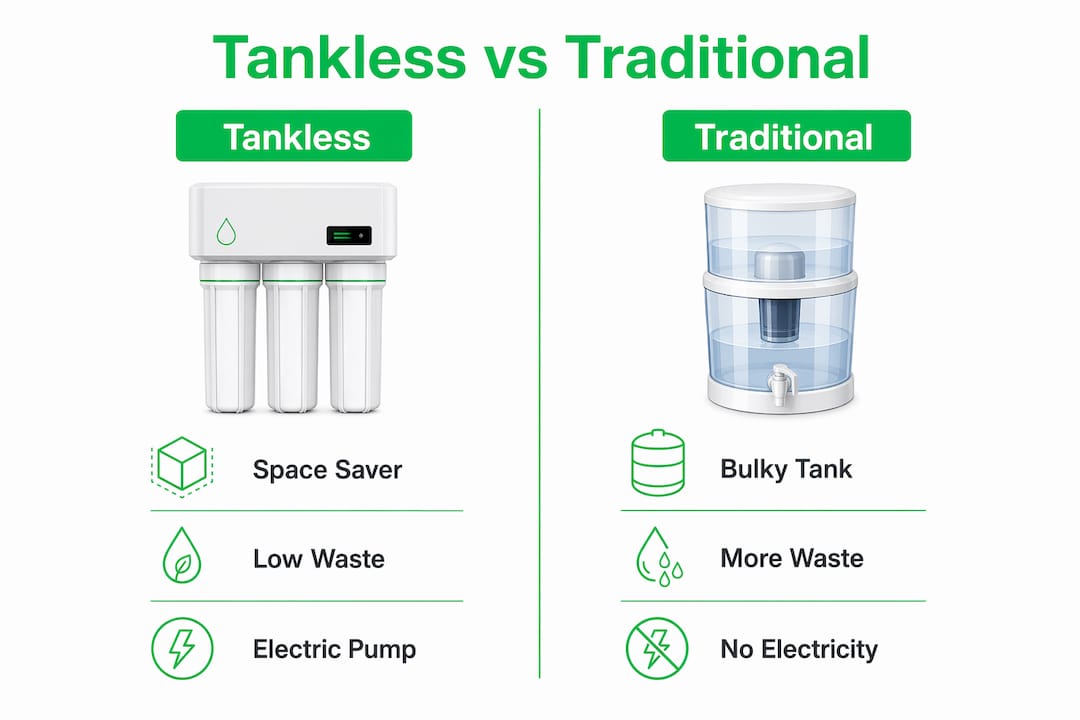
Tankless systems take up a fraction of the room that tank-based units require. The 70% reduction in cabinet space is not a minor improvement. It means you reclaim storage room under your sink for cleaning supplies, extra filters, or simply breathing room in a cramped kitchen.
Less water wasted with every gallon filtered
Traditional tank RO systems waste 3 to 5 gallons of water for every gallon they produce. Tankless systems cut that waste dramatically. Tankless RO systems waste 40–60% less water than traditional models, with water-to-waste ratios as efficient as 1.5:1. For a household that runs the filter tap multiple times a day, that adds up to real savings on your water bill over time.
Fresher water with no stagnation risk
Stored water in a traditional tank can sit for hours or days before you use it. Tankless systems deliver water on demand, which eliminates the stagnation risk that makes stored tank water a potential bacteria breeding ground. Every glass you pour is filtered fresh at that moment.
Key benefits at a glance
- Space efficiency: Saves up to 70% of under-sink cabinet space
- Water efficiency: Produces filtered water with a 1.5:1 waste ratio vs. 3:1 to 5:1 for older systems
- Water freshness: No storage tank means no stagnation and lower contamination risk
- Filter replacement speed: Cartridges swap out in 30 seconds without tools, compared to 20-plus minutes for traditional systems
- Skin and hair benefits: Removing chlorine and heavy metals from drinking water supports better skin hydration and hair health
The skin and hair connection is worth taking seriously. Chlorine and dissolved minerals in unfiltered tap water strip moisture from skin and weaken hair over time. Filtering your drinking water is one part of the equation. Filtering your shower water is the other, and the two work together for the best results.
How to maintain and care for a tankless water filter system
Maintenance is where tankless systems genuinely outperform traditional setups, but only if you stay consistent with the schedule.
Recommended replacement schedule
- Replace filter cartridges annually under normal conditions. In hard water areas, replace every 3–6 months. Maintenance experts recommend this frequency to keep flow rates stable and contaminant removal effective.
- Check inlet screens every 6 months. Clogged inlet screens restrict flow and force the system to work harder, which reduces energy efficiency and shortens the unit’s lifespan.
- Inspect the sediment pre-filter first when you notice reduced water pressure. Sediment filters at 5–20 microns catch the most debris and clog faster than the RO membrane.
- Match your filter’s flow rate to your system specs. External inline filters often handle flow rates up to 16 GPM. Using an undersized filter creates a bottleneck that defeats the purpose of a high-output tankless system.
- Use scale inhibitors or TAC (template-assisted crystallization) systems if you live in a hard water area. Scale inhibitors prevent mineral buildup in the heat exchanger and membrane, which is the leading cause of premature system failure.
Signs your filter needs attention
Reduced water flow at the tap is the clearest warning sign. A noticeable change in taste or odor is another. If your system displays an error code, a clogged or exhausted filter is usually the first thing to check. Neglecting filter maintenance can trigger error codes and lead to premature system failure, which turns a minor maintenance task into a costly repair.
Pro Tip: Set a phone reminder every 6 months to check your inlet screen. It takes five minutes and prevents the most common cause of reduced performance in tankless systems.
How do tankless water filters compare to traditional tank-based systems?
The differences between tankless and traditional tank-based water filters are significant enough to affect your buying decision, your installation plan, and your daily experience.
| Feature | Tankless system | Traditional tank system |
|---|---|---|
| Cabinet space | Saves up to 70% more space | Large pressure tank required |
| Water output | 400–1,600 GPD | 50–100 GPD |
| Water waste ratio | As low as 1.5:1 | 3:1 to 5:1 |
| Filter replacement | 30 seconds, no tools | 20+ minutes with wrenches |
| Water freshness | Filtered on demand, no stagnation | Stored water, stagnation risk |
| Electrical requirement | Requires outlet for booster pump | No electricity needed |
| Installation complexity | Moderate (outlet may be needed) | Simpler, no electrical work |
The one area where traditional systems hold a clear advantage is electrical independence. A tank-based RO system uses gravity and water pressure to function, so it works without any power source. A tankless system’s booster pump needs electricity. For homeowners in areas with frequent power outages, or in older homes where adding an outlet is expensive, a traditional system may be the more practical choice.
Water quality and hard water effects on skin are also worth factoring in. If your municipal supply is high in chlorine or minerals, a tankless system’s higher output and fresher delivery give it a clear edge for both drinking and cooking water.
Key Takeaways
A tankless water filter is the most space-efficient, water-efficient, and maintenance-friendly home filtration option available in 2026, provided your home has an electrical outlet under the sink.
| Point | Details |
|---|---|
| On-demand filtration | Tankless systems filter water as you use it, eliminating stagnation and freshness concerns. |
| Space and efficiency gains | Tankless units save up to 70% of cabinet space and waste 40–60% less water than traditional systems. |
| Electrical requirement | A booster pump requires a nearby outlet; check before purchasing to avoid added installation costs. |
| Maintenance schedule | Replace cartridges annually (every 3–6 months in hard water areas) and check inlet screens every 6 months. |
| Skin and hair connection | Removing chlorine and minerals from filtered water supports healthier skin and hair alongside shower filtration. |
Why I think most homeowners underestimate the electrical requirement
Most articles about tankless water filters focus on the space savings and the efficiency numbers, and those are real. But the detail that catches people off guard is the electrical outlet requirement. I’ve seen homeowners budget carefully for a tankless system, order the unit, and then discover their under-sink cabinet has no outlet. That single oversight adds an electrician visit and extra cost to a purchase they thought was straightforward.
My honest recommendation: before you read another spec sheet, open your under-sink cabinet and look for an outlet. If there isn’t one, get a quote from an electrician first. The tankless system is still worth it in most cases, but you deserve to know the full cost upfront.
The other thing I’d push back on is treating tankless filtration as a complete solution on its own. Your drinking water matters, but so does your shower water. Chlorine and hard water minerals hit your skin and hair every single day in the shower. Pairing a tankless drinking water filter with a quality shower filter gives you coverage at both points of contact. That combination is what actually moves the needle on skin hydration and hair strength, not one or the other in isolation.
If you live in a hard water area, also check your hard water solutions checklist before settling on a system. Hard water accelerates filter wear and affects your results at the tap and in the shower.
— Sara
Better water quality starts at every tap and every shower
Choosing a tankless water filter is a strong first step toward cleaner, healthier water at home. The next step is making sure your shower water gets the same attention.
Vitacleanhq specializes in shower filtration products designed to neutralize chlorine and remove impurities that affect your skin and hair daily. The Vitamin C shower filter shots replace in seconds and work with both handheld and wall-mounted systems. For ongoing maintenance without the hassle, the filter refill plan keeps replacements arriving on schedule so your filtration never lapses. Cleaner water at the sink and in the shower is the combination that makes a real difference for your skin, hair, and overall wellness.
FAQ
What is a tankless water filter in simple terms?
A tankless water filter cleans water on demand as you use it, with no storage tank. It connects to your water supply line and filters water in real time through membranes and cartridges.
How often do you replace filters in a tankless system?
Replace filter cartridges annually under normal conditions, or every 3–6 months in hard water areas. Check inlet screens every 6 months to prevent flow restriction.
Do tankless water filters need electricity?
Yes. Tankless RO systems use a booster pump that requires an electrical outlet. Homes without an outlet under the sink may need one installed before setup.
How does a tankless filter compare to a traditional tank filter for water waste?
Tankless systems produce filtered water at a 1.5:1 water-to-waste ratio. Traditional tank systems waste 3 to 5 gallons for every gallon they produce, making tankless systems significantly more water-efficient.
Can a tankless water filter improve skin and hair health?
Filtering out chlorine and dissolved minerals from drinking water reduces the daily chemical load on your body. Pairing a tankless drinking water filter with a shower filter gives the most complete protection for skin and hair health.