
Your Complete Guide to Allergy-Friendly Showers
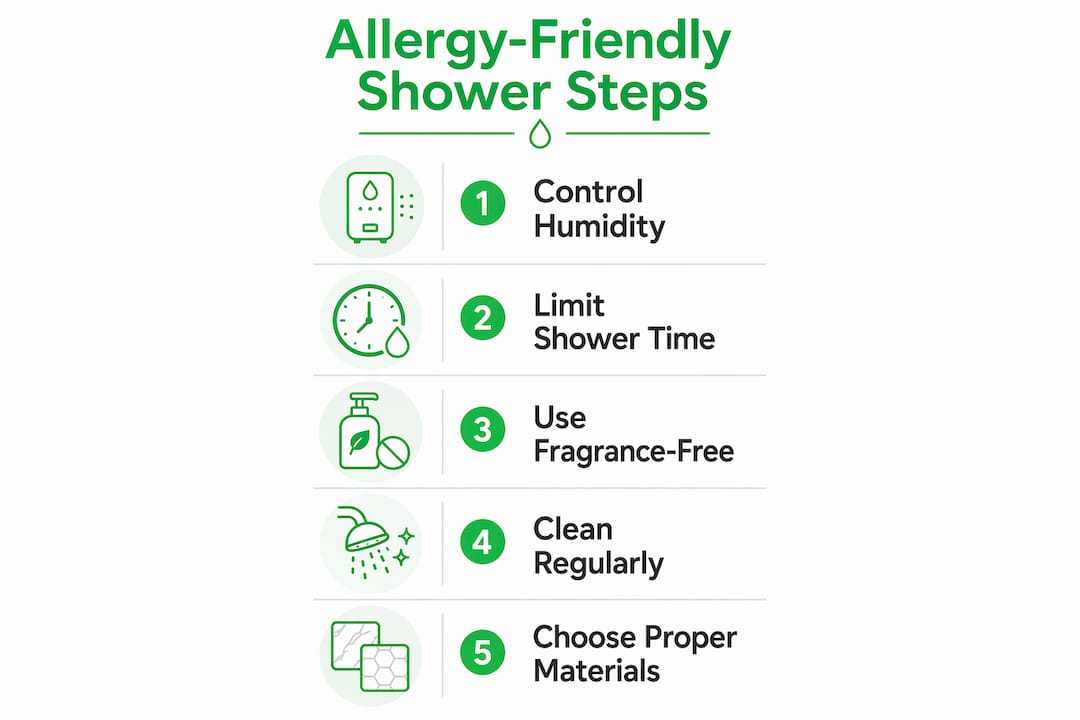
The single most effective thing you can do for shower-related allergies is control what touches your skin and what floats in your bathroom air. That means managing humidity, choosing the right products, and cleaning consistently. Here is the short version of what works:
- Run your exhaust fan during every shower and keep it running for at least 15–20 minutes after you finish.
- Keep indoor humidity below 60% to stop mold from taking hold. Mold is one of the most common bathroom allergens.
- Towel-dry shower walls and the tub floor immediately after use. Standing water is the starting point for mold growth.
- Fix plumbing leaks fast. Even a slow drip under the faucet creates the moisture mold needs.
- Limit showers to 5–10 minutes with warm water at 98–105°F to protect your skin barrier.
- Use fragrance-free, gentle cleansers on skin and hair. Fragrances are a leading cause of contact dermatitis.
- Moisturize within 5 minutes of toweling off to lock in hydration before your skin dries out.
- Consider a Vitamin C shower filter to neutralize chlorine and chloramines that irritate sensitive skin.
- Shower 30–60 minutes before bed to remove pollen, pet dander, and dust mite particles before they transfer to your pillow.
- Clean shower surfaces weekly and replace moldy curtains or bathmats promptly.
Every section below goes deeper on each of these points, with specific product guidance, material recommendations, and design tips built for allergy sufferers in 2026.
How to control humidity and mold growth in your bathroom
Mold is not just an aesthetic problem. Mold thrives when indoor humidity climbs above 60%, and bathrooms are the most humidity-prone room in any home. Once mold spores become airborne, they trigger sneezing, congestion, and asthma flares in sensitive people.
The exhaust fan is your first line of defense. Run it during every shower and leave it on for at least 15–20 minutes afterward. If your fan is older or undersized for the room, it may not be moving enough air. Bathroom fans are rated in CFM (cubic feet per minute), and the general rule is 1 CFM per square foot of bathroom floor space.
After every shower, spend 60 seconds towel-drying the walls, the tub floor, and the door or curtain. It sounds tedious, but it removes the standing water that mold needs to establish itself. Grout lines and caulking are the most vulnerable spots. Inspect them monthly and reseal any cracks before moisture gets underneath.
A few more practices that make a real difference:
- Skip wallpaper entirely. It traps moisture behind its surface and is nearly impossible to keep mold-free in a bathroom.
- Use mold-resistant paint (look for products labeled “mold-inhibiting” or “bathroom-grade”) on walls and ceilings.
- Add a dehumidifier if you live in a humid climate like Florida, Louisiana, or coastal areas of the Southeast. A portable unit set to maintain 50% relative humidity works well in most bathrooms.
- Seal grout annually with a penetrating grout sealer to block moisture absorption.
- Check under the sink and around the toilet base for slow leaks. These go unnoticed for months and create hidden mold colonies.
Pro Tip: Buy a small digital hygrometer (under $15 at most hardware stores) and mount it on your bathroom wall. It gives you a real-time humidity reading so you know exactly when to run the fan or dehumidifier, instead of guessing.
What your shower routine should look like for allergy relief
The way you shower matters as much as what you use. A well-structured routine removes allergens from skin and hair without stripping the protective oils your skin needs to stay resilient.
Keep showers to 5–10 minutes and set the water temperature between 98°F and 105°F. Hotter water feels good in the moment, but it dissolves the lipid layer that keeps your skin barrier intact. Once that barrier is compromised, allergens penetrate more easily and irritation compounds.

Hair traps significantly more allergens than skin does. Spend at least two full minutes actively shampooing, working the lather from roots to ends. Pollen, dust mite particles, and pet dander cling to hair shafts, and a quick rinse will not dislodge them. After you step out, dry your hair thoroughly before lying down. Damp hair stirred against a pillow redistributes allergens right back into your breathing zone.
Steam is a genuine benefit for allergy sufferers. A few minutes of warm steam helps loosen allergens from nasal passages and opens pores so cleansers can work more effectively. The key is keeping the temperature moderate. Scalding steam irritates mucous membranes and worsens congestion rather than relieving it.
Here is a step-by-step allergy-safe shower sequence:
- Start with hair. Wet thoroughly, apply a fragrance-free shampoo, and scrub for at least two minutes before rinsing.
- Cleanse face gently. Use your fingertips, not a washcloth, and a fragrance-free gel or cream cleanser.
- Body wash last. Pay extra attention to skin folds, behind the ears, and the backs of knees where allergens and sweat accumulate.
- Rinse completely. Residual product left on skin is a common irritant source.
- Towel off gently. Pat, do not rub. Aggressive rubbing damages the skin surface.
- Moisturize immediately. Apply a fragrance-free moisturizer within five minutes of stepping out, while your skin is still slightly damp.
Timing your shower 30–60 minutes before bed gives your hair time to dry naturally and prevents allergens from transferring to your pillow. A thorough pre-sleep shower can remove a substantial load of pollen, dust mites, pet dander, and mold spores from skin and hair, reducing what ends up in your bedding overnight.
Cleaning and maintenance practices that actually reduce shower allergens
Cleaning is not glamorous, but it is the most direct way to reduce allergen reservoirs in your bathroom. AAAAI guidance is clear: removing moisture and mold sources rapidly cuts allergen exposure that aggravates asthma and allergies. The challenge is doing it consistently, not just when you notice visible buildup.
Scrub tub surfaces, tile walls, and faucet bases weekly with a non-toxic, fragrance-free bathroom cleaner. Mold often starts in grout lines and around the drain before it becomes visible on tile faces. A stiff-bristled grout brush and a diluted hydrogen peroxide solution (3%) handles most early-stage mold without releasing harsh chemical fumes that irritate airways.
Shower curtains and bathmats are allergen magnets. Fabric curtains should go through the washing machine every two weeks. If a curtain has visible mold that does not wash out, replace it. Vinyl curtains can be wiped down with a diluted bleach solution, but check for mold along the bottom hem where water pools. Bathmats should be washed weekly and dried completely before putting them back down.
- Remove bathroom rugs if you have persistent allergy problems. Hard floors are far easier to keep allergen-free than any textile.
- If you keep a rug, choose a washable, low-pile version and wash it weekly in hot water.
- Use a HEPA-filter vacuum on any textile surface in the bathroom, including bathmats and fabric shower curtains, before washing.
- Avoid cleaning sprays with strong chemical odors or volatile organic compounds (VOCs). Products with heavy pine, citrus, or floral scents can trigger the same inflammatory response as biological allergens.
- Deep clean quarterly. Pull out the toilet, clean behind it, scrub the exhaust fan cover, and inspect the ceiling for early mold spots.
- Schedule cleaning more frequently during peak allergy seasons (spring and fall in most US regions) when pollen tracked in from outside adds to the indoor allergen load.
Pro Tip: Hang a small squeegee inside your shower and use it on the walls and door after every single use. It takes 30 seconds and cuts mold-promoting moisture by a large margin compared to air-drying alone.
How to avoid the most common irritants in allergy-friendly showers
The products you bring into the shower are often the biggest problem. Fragrances are the leading cause of contact dermatitis in the United States, and they hide in places you would not expect: shampoos, conditioners, body washes, shaving creams, and even some “natural” products loaded with essential oils.
The FDA is explicit that the term “hypoallergenic” has no legal definition and no regulatory standard behind it. A product labeled hypoallergenic can still contain fragrance mixtures that cause allergic reactions. The only label worth trusting is “fragrance-free.” “Unscented” is not the same thing. Unscented products often contain masking fragrances to cover chemical odors, and those masking agents are themselves allergens.
Essential oils deserve specific attention. Lavender, tea tree, eucalyptus, and peppermint are popular in wellness products, but all of them are documented contact allergens. A product marketed as “natural” or “plant-based” is not automatically safe for allergy-prone skin.
Exfoliation is another area where less is more. Over-exfoliating damages the skin barrier, making it easier for allergens and irritants to penetrate. Limit physical exfoliation to once or twice a week at most, and use a gentle chemical exfoliant (like a low-concentration lactic acid wash) rather than abrasive scrubs.
A few specific things to avoid:
- Hot water above 105°F. It strips skin oils and worsens allergic inflammation.
- Heavily fragranced shampoos and conditioners. Switch to “free and clear” versions from any major drugstore brand.
- Antibacterial soaps with triclosan. They disrupt the skin microbiome and can worsen sensitivity over time.
- Loofahs and natural sponges. They harbor bacteria and mold. Use a soft washcloth instead and wash it after every use.
- Pets in the bathroom. Pet dander settles on every surface. Keep the bathroom door closed.
Pro Tip: Before committing to a new shower product, apply a small amount to the inside of your wrist and leave it for 24 hours. If you see redness, itching, or swelling, skip it. This patch test catches most contact allergens before they cause a full-body reaction.
How shower water quality affects your skin and why Vitamin C filters help
Most people focus on what they put on their skin in the shower and overlook what is already in the water. Municipal tap water in the United States is treated with chlorine and chloramines to kill bacteria, which is necessary for drinking water safety. But those same disinfectants disrupt the skin barrier when you shower in them daily.
Chlorine and chloramines strip the natural oils from skin and hair, reduce the diversity of the skin microbiome, and can trigger or worsen conditions like eczema, psoriasis, and contact dermatitis. The exposure happens three ways: direct skin contact, inhalation of steam, and absorption through open pores. People with existing skin allergies feel this more acutely because their barrier is already compromised.
Vitamin C shower filters neutralize chlorine and chloramines through a chemical reaction with ascorbic acid (Vitamin C). The reaction is fast and complete at normal shower temperatures, which makes Vitamin C filtration more effective than carbon filters for chloramine removal specifically. Carbon filters handle chlorine well but struggle with chloramines, which are increasingly common in US municipal water systems.
Vitacleanhq’s Vitamin C shower filter system is built around replaceable filter shots that make maintenance straightforward. You do not need tools or a plumber. The ceramic filter options add another layer of filtration, removing sediment and bacteria while supporting better water quality for sensitive skin. For people who prefer a handheld unit, the handheld shower filter delivers the same chlorine-neutralizing performance with flexible positioning.
Key benefits of filtered shower water for allergy-prone skin:
- Reduced chlorine exposure means less stripping of the skin’s natural lipid layer.
- Lower irritant load in shower steam reduces inhalation of chemical disinfectants.
- Better skin hydration after showering, since the barrier stays more intact.
- Less scalp irritation and reduced hair dryness, which matters because a dry, irritated scalp produces more flaking that can worsen airborne allergen levels in the bathroom.
- Microfiber and antibacterial filter options from Vitacleanhq also reduce bacteria and fine particles in the water stream.
Pro Tip: Replace your Vitamin C filter shot on schedule, not just when you notice a change in water feel. Ascorbic acid depletes gradually, and an exhausted filter provides no chlorine protection even though the shower head looks the same. Vitacleanhq’s filter refill plan automates this so you never shower through a spent filter.
Daily shower habits that make the biggest difference for allergy sufferers
A consistent daily routine does more for allergy management than any single product purchase. The goal is to remove allergens from your body before they transfer to your home environment, particularly your bedding, and to avoid reintroducing them after you have cleaned up.
Shower once a day, ideally in the evening. Morning showers are fine for general hygiene, but they leave a full day’s worth of pollen, dust, and dander accumulation on your skin and hair by the time you go to bed. An evening shower, timed 30–60 minutes before sleep, removes that full-day load and gives your hair time to dry completely.
After showering, change into clean clothes before sitting on furniture or getting into bed. This sounds obvious, but it is a step most people skip. The clothes you wore during the day carry allergens, and putting them back on after a thorough shower immediately recontaminates your skin.
Avoid stepping outside briefly after showering if pollen counts are high. Even a two-minute trip to the mailbox can deposit a fresh layer of pollen on clean hair. Check your local pollen count through the American Academy of Allergy, Asthma and Immunology (AAAAI) pollen tracker before deciding whether to shower before or after any outdoor activity.
A few daily habits worth building:
- Rinse your face with cool water immediately after coming indoors from high-pollen environments, before your full shower.
- Use a separate, clean towel for your face every day. Shared towels accumulate allergens and bacteria quickly.
- Keep your bathroom door closed throughout the day to limit the amount of household dust and pet dander that settles on shower surfaces.
- Wipe down the shower door or curtain with a dry cloth after each use to prevent soap scum buildup, which traps allergens.
For people managing shower allergens alongside sensitive skin, the combination of a consistent evening routine and filtered water makes a measurable difference in how skin feels week over week.
Which shower materials and finishes work best for allergy-prone bathrooms
The materials your shower is built from determine how easily allergens accumulate and how thoroughly you can clean them. This is a decision that matters most during renovation, but even renters can make targeted upgrades.
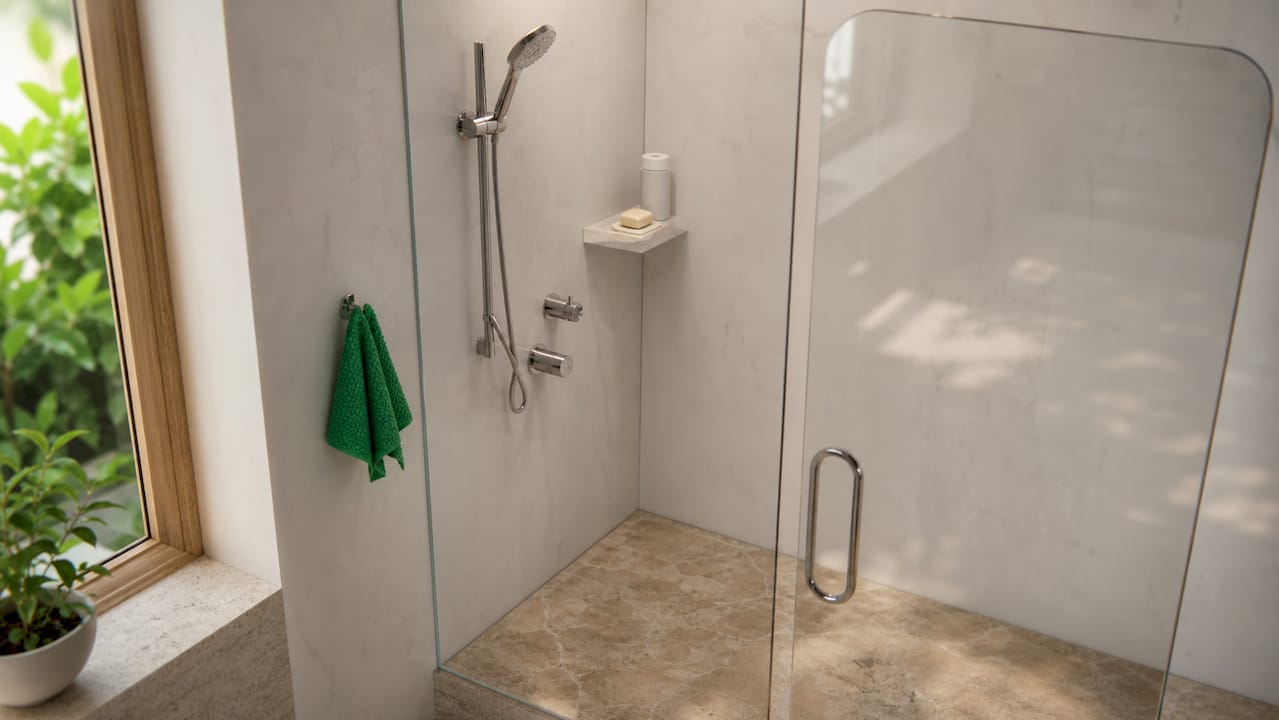
Porcelain and ceramic tile are the gold standard for allergy-friendly shower walls and floors. Both are non-porous when properly glazed, which means mold and bacteria cannot penetrate the surface. They clean easily with standard bathroom cleaners and hold up to the repeated scrubbing that allergy management requires. Large-format tiles (12x24 inches or bigger) have fewer grout lines, which means fewer places for mold to establish.
Solid surface panels (acrylic or composite materials) are a strong alternative, especially for renters who cannot retile. They have no grout lines at all, which eliminates the most common mold harbor in a shower. Brands like Swanstone and Kohler offer solid surface panels that install over existing tile in some configurations.
Glass shower doors beat fabric or vinyl curtains on every allergy metric. Glass does not absorb moisture, does not harbor mold, and wipes clean in seconds. Frameless glass doors are better than framed ones because metal frames collect soap scum and moisture in their channels.
For flooring, avoid textured rubber mats with suction cups. The suction cups trap water underneath and create a perfect mold environment. A teak wood bath mat or a flat, machine-washable cotton mat is easier to keep clean.
Finish choices also matter:
- Matte tile finishes hide water spots but are slightly harder to clean than polished finishes. For allergy sufferers, a polished or satin finish is easier to wipe down thoroughly.
- Chrome and stainless steel fixtures resist corrosion and do not harbor bacteria the way plastic fixtures do. Avoid fixtures with decorative crevices where soap and mineral deposits accumulate.
- Grout color: darker grout hides staining but makes it harder to spot early mold growth. Light gray or white grout lets you see mold before it spreads.
When choosing fragrance-free products for sensitive skin, the same principle applies to your shower environment: simpler surfaces with fewer seams and textures are easier to keep allergen-free.
How to control pet dander and dust mites in the bathroom
Pet dander and dust mites are two of the most common indoor allergens in US homes, and both find their way into bathrooms more easily than most people realize. Dander travels on clothing and settles on every surface. Dust mites colonize any textile that stays slightly warm and humid, which describes a bathroom bathmat almost perfectly.
The most direct solution for dust mites is heat. Wash all bathroom textiles, including bathmats, hand towels, and fabric shower curtains, in water at 130°F or higher. At that temperature, dust mites and their waste particles are killed. The AAAAI recommends this washing temperature specifically for bedding, and the same principle applies to bathroom textiles.
Keep pets out of the bathroom entirely. This is the single most effective step for reducing pet dander in the shower environment. Dander is microscopic and sticky. Once a cat or dog has spent time in your bathroom, dander settles into grout lines, onto the bathmat, and into the exhaust fan cover. A closed door policy is far easier than trying to clean dander out after the fact.
For dust mite control beyond washing:
- Replace fabric shower curtains with glass doors or vinyl curtains that can be wiped clean rather than washed.
- Remove decorative baskets, fabric storage bins, and plush rugs from the bathroom. Every textile is a potential dust mite habitat.
- Vacuum the bathroom floor weekly with a HEPA-filter vacuum before mopping. Vacuuming first captures particles that mopping would otherwise spread.
- Use allergen-proof covers on any storage cushions or fabric items you keep in the bathroom.
- Air out the bathroom after cleaning by opening a window or running the exhaust fan for 30 minutes. This removes the disturbed allergen particles that cleaning stirs into the air.
A HEPA-filter air purifier placed just outside the bathroom door can capture airborne dander and dust mite particles that escape when you open the door. Units from brands like Coway, Winix, or Levoit sized for small rooms (up to 200 square feet) handle this well without taking up much space.
How shower design and layout affect allergen buildup
The physical design of your shower determines where water pools, where air stagnates, and where mold gets its first foothold. Most people inherit their shower layout rather than choose it, but understanding which design features cause problems helps you prioritize fixes.
Shower niches and recessed shelves are convenient but problematic. Water pools in the bottom of every niche, and soap residue builds up along the edges. If you have niches, slope them slightly toward the drain during installation (or ask a contractor to re-caulk them with a slight pitch) and wipe them dry after every shower.
Shower benches and built-in seats create horizontal surfaces where water sits. A teak bench that you remove and dry after each use is better than a tiled bench that stays wet. If you have a tiled bench, dry it with a towel after every shower and inspect the grout monthly.
Shower size matters for ventilation. A very small shower stall traps steam more aggressively than a larger walk-in design. If your bathroom exhaust fan is positioned far from the shower, steam condenses on walls before it reaches the fan. A secondary ceiling fan or a wall-mounted fan positioned closer to the shower opening improves air movement significantly.
Curbless (zero-threshold) showers drain faster and dry more completely than curbed designs. The curb on a traditional shower traps water and creates a perpetually damp zone at floor level. Curbless designs also eliminate the rubber or vinyl gasket at the base of the curb, which is a common mold site.
Shower door placement affects how much steam escapes into the rest of the bathroom. A door that opens outward keeps more steam contained in the shower enclosure, where your exhaust fan can capture it. Sliding doors with overlapping panels create channels that stay wet and are difficult to clean thoroughly.
For anyone building or renovating a bathroom with allergy management in mind, the priorities are: large-format tile with minimal grout, a curbless drain, a glass door that opens outward, and an exhaust fan rated for the room’s square footage. Those four choices eliminate the majority of design-driven allergen accumulation problems.
Upgrade your shower with Vitacleanhq filtration
If you have worked through the routine and cleaning steps in this guide and still notice skin irritation, dryness, or scalp sensitivity after showering, the water itself is likely a contributing factor. Chlorine and chloramines in municipal water are invisible irritants that no amount of fragrance-free shampoo can fully offset.
Vitacleanhq’s Vitamin C shower filter shots neutralize chlorine and chloramines at the point of contact, before the water touches your skin. The system installs in minutes, requires no tools, and the replaceable shot design means you never have to buy a whole new shower head when the filter depletes. For a complete water quality upgrade, the microfiber and antibacterial filter options add sediment and bacteria removal on top of chlorine neutralization.
Allergy-conscious showering starts with what you can control. Vitacleanhq makes the water quality part straightforward.
Key Takeaways
An allergy-friendly shower combines humidity control, a consistent evening routine, fragrance-free products, clean surfaces, and filtered water to reduce allergen exposure at every step.
| Point | Details |
|---|---|
| Keep humidity below 60% | Run your exhaust fan during and for 15–20 minutes after every shower to prevent mold growth. |
| Shower 5–10 minutes at 98–105°F | Moderate temperature and short duration protect the skin barrier and reduce allergen penetration. |
| Time showers before bed | Showering 30–60 minutes before sleep removes pollen, dander, and dust mite particles before they reach your pillow. |
| Choose fragrance-free products | “Hypoallergenic” has no legal definition; only “fragrance-free” reliably reduces contact dermatitis risk. |
| Filter your shower water | Vitamin C filters neutralize chlorine and chloramines that strip the skin barrier and worsen allergic skin reactions. |