
What Is Filter Lifespan? A Homeowner's 2026 Guide
TL;DR:
- Filter lifespan indicates how long a filter effectively removes contaminants before needing replacement.
- Replacing filters based on volume or time prevents the release of trapped contaminants and ensures water safety.
Filter lifespan is the defined period or volume of water after which a filter must be replaced to maintain effective contaminant removal. Most homeowners treat it like an expiration date on milk, but it works more like a sponge. Once the filter media reaches capacity, it gradually loses its ability to adsorb chemicals and trap sediment, even though water still flows through it. Understanding what is filter lifespan, and what actually drives it, is the difference between water that protects your health and water that only looks clean.
What is filter lifespan and why does it matter?
Filter lifespan, known in the industry as filter service life or filter capacity, is a performance metric. It measures how long a filter removes contaminants at an acceptable rate before it needs to be swapped out. The industry standard rule is simple: replace whichever limit arrives first, time or volume. A filter rated for 6 months or 200 gallons gets replaced at 200 gallons even if only 3 months have passed.
This matters because a spent filter does not just stop working. It can release trapped contaminants back into your water. For homeowners and renters relying on shower filters, pitcher filters, or under-sink systems, a filter past its service life delivers false confidence. You think you are protected. You are not.
What factors govern water filter lifespan in residential settings?
Several variables determine how quickly a filter reaches its capacity limit. The most overlooked is household water usage volume. Manufacturers’ time estimates assume a baseline daily usage, often around 2 gallons per day for drinking filters. Double that usage and you halve the time before the filter is exhausted.
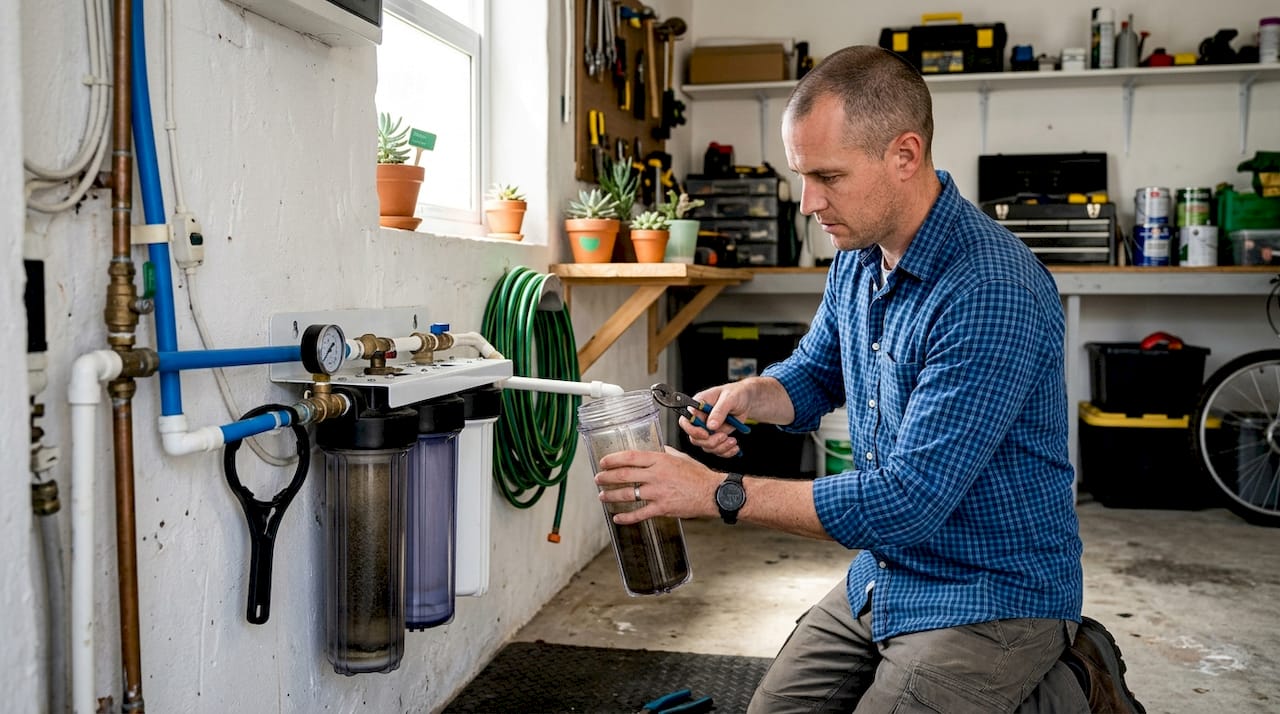
Water quality is the second major driver. Hard water loaded with calcium and magnesium clogs filter media faster than soft water. High sediment loads from older pipes or rural well sources accelerate clogging even further. The filter type itself also plays a role. Activated carbon blocks adsorb chlorine and organic compounds until the carbon surface is saturated. Sediment filters trap physical particles until the pores are blocked. Each mechanism has a different failure mode and a different pace.
Local municipal events are a factor most homeowners never consider. Pipe maintenance and construction work can cause sudden turbidity surges, sometimes called “construction shock,” that overwhelm a filter in days rather than months. If your city is doing roadwork near your water main, your filter is working overtime.
Key factors that shorten filter lifespan faster than the label predicts:
- High household water usage above the manufacturer’s baseline assumption
- Hard water or high total dissolved solids (TDS) in your supply
- High sediment content from aging pipes or well water
- Sudden turbidity spikes from nearby municipal pipe work
- Infrequent flushing of the filter after installation or long periods of non-use
Pro Tip: If your city sends a water main maintenance notice, flush your filter for 30 seconds immediately after the work is complete. That single event can cut weeks off your filter’s remaining life.
How long do filters last? A comparison by filter type
Filter lifespans vary widely by type, from as short as one month for basic pitcher filters to over a decade for whole-house sediment systems. The table below covers the most common residential options.
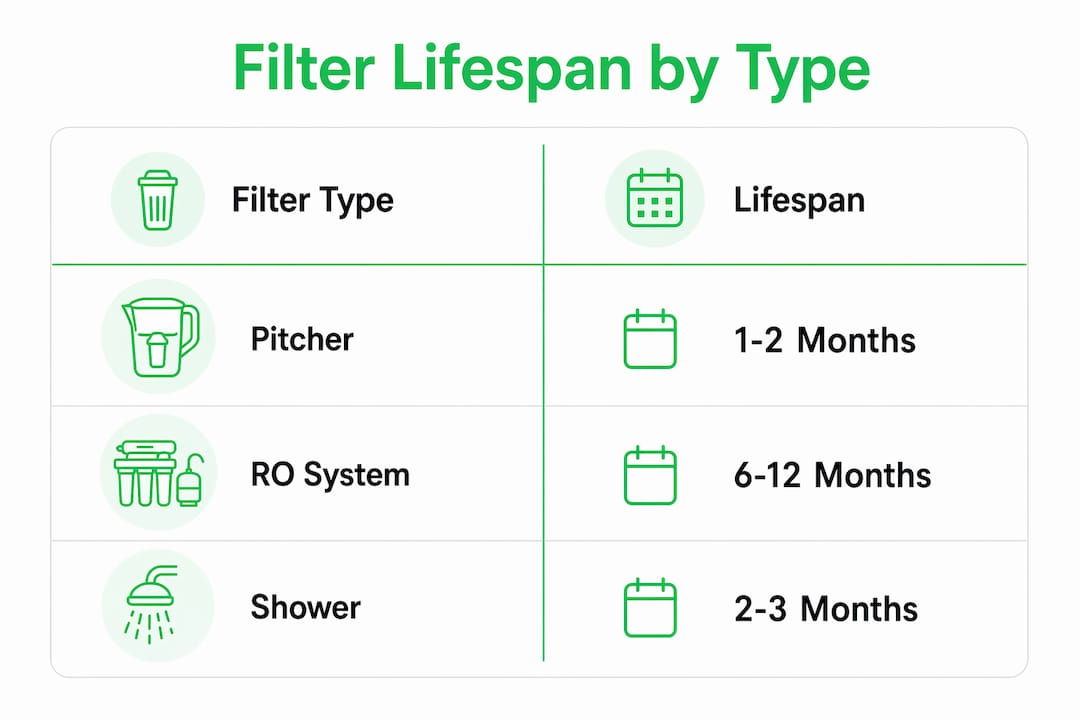
| Filter type | Typical lifespan | Rated capacity | Best use |
|---|---|---|---|
| Pitcher filter | 1–2 months | 40 gallons | Drinking water, small households |
| Faucet-mounted carbon | 2–3 months | 100 gallons | Drinking and cooking water |
| Refrigerator filter | 6 months | 200–300 gallons | Chilled drinking water |
| Shower filter (carbon/Vitamin C) | 1–3 months | 5,000–10,000 gallons | Skin and hair protection |
| Under-sink activated carbon | 6–12 months | 500–1,000 gallons | Whole-kitchen water quality |
| RO pre/post-filters | 6–12 months | Varies by system | Multi-stage purification |
| RO membrane | 2–5 years | Varies by TDS | Full contaminant removal |
| Whole-house sediment filter | 3–6 months | 100,000+ gallons | Whole-home protection |
For multi-stage reverse osmosis systems, Pentair recommends changing pre-filters and post-filters every 6–12 months, while the RO membrane itself can last 2–5 years depending on water hardness and TDS levels. The membrane lasts longer because it handles only the water that has already passed through the pre-filters. That staged approach protects the most expensive component.
Shower filters sit in a unique category. They are rated by gallon volume, but most households measure shower use by time, not gallons. A family of four taking daily showers will exhaust a shower filter cartridge far faster than a single person living alone. The skin and hair benefits of a properly maintained shower filter, including reduced chlorine exposure and less scalp irritation, disappear entirely once the filter media is saturated.
When to replace your water filter: signs of filter wear
Tracking the manufacturer’s recommended time and volume limits is the starting point, not the finish line. Real-world conditions mean you need to watch for physical signs too.
- Flow rate drops noticeably. A pressure drop of 15–20 PSI across a whole-house filter signals the replacement point. For shower filters and faucet units, a weaker stream than usual is the equivalent signal. Flow changes typically appear before taste or odor changes do.
- Taste or odor returns. If your water starts tasting like chlorine again or has a musty smell, the activated carbon is saturated. The filter is no longer adsorbing the compounds it was designed to catch.
- Water appears cloudy or discolored. Sediment filters that are fully clogged can fracture under pressure, releasing trapped particles back into the water stream.
- You have exceeded the gallon rating. Tracking gallons filtered against the manufacturer’s rated capacity is a more accurate replacement indicator than calendar days alone. A simple tally of daily usage gets you there.
- A local water event has occurred. After any municipal pipe work, construction, or boil-water advisory in your area, inspect your filter and consider replacing it ahead of schedule.
Pro Tip: Set a phone reminder for both the time limit and an estimated volume limit. If you hit either one, replace the filter. Do not wait for both.
Some newer filter systems include built-in indicators. Brita’s Longlast filters use a digital indicator on the pitcher lid. Pentair’s whole-house systems support pressure gauge monitoring. These tools remove the guesswork, but they are only as reliable as the installation behind them.
How to calculate and personalize your filter replacement schedule
A personalized schedule beats a generic one every time. Start with the manufacturer’s gallon rating and divide it by your household’s estimated daily water use. A filter rated for 500 gallons used at 5 gallons per day lasts 100 days, not the 6 months printed on the box.
Household size is the most practical adjustment variable. A single person in an apartment uses far less water than a family of four. Hard water areas, common across the American Southwest and Midwest, require more frequent replacement because mineral buildup clogs filter media faster than in soft-water regions.
Practical steps to build your replacement schedule:
- Note the filter’s gallon capacity and your household’s estimated daily usage
- Divide capacity by daily usage to get your personal replacement interval in days
- Adjust downward by 10–15% if your water is hard or your pipes are older
- Log the installation date and estimated replacement date on a sticky note inside the cabinet
- Factor in any local water events that may have accelerated clogging
- Avoid relying solely on calendar time. Volume is the more accurate measure
Emerging predictive technologies in 2026 use household flow data and municipal treatment records to estimate remaining filter life more precisely. These models account for variables like TDS changes and seasonal turbidity shifts. For most homeowners, a simple log and a phone reminder still outperform waiting for a performance drop.
Proactive replacement costs less than reactive replacement. A filter that fails silently means you have been drinking or showering in inadequately filtered water for weeks. The cost of a replacement cartridge is always lower than the cost of that exposure. Proper filter maintenance is not just a chore. It is the mechanism that keeps the health benefits of filtration intact.
Key Takeaways
Filter lifespan is a performance window, not an expiration date, and replacing on volume rather than time alone is the most reliable way to maintain safe, clean water at home.
| Point | Details |
|---|---|
| Replace on whichever comes first | Swap your filter when it hits the time limit or volume limit, not just the calendar date. |
| Usage volume shortens lifespan | Doubling daily water use halves the time before your filter reaches its rated capacity. |
| Flow rate is the early warning | A noticeable pressure drop signals filter end-of-life before taste or odor changes appear. |
| Filter type determines interval | Pitcher filters last 1–2 months; RO membranes can last 2–5 years depending on water hardness. |
| Personalize your schedule | Divide the filter’s gallon rating by your daily usage to get a replacement date that fits your home. |
What I have learned from years of watching filters fail quietly
The most common mistake I see homeowners make is trusting the calendar over the filter. They change it every six months because the box says so, and they feel good about it. But a family of four in Phoenix with hard water is not the same as a single renter in Seattle with soft municipal water. The same filter, the same box, the same six-month label. Completely different actual lifespans.
Flow rate is the metric I always come back to. Before you ever notice a taste change, the pressure has already dropped. That drop is the filter telling you it is working harder than it should. I have seen whole-house systems where the homeowner noticed the shower felt weaker and assumed it was a plumbing issue. It was a clogged sediment filter that had been in place for 14 months. The fix was a $12 cartridge.
Local water events are the wildcard nobody talks about enough. A water main break two streets over can dump enough sediment into your supply to clog a filter that had three months of life left. The physics of pressure drop are unforgiving. The filter does not know it was supposed to last longer. It just fills up.
My honest recommendation: build a two-trigger system. Set a calendar reminder and a volume estimate. Whichever arrives first, replace the filter. Do not negotiate with it. The cost of a replacement cartridge is trivial compared to the cost of skin irritation, hair damage, or worse, drinking water that has passed through a saturated carbon block leaching back what it once trapped.
— Sara
Vitacleanhq shower filters and easy filter replacement
Shower filter maintenance does not have to be complicated. Vitacleanhq builds its entire product line around one idea: replacing a filter should take less than a minute and never require a plumber.
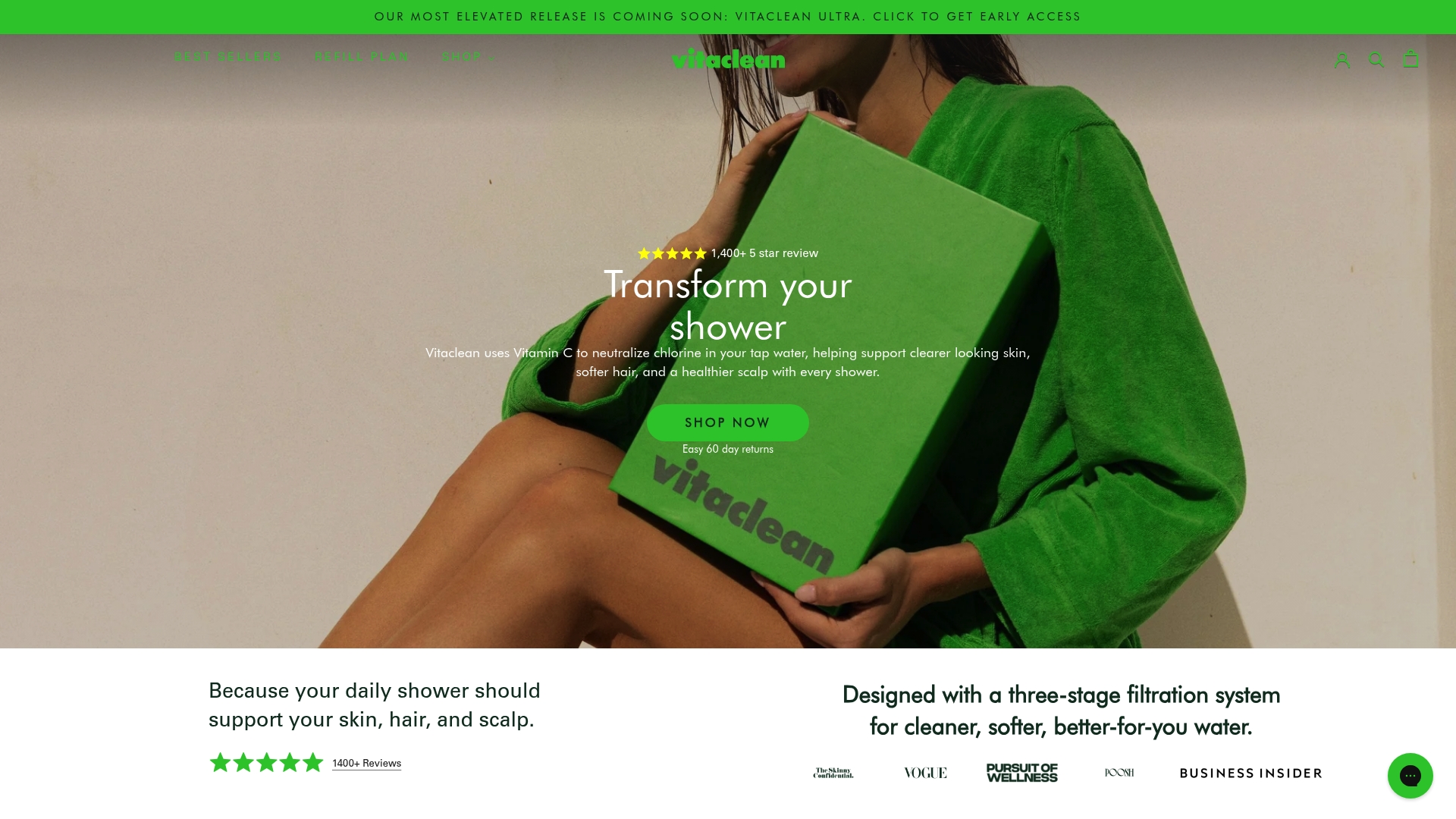
Vitacleanhq’s Vitamin C filter shots neutralize chlorine and chloramine on contact, protecting your skin and scalp with every shower. Each cartridge has a clear replacement interval so you always know where you stand. For homeowners and renters who want zero guesswork, the filter refill plan ships a fresh cartridge to your door before the old one runs out. No reminders needed. No lapsed protection. Just consistent water quality that keeps your skin and hair in the condition they deserve.
FAQ
What is filter lifespan in simple terms?
Filter lifespan is the total time or volume of water a filter can process before it stops removing contaminants effectively. Replace it when either the time limit or the volume limit is reached, whichever comes first.
How long do water filters last on average?
Lifespans range from 1–2 months for pitcher filters to 2–5 years for reverse osmosis membranes. The exact duration depends on filter type, household water usage, and local water quality.
What are the signs that a filter needs replacing?
The clearest signs are a drop in water flow or pressure, the return of chlorine taste or odor, and cloudy or discolored water. Flow rate typically drops before taste changes appear.
Does hard water shorten filter lifespan?
Yes. Hard water accelerates mineral buildup inside filter media, reducing capacity faster than the manufacturer’s baseline estimate assumes. Homeowners in hard-water regions should replace filters more frequently than the label suggests.
Can a water filter be harmful after its lifespan ends?
A saturated filter can release previously trapped contaminants back into the water. Activated carbon that has reached full capacity no longer adsorbs chemicals and may allow them to pass through at higher concentrations than unfiltered water.