
What Causes Hair Dullness After Showering
TL;DR:
- Hair dullness after showering occurs when a roughened cuticle scatters light instead of reflecting it. Hard water minerals, chlorine oxidation, product buildup, and over-cleansing cause this damage, impairing shine. Using filtered shower water, clarifying shampoos, and cold rinses can restore hair’s brightness and health.
Hair dullness after showering is defined as the loss of light-reflecting shine caused by a roughened or coated hair cuticle. The main triggers are hard water minerals, chlorine oxidation, product buildup, and over-cleansing. Each one disrupts the cuticle’s ability to lie flat and bounce light back evenly. Garnier confirms that flat cuticles produce smooth, shiny hair, while raised cuticles scatter light and create a matte, lifeless look. Understanding what causes hair dullness after showering is the first step toward fixing it for good.
How does the hair cuticle affect shine after washing?
Hair shine is an optical effect, not a measure of softness or cleanliness. The cuticle is the outermost layer of each hair strand, made up of overlapping, scale-like cells. When those scales lie flat, light bounces off the surface in a uniform direction, producing visible shine. When they lift or roughen, light scatters in every direction, and the hair looks dull no matter how clean it is.

Hot water is one of the fastest ways to raise the cuticle during a shower. Heat causes the cuticle scales to swell and lift, leaving them vulnerable to mechanical damage from towel rubbing or brushing while wet. Chlorine and chloramines in tap water make this worse. These chemicals oxidize the cuticle’s lipid layer, breaking down the protective surface proteins and creating a structurally rough texture that persists long after the water dries. Conditioner can smooth the surface temporarily, but it cannot reverse oxidative damage to the cuticle itself.
Color-treated hair is especially vulnerable. The coloring process already opens the cuticle to deposit pigment, so repeated chlorine exposure accelerates fading and roughening at the same time.
Pro Tip: Rinse your hair with the coolest water you can tolerate for the final 30 seconds of your shower. Cold water closes the cuticle scales, locking in moisture and improving light reflection immediately.
What role do water minerals and chlorine play in hair dullness?
Hard water is tap water with elevated concentrations of calcium and magnesium. These minerals do not rinse away cleanly. They deposit a thin, chalky film on each hair strand. That film blocks light reflection and prevents conditioner from penetrating the shaft, which is why mineral deposits reduce brightness and cause rapid color fading in treated hair. Hard water affects more than 85% of American homes, making it one of the most common and overlooked causes of dull hair after washing.
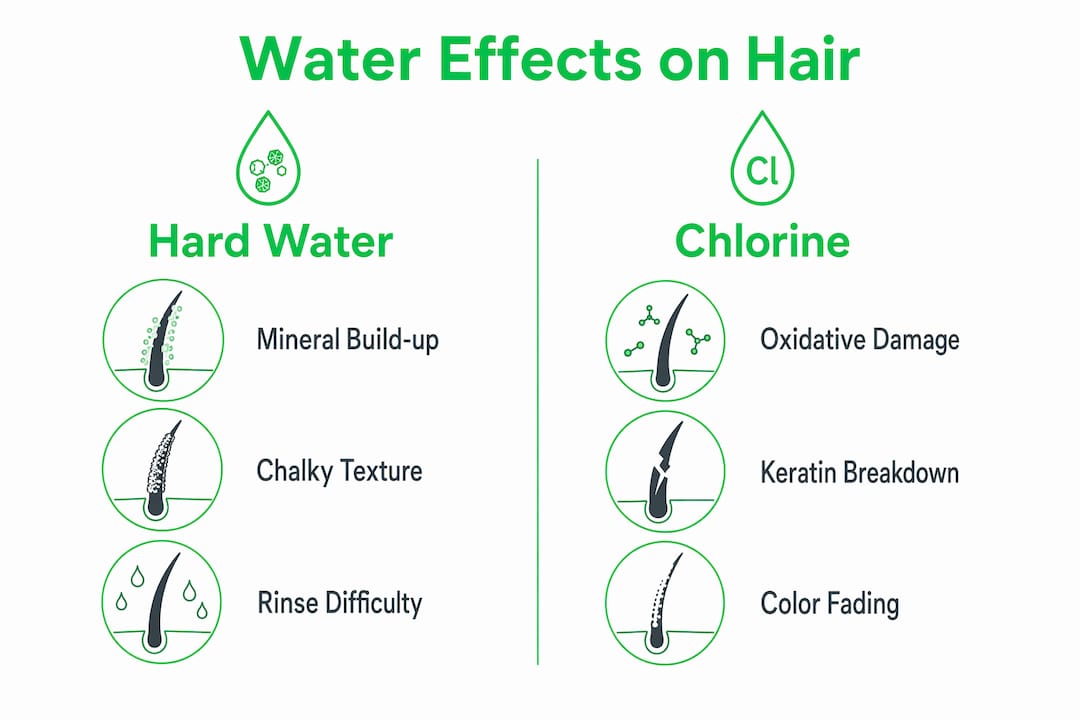
Chlorine works differently from minerals. Rather than coating the hair, it chemically attacks it. Chlorine oxidizes keratin and strips natural oils, leaving hair frizzy, brittle, and prone to breakage. The damage is structural, not just surface-level. This distinction matters because the fix for mineral coating (clarifying or chelating treatments) differs from the fix for chlorine damage (antioxidant protection and water filtration).
The table below shows how these two water factors differ in their effects and the solutions each requires.
| Factor | Effect on hair | Primary solution |
|---|---|---|
| Hard water minerals (calcium, magnesium) | Chalky film blocks light reflection, causes dryness and color fade | Chelating shampoo, shower filter |
| Chlorine and chloramines | Oxidizes keratin, roughens cuticle, strips oils | Vitamin C shower filter, antioxidant treatments |
| Limescale buildup | Weighs hair down, prevents moisture absorption | Clarifying wash, filtered water |
For people living in hard water areas, water quality directly affects hair in ways that no amount of premium shampoo can fully counteract without addressing the source.
How do product buildup and washing habits cause dull hair?
Product residue is a silent contributor to dull hair after washing. Styling creams, dry shampoos, silicone-based conditioners, and leave-in treatments all leave behind thin layers that accumulate over time. Even thin residue layers reduce shine and block moisture from reaching the hair shaft. The result is hair that feels clean but looks flat and lifeless.
Over-washing compounds the problem from the opposite direction. Washing hair too frequently strips natural oils that coat and protect the cuticle, leaving hair dehydrated, brittle, and dull. The scalp then overproduces oil to compensate, which prompts more frequent washing, creating a cycle that worsens dullness over time.
Signs that buildup is the culprit include:
- Hair feels heavy, coated, or waxy after washing
- Conditioner seems to sit on top of the hair rather than absorb
- Hair looks greasy at the roots but dry at the ends
- Volume collapses quickly after styling
Pro Tip: Use a clarifying or chelating shampoo once every two weeks to strip mineral and product residue. Brands like Kenra Platinum and Malibu C make chelating formulas specifically designed for hard water buildup. Follow with a deep conditioner to restore moisture balance.
Removing product buildup is often more effective at restoring shine than adding more conditioning products on top of existing residue.
What practical steps restore shine to dull hair after showering?
Restoring hair shine requires addressing the root cause, not just the symptom. The following steps work together to fix dull hair after washing.
- Switch to filtered shower water. Vitamin C shower filters neutralize chlorine and reduce mineral content before water reaches your hair. Vitacleanhq’s Vitamin C shower filters are designed specifically for this purpose, removing the oxidizing chemicals that cause structural cuticle damage.
- Use a chelating shampoo monthly. Chelating shampoos contain EDTA or citric acid, which bind to calcium and magnesium ions and lift them off the hair shaft. This is the most direct way to remove hard water mineral film.
- Lower your water temperature. Hot water opens the cuticle and accelerates mineral absorption into the hair shaft. Lukewarm water cleans just as effectively with far less cuticle disruption.
- Apply argan oil or a smoothing serum after washing. Argan oil contains oleic and linoleic acids that fill gaps in a roughened cuticle, improving light reflection without weighing hair down. Apply to damp hair before drying.
- Adjust washing frequency. Most hair types do not need daily washing. Washing every two to three days preserves the natural oil layer that keeps the cuticle smooth and protected.
- Finish with a cold rinse. As noted above, cold water closes the cuticle scales before you step out of the shower, locking in whatever moisture and smoothing products you have applied.
For color-treated hair, protecting hair from hard water is especially critical. Mineral deposits accelerate color fading and make dye-treated cuticles even more porous and prone to roughening.
How to identify if dullness is from dehydration, buildup, or damage
Diagnosing the cause of dull hair determines which fix will actually work. The table below outlines the key differences.
| Cause | How hair feels after washing | Visual signs | Best first step |
|---|---|---|---|
| Mineral or product buildup | Heavy, waxy, or coated | Flat, no volume, greasy roots | Clarifying or chelating shampoo |
| Dehydration (oil stripping) | Dry, rough, brittle | Frizzy ends, flyaways, no elasticity | Deep conditioning treatment |
| Chlorine or chemical damage | Stiff, porous, fragile | Dull even after conditioning, color fade | Shower filter, protein treatment |
Buildup causes a coated, heavy feeling, while dehydration produces a dry, brittle sensation. These two conditions require opposite treatments. Applying a heavy conditioner to buildup-coated hair adds more residue and worsens the problem. Applying a clarifying shampoo to already dehydrated hair strips it further.
A simple at-home test: wash your hair with just water and no products. If it feels lighter and looks shinier, buildup is the primary issue. If it still feels rough and dry, dehydration or structural damage is the cause. Persistent dullness that does not respond to either approach warrants a consultation with a trichologist, a specialist in scalp and hair health.
Key takeaways
Hair dullness after showering results from cuticle roughness caused by hard water minerals, chlorine oxidation, product buildup, or over-cleansing, and each cause requires a different targeted fix.
| Point | Details |
|---|---|
| Cuticle flatness determines shine | Raised or roughened cuticles scatter light, making hair look dull regardless of softness. |
| Hard water and chlorine cause different damage | Minerals coat the hair shaft; chlorine oxidizes and structurally damages the cuticle. |
| Buildup vs. dehydration need opposite fixes | Heavy, waxy hair needs clarifying; dry, brittle hair needs deep conditioning. |
| Filtered shower water addresses the root cause | Vitamin C filters remove chlorine and reduce minerals before they reach your hair. |
| Cold rinse closes the cuticle | Finishing with cool water improves light reflection and seals in moisture immediately. |
What I’ve learned about dull hair that most articles get wrong
Most people treat dull hair as a product problem. They buy a new shampoo, a shinier conditioner, or an expensive serum. The results last a few days, then the dullness returns. The reason is simple: they are treating the symptom while the source of damage runs through their shower head every morning.
I spent years recommending conditioning treatments and glossing masks before I paid serious attention to water quality. The shift in perspective changed everything. Once you understand that chlorine is actively oxidizing your hair cuticle during every shower, and that hard water minerals are building up a film that no conditioner can penetrate, the product-first approach starts to look like putting a bandage over a wound you keep reopening.
The other mistake I see constantly is confusing buildup with dehydration. People pile on moisture treatments when their hair actually needs a clarifying reset. The hair feels heavy and coated, they interpret that as dryness, and they add more product. The cycle continues. Learning to read how your hair feels right after washing, before any products, is one of the most useful diagnostic skills you can develop.
Water filtration is not a luxury add-on. For anyone dealing with persistent dull hair after washing, it is the most logical first step. Everything else works better once the water itself stops working against you.
— Sara
How Vitacleanhq helps protect your hair from shower water damage
Chlorine and hard water minerals are present in most American tap water, and they reach your hair every time you shower. Vitacleanhq designs shower filtration systems specifically to remove these damaging elements before they contact your skin and hair.

The Vitamin C shower filter shots neutralize chlorine and chloramines on contact, eliminating the oxidative damage that roughens the cuticle and causes lasting dullness. The handheld shower filter and wall-mounted filter options fit most standard shower setups with no tools required. Both work with replaceable filter cartridges, making ongoing maintenance straightforward. For anyone serious about restoring hair shine and keeping it, cleaner shower water is the foundation everything else builds on.
FAQ
What causes hair dullness after showering?
Hair dullness after showering is caused by a roughened or coated cuticle that scatters light instead of reflecting it. The main triggers are hard water minerals, chlorine oxidation, product buildup, and over-cleansing.
Why does my hair look dull even right after washing?
If hair looks dull immediately after washing, the cause is likely mineral film from hard water or structural damage from chlorine. These issues prevent light reflection even on freshly cleaned hair.
Does hard water cause dry, dull hair?
Hard water deposits calcium and magnesium on the hair shaft, blocking moisture absorption and light reflection. This creates hair that looks dull and feels dry even after conditioning.
How do I fix dull hair after showering?
The most effective approach combines a clarifying or chelating shampoo to remove mineral and product residue, a vitamin C shower filter to stop chlorine damage at the source, and a cold final rinse to close the cuticle.
Can a shower filter actually improve hair shine?
A vitamin C shower filter neutralizes chlorine before it reaches your hair, preventing the oxidative cuticle damage that causes lasting dullness. For people in hard water areas, filtered water produces a noticeable improvement in shine and texture within a few weeks.