
What Is a Faucet-Mounted Water Filter? Your 2026 Guide
TL;DR:
- A faucet-mounted water filter is an affordable and easy-to-install device that reduces chlorine, lead, and sediment from tap water. It uses a three-stage system with sediment, activated carbon, and ion exchange resin to target common contaminants quickly on demand. Regular maintenance and replacing cartridges every four months ensure optimal performance and water safety.
A faucet-mounted water filter is a compact purification device that attaches directly to your kitchen faucet aerator, delivering filtered water on demand by reducing contaminants like chlorine, lead, and sediment. These systems use activated carbon filtration as their primary mechanism, and many models carry NSF/ANSI 42 or NSF/ANSI 53 certifications, which verify their claims for chlorine taste reduction and lead removal. Filter capacity averages around 100 gallons per cartridge, lasting approximately four months under typical household use. For renters and homeowners who want cleaner drinking water without major plumbing work, a faucet water filter system is the most accessible starting point available.
What is a faucet-mounted water filter and how does it work?
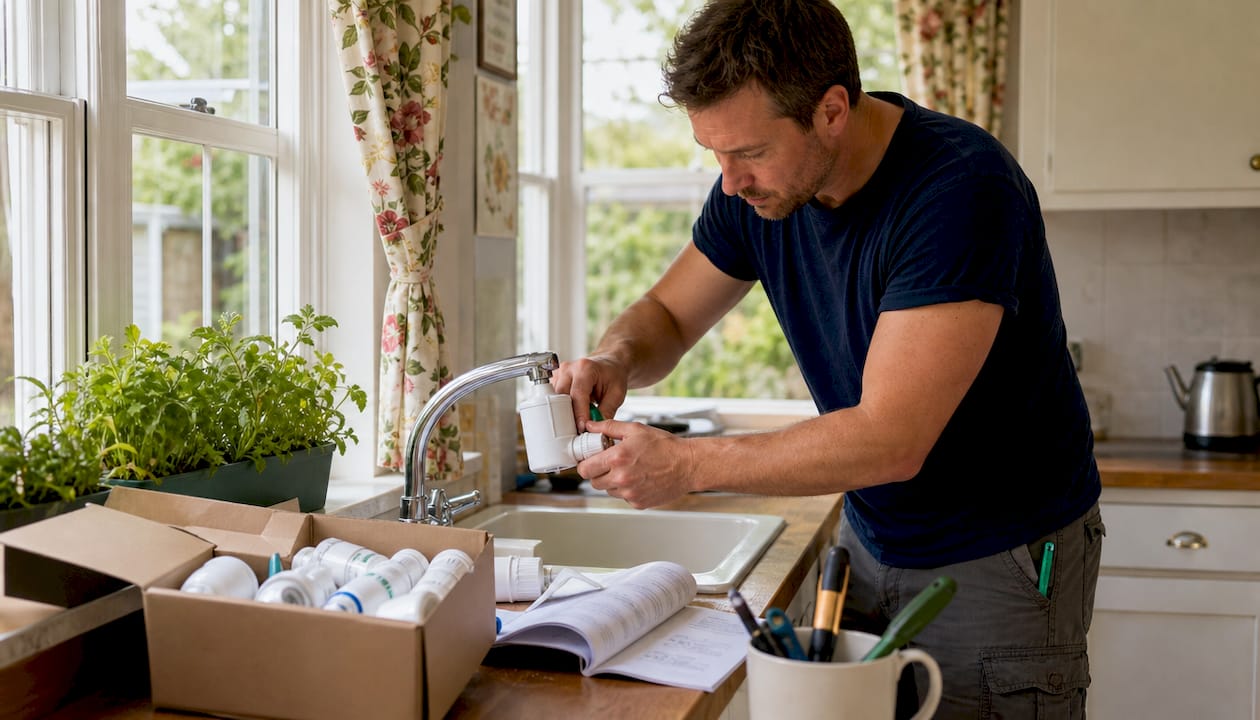
A faucet attachment water filter connects to the threaded end of your faucet where the aerator normally sits. Water enters the filter housing, passes through multiple stages of filtration media, and exits through a dedicated filtered outlet. The whole process happens in seconds, with no waiting and no separate container to fill.
Most faucet filters use a three-stage media design: a sediment screen to catch visible particles, activated carbon to adsorb chlorine and volatile organic compounds, and ion exchange resin to reduce heavy metals like lead. Each stage targets a different class of contaminant. Activated carbon works through adsorption, meaning contaminants bond to the carbon surface as water flows past. Ion exchange resin swaps harmless ions for harmful ones, pulling lead and similar metals out of the water.
Here is the basic flow path a faucet water filter system follows:
- Unfiltered tap water enters the filter housing through the inlet valve.
- The sediment screen catches visible particles like rust flakes and sand.
- Activated carbon adsorbs chlorine, chloramines, and volatile organic compounds that cause bad taste and odor.
- Ion exchange resin reduces dissolved heavy metals, including lead.
- Filtered water exits through the outlet and into your glass or pot.
- An integrated lever lets you switch between filtered and unfiltered flow for tasks like washing dishes, where filtration is unnecessary.
The lever feature is one of the most practical design details on a faucet filter. Unfiltered water flows faster and does not deplete the cartridge, so switching modes for rinsing vegetables or filling a pot extends filter life considerably.
Pro Tip: Switch to unfiltered mode whenever you are not drinking or cooking. This single habit can double the lifespan of your cartridge.
One real limitation is capacity. A cartridge rated for 100 gallons sounds like a lot, but a household that drinks, cooks, and fills water bottles exclusively through the filter can burn through that in under three months. Tracking your usage honestly helps you replace cartridges on time and avoid drinking through an exhausted filter that no longer removes anything.
Installation and maintenance: what to expect
Installing a faucet-mounted filter takes five to ten minutes and requires no tools in most cases. The process is straightforward: unscrew the existing aerator from your faucet tip, thread the filter housing onto the faucet, and snap the cartridge into place. Most units include adapter rings to fit standard faucet sizes. Renters benefit especially here because no drilling or plumbing modifications are required, and the filter removes just as easily when you move out.
Maintenance is where many people fall short. The key tasks are:
- Replace the cartridge on schedule. Most manufacturers recommend replacement every 100 gallons or every four months, whichever comes first. An expired cartridge stops filtering and can actually harbor bacteria.
- Clean the aerator screen monthly. Sediment builds up on the screen inside the filter housing. A quick rinse under running water keeps flow rates healthy.
- Inspect the external housing. Wipe down the outside of the filter regularly. Moisture and warmth create conditions where mold can grow on neglected surfaces.
- Check for leaks after installation. Run water for 30 seconds and inspect all connection points. A loose adapter ring is the most common source of drips.
- Flush a new cartridge before use. Run two to three minutes of filtered water to waste before drinking. This clears carbon fines that can temporarily cloud the water.
Neglecting the aerator screen is the most overlooked maintenance mistake. Mold growth on a dirty screen affects both water taste and safety, and it happens faster than most people expect. A monthly rinse takes 60 seconds and prevents the problem entirely.
One practical note on flow rate: filtering media restricts water passage, so filtered output is noticeably slower than unfiltered flow. This is normal and expected. It becomes inconvenient only when filling large pots, which is exactly when switching to unfiltered mode makes sense.
Pro Tip: Set a phone reminder for the first day of each month to check your cartridge status and clean the aerator screen. Consistent timing beats trying to remember by taste.
What are the benefits of faucet water filter systems compared to other home water options?
A faucet water filter system sits in a specific niche among home filtration options. Understanding where it excels and where it falls short helps you decide whether it fits your actual needs.
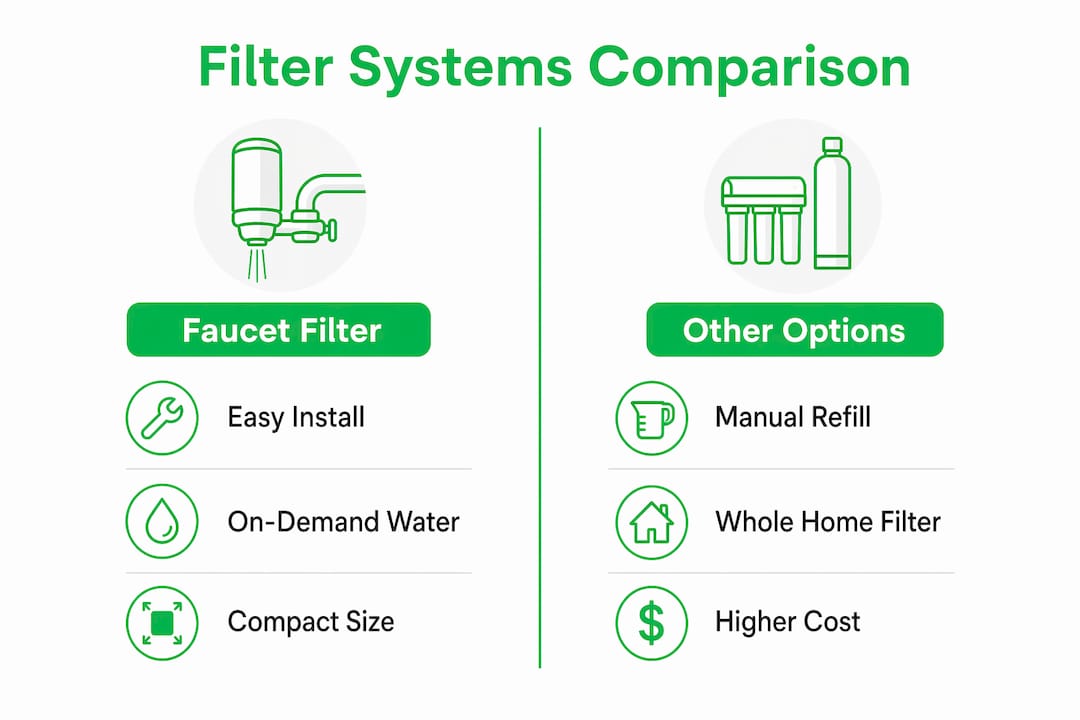
Pitcher filters are the most common alternative. They cost less upfront but require manual refilling, take up refrigerator space, and filter water slowly. A faucet filter delivers on-demand point-of-use filtration without any waiting. If you drink water directly from the tap frequently, a faucet filter is far more convenient than a pitcher.
Under-sink systems and whole-house filters offer broader coverage. An under-sink reverse osmosis unit removes a much wider range of contaminants, including PFAS compounds and microbiological threats that faucet filters cannot address. Whole-house systems treat every water outlet in the home. Both options require professional installation and significant upfront cost. A faucet filter costs a fraction of either and installs in minutes.
| Feature | Faucet-mounted filter | Pitcher filter | Under-sink system |
|---|---|---|---|
| Installation effort | Tool-free, 5–10 minutes | None | Professional recommended |
| Upfront cost | Low | Very low | High |
| On-demand filtered water | Yes | No (manual refill) | Yes |
| Removes chlorine and lead | Yes | Varies by model | Yes |
| Removes PFAS | No | No | Yes (reverse osmosis) |
| Renter-friendly | Yes | Yes | Rarely |
| Covers whole home | No | No | Yes (whole-house only) |
Faucet filters serve as single-point treatments for drinking and cooking water, not whole-home solutions. That distinction matters. If your concern is taste and odor from municipal chlorination, a faucet filter handles it well. If you have aging pipes with serious lead contamination or a private well with biological risks, a faucet filter is a useful supplement but not a complete answer.
Water treatment professionals note that faucet-mounted filters provide good value for renters and those wanting simple upgrades, while cautioning about their limitations. The honest framing is this: a faucet filter is an affordable, targeted tool. It does one job well and should not be asked to do more than that.
Can using a faucet-mounted water filter improve your health and beauty routines?
Filtered water has measurable effects beyond taste. Chlorine in tap water does not stay in your glass. It also affects your skin and hair during washing, and the water you drink influences how your body hydrates at the cellular level.
Removing chlorine from your drinking and cooking water reduces your overall daily chlorine exposure. Chlorine is a known irritant that can dry out skin and disrupt the scalp’s natural oil balance over time. People with sensitive skin or conditions like eczema often notice improvements when they reduce chlorine contact across all water sources, not just the shower. The benefits of filtered water for skin and hair are well documented in dermatology literature.
Practical beauty benefits of using a faucet water filter system include:
- Better skincare product performance. Chlorine and mineral deposits in tap water can break down active ingredients in serums and toners. Filtered water used for rinsing or mixing products preserves their effectiveness. Learn more about how filtered water affects your skincare routine.
- Reduced scalp irritation. Drinking cleaner water supports overall hydration, which shows up in scalp health and hair texture over weeks of consistent use.
- Fewer mineral deposits on skin. Hard water leaves calcium and magnesium residue on skin after washing. Filtered water reduces this buildup, leaving skin feeling less tight after rinsing.
- Improved taste encourages better hydration. Water that tastes clean gets consumed more readily. Better daily hydration directly supports skin elasticity and overall wellness.
Realistic expectations matter here. A faucet filter improves drinking water quality at one point of use. It does not filter your shower water, which is where the majority of chlorine skin exposure happens. For full-body benefits, pairing a faucet filter with a quality shower filter addresses both exposure points. Vitacleanhq specializes in exactly that combination, with shower filtration products designed to neutralize chlorine at the source.
Key Takeaways
A faucet-mounted water filter is the most accessible point-of-use filtration option available, delivering on-demand chlorine and lead reduction with tool-free installation and a cartridge that lasts approximately four months.
| Point | Details |
|---|---|
| Core function | Reduces chlorine, lead, and sediment from drinking water at the faucet. |
| Installation ease | Tool-free setup in 5–10 minutes, with no plumbing changes required. |
| Cartridge replacement | Replace every 100 gallons or four months to maintain filtration performance. |
| Key limitation | Does not remove PFAS, microbiological threats, or whole-home contaminants. |
| Beauty benefit | Filtered drinking water supports hydration, skin health, and skincare product effectiveness. |
What I’ve learned from years of watching people use faucet filters
Most people buy a faucet filter, install it in ten minutes, and then forget about it for six months. That is the single biggest mistake I see. An expired cartridge does not just stop filtering. It can become a source of contamination itself, releasing trapped particles back into the water. The filter you installed to protect your health starts working against it.
My strongest recommendation is to check your local water quality report before buying any filter. The CDC advises this for good reason. Local water reports guide filter selection by showing exactly which contaminants are present in your supply. A filter certified under NSF/ANSI 53 for lead reduction is meaningless if lead is not your problem. Match the certification to your actual water, not to marketing claims.
I also think people underestimate how well a faucet filter fits into a broader water wellness strategy. It is not a replacement for a shower filter, a whole-house system, or reverse osmosis where those are warranted. It is a targeted, affordable tool for the one tap you drink from most. Used correctly and maintained consistently, it delivers real value. Used carelessly, it gives you false confidence. The difference is entirely in the habits you build around it.
— Sara
Vitacleanhq products that complement your water wellness routine
Cleaner drinking water is one piece of the picture. Your shower water carries chlorine and impurities that affect your skin and hair every single day, often more than your drinking water does.
Vitacleanhq’s Vitamin C shower filter shots neutralize chlorine at the showerhead, protecting your skin and scalp during every wash. The filters are designed for easy cartridge swaps, and a filter refill subscription keeps replacements arriving before you need them. Pairing a faucet filter for your drinking water with a Vitacleanhq shower filter for your body creates a complete, low-effort water wellness routine that covers every major point of daily water contact.
FAQ
What does a faucet-mounted water filter remove?
Most faucet-mounted filters remove chlorine, chloramines, lead, sediment, and volatile organic compounds using activated carbon and ion exchange media. They do not remove PFAS, bacteria, or viruses.
How long does a faucet filter cartridge last?
A standard cartridge lasts approximately 100 gallons or four months, whichever comes first. High-use households may need to replace cartridges more frequently.
Can renters install a faucet-mounted water filter?
Yes. Faucet filters attach to the existing aerator thread with no drilling, no plumbing changes, and no landlord approval required. Installation takes five to ten minutes and is fully reversible.
Is a faucet filter better than a pitcher filter?
A faucet filter delivers on-demand filtered water without manual refilling, making it more convenient for frequent use. Pitcher filters cost less upfront but require waiting for the reservoir to filter before drinking.
Do I need a certified faucet filter?
Certification under NSF/ANSI 42 or NSF/ANSI 53 verifies that a filter actually reduces the contaminants listed on its label. Checking your local water report first helps you choose the certification that matches your specific water supply.