
Hair Loss Prevention Workflow in Showers: Your Guide
TL;DR:
- Using a structured shower routine with filtered water and gentle products can significantly reduce hair shedding. Consistently applying techniques like lukewarm water, scalp massage, and cool rinsing helps maintain scalp health and hair strength. Regularly replacing filters and addressing mineral buildup further protects hair from environmental damage.
A hair loss prevention workflow in showers is a systematic routine combining water filtration, gentle cleansing, scalp massage, and temperature control to reduce shedding and protect hair strength. Most people treat the shower as a passive activity, but it is one of the highest-stress moments for your hair. Average daily shedding runs 50–150 strands, and a meaningful portion of that happens during washing. The good news is that the right sequence of steps, products, and tools can cut preventable loss significantly, without any plumbing changes.
How does water quality affect hair loss prevention in showers?
Water quality is the most overlooked variable in any shower hair care routine. Chlorine and hard water minerals like calcium and magnesium coat the hair shaft, raise the cuticle, and make strands brittle over time. Excess sulfates combined with chlorinated water strip sebum aggressively, elevate scalp pH, and accelerate hair shaft damage. That chemical combination is why people with otherwise healthy habits still notice thinning.
What shower filters actually do (and don’t do)
Standard KDF-55 filters neutralize chlorine and heavy metals but cannot physically remove hard water minerals like calcium and magnesium. This is a critical distinction. A filter protects you from chemical irritants, but mineral buildup still accumulates on the hair shaft unless you address it separately. Vitacleanhq’s Vitamin C shot filters work by neutralizing chlorine at the point of contact, which removes one major stressor from every wash.
Weekly apple cider vinegar rinses at pH ~3 disrupt the calcium carbonate film that hard water deposits on the hair shaft. This approximates the softening effect of a water softener without touching your plumbing. Think of it as a chemical reset that your filter alone cannot provide. The two approaches work together, not as substitutes for each other.
Pro Tip: Add one tablespoon of apple cider vinegar to one cup of water and apply it after conditioning. Leave it for two minutes, then rinse with cool water. The acidity dissolves mineral deposits without stripping natural oils.
Filter feature categories at a glance
| Feature category | What it addresses | Limitation |
|---|---|---|
| Chlorine removal | Neutralizes free chlorine in tap water | Does not affect mineral hardness |
| Heavy metal reduction | Reduces lead, mercury, and copper | Effectiveness varies by filter media |
| Mineral filtration | Partial reduction of some minerals | Cannot fully soften hard water |
| Cartridge maintenance | Sustained performance over time | Delayed replacement risks full exposure |
Filter cartridge saturation causes water pressure drops, which signals that the cartridge needs replacing. A sudden pressure drop is your clearest sign that the filter is no longer protecting your hair. Monitoring pressure takes five seconds and saves weeks of damage.
What are the best shampoo and conditioner practices for preventing hair loss?
Product choice shapes scalp health more than most people realize. Hot water opens scalp pores and increases absorption of chemical irritants, which means the ingredients in your shampoo penetrate more deeply during a warm shower. Choosing sulfate-free and paraben-free formulas reduces toxin exposure at the moment your scalp is most permeable. This is not a minor detail. It is the difference between a wash that cleanses and one that irritates.
The best shower products for hair loss prevention share three traits:
- Sulfate-free surfactants. Sodium lauryl sulfate (SLS) is the most common culprit behind scalp dryness. Gentler alternatives like cocamidopropyl betaine clean effectively without stripping the lipid barrier.
- No parabens or artificial fragrances. Both categories are linked to scalp inflammation, which weakens the follicle environment over time.
- Lightweight conditioners. Heavy silicone-based conditioners coat the scalp and create buildup that adds tension to roots. Choose water-soluble formulas for fine or thinning hair.
How to apply shampoo and conditioner correctly
Effective shampooing requires a fingertip scalp massage to remove sebum and buildup. The technique matters more than the quantity of product. Use the pads of your fingers, not your nails, and work in small circular motions across the entire scalp. Avoid scrubbing the hair length itself, since that creates friction and tangling that leads to breakage.

Conditioner belongs on the mid-lengths and ends only. Applying it at the root adds weight and buildup that can stress the follicle and cause mechanical tension on already fragile strands. Leave conditioner on for two to three minutes before rinsing. That contact time allows the ingredients to penetrate the cuticle and reduce porosity.
Pro Tip: Rinse shampoo with lukewarm water, then drop the temperature slightly before applying conditioner. The cooler water partially closes the cuticle, which helps the conditioner bond to the hair shaft rather than sitting on the surface.
Rinsing with cool water after conditioning seals the cuticle, reduces mineral penetration, and preserves hair strength. A 10-second cool rinse at the end of every wash is one of the highest-return habits in any scalp health shower routine.
What is the step-by-step shower routine to minimize hair shedding?
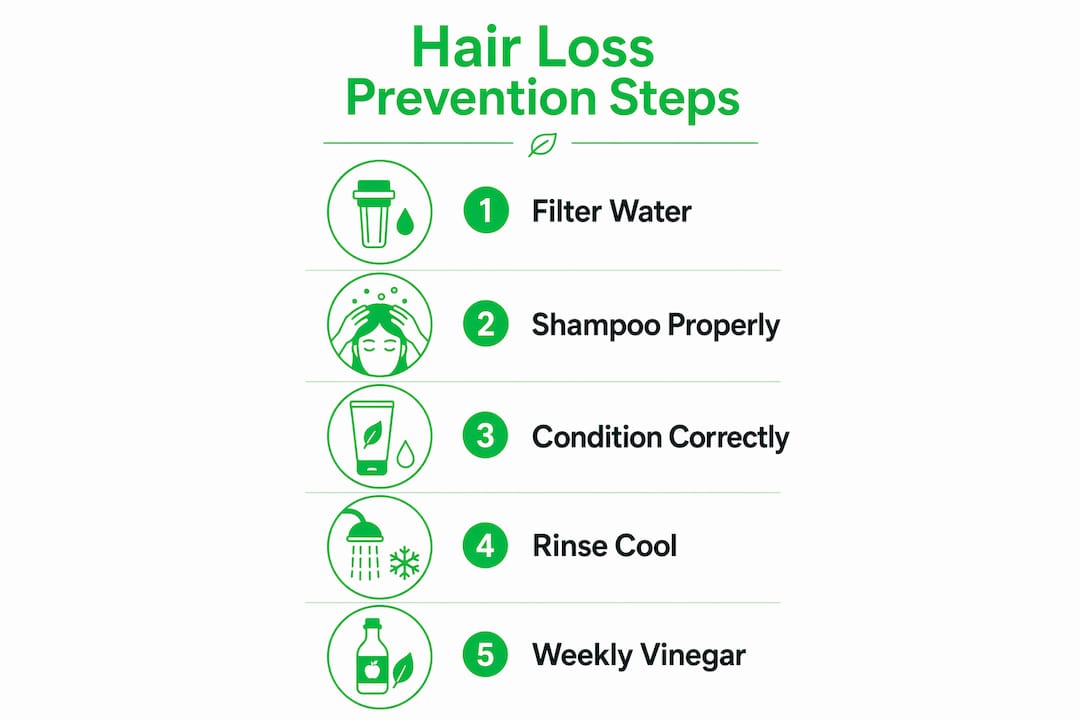
A structured sequence removes guesswork and builds the consistency that produces results. A protocol using a weekly apple cider vinegar rinse and sulfate-free shampoo shows visible improvements in hair breakage and tangling within 4–6 weeks. Consistency is the active ingredient. The steps below apply to every wash, with the vinegar rinse added once per week.
The full workflow, step by step
- Saturate hair completely. Let water run through your hair for 30–60 seconds before applying any product. Full saturation reduces the amount of shampoo needed and ensures even distribution.
- Apply a small amount of sulfate-free shampoo to the scalp. Focus entirely on the scalp, not the hair length. Use fingertip circular massage for 60–90 seconds to lift sebum and buildup.
- Rinse thoroughly with lukewarm water. Incomplete rinsing leaves residue that clogs follicles and adds weight. Take an extra 20 seconds to rinse the nape and crown.
- Apply conditioner from mid-lengths to ends. Keep it off the scalp. Leave it on for two to three minutes while you complete other shower tasks.
- Weekly only: apply apple cider vinegar rinse. Mix one tablespoon with one cup of water. Pour over the hair after conditioning, leave for two minutes, then rinse.
- Finish with a cool water rinse. 10–15 seconds of cooler water seals the cuticle and reduces frizz and breakage after the shower.
- Gently squeeze, do not rub, with a microfiber towel. Rubbing wet hair with a standard towel causes significant mechanical breakage. Squeezing removes water without disrupting the cuticle.
Maintenance schedule for your shower filter
| Task | Frequency | Why it matters |
|---|---|---|
| Check water pressure | Weekly | Pressure drop signals cartridge saturation |
| Replace filter cartridge | Per manufacturer schedule | Saturated filters expose hair to unfiltered water |
| Clean showerhead exterior | Monthly | Mineral deposits reduce flow and filter contact |
| Rotate shampoo formula | Every 8–12 weeks | Prevents scalp adaptation and product buildup |
Pair this routine with a hard water hair care strategy if you live in an area with high mineral content. The filter handles chlorine; the vinegar rinse and chelating shampoo handle the minerals.
What common shower mistakes contribute to hair loss?
Most shower habits that worsen hair shedding are invisible until the damage accumulates. Identifying them is the fastest way to refine your routine.
- Using water that is too hot. Hot water strips the scalp’s natural sebum, leaving it dry and inflamed. Inflamed follicles shed hair faster. Lukewarm is the correct temperature for the entire wash.
- Applying too much shampoo. More product does not mean cleaner hair. Excess shampoo requires more rinsing, increases friction, and raises the risk of residue buildup.
- Putting conditioner on the scalp. Conditioner at the root creates buildup that adds physical weight and tension to follicles. Over time, that tension contributes to traction-related thinning.
- Skipping filter cartridge replacement. A saturated cartridge exposes hair to unfiltered water, undoing every other step in your routine. Delayed replacement is the most common reason a filter stops working.
- Sleeping with wet hair. Wet hair is significantly more elastic and fragile. Friction against a pillow while the cuticle is open causes breakage that mimics shedding.
- Skipping the cool rinse. Ending on hot water leaves the cuticle raised, which increases tangling, frizz, and breakage during detangling after the shower.
Understanding hard water effects on hair helps you recognize when your environment is working against your routine, not just your products.
Key Takeaways
A consistent shower hair care routine built around filtered water, sulfate-free products, and correct technique is the most effective way to reduce preventable hair shedding.
| Point | Details |
|---|---|
| Filter chlorine, address minerals separately | KDF-55 and Vitamin C filters remove chlorine; apple cider vinegar rinses handle mineral buildup. |
| Use sulfate-free, paraben-free products | Gentle surfactants reduce scalp irritation, especially when hot water increases pore permeability. |
| Technique beats quantity | Fingertip scalp massage and conditioner on mid-lengths only protect follicles and reduce breakage. |
| End every wash with cool water | A cool final rinse seals the cuticle and reduces post-shower breakage and mineral penetration. |
| Replace filter cartridges on schedule | A saturated cartridge stops protecting hair; monitor water pressure weekly as your early warning. |
What I’ve learned from treating the shower as a hair health system
Most people approach hair loss prevention as a product problem. They switch shampoos, add serums, and try supplements, but never examine what happens in the shower itself. After years of paying attention to this, I am convinced the shower is where most preventable hair damage originates.
The subtlest stressor is water quality. Chlorine and mineral buildup are invisible, cumulative, and easy to dismiss until you remove them and notice the difference. I started using a filtered showerhead and added a weekly apple cider vinegar rinse, and within about six weeks the texture of my hair changed noticeably. Less breakage during detangling. Less frizz. Strands that felt stronger rather than brittle.
The second thing I would tell anyone is to stop chasing the perfect shampoo and start fixing your technique. The fingertip massage, the cool final rinse, keeping conditioner off the scalp. These are not complicated. They just require consistency. Seasonal changes matter too. Hard water mineral content can shift with municipal supply changes, so I reassess my routine in spring and fall and adjust the vinegar rinse frequency accordingly.
The honest truth is that no single product fixes hair loss. A well-designed workflow does.
— Sara
Vitacleanhq products that support your hair protection routine
Your shower routine is only as strong as the water running through it. Chlorine and heavy metals in unfiltered tap water undo careful product choices and technique every single wash.
Vitacleanhq’s Vitamin C shot shower filters neutralize chlorine at the point of contact, removing one of the primary chemical stressors from your daily wash. For broader filtration, the ceramic filter collection reduces a wider range of impurities that affect both scalp health and skin. Both systems are designed for easy cartridge replacement, so maintaining your protection level takes minutes, not tools. If you want a complete setup, the replaceable shower head filters collection covers chlorine, heavy metals, and more, built for people who take their hair health seriously.
FAQ
How much hair loss in the shower is normal?
Losing 50–150 strands per day is within the normal range, including strands shed during washing. Consistently losing more than that warrants a closer look at your water quality, products, and technique.
Do shower filters actually prevent hair loss?
Shower filters reduce chlorine and heavy metals that damage the hair shaft and irritate the scalp, which lowers one major cause of preventable shedding. They do not address hormonal or genetic hair loss, and they must be paired with mineral-targeting rinses for full protection in hard water areas.
How often should I do an apple cider vinegar rinse?
Once per week is the standard recommendation. More frequent use can lower scalp pH too aggressively and cause dryness. Dilute one tablespoon in one cup of water and rinse out after two minutes.
What water temperature is best for washing hair?
Lukewarm water is the correct temperature for shampooing and conditioning. Finish with a 10–15 second cool rinse to seal the cuticle and reduce post-shower breakage.
When should I replace my shower filter cartridge?
Replace the cartridge on the manufacturer’s recommended schedule, and monitor water pressure weekly. A noticeable drop in pressure signals that the cartridge is saturated and no longer filtering effectively.